
Carved Marble Urns
Carved marble urns bring classical form and solid geological weight to a room, functioning as substantial planters, garden ornaments or focal centrepieces.
Carved Marble Urns
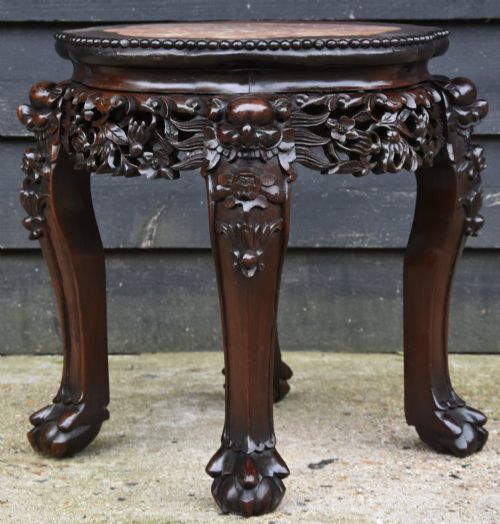
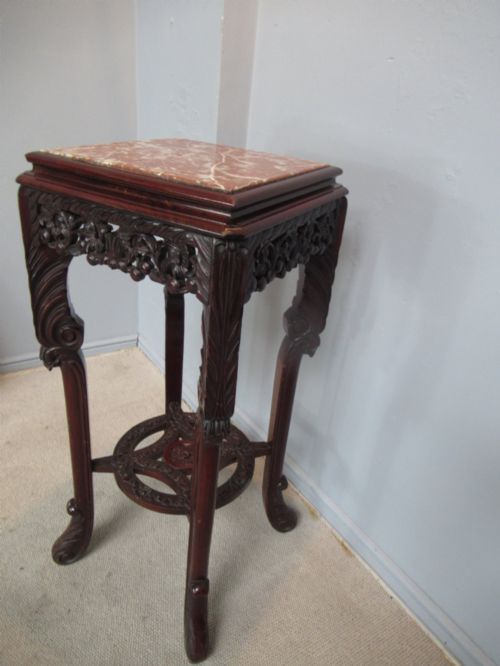
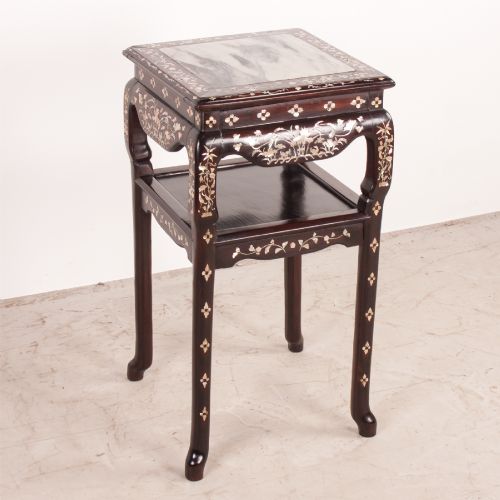
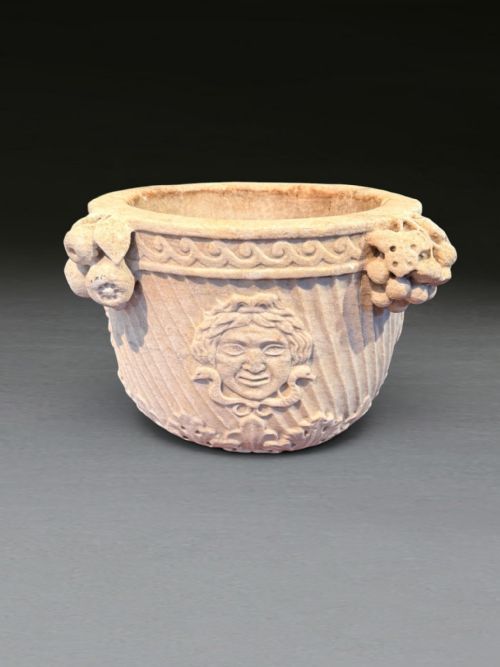
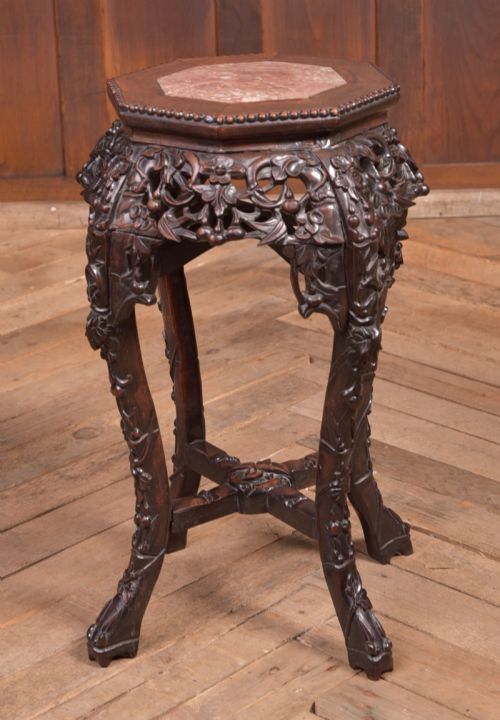
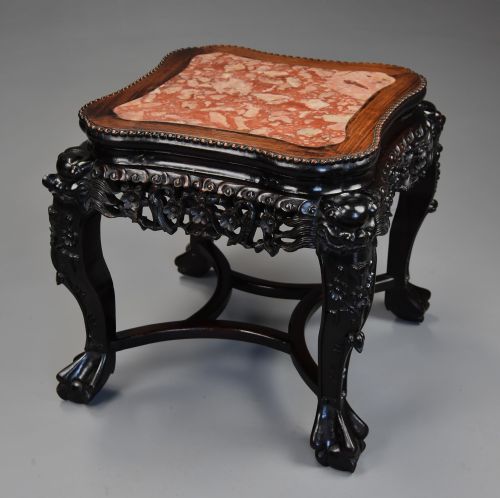
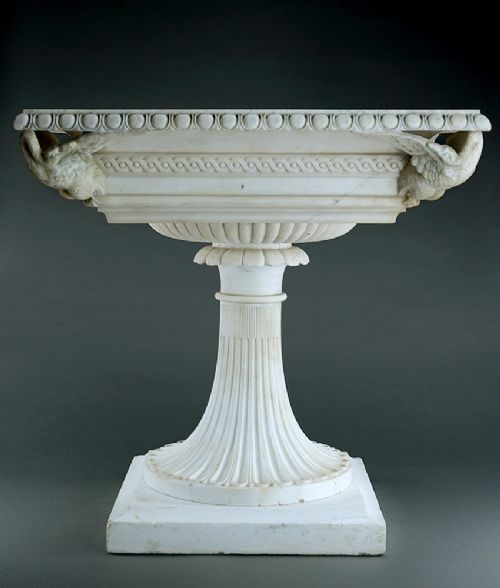
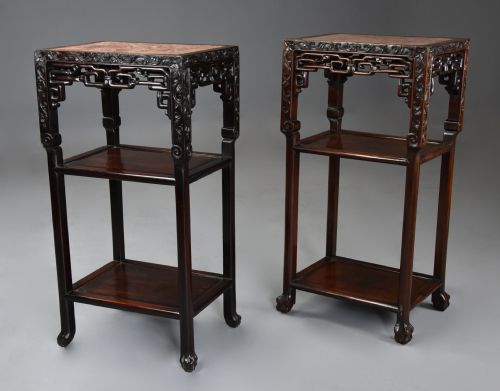
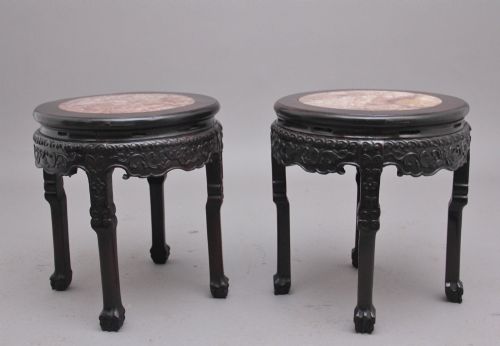
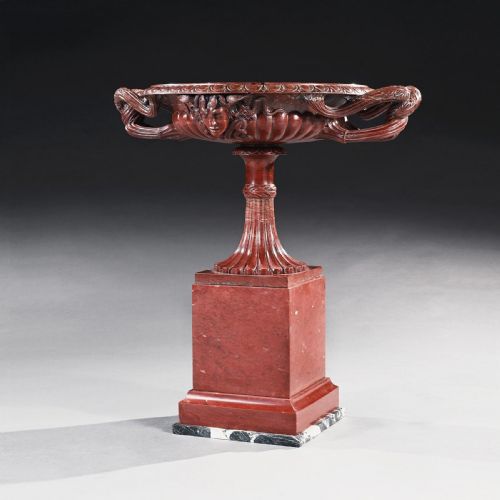
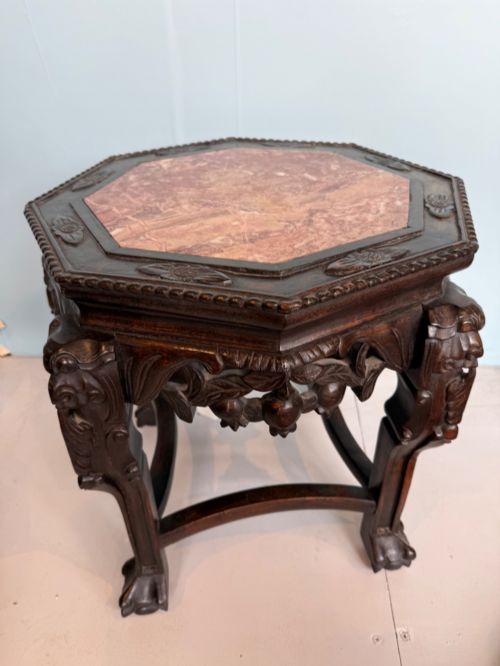
Carved marble urns include monumental garden vessels from the early twentieth century alongside smaller decorative items and architectural fragments shaped from stone. Buyers encounter pieces spanning several centuries, with Italian Grand Tour souvenirs and Chinese hardwood stands featuring inset marble panels appearing frequently.
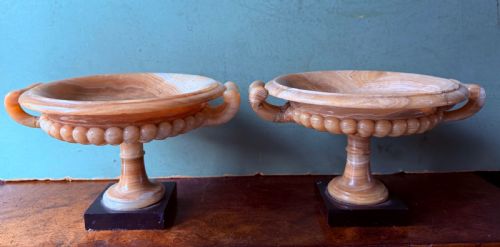
The selection ranges from sixteenth-century Italian Renaissance examples to nineteenth-century Italian tazza urns and white marble mortars. Forms extend beyond traditional garden vessels to encompass pedestals, columns, and low jardiniere stands designed to elevate plants and decorative objects.
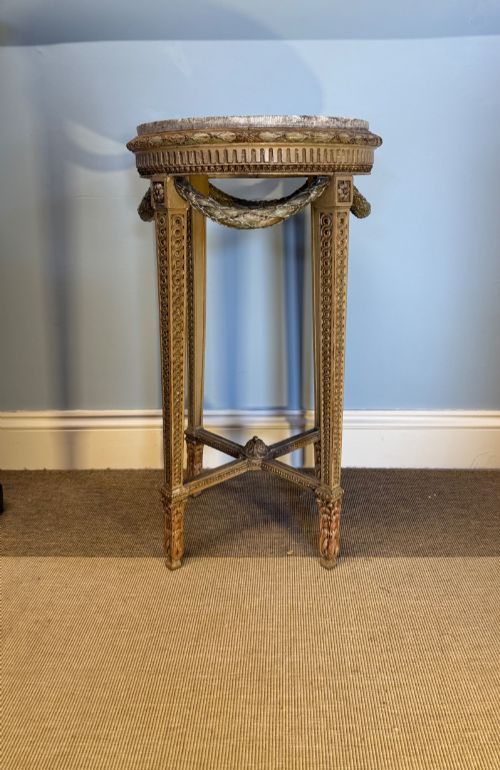
Origin points diverge between European classical revival workshops and Asian export centres utilising dense native hardwoods paired with marble inserts. Each geographic tradition applies distinct carving vocabularies to the stone, whether through Neoclassical foliate relief or intricate oriental openwork frames.
Materials and Construction
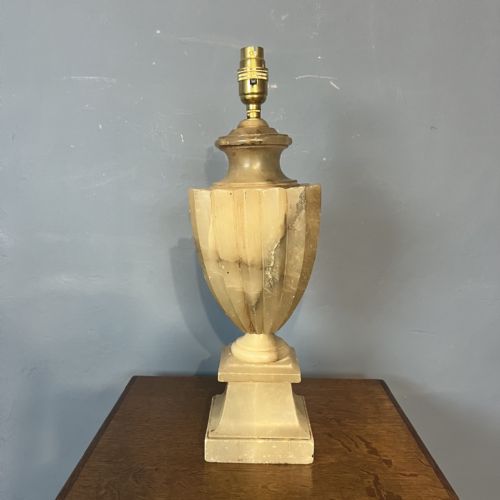
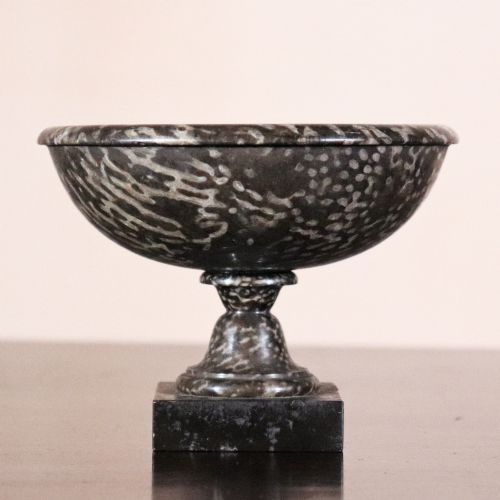
Makers shaped these objects primarily from solid marbles, alabaster, and specialised stones such as rosso antico and alabastro egiziano, often mounted on contrasting slate or black marble block bases. Artisans utilised hand chisels, drills, and abrasive powders to achieve smooth interior bowls and intricate exterior relief carvings.
Composites appear where heavy stone elements meet supporting structures of carved hardwood, rosewood, padouk, or ebonised wood, sometimes accented with brass or mother of pearl inlay. Wood sections utilise traditional joinery to secure the heavy marble inserts safely within the frames.
Several Victorian and Edwardian stands multitask happily as lamp tables, wine holders, or occasional stools when the houseplants take a day off.
Judging Quality and Execution
The refinement of the stone carving dictates the upper tier of the range, visible in the crispness of acanthus leaves, handles, and classical motifs without mechanical smoothing. Natural figuring and even colour distribution within the marble also elevate an object's visual impact.
Structural integrity separates standard utilitarian items from superior examples, particularly in how securely heavy stone inserts fit within wooden frames or how cleanly composite marble sections join. Age-related weathering on garden pieces adds character, but deliberate losses to high-relief carving reduce sculptural clarity.
Benedetto Boschetti
The Carved Marble Urns Glossary
- Grand Tour
- A cultural journey undertaken by wealthy young Europeans in the eighteenth and nineteenth centuries, collecting classical antiquities and architectural models as souvenirs. These objects often recreated ancient Roman forms on a smaller scale.
- Tazza
- A shallow bowl or vase standing on a foot and stem, frequently carved from marble or alabaster. The form derives from ancient drinking vessels and serves decorative display purposes.
- Jardiniere
- An ornamental stand or receptacle designed to hold plants or flowers. In antique furniture, these often feature waterproof marble insets to protect the surrounding wood.
- Pedestal
- An architectural base or column supporting a statue, vase, or urn. They elevate objects to eye level and appear in stone, marble, and carved hardwood.
- Pietra Dura
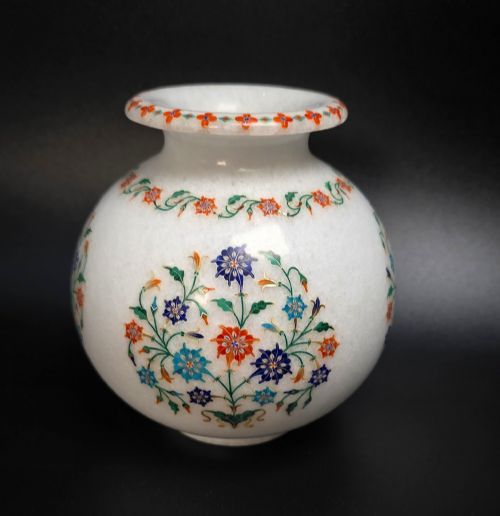
- An artistic technique using inlaid cut and fitted irregularly shaped coloured stones to create images or geometric patterns. It appears frequently on decorative marble surfaces from the Raj period.
Carved Marble Urns: Frequently Asked Questions
How were antique marble urns used?
Historic households utilised carved marble urns as interior decorative accents, garden focal points, and plant stands to display exotic flora.
Larger vessels often sat on stone pedestals or garden terraces, while smaller tazza forms decorated tables and mantelpieces.
Can marble urns stay outdoors?
Garden urns carved from durable stone withstand exterior conditions, though freezing water trapped inside bowls can cause cracking.
Interior decorative pieces and softer alabaster items require indoor placement away from frost and moisture.
How do I clean antique marble?
Dust surfaces regularly with a soft, dry cloth to prevent dirt accumulation within carved crevices and porous stone areas.
Avoid acidic cleaning agents and harsh commercial detergents that etch the polished surface of the marble.
What is a Grand Tour souvenir?
Grand Tour souvenirs are high-quality miniature or reduced-scale replicas of classical antiquities purchased by travellers in Italy during the nineteenth century.
These pieces typically utilise figured marbles, alabaster, or bronze and demonstrate exceptional sculptural precision.