
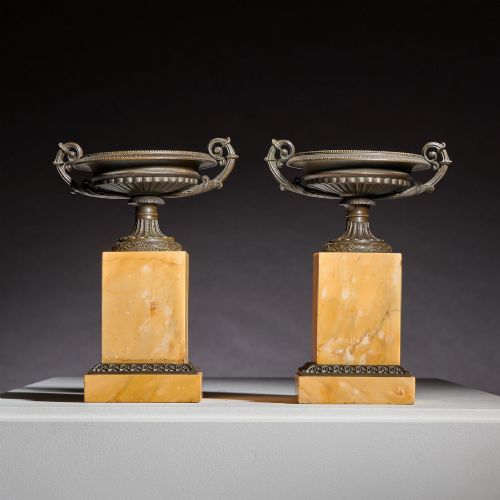
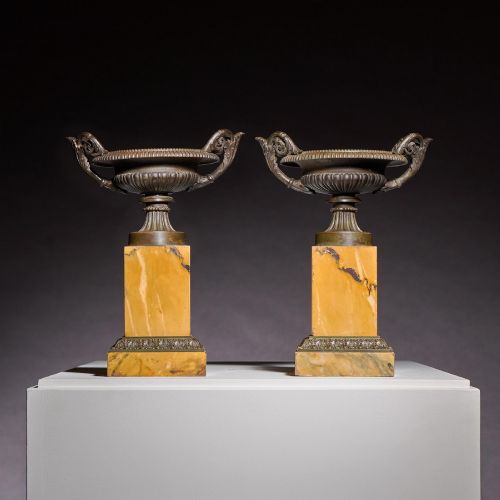
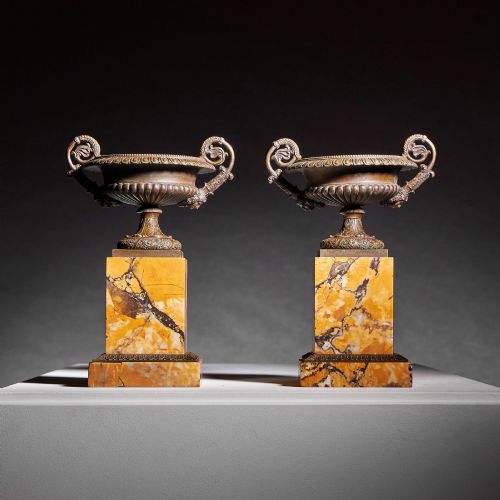
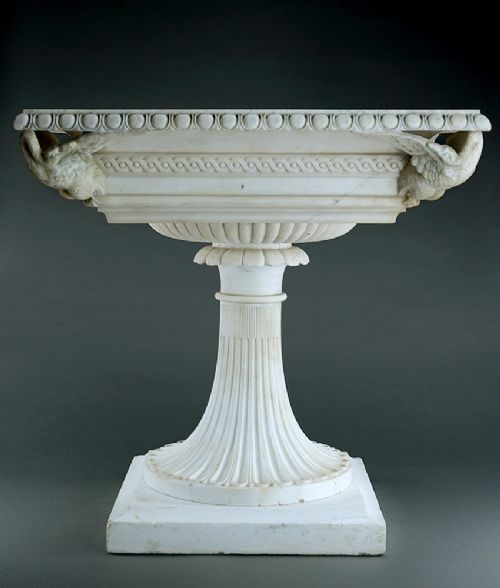
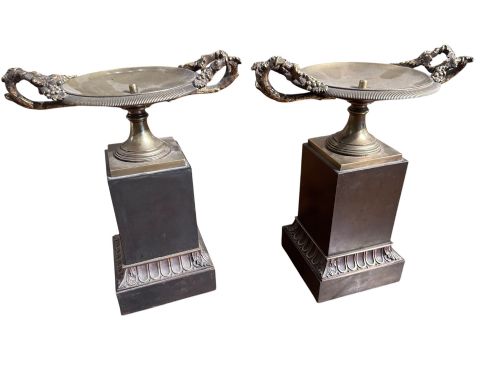


Marble Tazza on Pedestal
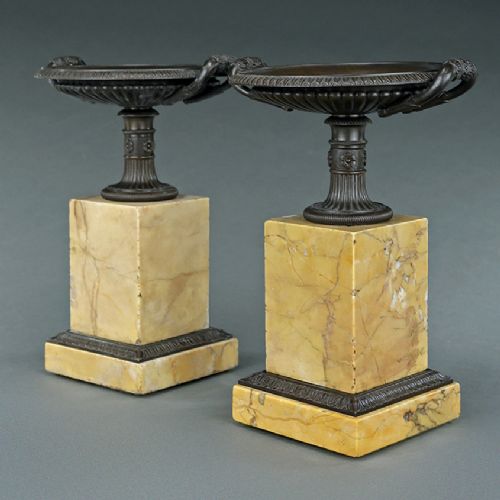
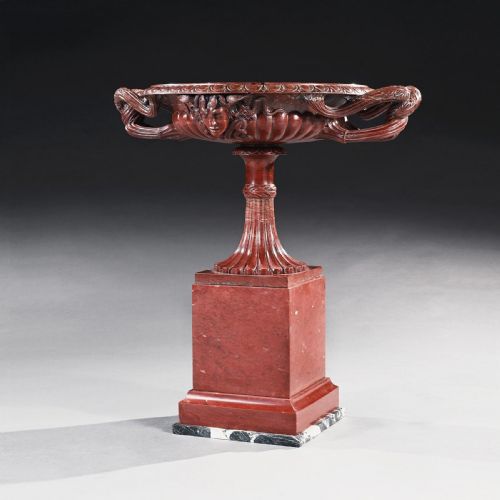
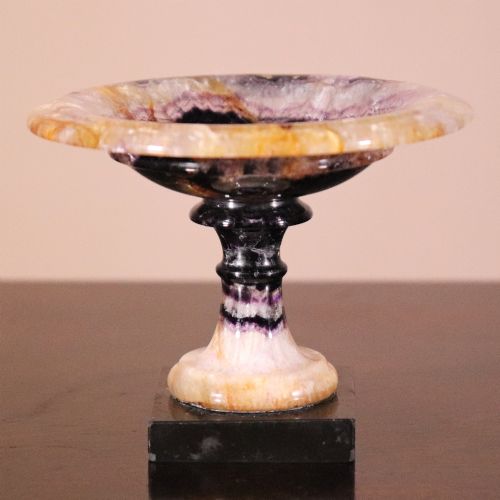
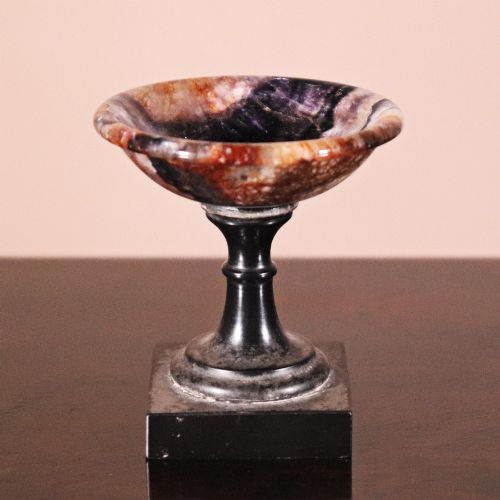
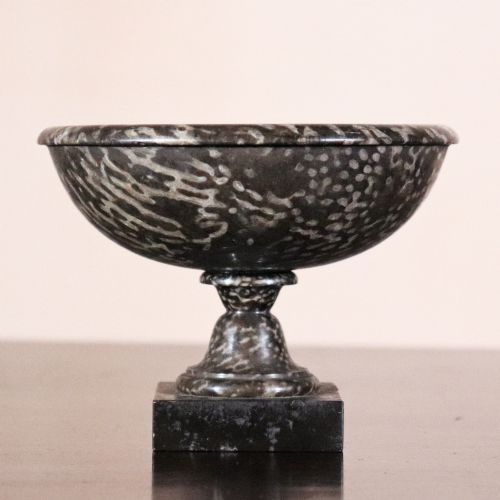
A marble tazza on pedestal brings classical proportion and substantial weight to a room, drawing the eye with its carved stone bowl and raised foot.
Marble Tazza on Pedestal
A marble tazza on pedestal takes the form of a shallow ornamental bowl elevated on a central column and base, echoing ancient vessels designed for display or libation. These objects emerge most frequently from nineteenth-century European workshops, often created as Grand Tour souvenirs for travellers returning from Italy.
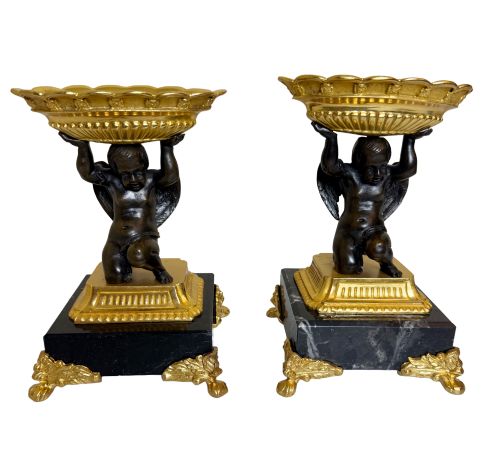
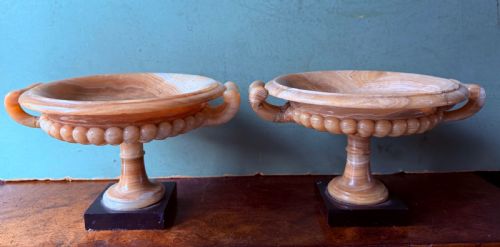
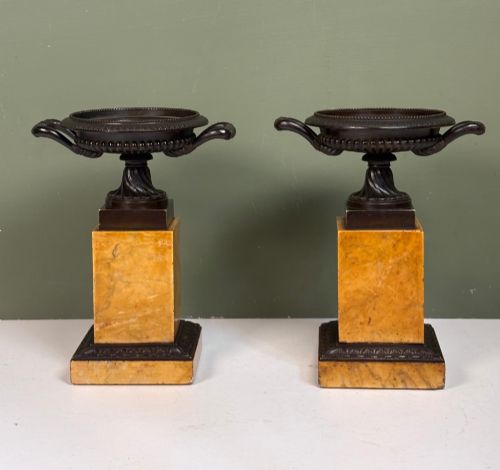
The materials span white, black, Sienna, Rosso Antico, and alabastro egiziano marbles, frequently paired with cast bronze, gilt bronze, and ormolu mounts. Makers adapted classical motifs from archaeological discoveries, producing both small cabinet specimens and monumental architectural centrepieces.
Forms on this page range from simple classical bowls to elaborate tazza urns and pedestal vessels. Pieces often appear in matched pairs, reflecting the formal symmetry favoured during the Regency, French Empire, and Victorian periods.
What varies in quality
Quality rests primarily in the choice and rarity of the stone, where intensely figured Sienna, Rosso Antico, or Blue John distinguish exceptional examples from plain white or black marble. The crispness of the turning and the depth of hand-carved detail in the stone bowl separate routine decorative items from superior works.
Metal mounts provide another measure of distinction, as finely chased ormolu and heavy cast bronze show greater sculptural definition than simpler, flatter fittings. Scale and proportion also influence standing, with monumental pairs or complex architectural designs demanding greater technical mastery from the maker.
Some nineteenth-century travellers carried home tiny carved stone tazze in fitted leather cases, protecting their precious souvenirs across bumpy alpine passes.
Benedetto Boschetti·Ferdinand Preiss
The Marble Tazza on Pedestal Glossary
- Tazza
- A shallow bowl mounted on a stem and foot, used historically for display or serving. The plural form is tazze.
- Grand Tour
- A cultural journey undertaken by nineteenth-century Europeans seeking art and antiquities, generating demand for souvenir sculptures and architectural models. These objects often copied celebrated pieces seen in Italian collections.
- Ormolu
- Gilded bronze produced by applying a mercury and gold amalgam to cast metal and heating it to drive off the mercury. The technique yields a rich, durable golden surface seen on many nineteenth-century mounts.
- Sienna marble
- A decorative Italian limestone featuring bold yellow and purple-brown veining against a warm ground. It was highly prized by Grand Tour craftsmen for its striking contrast.
Marble Tazza on Pedestal: Frequently Asked Questions
What is a marble tazza on pedestal?
A marble tazza on pedestal is an elevated decorative bowl carved from stone, typically mounted on a central column and solid base. These items derive their shapes from classical antiquity and were widely produced during the nineteenth century as ornamental objects for interiors.
They serve as focal points on sideboards, tables, or pedestals, often displayed in pairs to create symmetrical arrangements. Their substantial weight and stone construction give them a strong architectural presence in a room.
How were these decorative bowls used historically?
In the nineteenth century, these vessels served primarily as decorative ornaments rather than functional tableware. Wealthy collectors displayed them in libraries, drawing rooms, and cabinets to signal learning and refined taste.
Many pieces originated as souvenirs purchased by travellers on the Grand Tour of Italy, commemorating visits to classical sites and excavations. Their designs directly referenced antique pottery, stone altars, and architectural fragments discovered during archaeological digs.
How do I distinguish nineteenth-century pieces?
Nineteenth-century examples frequently show the characteristic hand-turned marks and mineral varieties associated with Italian marble workshops of the period. The integration of cast bronze or ormolu mounts alongside stones like Sienna and Rosso Antico points directly to this era.
Studying the patination of the bronze and the specific geological types of marble helps place a piece within periods such as Regency, French Empire, or Victorian. Grand Tour pieces often bear patination and wear consistent with age and handling during their travels.
What materials are common in these pieces?
The primary materials include various decorative stones such as Sienna marble, Rosso Antico, white marble, black marble, and alabastro egiziano. Rarer mineral specimens like Blue John, malachite, and Ashford coral also appear on smaller-scale objects.
Metal components are typically cast in bronze or brass, with many examples featuring fire-gilded ormolu surfaces. The combination of colourful stones with contrasting metal mounts creates the rich polychrome effect characteristic of nineteenth-century decorative arts.