
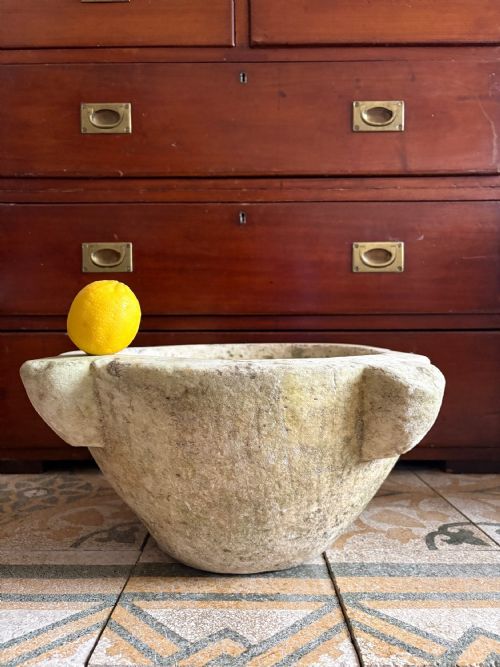


Carved Marble Basin
These carved marble basin examples range from sturdy domestic mortars to grand Italian urns and cisterns, offering tactile historic utility and classic form.
Carved Marble Basin
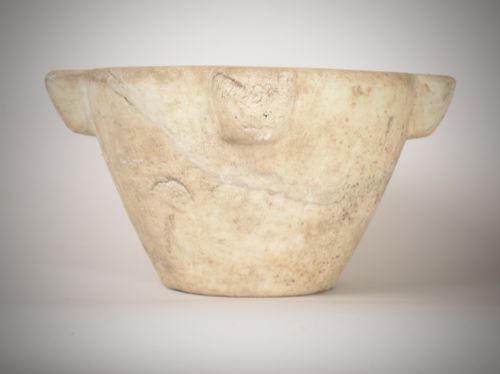
A carved marble basin encompasses utilitarian vessels like large mortars alongside ornamental items such as urns, tazzas, and cisterns. When you search for a carved marble basin, you encounter heavy stone pieces spanning several centuries from the sixteenth to the early twentieth.
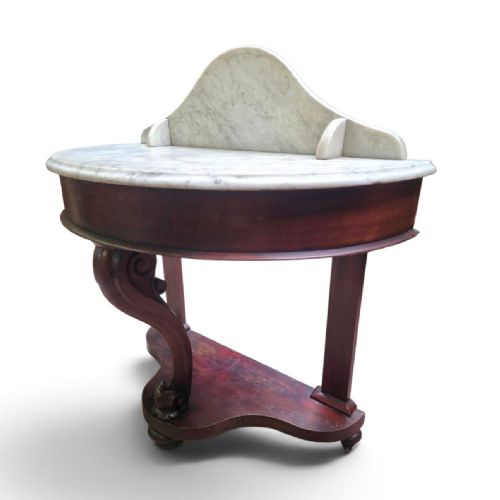
The domestic washstand forms a distinct group within this category, pairing stone tops with wooden frames in Victorian and Edwardian bedroom furniture. These washstands sit alongside garden cisterns and kitchenware, demonstrating the diverse practical origins of these stone objects.
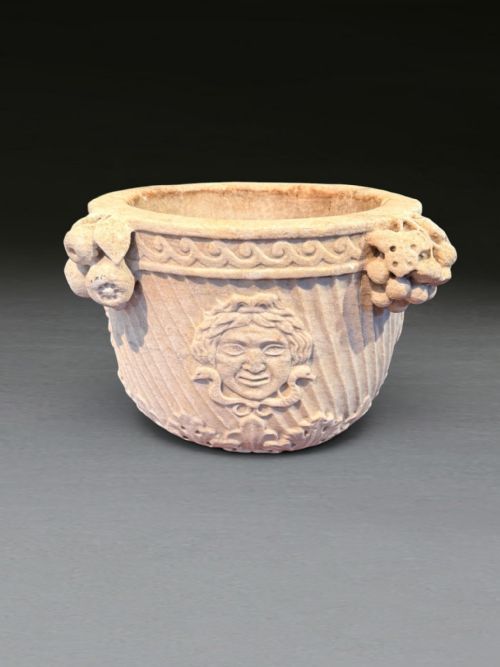
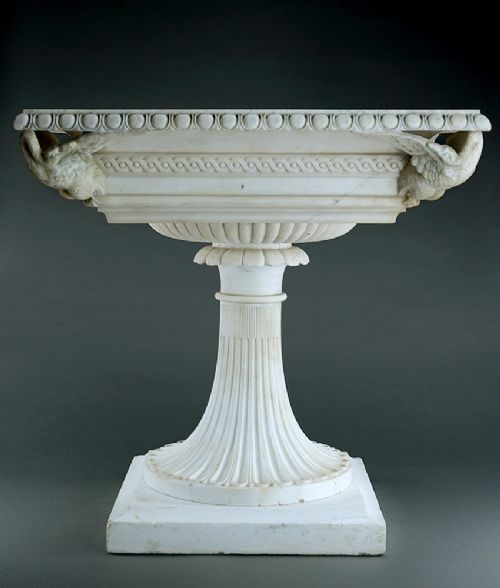
Italian provenance appears frequently among the grander examples, including eighteenth-century white marble mortars and neoclassical Carrara cisterns. Pieces from the nineteenth century reflect both Grand Tour influences and ecclesiastical forms like fonts.
How they were made
Makers shaped these objects primarily from solid blocks of marble and stone, utilising white marble, Carrara marble, and Sienna marble. Artisans carved the dense material by hand to achieve deep hollows in mortars and precise classical detailing on urns and tazzas.
What varies in quality
The refinement of the carving dictates the distinction between straightforward domestic kitchenware and ambitious decorative works like Italian Renaissance urns. Crispness in neoclassical details and the natural figuring of the marble distinguish exceptional examples from simpler utilitarian vessels.
Scale and material selection also define the range, with substantial proportions and imported decorative marbles elevating a piece beyond standard utility. The integration of stone tops with fitted wooden cabinetry creates a separate standard of craftsmanship for bedroom washstands.
The Carved Marble Basin Glossary
- Carrara marble
- A type of white or blue-grey marble quarried in the city of Carrara in Tuscany, known for its use in classical sculpture and neoclassical cisterns.
- Labrum
- An ancient Roman term for a large basin or bath, often referenced in Grand Tour pieces modelled on classical antiquities.
- Tazza
- A shallow bowl or cup mounted on a stem and foot, frequently utilised as a decorative pedestal vessel in stone or marble.
- Mortar
- A heavy bowl used with a pestle for grinding materials, surviving in eighteenth-century examples carved from solid white marble.
- Cistern
- A large vessel for holding water, appearing in neoclassical designs intended for garden or interior placement.
Carved Marble Basin: Frequently Asked Questions
What were marble mortars used for?
These heavy stone vessels served domestic and apothecary purposes for crushing and grinding dry ingredients.
Their solid construction allowed them to withstand heavy daily use in kitchens and laboratories over centuries.
How do I care for a marble top washstand?
Clean the stone surface with mild soap and water while avoiding acidic cleaners that etch marble.
Treat the wooden frame with appropriate furniture wax to protect the walnut or mahogany from moisture.
What is a Grand Tour piece?
Items created for travellers touring continental Europe during the eighteenth and nineteenth centuries.
These objects often replicated classical antiquities, such as Roman urns and basins, using local Italian marbles.
How do I distinguish an Edwardian washstand?
Edwardian examples feature lighter wood framing, often in walnut, paired with fitted marble tops.
They frequently incorporate tiled splashbacks characteristic of bedroom furniture from the early twentieth century.