
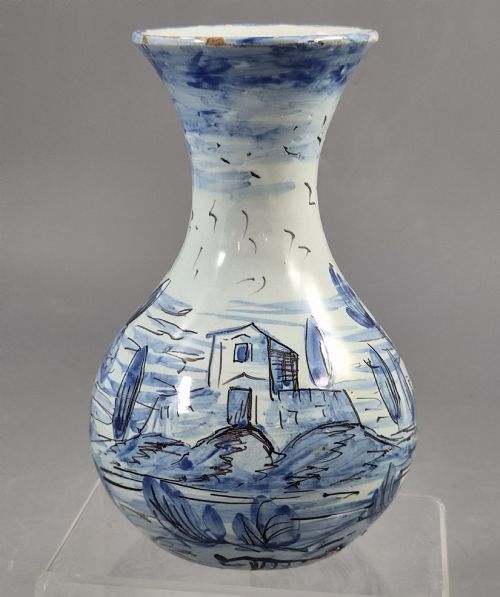
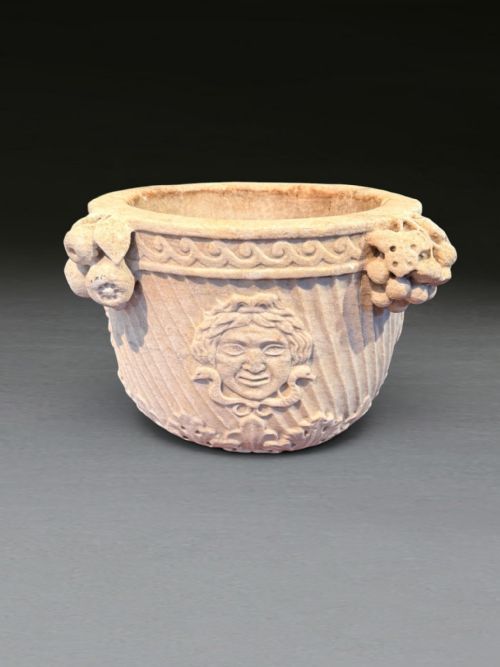
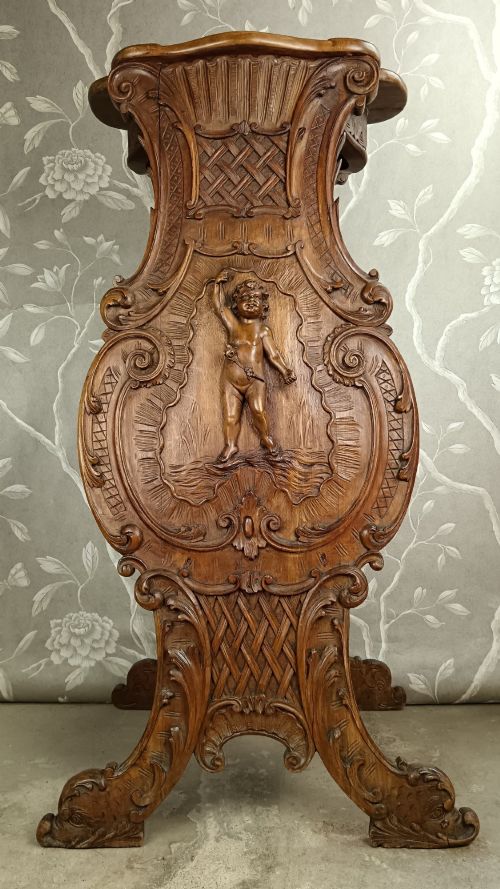
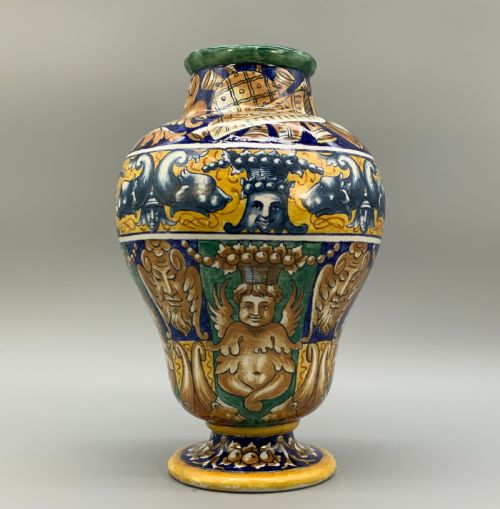
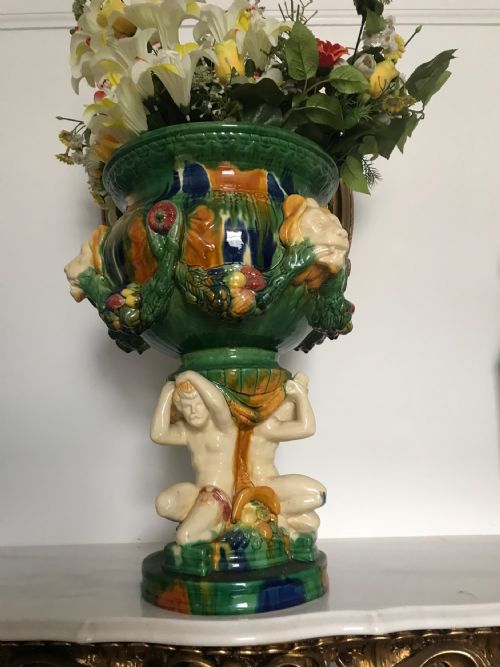


Italian Renaissance Urn
An italian renaissance urn brings the monumental scale and sculpted detail of classical revival design directly into a room.
Italian Renaissance Urn
When you search for an italian renaissance urn, you are looking at decorative vessels shaped by classical forms and later revival movements. The pieces on this page span the sixteenth century through the nineteenth and twentieth centuries, including Grand Tour items and revival styles.
You will most frequently meet tin-glazed earthenware and majolica vases produced in Italy during the nineteenth century, alongside marble carvings, bronze ewers, and carved walnut pedestals. Forms range from cabinet vases and covered urns to large planters on figural bases.
The selection also includes related furnishings such as baroque cabinets and pedestal stands designed to display these substantial decorative vessels. Most examples reflect nineteenth-century interpretations of earlier Renaissance and Baroque aesthetics rather than period-surviving originals.
How they were made
Makers shaped these objects from earthenware, ceramic, and marble, applying tin glazes and metallic lustre to create painted majolica surfaces. Workshops utilised traditional throwing and moulding techniques to achieve complex vessel profiles and figural bases.
Carved pieces employ solid walnut with detailed relief work, while bronze items rely on metal casting methods associated with Grand Tour souvenirs. Glazed ceramic surfaces feature polychrome pigments and blue and white designs fired to a durable finish.
Lions guard these vessels from every angle, glaring steadfastly from nineteenth-century ceramic pedestals.
What varies in quality
Quality rests in the crispness of the modelling and the depth of the glaze, separating finely painted tin-glazed earthenware from simpler commercial production. The articulation of details like lions' head decorations and figural supports defines the better examples.
The choice of material and the skill of the carver or painter dictate the overall presence of the object, whether in walnut pedestals or polychrome majolica vases.
Cantagalli
The Italian Renaissance Urn Glossary
- Maiolica
- Tin-glazed earthenware produced in Italy, known for its bright painted decoration and opaque white surface. This technique was central to Italian pottery traditions.
- Grand Tour
- A cultural journey undertaken by European elites, collecting antiquities, bronzes, and decorative art objects as souvenirs. These pieces often inspired nineteenth-century copies.
- Ewer
- A large pitcher with a flared spout and a curved handle, frequently produced in bronze or ceramic as a decorative display piece. They often form matching pairs with urns.
- Baroque
- An ornate artistic style characterised by dramatic movement, rich detail, and grand scale, spanning the seventeenth century and later revival periods.
- Faience
- Tin-glazed earthenware similar to majolica, often associated with French and Italian ceramic traditions emulating Chinese porcelain or classical forms.
Italian Renaissance Urn: Frequently Asked Questions
What is an italian renaissance urn?
An italian renaissance urn is a decorative vessel modelled on classical forms, encompassing both authentic sixteenth-century carvings and later nineteenth-century revival pieces.
These items were created primarily for display, drawing on the artistic vocabulary of the Italian Renaissance and subsequent revival periods.
How were these urns used?
These pieces served as interior decoration, often placed on pedestals, cabinets, or tables within grand homes and formal rooms.
Bronze versions and majolica vases functioned as ornamental focal points, sometimes paired as garniture sets on display.
How do I tell periods apart?
Differentiating periods relies on examining the materials, glaze consistency, and manufacturing methods visible in the piece. Sixteenth-century examples show genuine age and hand-worked marble, while nineteenth-century revival items reflect Victorian interpretations using tin-glazed earthenware and moulded ceramics.
Stylistic markers such as nineteenth-century Grand Tour aesthetics or Cantagalli factory marks help establish the precise era of production.
Are all these pieces from Italy?
The listings include pieces originating from Italy, such as majolica from Florence and ceramic planters with regional decoration.
Other items reflect the broader European interest in Italian design, including nineteenth-century French or British interpretations made for the Grand Tour market.
How do I clean a majolica vase?
Tin-glazed earthenware and majolica require gentle dusting with a soft, dry cloth to protect the painted surface and glaze.
Avoid using water, chemical cleaners, or abrasive materials that could penetrate crazing in the ceramic glaze and damage the pigments.