
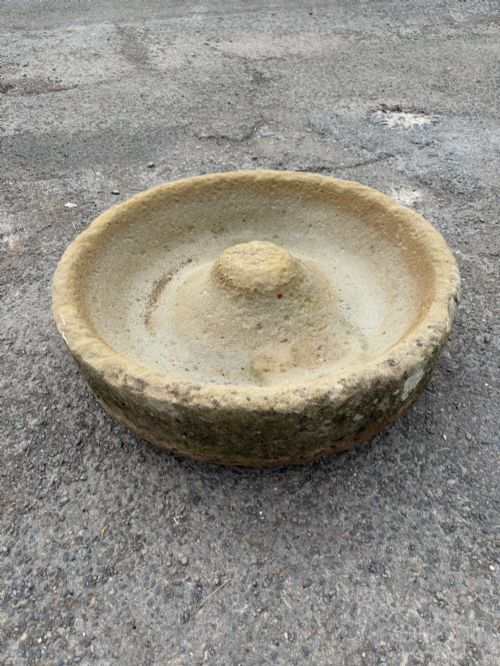
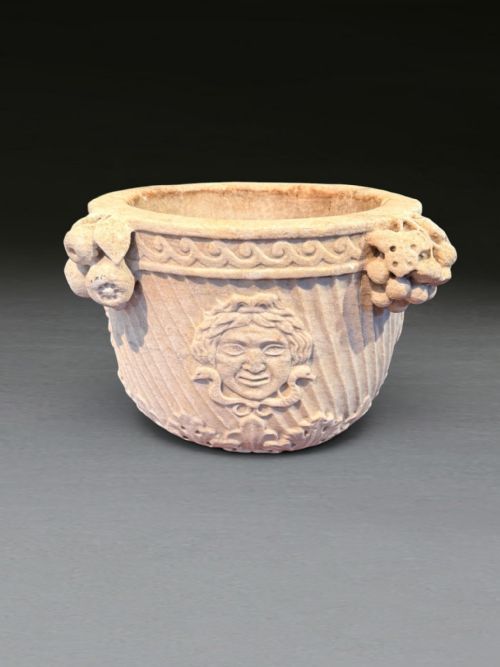
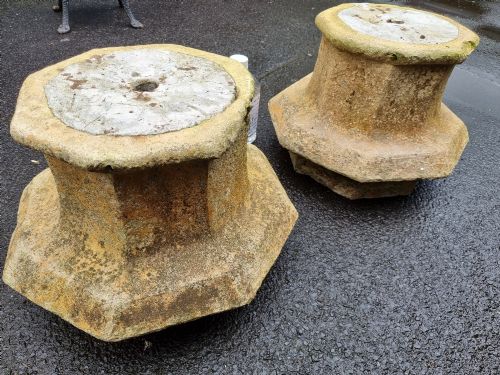
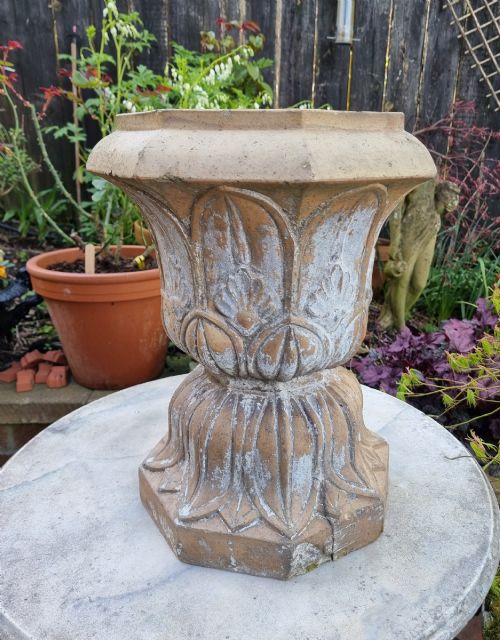
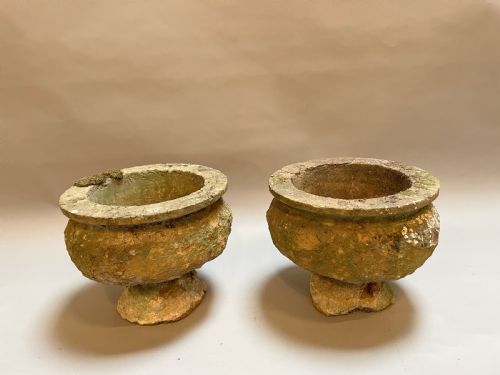


Buff Stone Planter
These buff stone planter pieces are garden vessels formed to hold planting, ranging from Edwardian terracotta to sixteenth-century Italian marble.
Buff Stone Planter
A buff stone planter takes the form of garden urns, planters, vessels, pedestals, plinths, and mortars designed for outdoor or architectural display. When searching for a buff stone planter, buyers encounter garden ornaments spanning multiple centuries.
The selections on this page bridge several eras, including the eighteenth century, nineteenth century, Victorian period, Edwardian era, and nineteen ten. Forms range from Scottish terracotta garden urns and salt glazed garden vessels to carved stone baskets.
Origins and styles stretch across Italian Renaissance marble urns, Gothic style garden plinths, and rustic English country pancheons. Buyers frequently find pairs alongside individual decorative vessels ready for garden placement.
How they were made
Makers shaped these garden objects using terracotta, composite stone, limestone, marble, soft stone, stoneware, and carved natural stone. Each material required specific carving, moulding, or glazing techniques suited to enduring outdoor conditions.
Potters and masons utilised traditional methods, from salt glazing stoneware and terracotta to hand-carving sixteenth-century marble and eighteenth-century stone baskets. Surface patination developed naturally through age, exposure, and use.
Listings feature items from the 16th century up to 1910, spanning terracotta, marble, limestone, and stoneware.
What varies in quality
Quality rests in the precision of the stone carving and the crispness of moulded details on salt glazed stoneware and terracotta. Earlier pieces from the sixteenth or eighteenth centuries exhibit distinct hand-worked tool marks absent in later mass production.
The depth of natural patination and surface weathering dictates visual character, with well-patinated terracotta and limestone showing superior weathering. Intact pairs and original garden plinths command higher regard than mismatched or single vessels.
The Buff Stone Planter Glossary
- Terracotta
- Fired clay used for garden planters and urns. It develops a warm reddish or buff tone as it weathers outdoors.
- Composite stone
- Manufactured material cast to resemble natural stone. It provides a durable alternative for garden pedestals and plinths.
- Salt glaze
- A vitreous coating formed by throwing salt into the kiln during firing. This technique creates a distinctive textured finish on stoneware.
- Pancheon
- A wide, shallow earthenware or terracotta vessel traditionally used in dairies. These heavy utility items now serve as garden planters.
- Plinth
- A heavy architectural base supporting a garden urn or statue. These blocks elevate stone vessels above ground level.
Buff Stone Planter: Frequently Asked Questions
What is a buff stone planter?
A buff stone planter is a garden vessel made from terracotta, limestone, or composite stone featuring a pale, warm yellowish-brown tone. These pieces range from antique garden urns to heavy stoneware pancheons.
They serve primarily as decorative garden planters or architectural plinths designed to hold planting schemes in outdoor settings.
How do I date an old stone planter?
Dating relies upon stylistic markers such as Neoclassical or Gothic Revival detailing combined with material types like salt glaze or hand-carved marble. Tool marks and surface patination provide further clues to age.
Sixteenth-century and eighteenth-century examples display distinct manual working methods compared to Victorian and Edwardian production.
Are stone planters frost resistant?
Many traditional stoneware, terracotta, and natural stone planters withstand cold weather if drainage holes remain clear. Dense materials like marble and hard limestone generally resist frost damage well.
Composite stone and softer porous stones require monitoring during freezing winter conditions to prevent cracking.
How heavy are antique stone planters?
Antique stone planters, carved stone baskets, and marble urns are exceptionally heavy due to their dense materials. Large Victorian salt glazed urns and eighteenth-century stone mortars often require multiple people or equipment to move.
Buyers should plan permanent garden placement carefully before positioning heavy pedestals and plinths.