

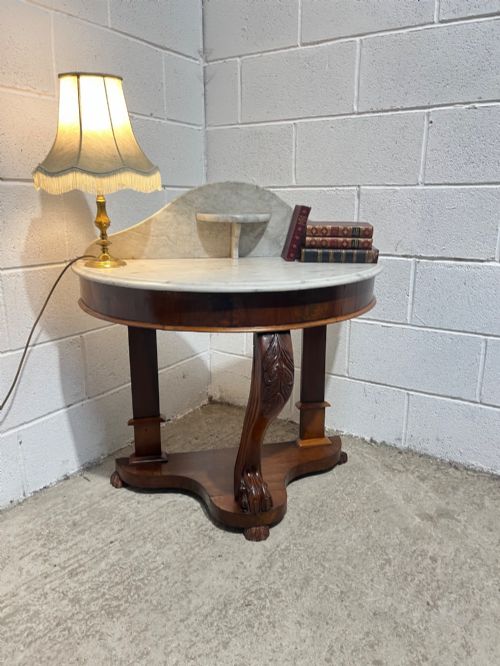
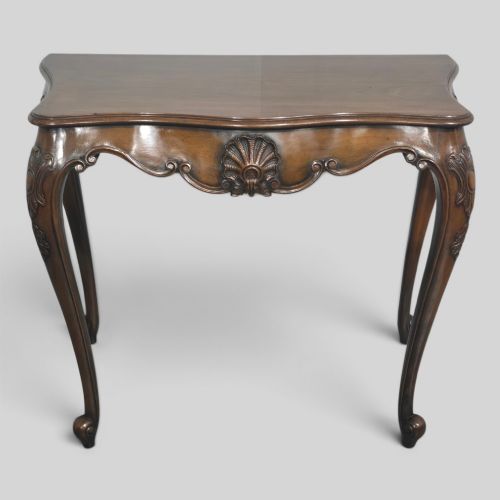
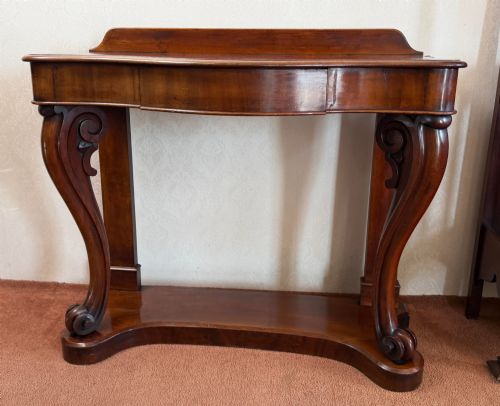
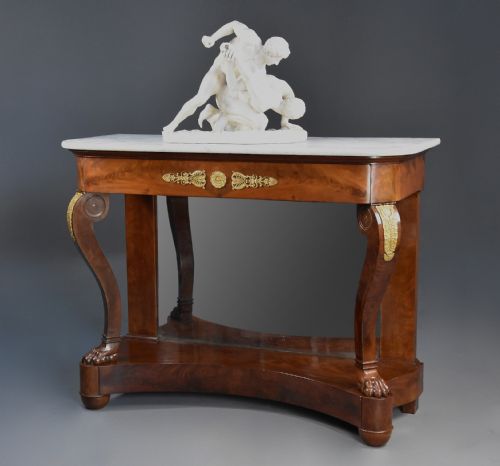
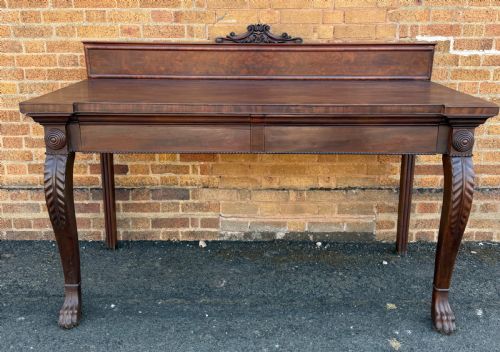
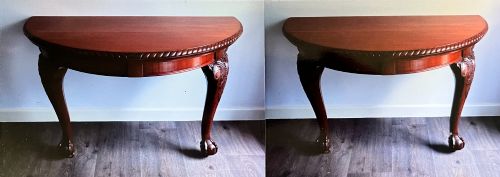
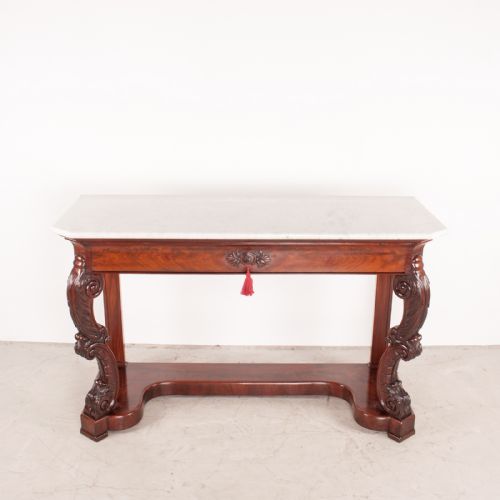
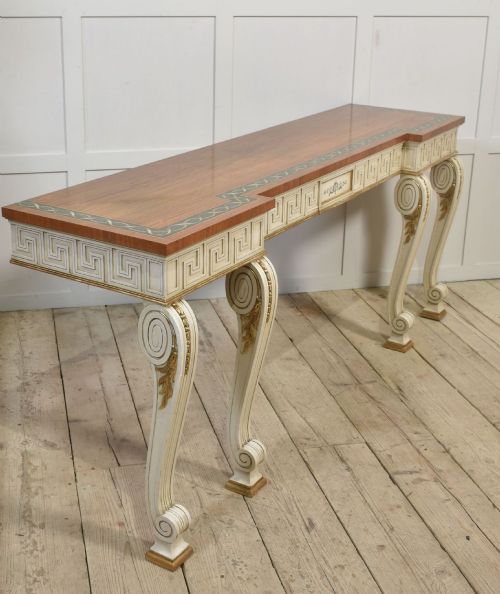
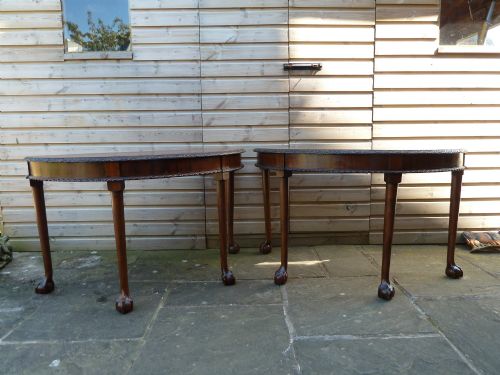
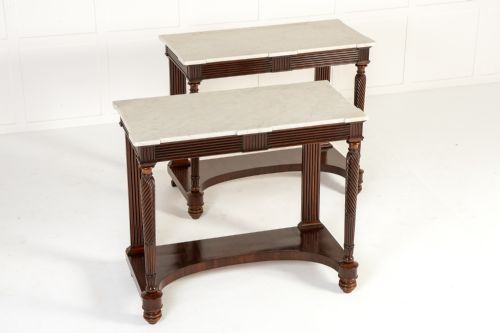

Carved Mahogany Wall Table
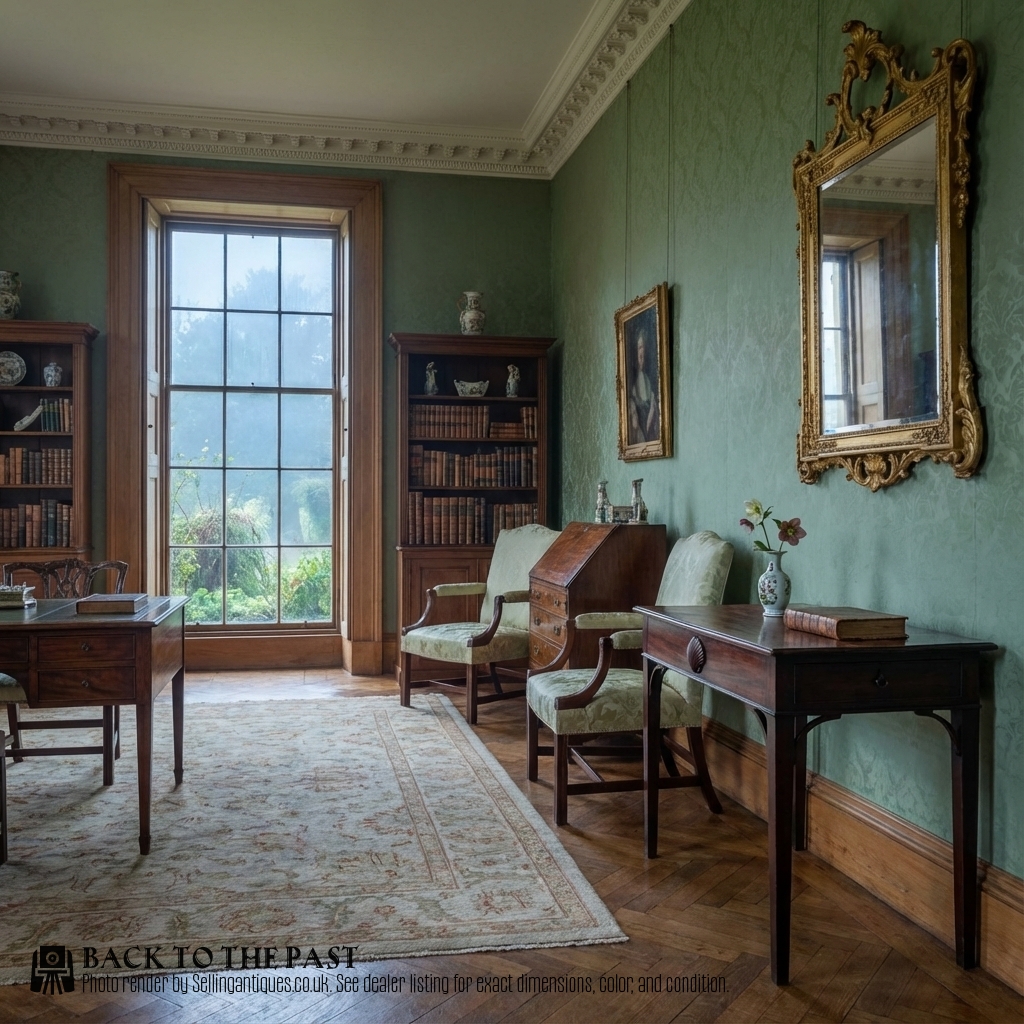
A carved mahogany wall table brings architectural presence and rich timber grain to a room, functioning as a console, serving surface or pier table.
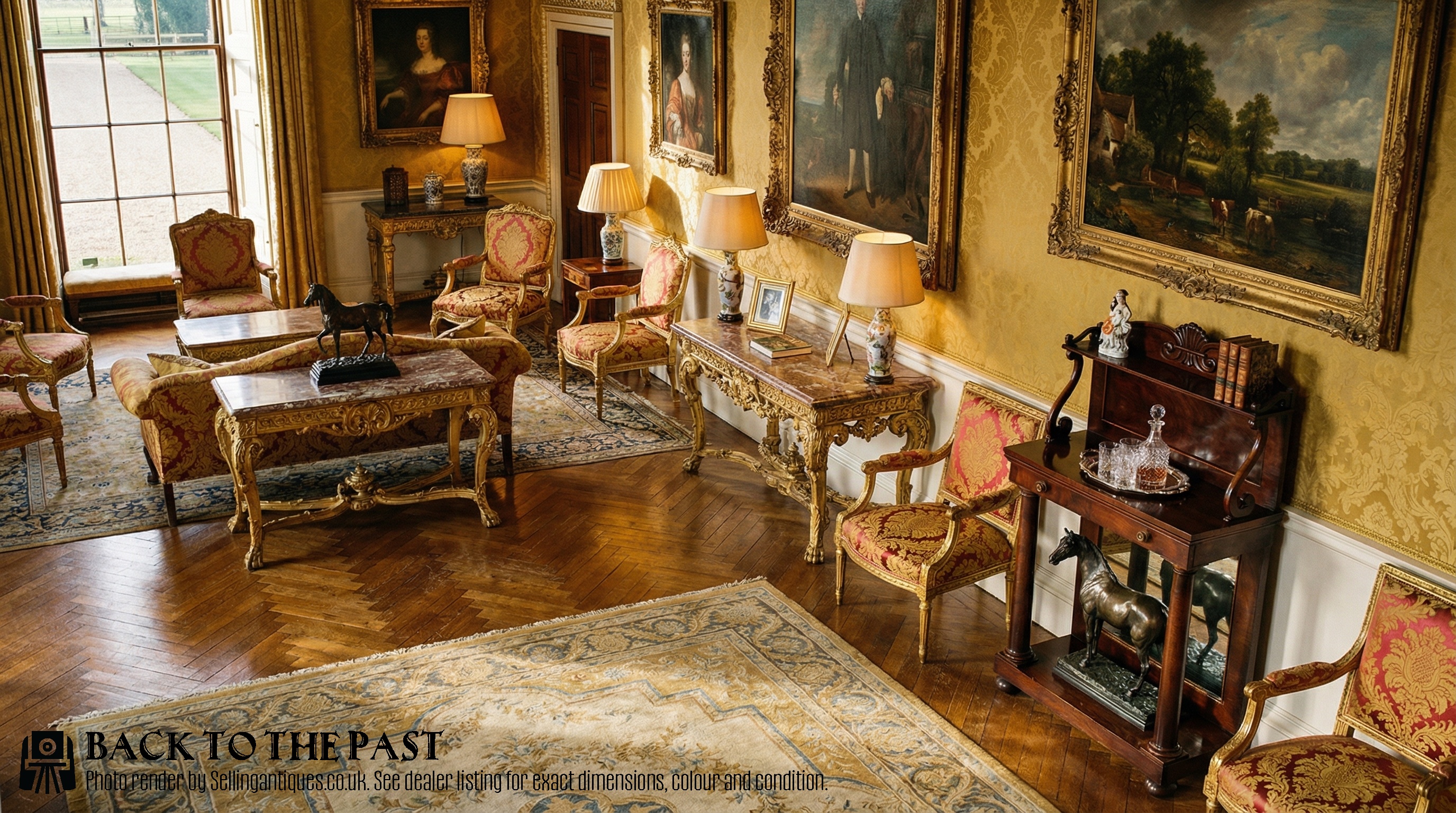
Carved Mahogany Wall Table
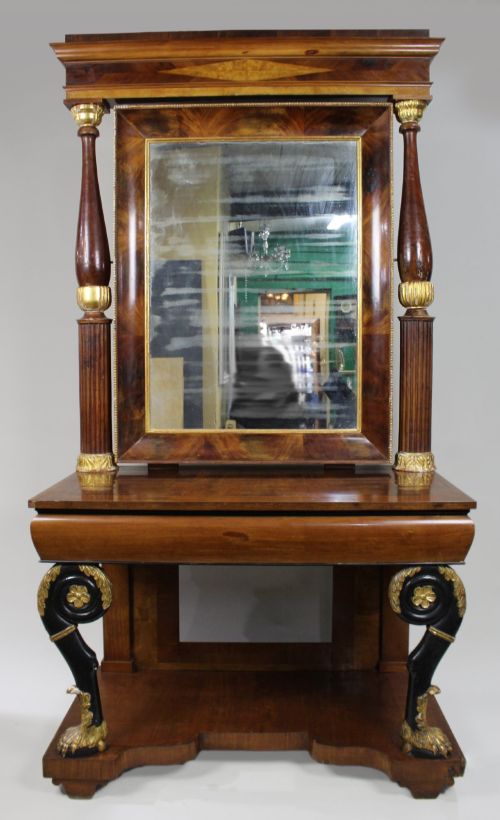
A carved mahogany wall table is typically built as a console, serving, or side table designed to stand flat against a wall, frequently paired with a mirror or topped with marble. When searching for a carved mahogany wall table, buyers encounter formats spanning the eighteenth, nineteenth, and twentieth centuries, with Victorian and Regency examples appearing regularly alongside earlier Georgian and later revival pieces.
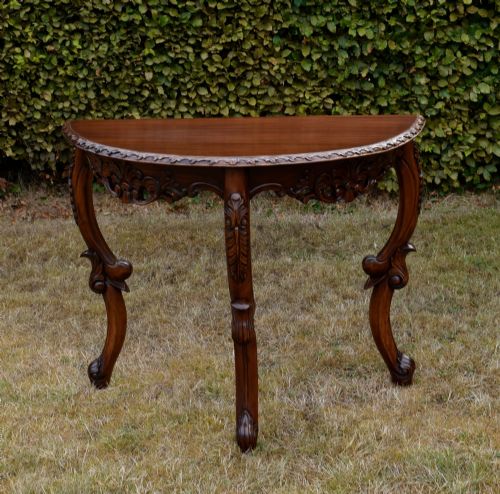
The forms range from demilune and serpentine shapes to rectangular serving and tea tables, often constructed with specific architectural placement in mind. Many examples incorporate classical or revival motifs such as Neoclassical, French Empire, and William IV styling, reflecting the changing tastes of cabinet makers across British, French, and Italian workshops.
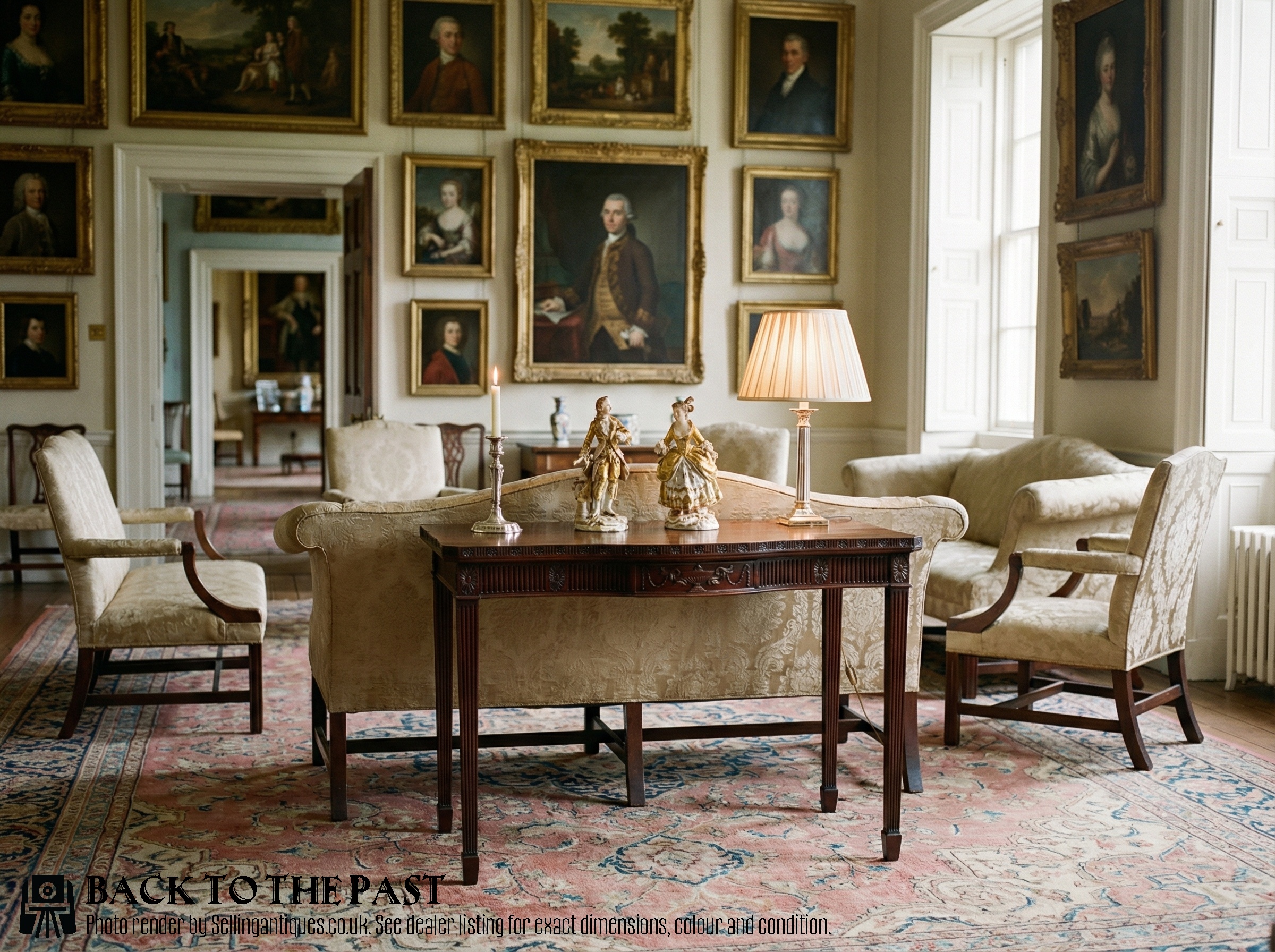
Materials and construction methods
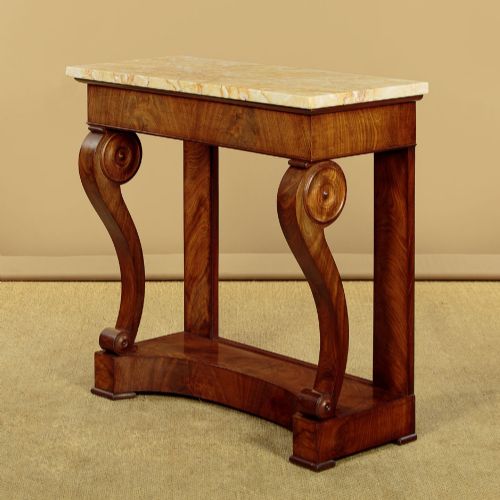
Makers utilised solid mahogany and flame mahogany veneer over supportive secondary timbers, sometimes adding parcel gilt highlights or decorative painted finishes to accentuate carved mouldings. Marble slabs feature prominently as inset table tops on numerous console and pier tables, providing a heavy, cool contrasting surface to the warm timber grain.
Structural embellishments frequently include cast brass, ormolu mounts, and glass elements alongside hand-carved wooden details. Cabinet makers shaped these materials using traditional joinery and carving techniques, producing surfaces with notable depth and figuring.
Carved Mahogany Wall Table Retail Price Guide 2026
Typical asking prices for carved mahogany wall table among the pieces listed under this phrase on Sellingantiques today, from the lower quarter to the upper quarter. They describe what is for sale here now, not the wider market.
Listings span the eighteenth to twentieth centuries, featuring Regency, Victorian, and Neoclassical periods alongside marble and flame mahogany veneer.
Factors that distinguish the range
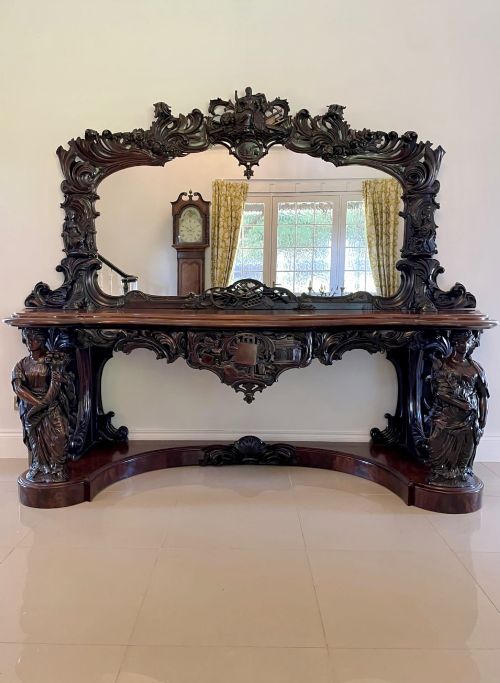
Quality in these tables rests upon the depth and crispness of the timber carving, the choice of figured mahogany veneers, and the harmonious integration of marble or gilt components. Finer pieces display confident proportion and bold design, such as imposing scale in serving tables or intricate serpentine curves.
The distinction between standard production and exhibition quality lies in the execution of secondary details, including the precision of parcel gilding, the selection of heavy slab marble, and the overall coherence of revival styles like Victorian Rococo or Italian Neoclassical.
Jean Joseph Chapuis
The Carved Mahogany Wall Table Glossary
- Console table
- A table designed to be fixed against a wall, often supported by front legs or brackets with the rear secured to the architecture.
- Demilune
- A half-moon shape commonly utilised for the timber tops and frames of smaller side and wall tables.
- Parcel gilt
- Portions of a carved wooden surface highlighted with thin layers of gold leaf.
- Serpentine
- A gently undulating line featuring a convex centre flanked by concave curves, frequently seen on table fronts.
- Pier table
- A decorative table specifically manufactured to stand against the wall beneath a pier glass or mirror.
Carved Mahogany Wall Table: Frequently Asked Questions
Where should a wall table be placed?
These tables suit entrance halls, living rooms, and dining spaces where floor space is at a premium and a shallow footprint is required. They often anchor a wall beneath a large mirror or painting.
Because they stand flush against the vertical surface, they provide a stable platform for display without obstructing room traffic.
Did these tables always have marble tops?
Many examples feature solid timber or veneered surfaces, while others incorporate inset marble slabs for durability and formal appearance. Marble tops are particularly common on nineteenth-century console and pier tables.
The choice of top depended heavily on the intended function, with serving tables favouring wood and display pieces favouring stone.
How do I identify a Regency period table?
Regency pieces often display classical restraint, clean architectural lines, and bold mahogany grain with minimal carved ornamentation. Makers of this era frequently drew inspiration from ancient Greek and Roman designs.
Proportions tend to be sturdy yet refined, occasionally incorporating brass inlay or paw feet.
What is the difference between a console and a side table?
A console table is traditionally designed to rely partly on the wall for support, whereas a side table stands entirely on its own four legs. In modern usage, the terms frequently overlap.
Both variants serve similar decorative and functional roles within domestic interiors.