

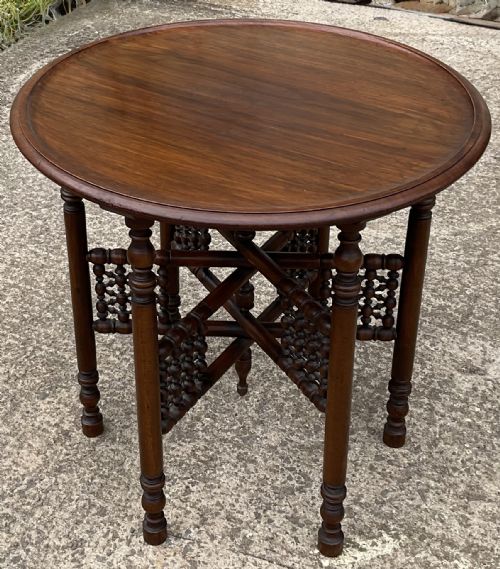


Carved Mahogany Tray Table
A carved mahogany tray table brings sturdy timber and a functional removable top into daily domestic use.
Carved Mahogany Tray Table
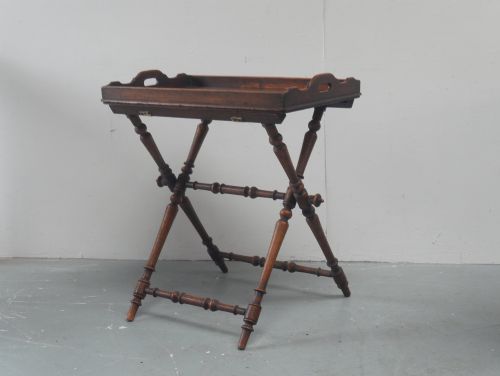
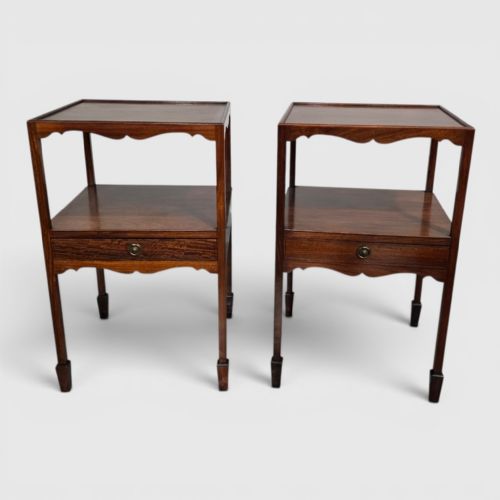
When searching for a carved mahogany tray table, collectors examine forms that combine a raised edge tray with a sturdy timber stand. The pieces available span periods from the eighteenth century through to the Edwardian era, incorporating styles such as Georgian, Chippendale, and Victorian. Most examples function as occasional tables, silver tables, or folding butlers trays raised on collapsible or fixed bases.
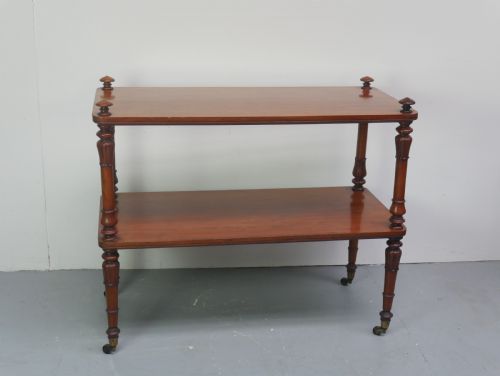
The timber itself defines the appearance, frequently utilising rich flame mahogany alongside secondary woods like oak. Many pieces display detailed carving along the tray borders, apron rails, and tripod or four-legged stands. Buyers encounter both original period items and later revivals from the nineteenth and twentieth centuries constructed with the same traditional forms.
Distinguishing quality in timber and carving
Quality rests upon the crispness of the hand-carving and the depth of figure within the mahogany timber. Superior examples exhibit sharp relief work along the tray edges and legs rather than soft or moulded rounding.
Construction integrity separates master craftsmanship from routine workshop production. Tight joints, well-fitted folding mechanisms, and substantial timber thickness distinguish the finest tray tables from lighter decorative adaptations.
Gillows·James Mein of Kelso·Maple & Co
The Carved Mahogany Tray Table Glossary
- Tray table
- A piece of furniture featuring a removable or integrated raised-edge tray supported by a folding or fixed stand. These tables originated for serving or moving tableware efficiently.
- Silver table
- An eighteenth-century form of display or serving table, frequently featuring a raised gallery edge and carved cabriole legs. They were utilised in prominent rooms for holding silver collections.
- Flame mahogany
- A veneer figure cut from the branch junction of the mahogany tree, producing a distinctive flickering flame pattern. Cabinetmakers prized this timber for high-status table tops.
- Butlers tray
- A rectangular tray with hinged or fixed sides fitted with cut-out carrying handles, designed to sit upon a folding wooden stand. They allowed servants to transport items between rooms easily.
Carved Mahogany Tray Table: Frequently Asked Questions
What is a tray table used for?
These tables served primarily for holding drinks, silver, or meal service items within formal reception rooms. The removable top allowed items to be carried directly from the kitchen or pantry.
In modern rooms, they function effectively as versatile occasional surfaces for lamps, books, or drinks beside seating arrangements.
How do I date a mahogany table?
Dating relies on examining construction methods, timber characteristics, and stylistic details such as carved leg motifs or edge mouldings. Eighteenth-century pieces display heavier solid construction and hand-cut joinery.
Later Edwardian and revival pieces often utilise standardised fixings and machine-cut elements while copying earlier Georgian decorative schemes.
Are tray tops removable?
Many traditional butler tray tables feature a loose top that lifts entirely off its folding X-frame stand. Other variants secure the tray permanently to a fixed pillar or four-legged base.
Buyers should inspect the underside of the tray and the supporting rails to determine if the top was built to detach.
What is flame mahogany?
Flame mahogany is a decorative wood veneer harvested from the fork where branches meet the main tree trunk. This figure creates dramatic, undulating patterns across table tops and drawer fronts.
Cabinetmakers utilised this timber selectively on prominent exterior surfaces to display wealth and decorative refinement.