




Carved Mahogany Tea Tray
A carved mahogany tea tray brings tactile warmth and period utility to a room, offering a sturdy surface shaped by centuries of refined woodworking.
Carved Mahogany Tea Tray
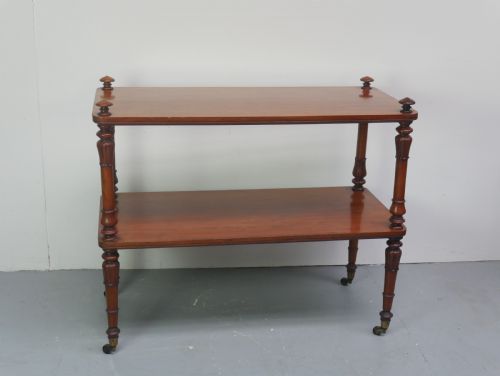
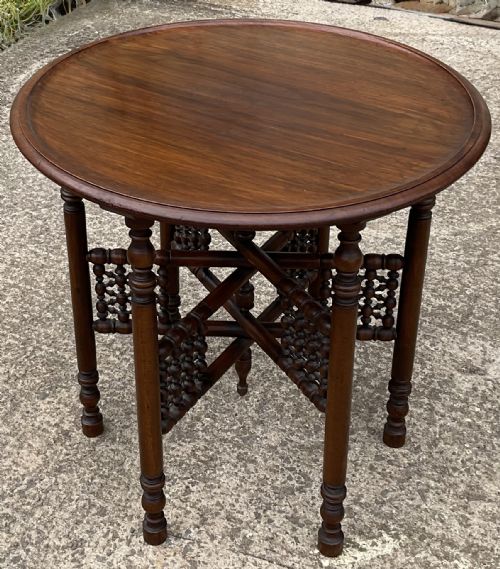
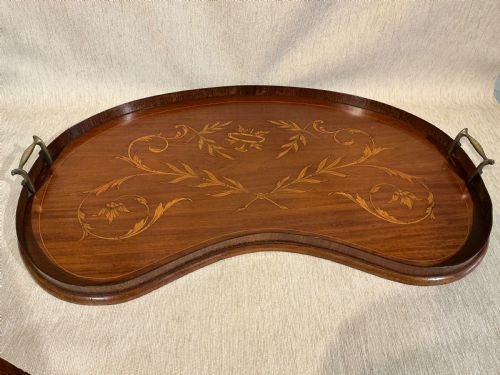
A carved mahogany tea tray represents a tradition of serving and display that spans from the eighteenth century into the twentieth. These pieces appear in forms ranging from oval trays with galleried edges to occasional tables fitted with removable trays.
The selection here encompasses Georgian originals alongside Edwardian and Georgian Revival interpretations. Trays and silver tables dominate the grouping, showing how mahogany served as the premier timber for hosting and entertaining.
How they were made
Makers utilised solid mahogany and flame mahogany veneers, often pairing the rich brown timber with contrasting satinwood inlay. Brass handles and fittings frequently complete the construction of these serving pieces.
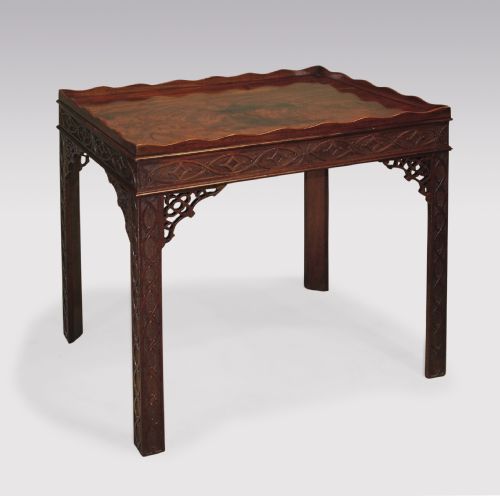
Cabinetmakers shaped the wood through careful carving and joinery, creating raised galleries, scalloped edges, and tiered structures. The surface finish relies on traditional polishing to highlight the natural grain of the mahogany.
Listings span from the 18th Century through the Georgian, Regency, and Victorian eras into Edwardian and 1930s interpretations.
What varies in quality
The distinction between ordinary and exceptional pieces rests in the crispness of the carved detail and the choice of timber figure. Flame mahogany and subtle satinwood inlay elevate a piece beyond standard utilitarian production.
Proportion and structural integrity dictate the standing of a tray or silver table. Finer examples display balanced proportions in their galleries and legs, maintaining harmony between decorative carving and everyday function.
Gillows
The Carved Mahogany Tea Tray Glossary
- Mahogany
- A durable tropical hardwood prized for its deep reddish-brown colour and stable working properties. It served as the primary material for fine British case furniture and serving pieces from the eighteenth century onwards.
- Gallery
- A raised wooden border surrounding the edge of a tray or table top. This architectural feature prevents items from sliding off during service.
- Silver table
- A specialised form of display table used in the eighteenth century for holding tea or silver service. These tables often feature intricately carved edges and cabriole legs.
- Flame mahogany
- A decorative veneer cut from wood where the branches join the main trunk, producing a rippled, flame-like pattern. It was selected for the most prominent surfaces of high-end furniture.
Carved Mahogany Tea Tray: Frequently Asked Questions
How do I date a mahogany tea tray?
Dating relies on examining the construction methods, edge profiles, and timber characteristics. Eighteenth-century pieces often feature hand-carved galleries and solid mahogany construction, while Edwardian revivals display machine-cut precision and specific inlay patterns.
Changes in hardware, such as brass handles, also offer clues to the period. Comparing the joinery against known stylistic eras helps narrow down the decade of manufacture.
Were these trays used for serving tea?
These trays were primarily designed for serving tea and displaying silver within the formal rooms of a household. Their sturdy mahogany construction and raised edges supported heavy porcelain teapots and cups.
Over time, many trays transitioned into static display pieces on occasional tables. Some designs incorporate removable trays that rest upon dedicated stands or side tables.
What is the difference between a tray and a silver table?
A tray is a portable serving surface with handles or a raised rim designed to be lifted. A silver table is a fixed piece of furniture, often with legs and a galleried top, built to hold silver and tea wares.
Silver tables frequently incorporate more elaborate carving and occasionally feature tiered shelves. Some Edwardian examples combine both concepts by offering a removable tray resting on a side table base.
How do I care for mahogany surfaces?
Maintenance involves keeping the timber away from direct sunlight and extreme temperature fluctuations to prevent the wood from drying out. Regular dusting with a soft, dry cloth preserves the polished finish.
Application of traditional wax polish helps nourish the mahogany and maintain its natural lustre. Avoid placing damp items directly onto the unsealed wood to prevent water rings.