


Edwardian Inlaid Platter
These edwardian inlaid platter examples are decorative wooden or metal serving surfaces combining marquetry or shell details for practical entertaining.
Edwardian Inlaid Platter
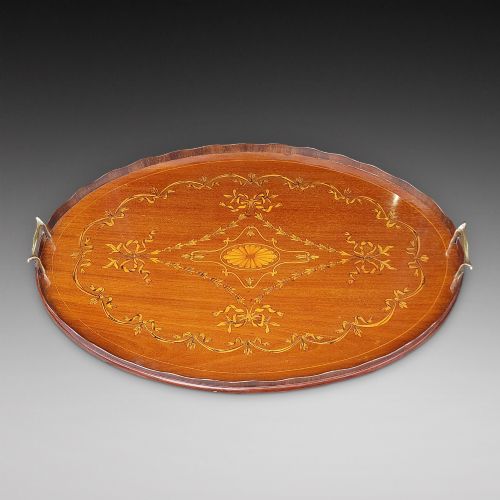
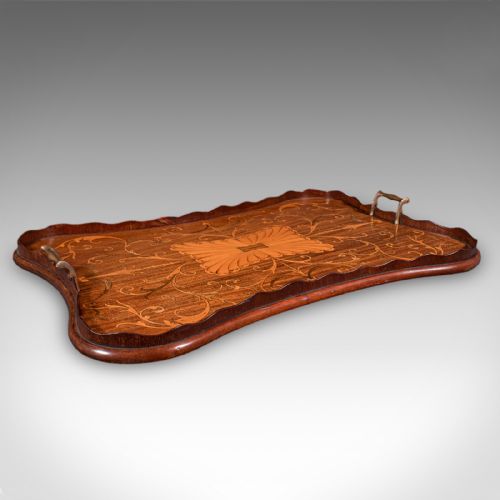
The edwardian inlaid platter search phrase leads you directly to serving trays, afternoon tea platters, and wall chargers produced across the late nineteenth and early twentieth centuries. You will most frequently encounter Edwardian and Victorian mahogany serving trays featuring contrasting wood inlays or marquetry work.
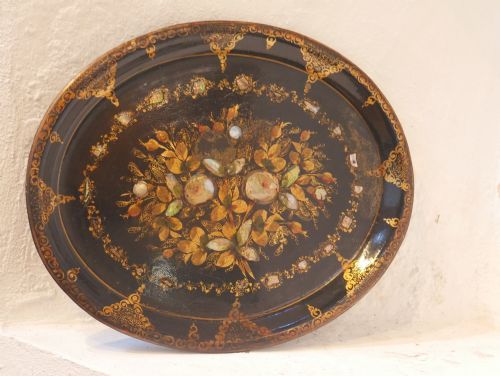
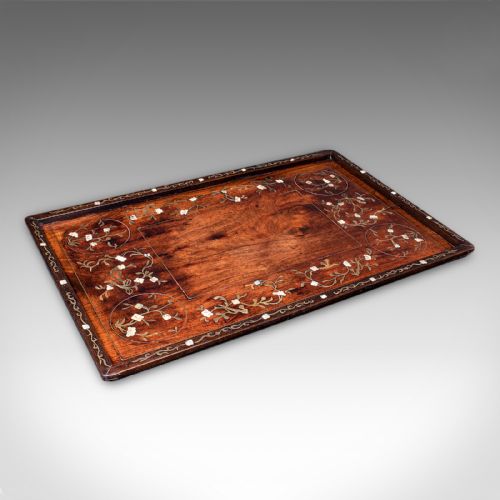
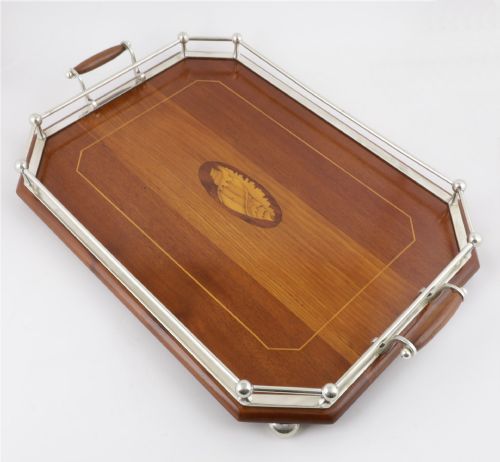
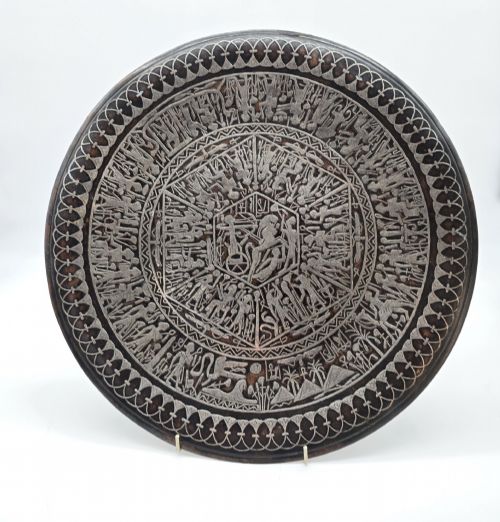
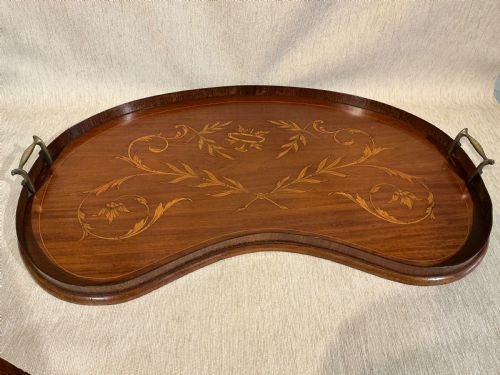
The selection ranges from kidney-shaped mahogany surfaces to octagonal silver plate and wood gallery trays with shell inlay. Some examples draw upon Sheraton, Georgian, or Egyptian revival styles alongside Anglo-Indian teak or papier-mache constructions.
Makers utilised various forms from simple afternoon tea slides to large butler's serving trays and decorative wall chargers. These objects served domestic entertaining functions before transitioning into decorative wall pieces or tabletop displays.
How they were made
Craftsmen built these pieces primarily from solid mahogany, satinwood, or teak, often incorporating contrasting wood veneers for marquetry motifs. Metal components such as brass galleries and silver-plated mounts added structural definition and raised edges to the wooden bases.
Surface decoration frequently relied on delicate shell inlay, intricate wood marquetry, and sometimes mother-of-pearl or lacquer work. Papier-mache construction appears in select Victorian items, demonstrating alternative moulding techniques from the same era.
Current listings feature materials ranging from solid mahogany, satinwood, and teak to brass, silver plate, papier-mache, lacquer, and mother-of-pearl.
What varies in quality
Quality separates through the precision of the marquetry work and the crispness of the inlay details embedded into the mahogany or satinwood ground. Pieces with finely fitted brass galleries and substantial silver-plated mounts indicate higher production standards.
The overall balance of the form, whether a kidney-shaped serving tray or an octagonal gallery tray, influences the visual weight and elegance of the design. Superior examples maintain structural integrity alongside clean, undisturbed decorative surfaces.
The Edwardian Inlaid Platter Glossary
- Marquetry
- Decorative veneer applied to a wood foundation to form intricate pictorial or geometric patterns. This technique defines the detailed imagery seen on many mahogany serving surfaces.
- Gallery tray
- A serving tray fitted with a raised pierced metal or wooden border around the perimeter. This rim prevents items from sliding off during transport.
- Satinwood
- A durable exotic hardwood known for its yellowish sheen and smooth texture. It provides a bright contrasting background for inlaid details.
- Wall charger
- A large decorative plate intended for display on a wall rather than for serving food. These pieces often feature extensive surface decoration or figural motifs.
- Papier-mache
- A composite material made from paper pulp or layers of paper bound with glue or resin. It is moulded and lacquered to create lightweight Victorian trays.
Edwardian Inlaid Platter: Frequently Asked Questions
What is an edwardian inlaid platter used for?
These pieces served primarily for afternoon tea service, carrying glassware, or transporting dishes across the home during the Victorian and Edwardian periods. Today they function equally well as functional serving trays or decorative tabletop centerpieces.
Larger wall chargers and specific tray designs also transition easily into wall-mounted decorative displays within traditional or contemporary interiors.
How do I identify an Edwardian tray?
Edwardian examples typically showcase lighter woods like satinwood or mahogany combined with refined marquetry motifs characteristic of the early twentieth century. They often reflect Georgian or Sheraton revival influences in their symmetrical layouts.
Comparing the specific wood species and inlay patterns against dated examples helps place them within the broader span of nineteenth and early twentieth century production.
Are these trays suitable for daily use?
Many of these pieces remain structurally sound for serving drinks or afternoon tea, provided they receive careful handling and gentle cleaning. Their wooden bases and inlaid details require protection from excessive moisture and heat.
Using them selectively preserves the delicate marquetry, brass galleries, and silver-plated surfaces over years of domestic enjoyment.
What materials are common in these platters?
The listings show a frequent combination of mahogany and satinwood paired with contrasting wood marquetry or shell inlay. Brass and silver-plate frequently appear as gallery rails or decorative mounts.
Alternative materials such as teak, papier-mache, and mother-of-pearl also emerge within specific Victorian and Anglo-Indian variants.