


Carved Mahogany Screen
A carved mahogany screen is a functional panel designed to block hearth heat or divide a room, bringing both period craftsmanship and practical utility to an interior.
Carved Mahogany Screen
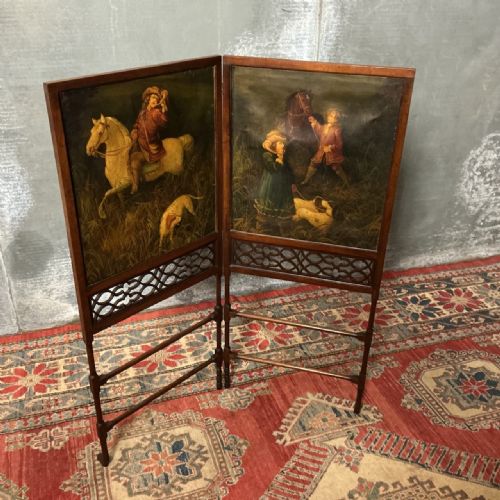
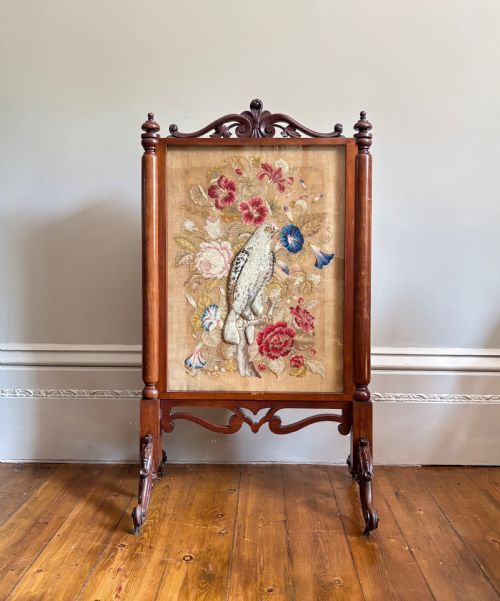
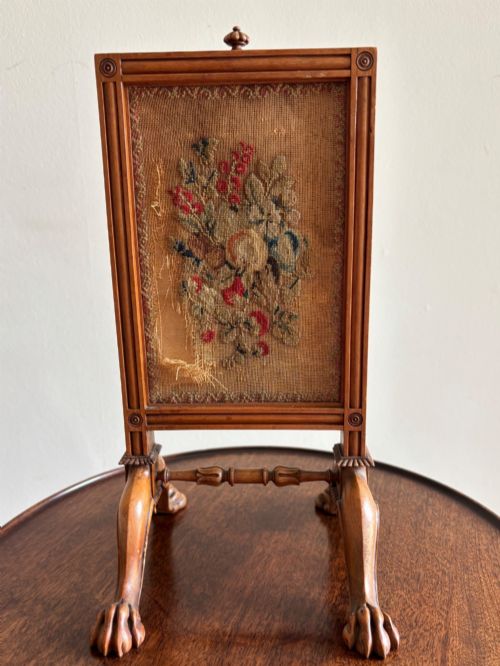
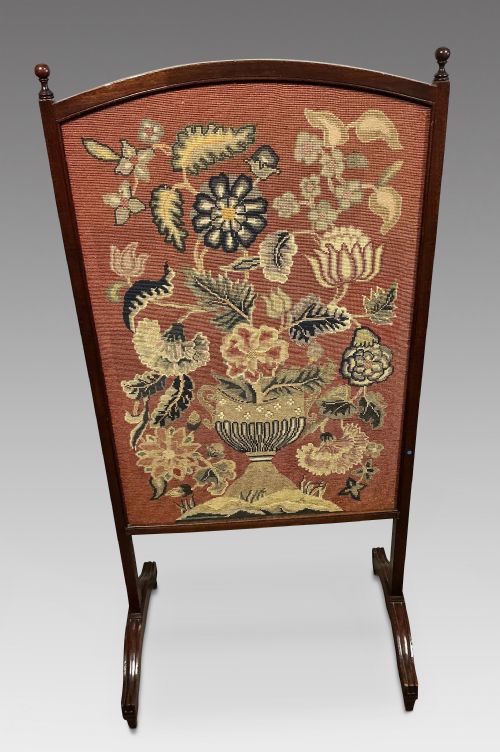
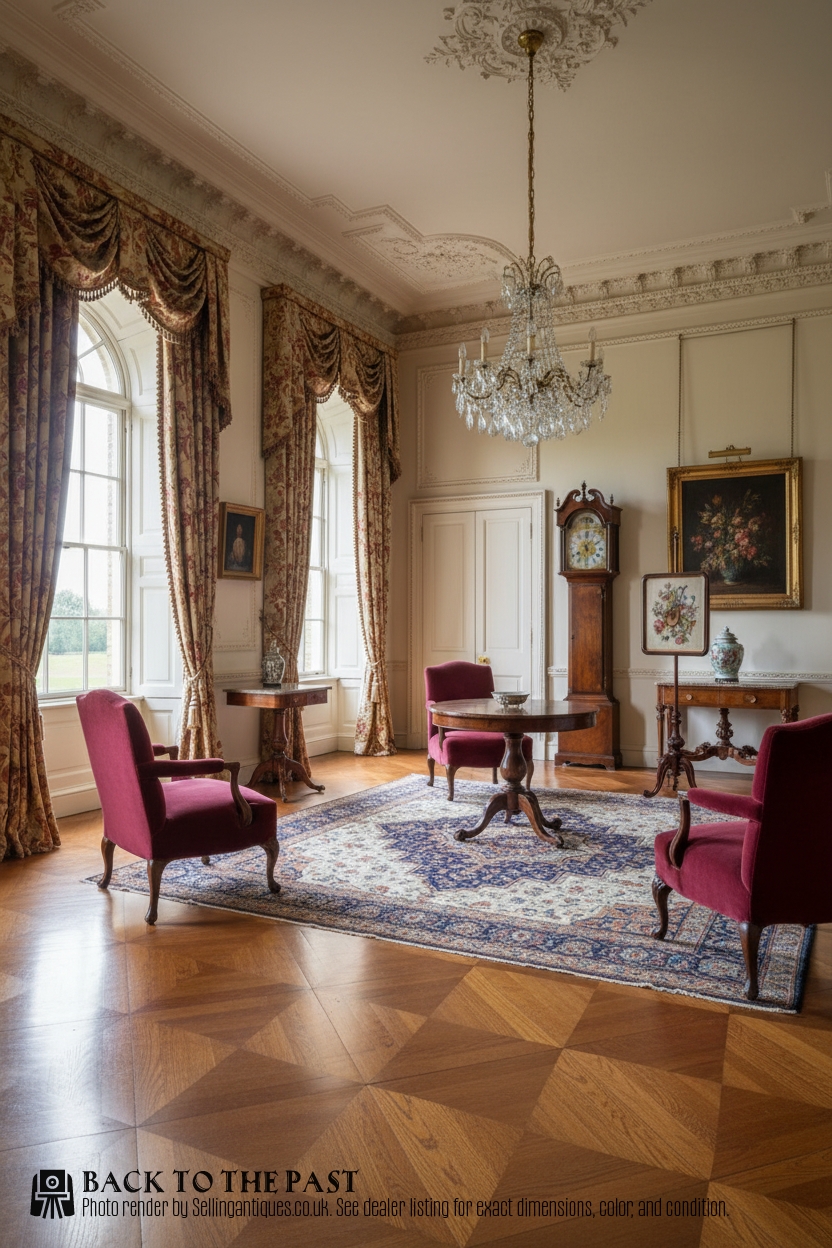
A carved mahogany screen appears in several distinct forms across this selection, primarily as firescreens, pole screens, and multi-panel room dividers. The most frequent iteration met on this page is the pole screen, featuring an adjustable vertical shaft mounted on a carved base to display an embroidered needlework panel.
Makers produced these pieces across the eighteenth and nineteenth centuries, spanning Georgian, Regency, Early Victorian, Victorian, and Edwardian periods. Examples range from compact miniature versions and single-panel fire barriers to large four-panel privacy screens and Chinese silk hand-painted frames.
The secondary function shifts from hearth protection to spatial division, seen in larger room dividers incorporating glass, bergere, canvas, or wool panels. Buyers encounter both single items and matched pairs demonstrating stylistic shifts from Chippendale influences to bobbin-turned Victorian designs.
How they were made
The primary structural timber across these pieces is mahogany, sometimes paired with rosewood for contrast, formed into sturdy stands, folding frames, and intricate turned or carved bases. Artisans shaped the wood through traditional joinery and detailed carving before mounting functional elements.
Panels integrate textile arts directly into the woodwork, utilising wool, canvas, tapestry, and needlepoint alongside hand-painted Chinese silk, oil paintings, and glass. Brass hardware often secures adjustable mechanisms on pole screens, allowing panels to slide vertically along the central shaft.
Carved Mahogany Screen Retail Price Guide 2026
Typical asking prices for carved mahogany screen among the pieces listed under this phrase on Sellingantiques today, from the lower quarter to the upper quarter. They describe what is for sale here now, not the wider market.
One unexpected nineteenth-century mahogany screen preserves the specific coat of arms for the Clan Maclellan.
What varies in quality
The distinction between tiers rests upon the execution of the woodwork and the integrity of the integrated panel. Superior examples display crisp, deeply carved wooden bases and hand-woven needlework or original oil paintings, whereas simpler items utilise plain turned supports and standard textiles.
Mechanical complexity also separates pieces, particularly in adjustable pole screens and multi-fold room dividers where the movement relies on sound engineering. The inclusion of uncommon materials like bergere or hand-painted silk elevates the refinement of the construction.
The Carved Mahogany Screen Glossary
- Pole screen
- A freestanding firescreen featuring an adjustable panel mounted on a vertical wooden pole and supported by a tripod or pedestal base. This design allowed occupants to slide the screen up or down to block heat from the fireplace.
- Needlepoint
- A form of canvas work embroidery executed with yarn using a tent stitch. It frequently forms the decorative central panel of nineteenth-century firescreens.
- Bergere
- A type of enclosed upholstered armchair or, in this context, a panel filled with woven cane webbing. It provides a lightweight, textured insert within a wooden frame.
- Bobbin turned
- A method of woodturning that creates a series of rounded, spool-like shapes along the length of a support or leg. This decorative turning style is characteristic of certain Victorian items.
- Chippendale
- A style of eighteenth-century English furniture design known for ornate carving and balanced proportions. Pieces reflecting this influence often incorporate elaborate woodwork on the screen frame or base.
Carved Mahogany Screen: Frequently Asked Questions
What is a pole screen used for?
A pole screen served to protect a person's face from the intense radiant heat of an open coal fire. The adjustable panel could be raised or angled as needed.
In modern rooms, they function primarily as decorative antique furnishings that display period needlework or oil paintings.
How do I tell a pole screen from a standard firescreen?
A pole screen mounts its display panel on a central vertical shaft supported by a floor-standing base, allowing height adjustment.
A standard firescreen uses a fixed, flat frame resting directly on feet or a low hearth support without a central pole.
What periods do these screens come from?
The pieces span the eighteenth, nineteenth, and early twentieth centuries, covering Georgian, Regency, William IV, Victorian, and Edwardian eras.
Stylistic markers range from eighteenth-century Chippendale carvings to mid-nineteenth-century bobbin-turned supports and Edwardian constructions.
How do I care for the needlework panels?
Keep textile panels out of direct sunlight to prevent the wool and canvas threads from fading over time. Regular gentle dusting helps maintain the fabric without disturbing the historical fibres.
Avoid placing them too close to active heat sources or in damp environments to preserve the mahogany frame and the aged textile.