
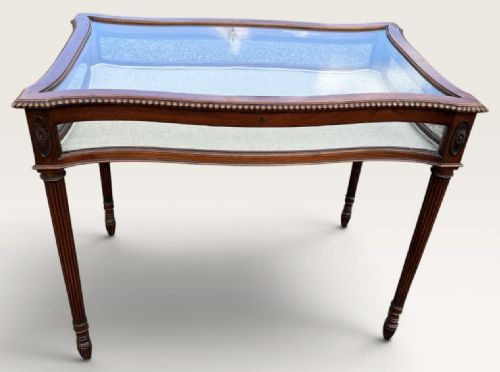
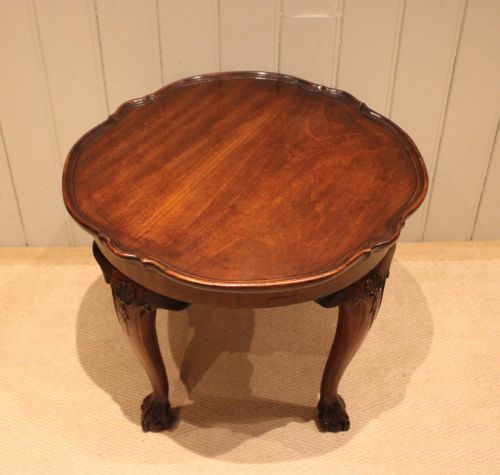
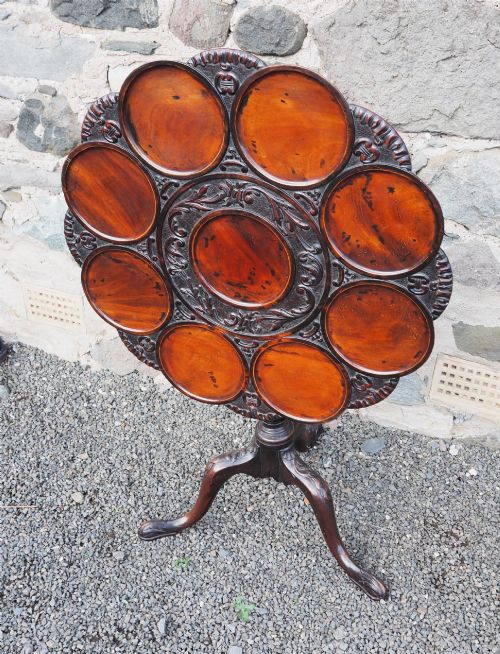
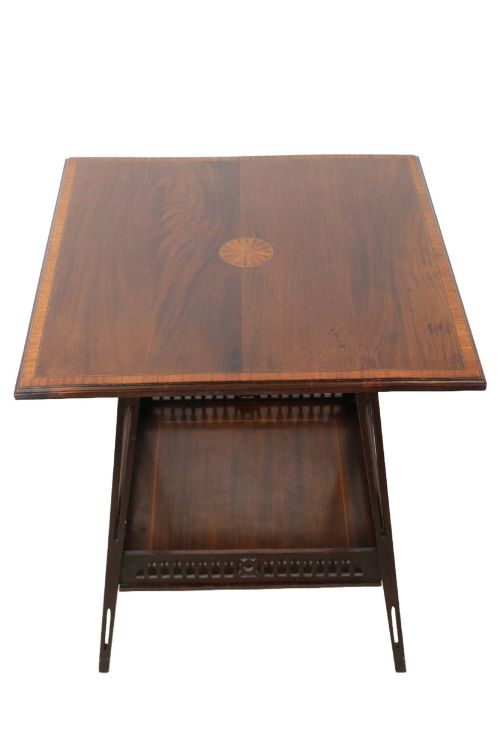

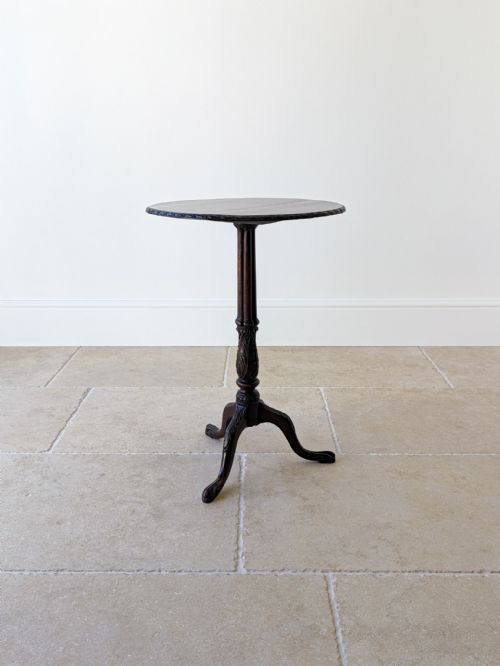
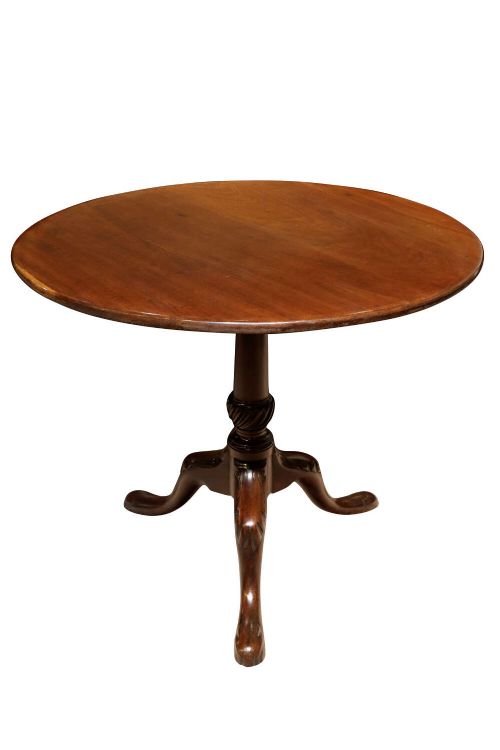
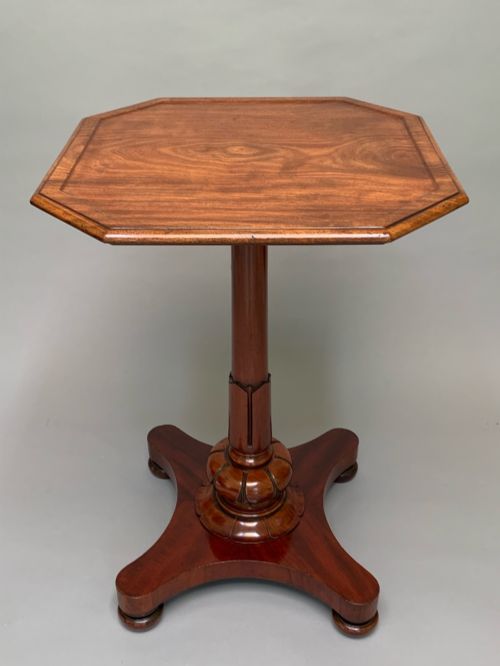
Carved Mahogany Occasional Table
A carved mahogany occasional table brings centuries of British joinery into a room as a compact, decorative surface.
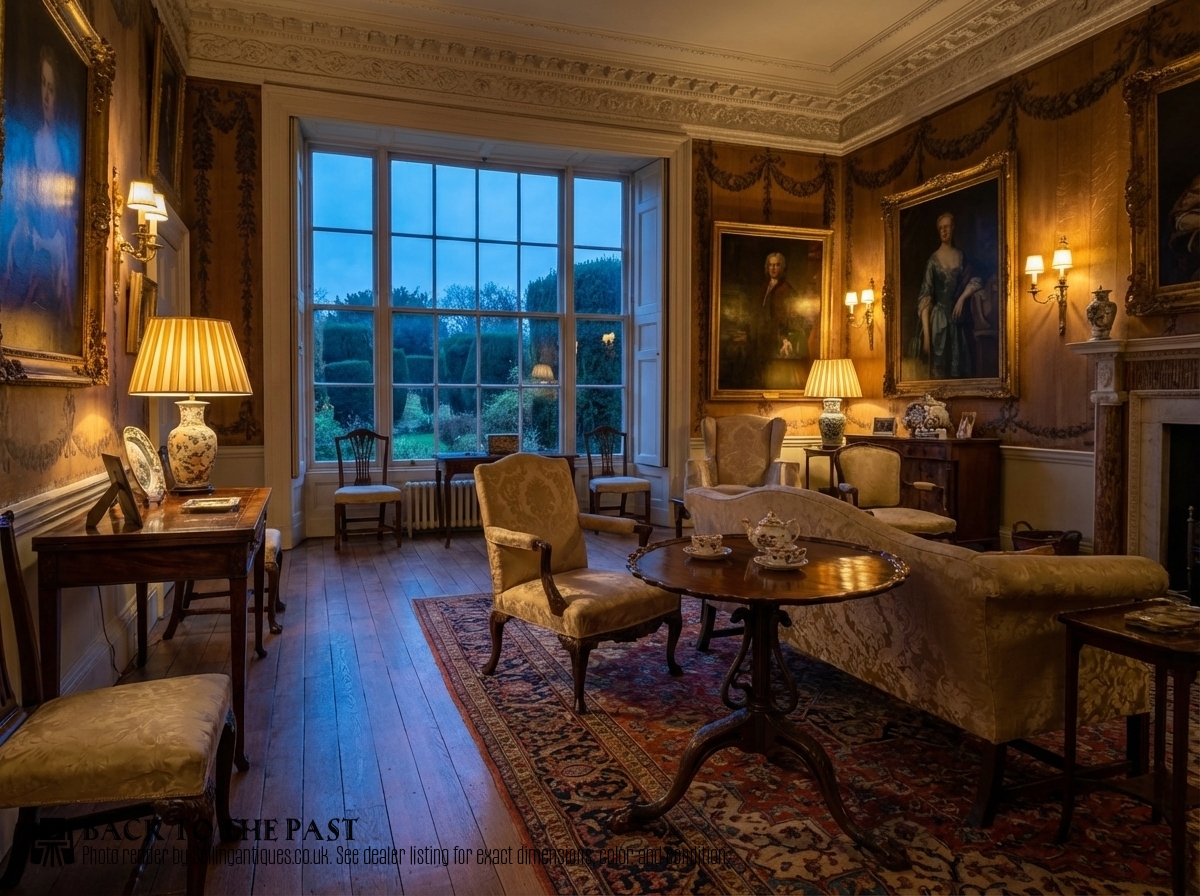
Carved Mahogany Occasional Table
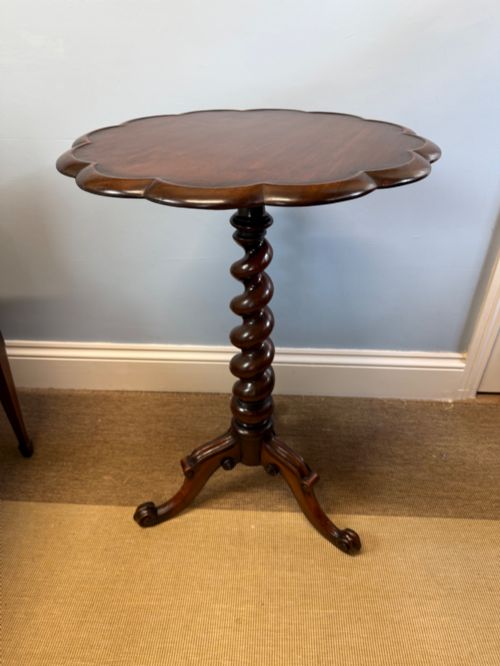
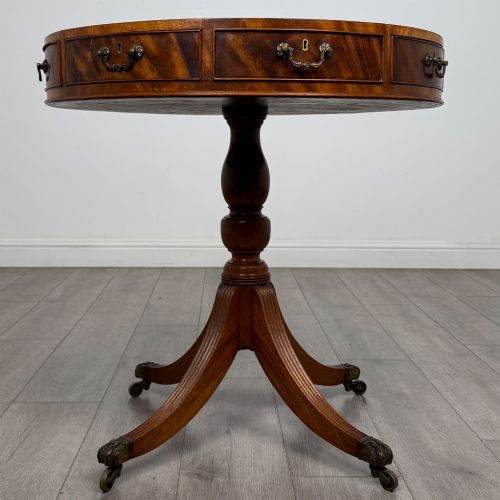
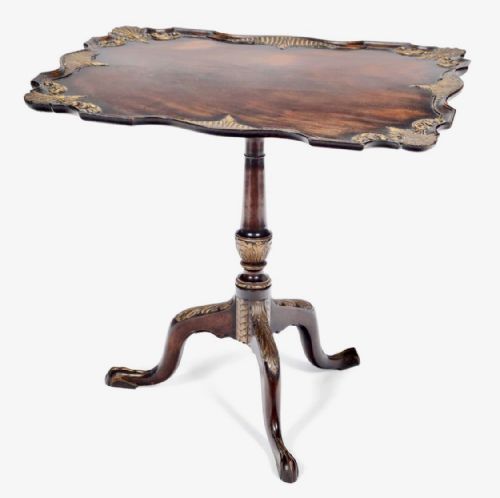
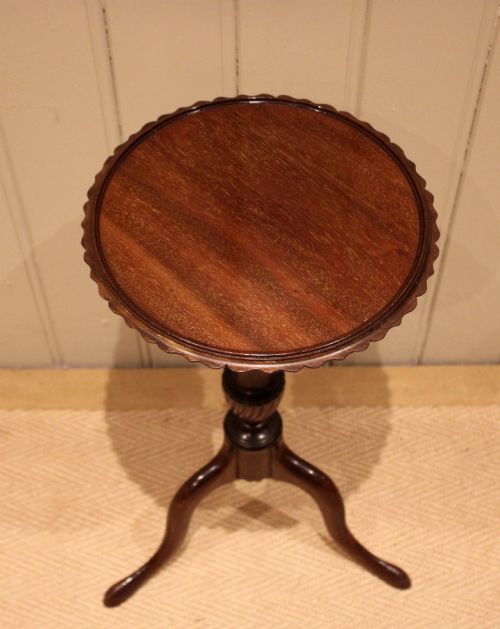
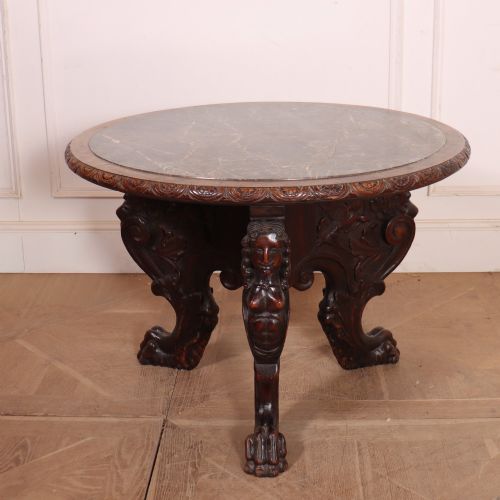
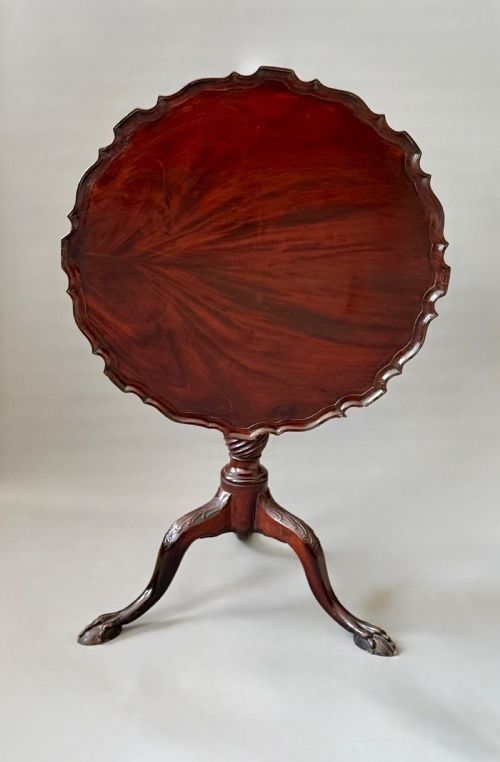
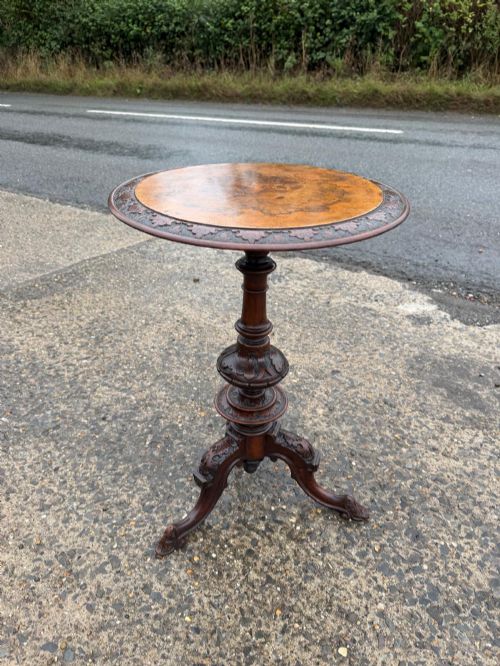
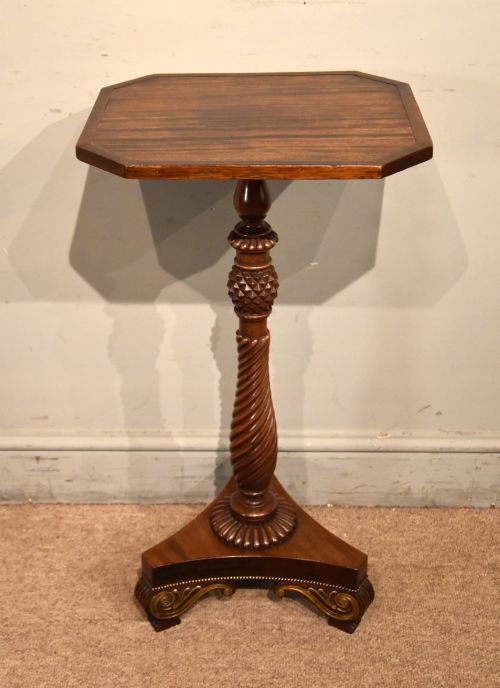
When you search for a carved mahogany occasional table, you encounter small, movable surfaces designed for drinks, lamps, or display rather than formal dining. The pieces seen across these listings span the eighteenth, nineteenth, and twentieth centuries, taking the form of wine tables, tripod tables with tilt tops, drum tables, and octagonal pedestal forms. Edwardian interpretations and revival styles such as Chippendale and Regency appear frequently, reflecting both original period production and later adaptations of earlier designs.
The materials used extend beyond primary timbers, incorporating brass, marble, walnut, satinwood, and parcel gilt accents alongside the dominant mahogany. Forms vary from simple lamp tables with circular tops to elaborate supper tables featuring pie crust edges and carved tripod legs. These smaller pieces served specific functions in domestic interiors, allowing homeowners to move surfaces as light and social habits required.
How they were made
Joiners and cabinet makers constructed these tables using solid timber and veneers of mahogany, often selecting dense boards that took a deep polish. Turning lathes shaped central pedestals and tripod columns, while hand-carving produced decorative details on knees, legs, and table rims. Mechanisms such as birdcage actions and tilt-top pivots utilised brass hinges, catches, and pivot pins to allow tops to fold away when not in use.
Surfaces sometimes incorporated secondary timbers like walnut or satinwood for inlay work, and occasionally supported inset marble slabs for Gueridon styles. Fine carving on tripod legs and raised borders required skilled hand chiselling, distinguishing workshop production from simpler turned examples.
Carved Mahogany Occasional Table Retail Price Guide 2026
Typical asking prices for carved mahogany occasional table among the pieces listed under this phrase on Sellingantiques today, from the lower quarter to the upper quarter. They describe what is for sale here now, not the wider market.
Some tilt tops fold flat like giant wooden pancakes, proving our ancestors understood the art of hiding furniture when the room got too crowded.
What varies in quality
Quality rests in the crispness of the hand-carving and the choice of mahogany timber, where well-figured grain and rich patination elevate an ordinary frame. The integrity of mechanical joints, such as the tilt-top mechanism or birdcage action, separates sturdy daily-use tables from loose or poorly repaired examples.
Proportion and balance also define superior pieces, particularly in tripod tables where the span of the legs must support the weight of the top securely. The precision of inlaid details, mouldings, and the original retention of hardware like brass fittings further distinguish top-tier examples from utilitarian workshop output.
Trevor Page & Co·Gillow
The Carved Mahogany Occasional Table Glossary
- Tripod table
- A small freestanding table supported by a central pillar resting on three legs. These versatile tables often featured tilt-top mechanisms for storage.
- Tilt top
- A hinged table top that rotates to a vertical position when not in use. This mechanism saved floor space in smaller eighteenth and nineteenth-century rooms.
- Pie crust edge
- A raised, carved moulding along the perimeter of a circular table top resembling pastry work. This decorative flourish required careful hand shaping by the cabinet maker.
- Gueridon
- A small ornamental stand or table, frequently featuring a marble top. French in origin, these tables often served as lamp or display surfaces.
- Birdcage
- A wooden framework beneath a tilt top that allows the surface to both rotate and pivot. This complex mechanism appeared on finer eighteenth and nineteenth-century occasional tables.
Carved Mahogany Occasional Table: Frequently Asked Questions
What is a tilt top table used for?
A tilt top table served as a versatile movable surface that could be tucked against a wall when not needed. Homeowners tipped the surface vertical to save space in crowded drawing rooms.
By day or evening, the table moved easily beside chairs for holding books, lamps, or tea service before being folded away.
How do I tell an 18th century table from a revival piece?
Eighteenth century originals show construction methods appropriate to the period, including hand-cut dovetails, shrinkage patterns in the timber, and authentic wear around pivot points. Revival pieces made during the Edwardian era often use standardised machine-swn fixings and cleaner, less variable timber.
Examining the underside of the top and the peg joints reveals whether the timber has aged naturally over centuries or dates to a later nineteenth or twentieth-century revival workshop.
What is a birdcage mechanism?
A birdcage mechanism is a small wooden cage structure built beneath the table top that lets the surface both tilt and rotate independently. This ingenious assembly used turned wooden columns and a central pivot pin.
Found on finer tripod tables, it provided extra stability and convenience for users who wished to adjust the angle of the surface.
Where should I place an occasional table at home?
An occasional table suits small spaces beside armchairs, sofas, or in corners requiring a lamp or display surface. Because many examples feature tripod bases, they fit neatly into awkward angles where four-legged tables cannot go.
Keep them away from direct heat sources and strong sunlight to protect the polished mahogany finish and prevent timber splitting.