
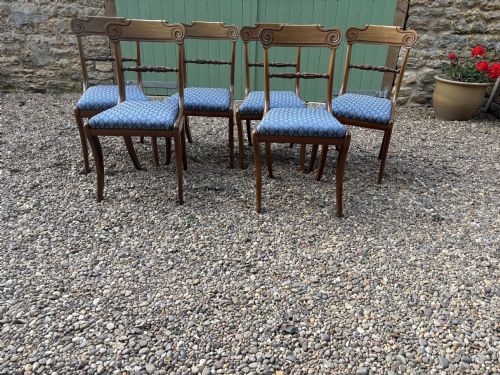
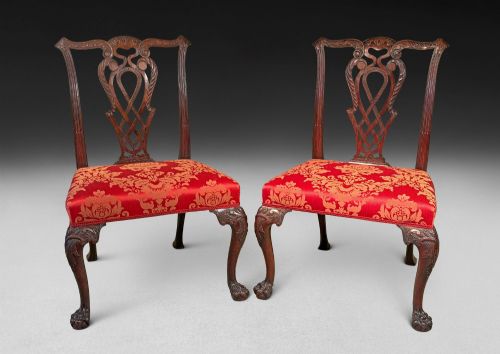
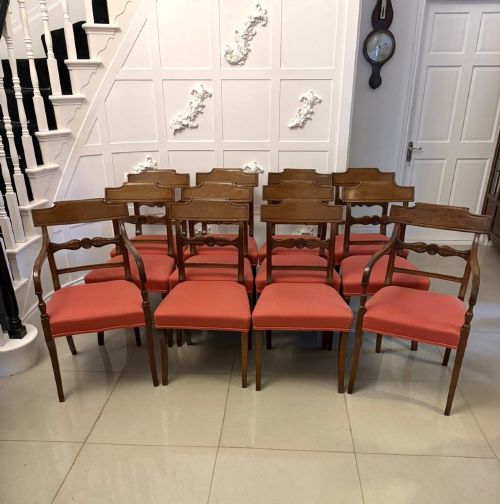
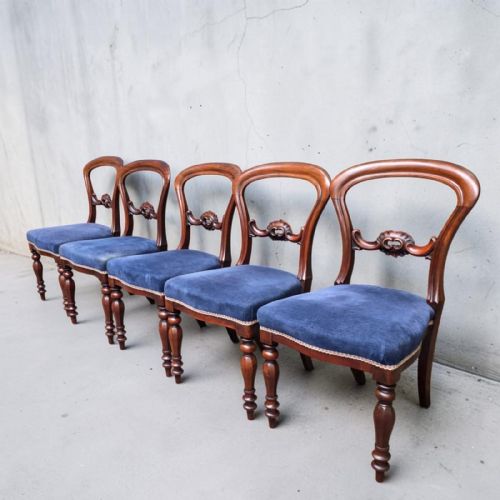
Carved Mahogany Dining Seating
Carved mahogany dining seating brings together robust tropical timber and sculptural detail, forming the foundation of period dining rooms.
Carved Mahogany Dining Seating
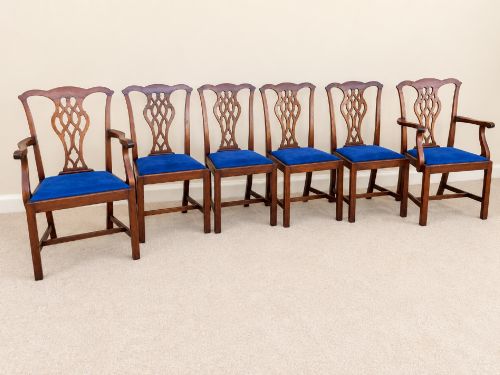
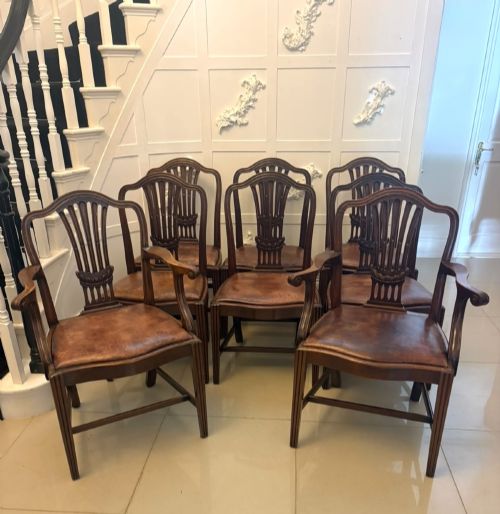
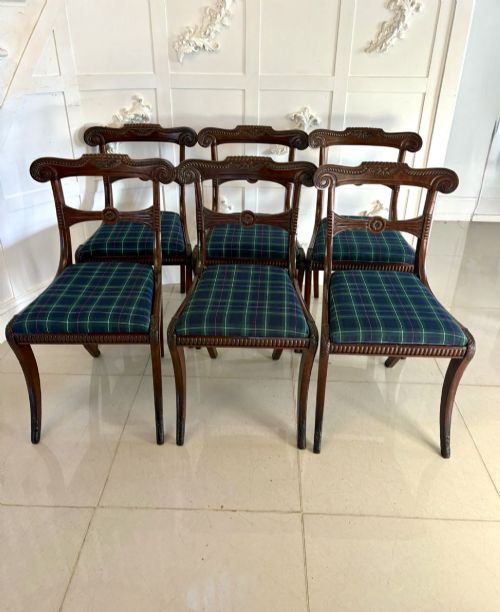
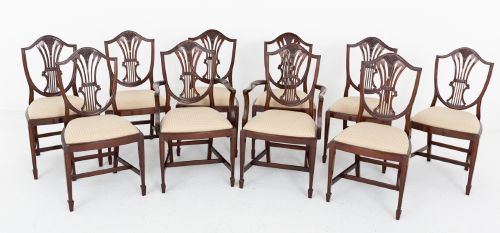
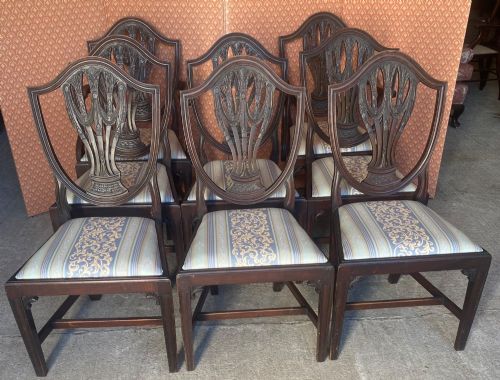
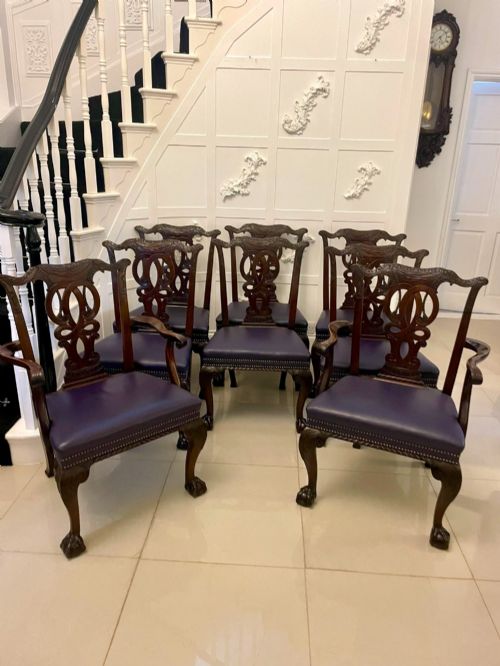
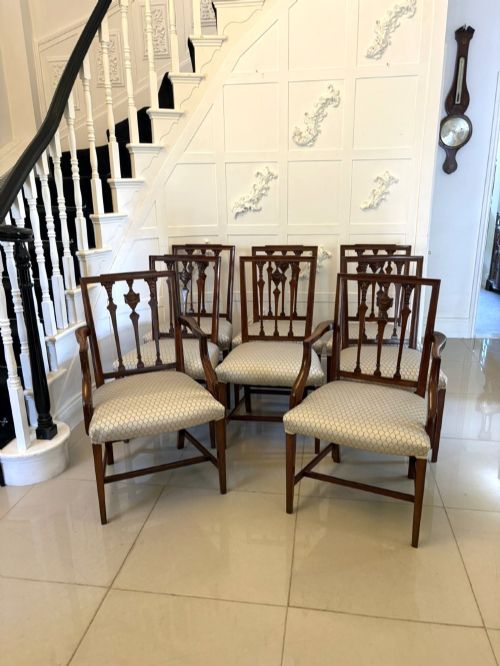
Carved mahogany dining seating covers a broad range of chairs designed for formal dining rooms, appearing most frequently in matched sets from the eighteenth and nineteenth centuries. The selection spans single dining chairs, carvers, armchairs, and hall chairs produced across Georgian, Regency, and Victorian periods.
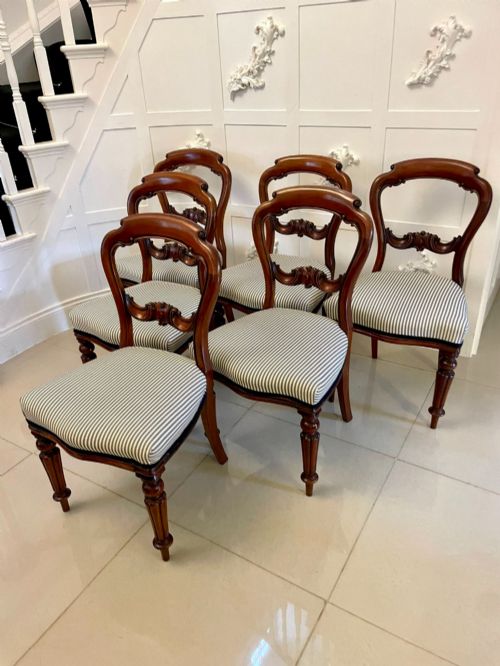
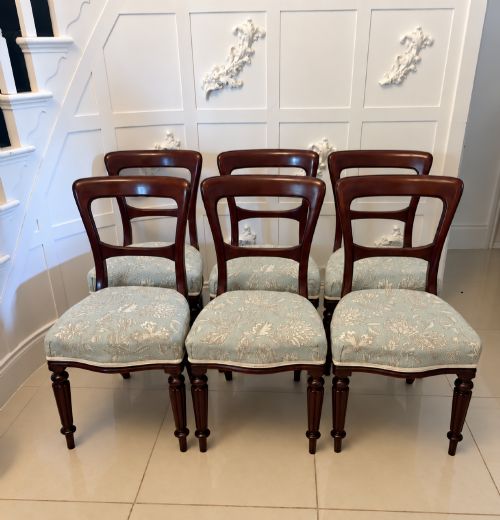
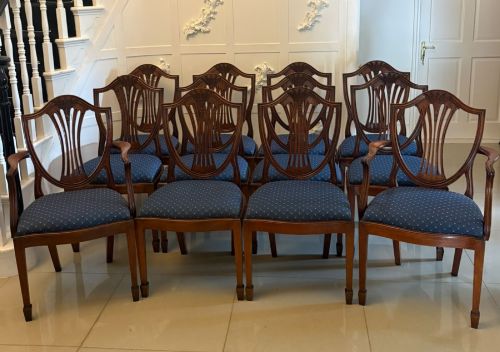
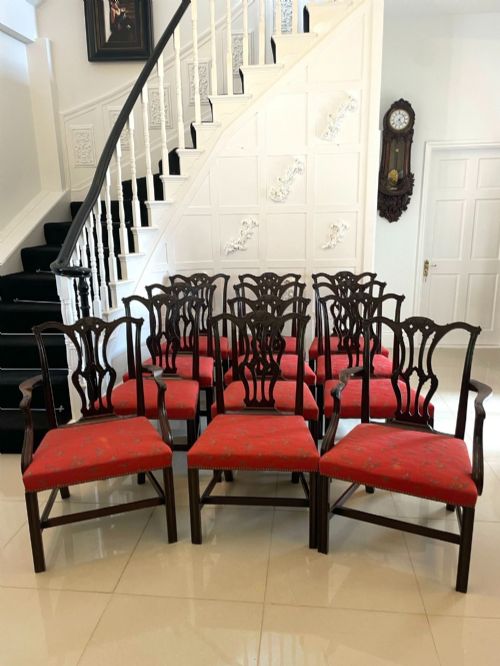
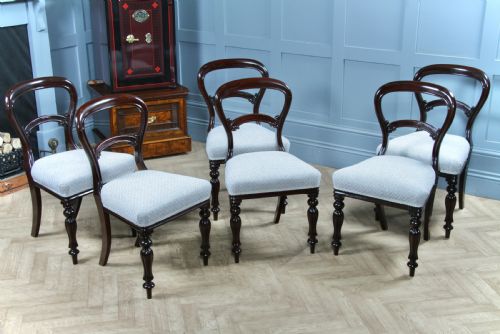
Buyers encounter numerous larger suites alongside pairs and individual pieces, executed in styles that reference Chippendale, Hepplewhite, and William IV designs. These forms range from shield backs and ladder backs to balloon backs and bar backs, utilising native and Cuban varieties of the timber.
The objects serve both functional dining purposes and decorative roles within reception spaces, drawing on regional British, Scottish, Irish, and Dutch traditions. Surviving examples demonstrate how domestic seating evolved from geometric eighteenth-century forms toward more curvilinear Victorian interpretations.
Materials and construction methods
Makers relied primarily on solid mahogany, known for its dense grain and structural stability, which permitted intricate hand-carving without splitting. Secondary timbers provided internal framing support, while seating surfaces received padding covered in leather, velvet, or woven upholstery fabrics.
Decoration often incorporated brass inlay, turned woodwork, and applied mouldings alongside deep relief carving on splats, rails, and front legs. Joinery techniques combined traditional mortise and tenon frames with pinned joints to withstand regular use around the dining table.
Object forms recorded across the inventory include standard dining chairs, open armchairs, library chairs, hall chairs, and matched carver pairs.
Distinctions in execution and preservation
Quality rests upon the crispness of the hand-carved ornament and the natural figure of the mahogany timber selected by the cabinetmaker. Superior sets display uniform grain matching across multiple chairs, balanced proportions, and substantial weight indicating dense heartwood.
The integrity of the original frame construction and the survival of untouched surfaces differentiate standard commercial production from exhibition-grade work. Original leather or period textile coverings and minimal timber replacement further distinguish superior examples from heavily restored sets.
Gillows·Warings·Maple and Co
The Carved Mahogany Dining Seating Glossary
- Mahogany
- A durable tropical hardwood valued for its rich reddish-brown colour and stability under intricate hand-carving. It serves as the primary structural and decorative material across these dining chairs.
- Carver
- An armchair designed with elbow supports, typically produced as part of a larger dining suite to sit at the head of the table. These often mirror the decorative style of the matching side chairs.
- Shield back
- A chair back design shaped in the outline of a heraldic shield, popularised during the eighteenth century. The central splat is frequently pierced and carved with floral or feather motifs.
- Balloon back
- An oval or rounded upholstered backrest configuration characteristic of Victorian seating forms. This design offers ergonomic support while presenting a continuous curved wooden outline.
- Bar back
- A horizontal wooden splat crossing the uprights of a chair back, often reeded or moulded. This form appears frequently in Regency and William IV dining suites.
Carved Mahogany Dining Seating: Frequently Asked Questions
How do I care for mahogany dining chairs?
Maintain stable indoor humidity levels and keep wooden surfaces away from direct heat sources to prevent timber shrinkage or splitting. Clean periodically with a dry, soft cloth and avoid chemical polishes that build up residue over time.
Inspect structural joints regularly for movement and protect leather or fabric upholstery using appropriate specialist conditioning methods. Professional conservation avoids aggressive interventions that might compromise original finishes.
Can I mix different chair styles around one table?
Mixing distinct styles, such as pairing carvers from one era with side chairs from another, reflects historical furnishing practices. Many domestic interiors evolved organically by gathering pieces over generations rather than purchasing uniform sets.
Ensure seat heights and arm clearances align correctly with your dining table dimensions to maintain comfortable seating positions. Consistency in timber tone or period can help unify disparate seating choices.
What is the difference between a side chair and a hall chair?
Side chairs are built with upholstered seats and designed specifically for comfort during long periods around the dining table. Their construction prioritises ergonomic support and complementary proportions for seated company.
Hall chairs feature solid wood seats and rigid upright backs intended for occasional use in entranceways or reception spaces. They frequently display prominent carved crests or painted family insignia rather than padded comfort.
How do I identify Regency features on dining chairs?
Regency seating often incorporates classical motifs inspired by ancient Greek and Roman design, such as saber legs and carved scrollwork. Brass inlay and reeded woodwork frequently accent the structural frames of this period.
The timber selection tends towards dark Cuban mahogany with pronounced grain patterns, reflecting the prevailing neoclassical aesthetic of the early nineteenth century. Proportions remain clean and architectural, moving away from heavy rococo ornamentation.