


Regency Wooden Seaters
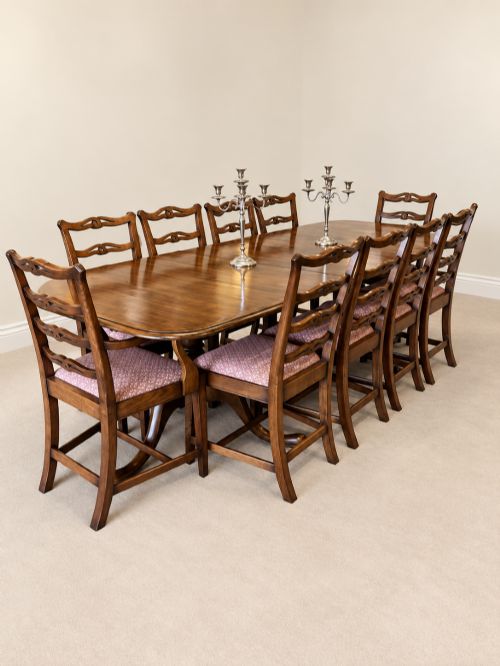
Regency wooden seaters bring grand mahogany dining tables and matched chairs together to anchor a proper room.
Regency Wooden Seaters
When you search for regency wooden seaters, you are looking at substantial dining tables and sets of chairs built to accommodate gatherings from four to sixteen people.
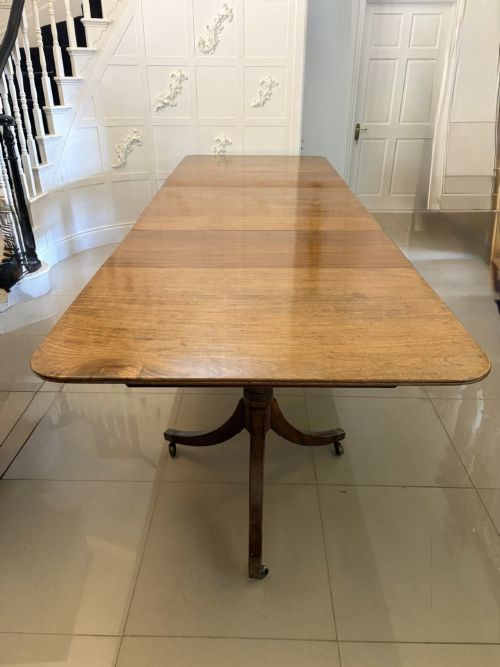
The version you are most likely to meet on this page is a mahogany dining table, spanning pillar and pedestal designs alongside extending formats.
These pieces draw on periods including George III, the Regency era, and William IV, originating from 1800 through the nineteenth century into 1920.
Materials and construction
Makers built these dining tables and chairs predominantly from figured mahogany, selected for deep grain patterns across large surfaces.
Workshops integrated brass elements and ceramic components into the structures, alongside fitted upholstery fabric for the seating.
Extending mechanisms and multiple pillar supports allowed tables to expand safely while maintaining stability for large seaters.
Distinctions in quality
The top of the range demonstrates superior figured mahogany selection, where rich grain patterns flow consistently across extended leaves and table tops.
Construction intricacy separates standard forms from finer examples, seen in multiple pillars and reeded legs that demand advanced joinery.
Scale dictates capability, distinguishing tables built for four to six seats from massive fourteen and sixteen seater dining formats.
The Regency Wooden Seaters Glossary
- Mahogany
- A dense tropical hardwood prized for rich brown tones and durable figure, used extensively for framing and tabletops. It takes a high polish and resists warping under daily use.
- Pillar
- A central vertical support column beneath a table top, often multiplying into twin or triple configurations for larger dining formats. These columns distribute weight across heavy mahogany leaves.
- Reeded
- A decorative moulding carved into wooden legs or frames with parallel convex strips resembling bundled reeds. This technique adds texture and refined lines to furniture edges.
- Extending
- A mechanical property allowing tables to separate and accept internal leaves to increase seating capacity. This system adapts a moderate dining surface into a large seater.
Regency Wooden Seaters: Frequently Asked Questions
What periods do these pieces span?
The selection covers items from 1800, George III, the Regency period, and William IV, stretching into the nineteenth century and 1920.
These varied production dates reflect enduring classic designs that remained popular long after the initial Regency fashion peaked.
How many people do they seat?
Capacities range widely, from compact four to six seat tables up to grand fourteen and sixteen seater dining formats.
Triple pedestal and extending tables provide the flexibility needed to accommodate large dinner parties comfortably.
What materials are used?
Figured mahogany forms the primary body of these tables and chairs, providing strength and strong visual grain.
Additional components include brass fittings, ceramic elements, and upholstery fabric utilised on chairs.
Are chairs included with tables?
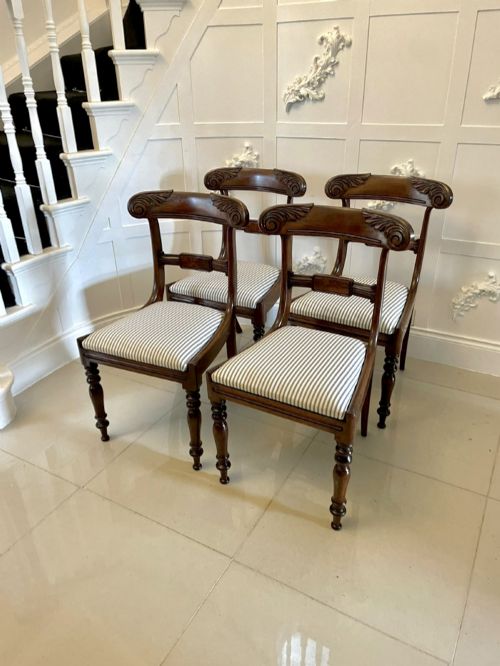
Listings feature both individual dining tables and matched sets of dining chairs designed for these settings.
Combining table and chairs creates a unified dining arrangement rooted in nineteenth-century craftsmanship.