
Carved Mahogany Chest Drawers
These carved mahogany chest drawers bring solid timber, rich grain and substantial storage into a room.
What carved mahogany chest drawers are
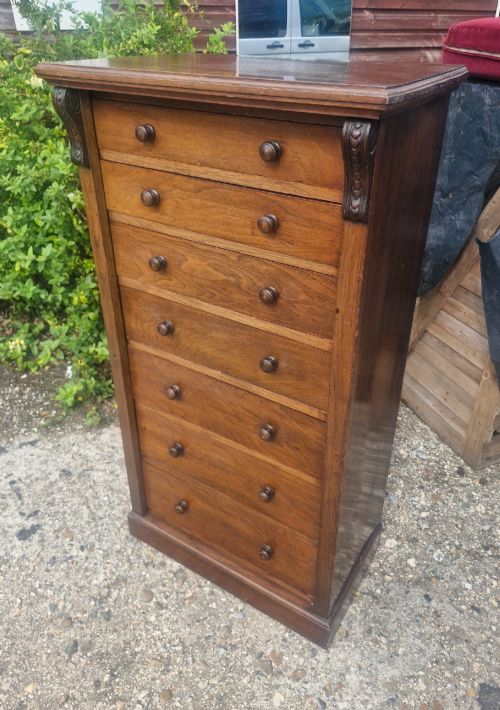
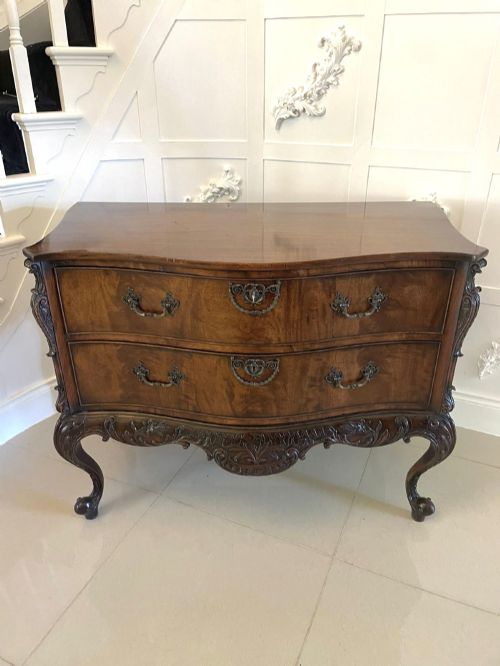
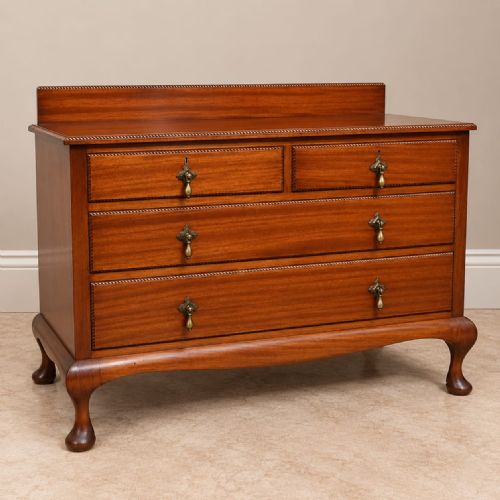
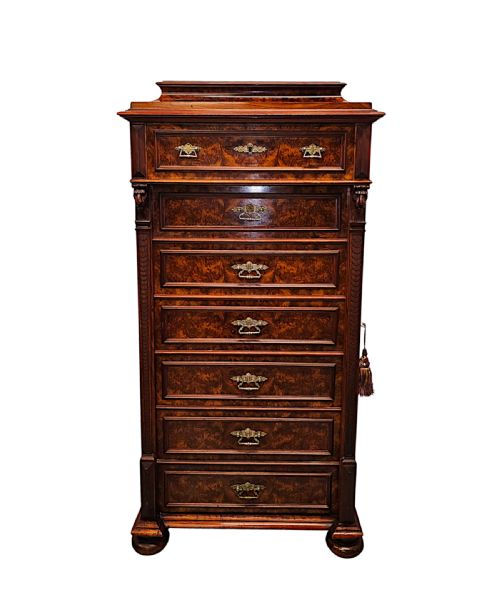
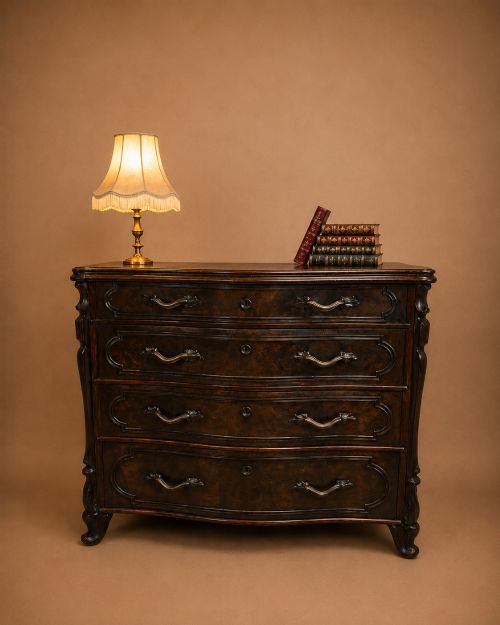
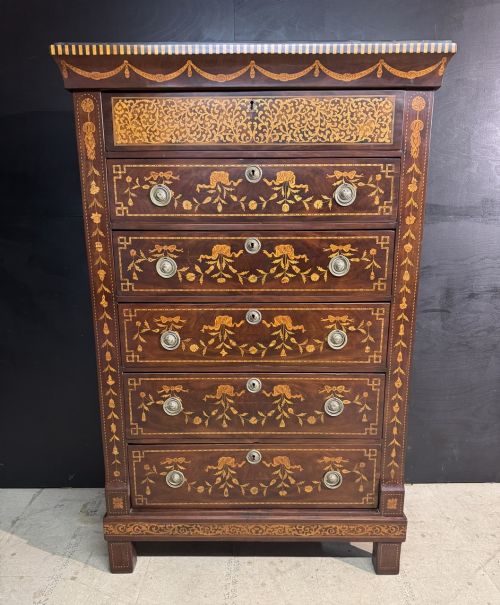
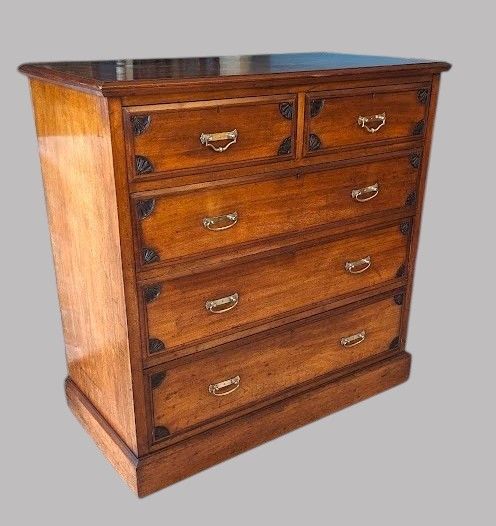
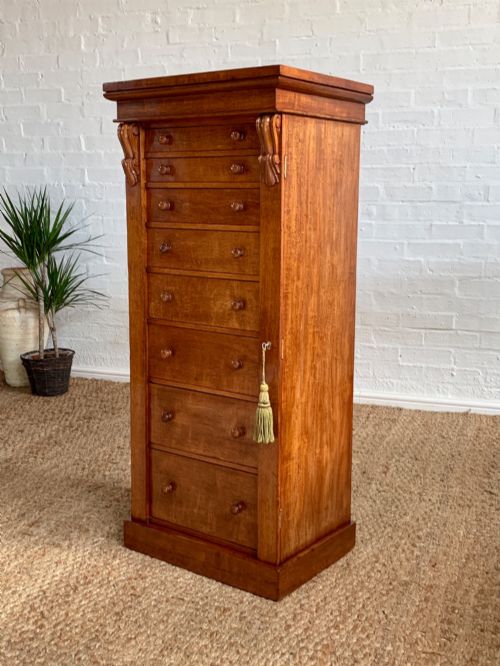
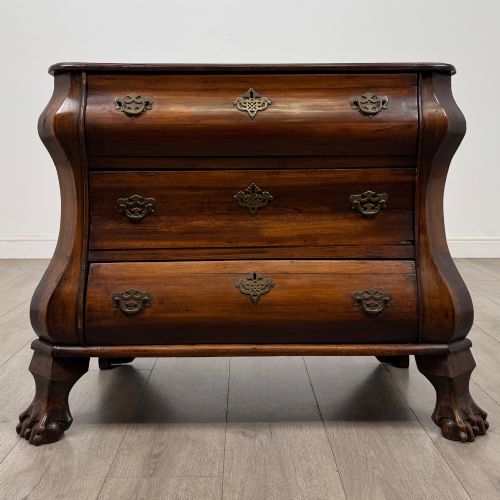
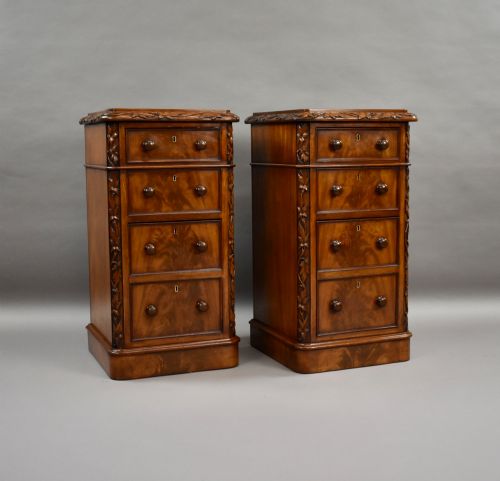
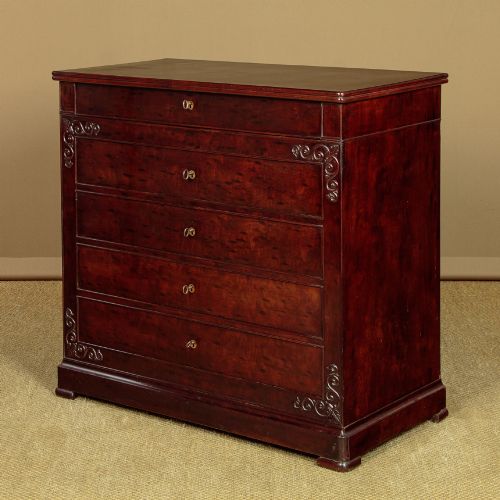
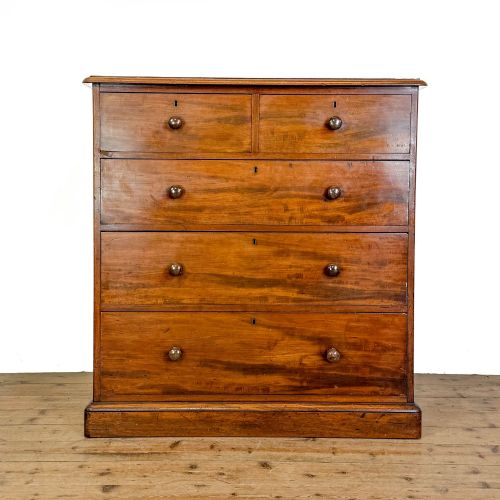
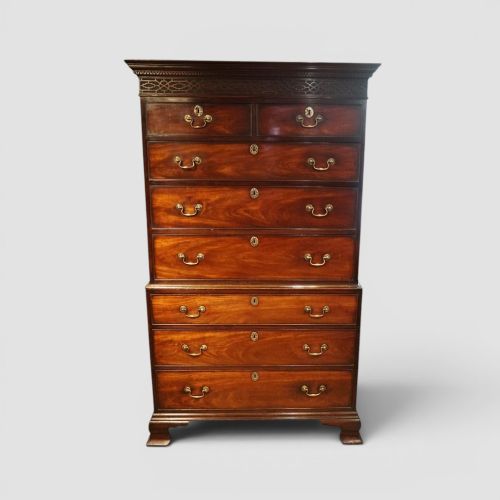
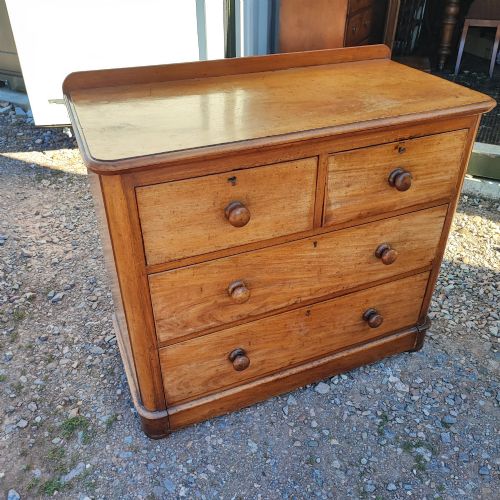
A carved mahogany chest drawers provides heavy timber storage for domestic spaces, appearing in forms such as tall chests, serpentine shapes, bow fronts, dressing chests, and gentleman's cupboards. These pieces arrive from periods spanning the Georgian era, the Regency era, and the Victorian era, alongside Edwardian revivals and Swedish designs.
Buyers encounter standard chests of drawers alongside specialised variants featuring marble tops, integrated cupboards, or dressing mirrors. The stylistic language shifts from restrained George II lines to elaborate Chippendale and Georgian revivals, with occasional Portuguese or Swedish regional interpretations.
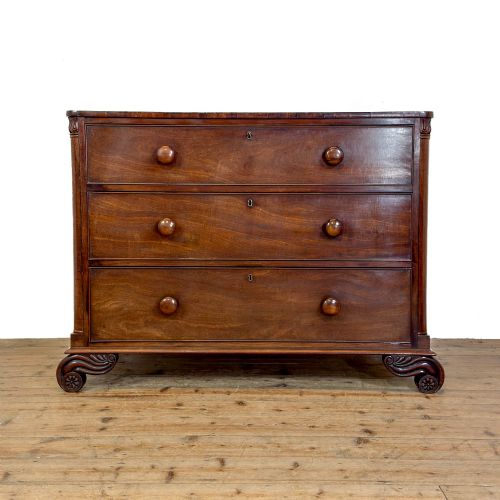
Most examples rely on dense tropical hardwoods shaped with carved details, decorative handles, and serpentine or bow-fronted facades. The surviving stock balances utilitarian function with cabinetmaking skill, offering various drawer configurations from deep tallboy formats to compact dressing units.
How they were made
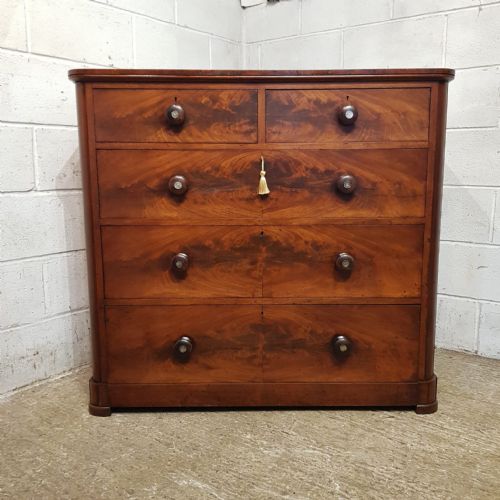
Makers built these pieces using solid mahogany, oak for secondary framing, and figured, flame, or plain mahogany veneers applied over stable timber bases. Workshops selected boards for their grain patterns, using figured and flame veneers on primary visible surfaces while retaining sturdy woods for internal drawer carcases.
Construction involved traditional joinery techniques paired with decorative carving applied directly to solid mouldings, drawer handles, and bracket feet or aprons. Brass hardware, glass elements, and occasional marble tops completed the structures, reflecting both British cabinetmaking traditions and continental workshop methods.
Retail Price Guide 2026
Typical UK retail prices for carved mahogany chest drawers, calculated from the Sellingantiques database of over a million retail prices indexed since 2003. This retail price guide relies exclusively on Sellingantiques data; no external sources or auction records are used, so the figures do not describe the wider market.
One unexpected survivor wears decorative carved handles that prove even a humble drawer pull deserves a little flourish.
What varies in quality
Quality rests in the selection of the timber, where vibrant flame and figured mahogany veneers display superior depth compared to plain or uniform boards. The crispness of the carving and the precision of the serpentine or bow-fronted shaping distinguish workshop output.
Internal construction and secondary woods signal the standard of the build, with oak-lined drawers and seamless veneer application marking the upper tier. Period authenticity in the handles, locks, and structural joints further separates standard production from exceptional cabinetwork.
Maple and Co·Waring and Gillow
The Carved Mahogany Chest Drawers Glossary
- Serpentine
- A front shape curving outward at the sides and inward at the centre. This undulating profile requires skilled carpentry to shape the solid timber and veneer.
- Bow front
- A convex curved front projecting outward in an arc. This form softens the rectangular outline of the furniture.
- Flame mahogany
- A veneer displaying distinct, flickering flame-like grain patterns. Cabinetmakers prized this cut for its dramatic visual movement.
- Commode
- A decorative chest of drawers or cabinet. The term often describes continental pieces, such as Portuguese marble-topped variants.
- Bracket foot
- A simple structural foot supporting the corners of a case piece. These feet take various moulded or ogee profiles.
Frequently Asked Questions
How do I identify a gentleman's chest?
A gentleman's chest typically combines drawer storage with enclosed cupboard space behind panelled doors. These pieces were designed to hold folded garments and accessories.
They appear in nineteenth-century workshops as multifunctional bedroom furniture.
Where were these chests made?
These chests originate primarily from British workshops, though Swedish and Portuguese pieces also appear in the record. Regional cabinetmakers adapted local tastes using imported mahogany timber.
British makers dominated the Georgian and Victorian stylistic revivals.
What is flame mahogany?
Flame mahogany is a sliced veneer showing a dramatic, flickering grain pattern resembling tongues of flame. Timber merchants cut this from specific sections of the mahogany log where branches met the trunk.
Cabinetmakers reserved these striking veneers for the primary visible surfaces of high-status furniture.