
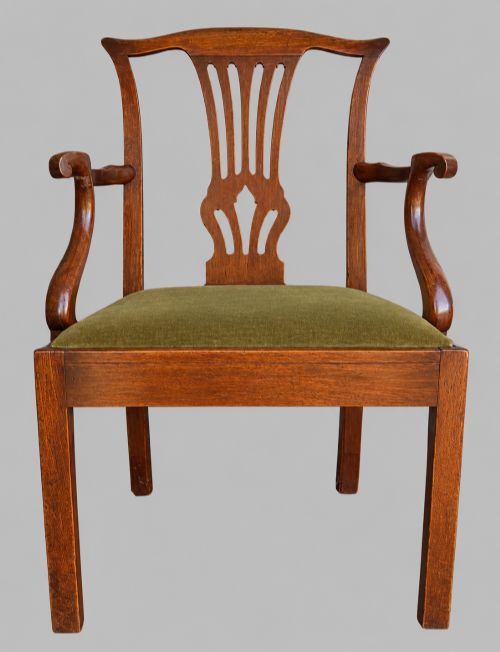
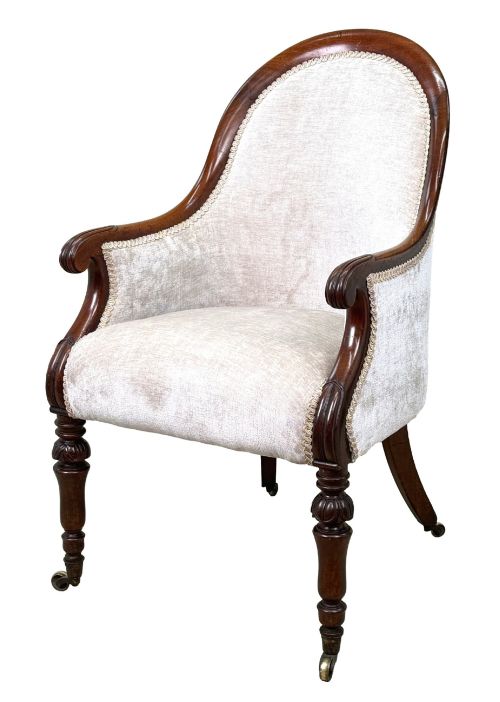
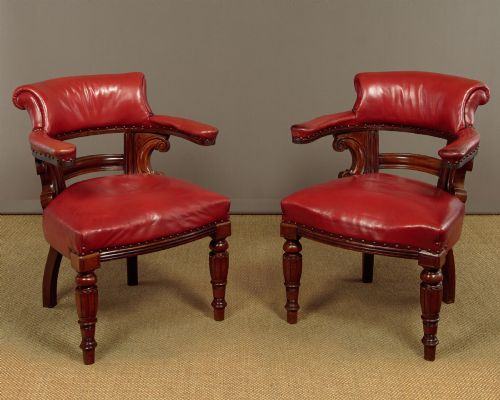
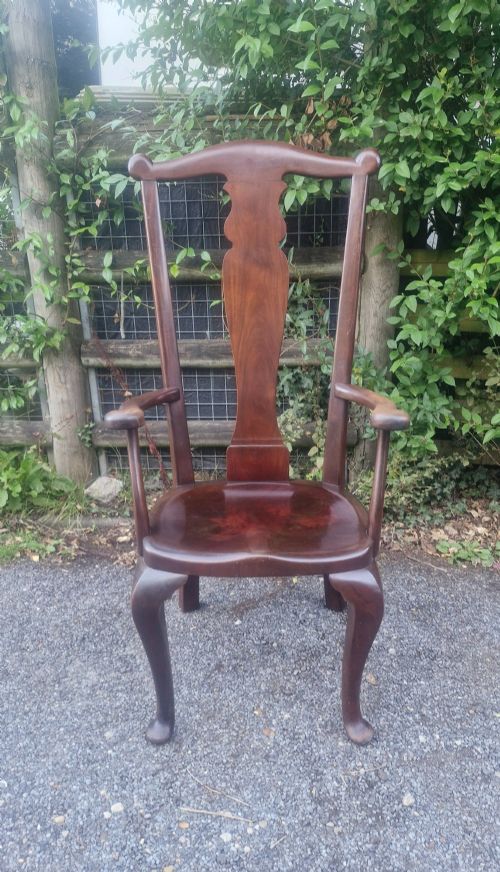
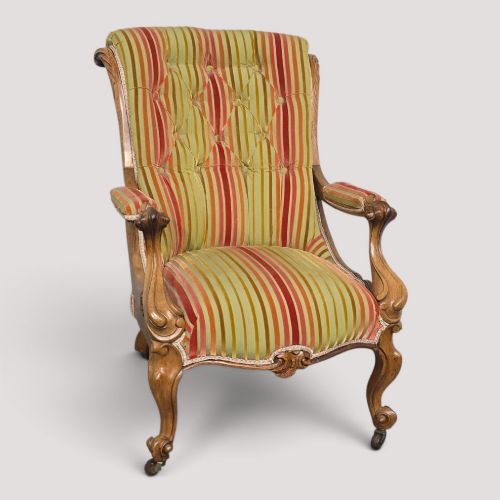
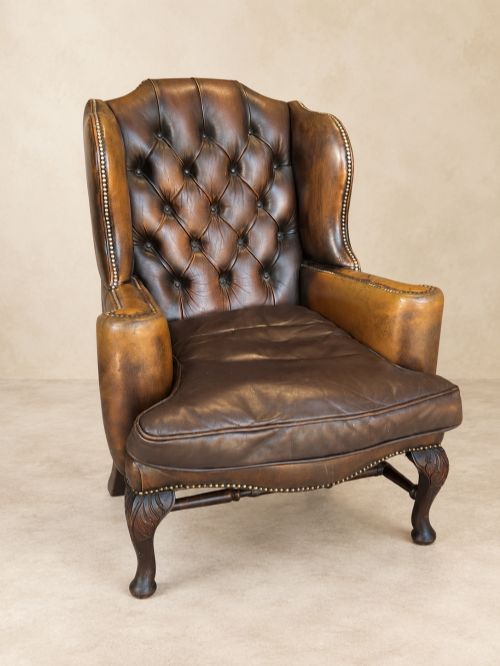
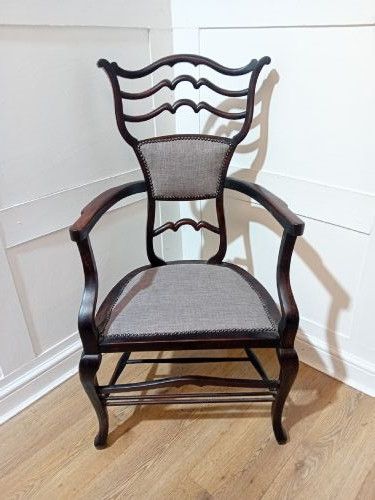

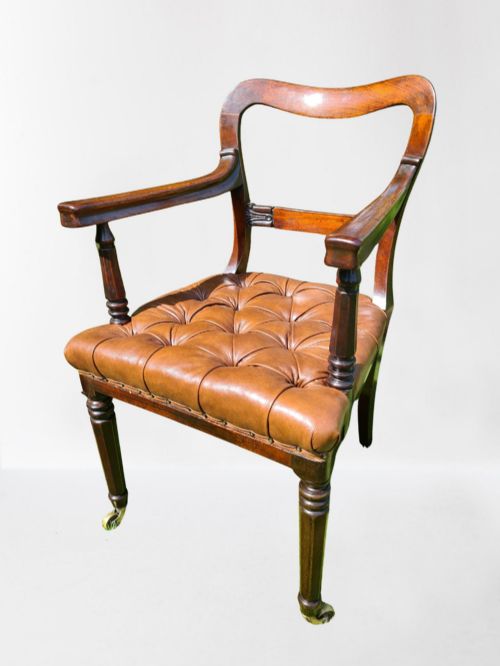
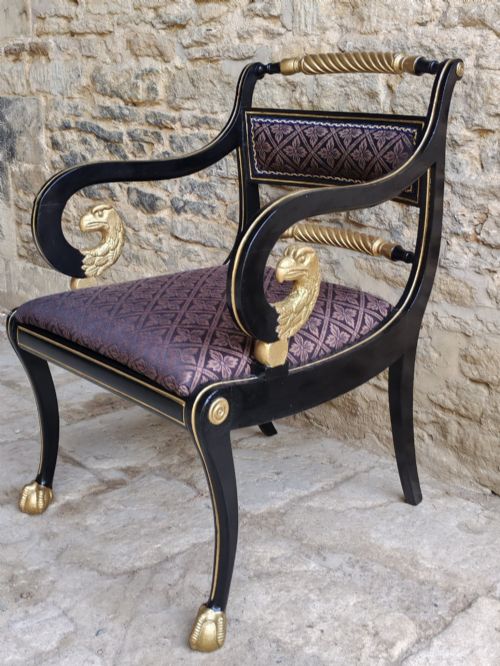
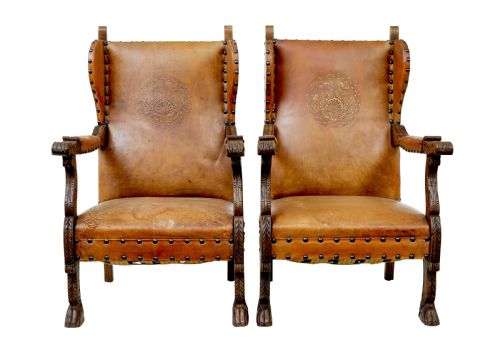
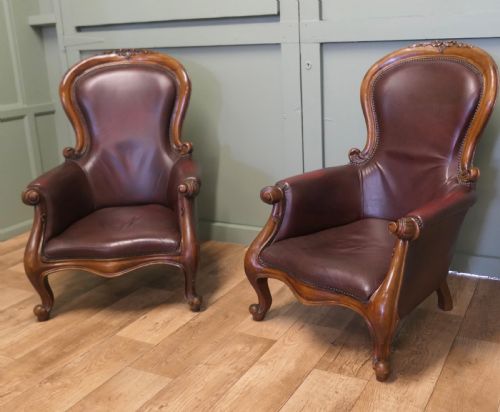
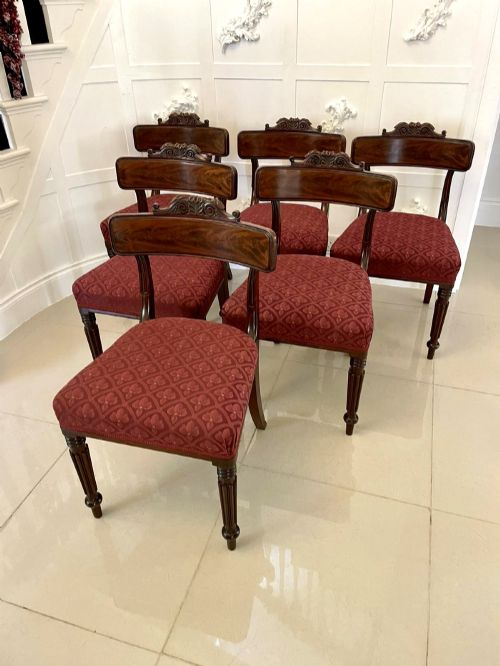
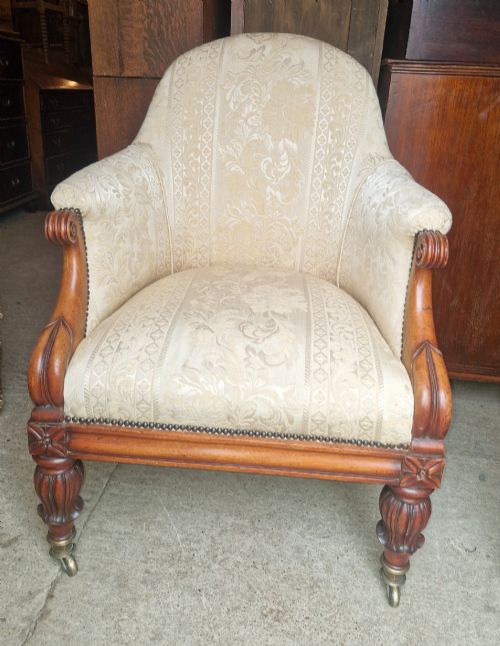
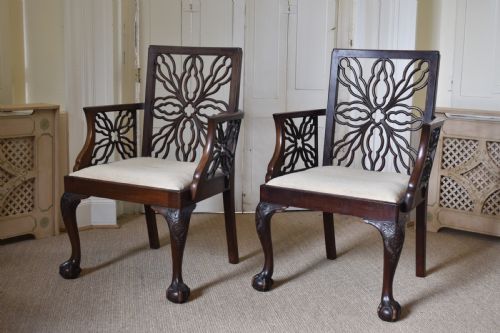
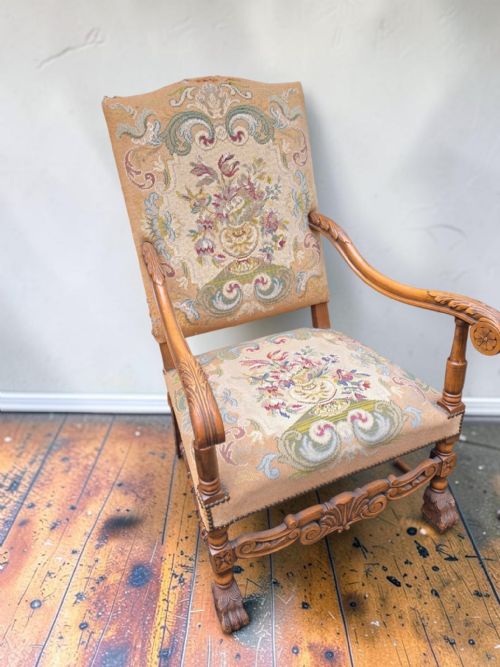
Carved Library Chair
A carved library chair balances scholarly gravity with deep seating comfort, offering a stately anchor for a desk or reading room.
How They Were Made
Cabinet makers relied predominantly on dense timbers like mahogany, walnut, and oak to build frames that could endure decades of daily service. Artisans shaped these woods by hand, carving rails and legs with floral, scroll, or blind fretwork patterns.
Upholstery techniques involved durable stuffing secured over webbing, finished with brass nail heads or hand-dyed leather, hide, and velvet. Caned panels also feature frequently, providing a lighter backrest option on specific Regency and later models.
What Varies In Quality
The distinction between ordinary and exceptional pieces lies in the crispness and depth of the timber carving, alongside the selection of finely figured grain. Master workshops invested significantly more labour into the execution of scrollwork, acanthus leaves, and monopodia details.
Proportion and structural integrity also dictate the standing of a piece, with superior examples offering balanced ergonomics and robust joinery that resists wobble. The integration of original leather or high-grade period upholstery elevates the overall coherence of the design.
Heavy ebony and teak library chairs travelled thousands of miles from colonial workshops in Ceylon to sit in British reading rooms.
Gillows·Whytock and Reid·Thomas Hope·Bruce Talbert·Pugin
The Carved Library Chair Glossary
- Gainsborough chair
- A wide-seated, open-armed armchair with a padded back and seat, typically dating from the Georgian period. This form provides generous proportions intended for comfortable writing at a pedestal desk.
- Bergère
- An enclosed upholstered armchair with wooden framing visible around the sides and back, often featuring cane work. The style originated in France before being adopted by British makers.
- Monopodia
- A carved furniture support taking the form of a single animal leg, usually ending in a claw or paw. This neoclassical motif appears on prominent Regency library seating.
- Gothic Revival
- A nineteenth-century design movement drawing inspiration from medieval architecture, characterised by pointed arches and tracery. Chairs from this style exhibit distinct architectural moulding.
- Tub chair
- A curved, semi-circular armchair where the back rail flows continuously into the armrests. This enclosed shape offers draught-proof comfort for reading beside a fire.
Carved Library Chair: Frequently Asked Questions
What defines a library chair?
A library chair is a robust, comfortable armchair designed specifically for reading, writing, or studying in a private study or home library.
These pieces typically feature supportive armrests, sturdy timber frames, and upholstered or cane backrests tailored for extended sitting.
How do I date an antique wooden armchair?
Dating relies on observing the prevailing style, timber choices, and construction methods characteristic of specific periods like Georgian, Regency, or Victorian.
Secondary woods, tool marks, and specific carved motifs often help narrow down the decade of manufacture.
Where were these chairs used?
They were primarily placed around large partners desks, reading tables, or beside fireplaces in substantial country houses and town residences.
Their sturdy construction suited them for heavy daily use by scholars, gentlemen, and family members.
Are these chairs suitable for modern daily use?
Many solid mahogany and oak frames remain exceptionally strong and easily accommodate contemporary sitting habits.
Pieces with sound internal webbing and durable leather or fabric upholstery function very well in everyday study environments.