

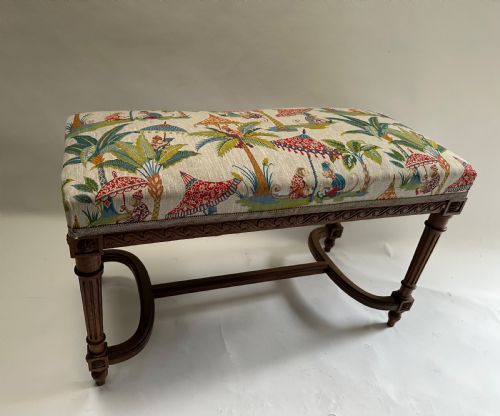
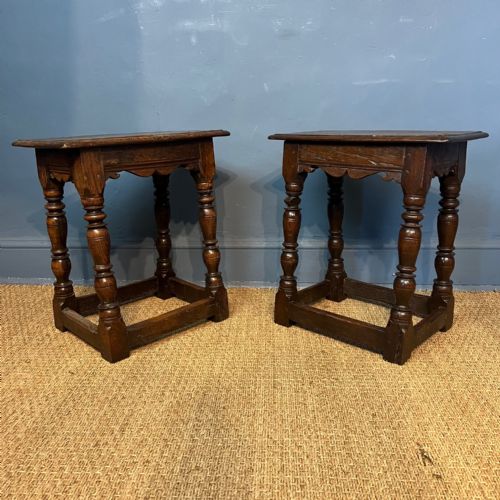
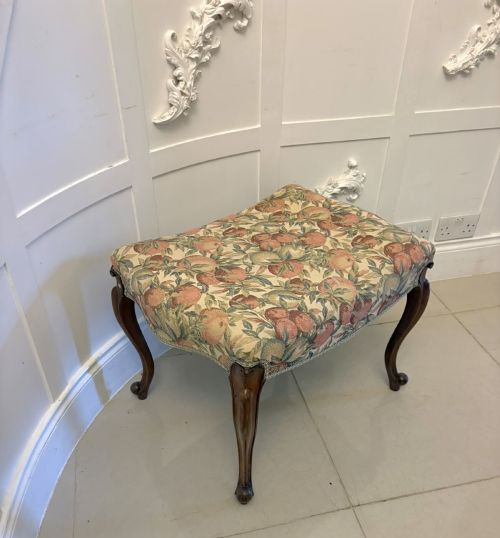

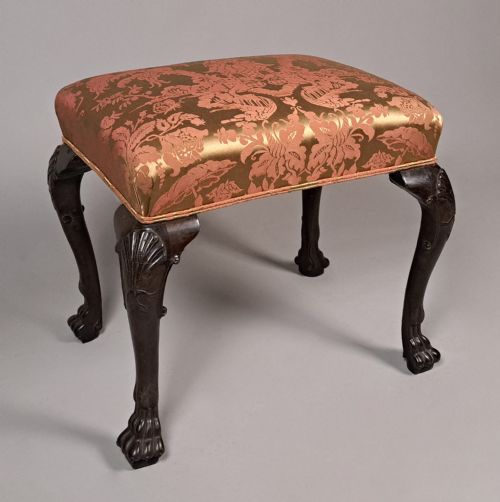
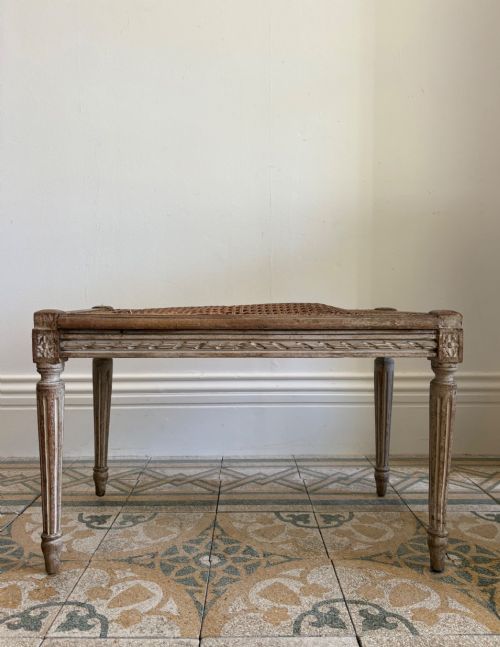
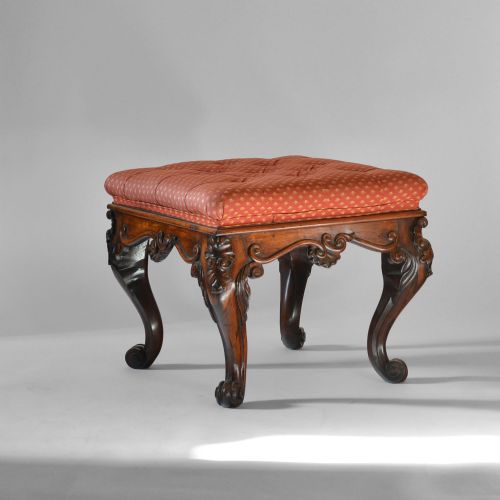
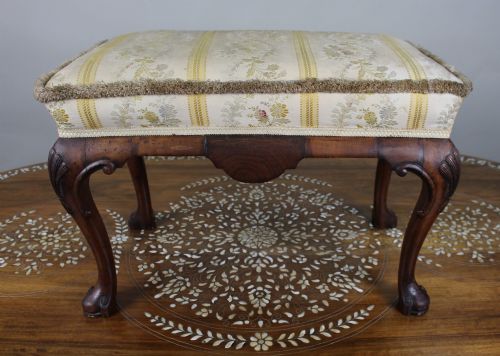
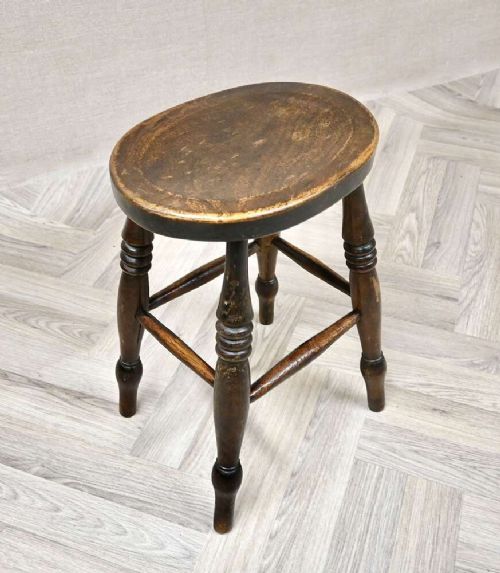
Carved Leg Footstool
A carved leg footstool brings period timber and textile work together into a low, practical seat for fireside or dressing room.
Carved Leg Footstool
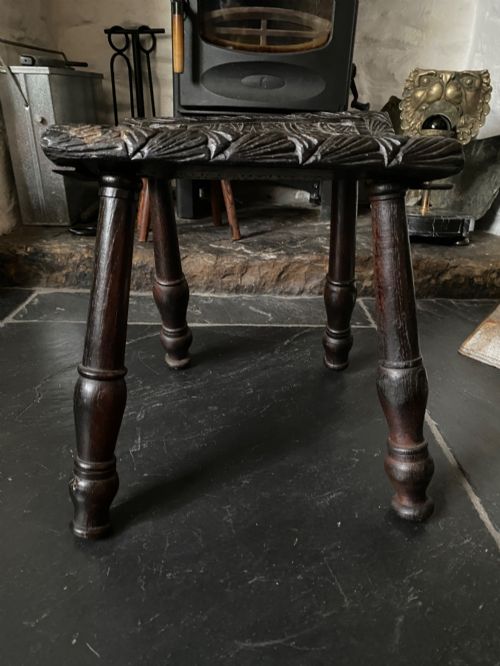
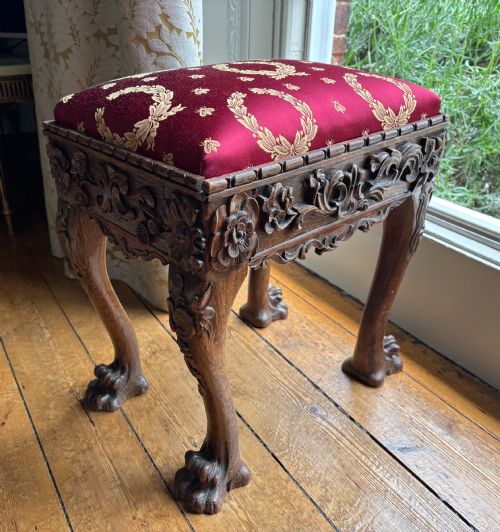
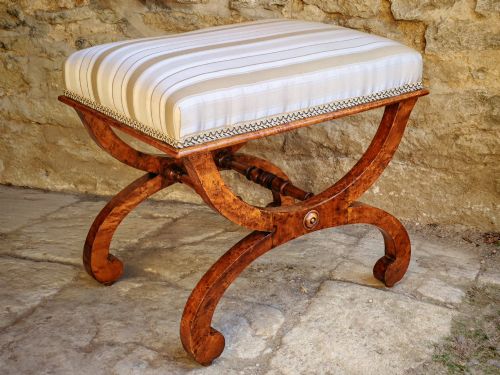
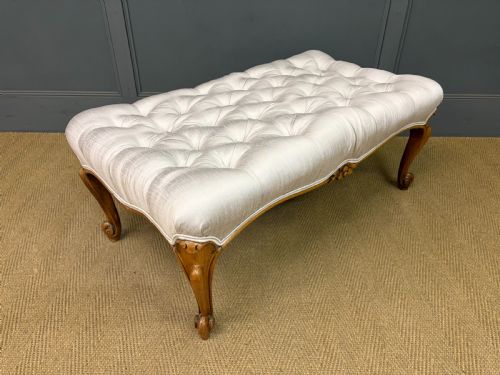
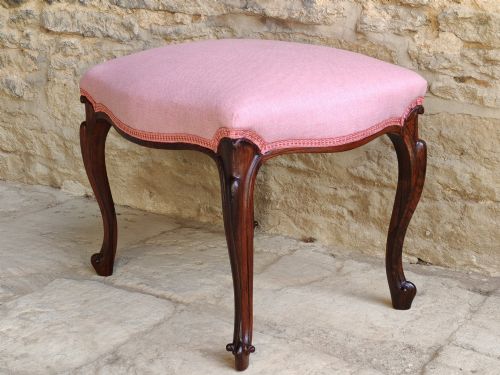
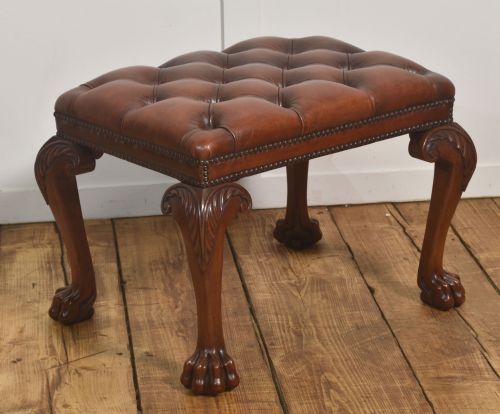
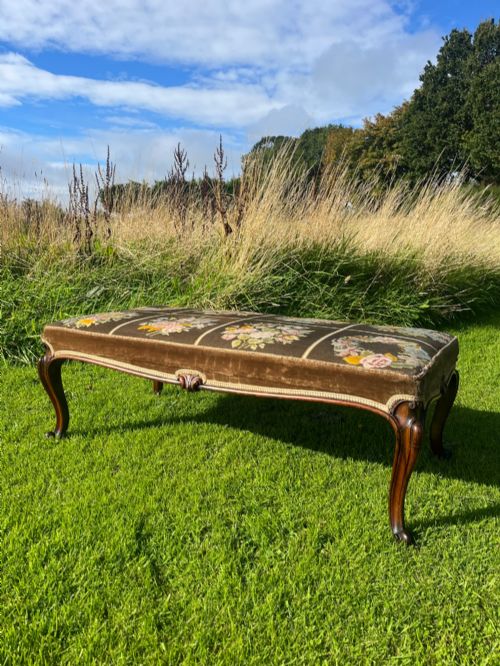
When you search for a carved leg footstool, you encounter low seating forms designed to support the feet or serve as compact occasional seats by the hearth. The examples appearing here span from the eighteenth century through the Victorian era and into the early twentieth century, taking shapes such as oval, rectangular, and jointed forms.
How they were made
Cabinet makers constructed the frames of these stools using solid hardwoods such as walnut, mahogany, oak, and rosewood, often shaping the supports with cabriole, spiral, or carved details. Timber selection dictated the character of the base, while secondary woods provided structural stability beneath the upholstery.
Top surfaces received traditional padding secured over webbing or solid bases, then finished with textiles including needlepoint, buttoned hide, velvet, or woven fabric. Brass accents occasionally appeared on castors or decorative mounts, completing the construction of the seat.
Carved Leg Footstool Retail Price Guide 2026
Typical asking prices for carved leg footstool among the pieces listed under this phrase on Sellingantiques today, from the lower quarter to the upper quarter. They describe what is for sale here now, not the wider market.
Listings feature woods including walnut, mahogany, oak, rosewood, and goncalo alves, spanning the seventeenth to the early twentieth century.
What varies in quality
The standard of a carved leg footstool rests upon the crispness of the woodwork and the proportion of the frame. Superior pieces display deep, well-defined carving on the legs and rails, whilst simpler items rely on plain turned or minimal woodwork.
Materials also dictate distinction within the range, with dense timbers like rosewood and figured walnut, paired with fine period needlepoint or hide upholstery, marking out the more ambitious examples from standard country workshop pieces.
The Carved Leg Footstool Glossary
- Cabriole leg
- A furniture leg that curves outward at the knee and tapers inward at the ankle, often ending in a pad or claw foot. This form became popular during the eighteenth century and returned in various Victorian revival styles.
- Needlepoint
- A type of canvas work embroidery used extensively for historical upholstery. It provides a durable and decorative surface for footstool tops.
- Stretcher
- A horizontal wooden rail connecting the legs of a stool to provide structural bracing. Earlier pieces often utilise shaped or turned stretchers for added stability.
- Hide
- Animal skin prepared for upholstery, appearing on larger or more formal footstools as buttoned red or burgundy leather. It offers a hard-wearing surface compared to woven textiles.
Carved Leg Footstool: Frequently Asked Questions
Where were footstools used?
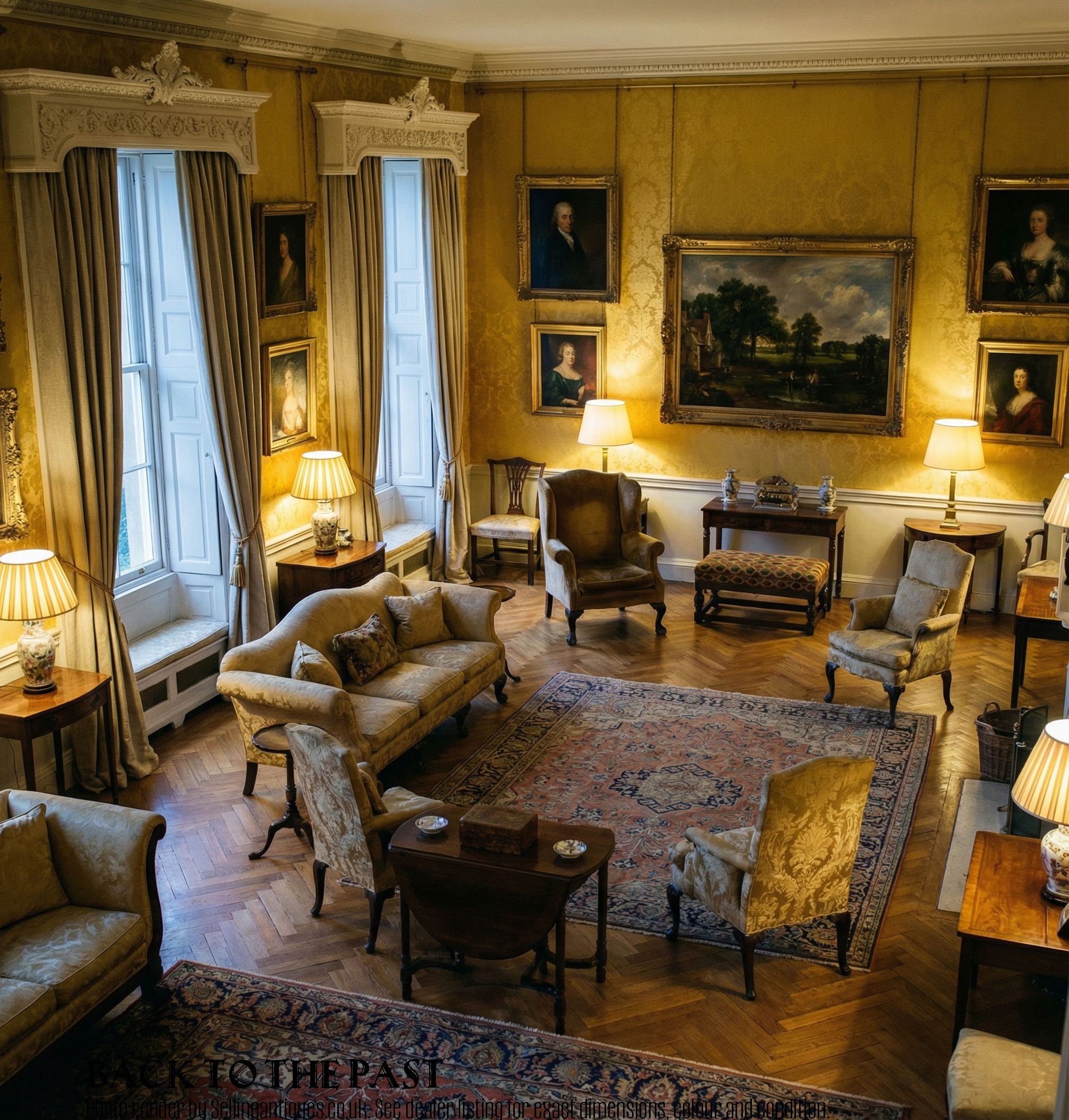
These low seats found placement beside firesides, in dressing rooms, and within formal parlours to provide comfort or serve as secondary seating.
Their compact dimensions allowed them to be easily moved around reception rooms as needed throughout the day.
How do I identify a Victorian stool?
Victorian examples typically feature dense timbers like walnut or rosewood, combined with cabriole legs and buttoned upholstery or needlepoint.
Proportions tend to be generous, reflecting the heavier domestic comfort associated with nineteenth-century interiors.
Are these stools comfortable?
Traditional padding uses materials like horsehair over webbing, offering a firm support rather than deep modern softness.
This construction maintains the crisp profile of the upholstered top while providing a solid resting place for the feet.
How do I care for antique wood?
Maintain the timber surfaces by applying quality wax polish sparingly and buffing with a soft cloth to preserve the grain.
Keep the pieces away from direct heat sources and strong sunlight to prevent the timber and upholstery from drying out.