
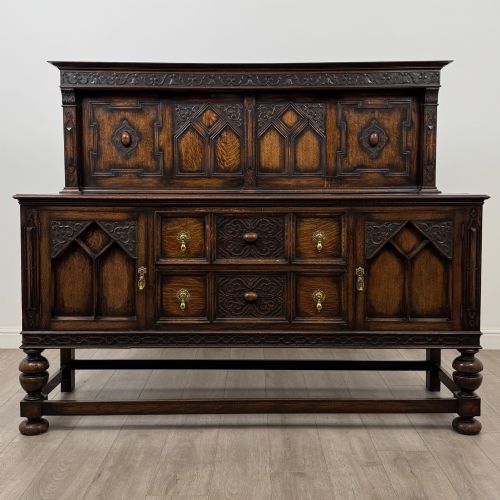
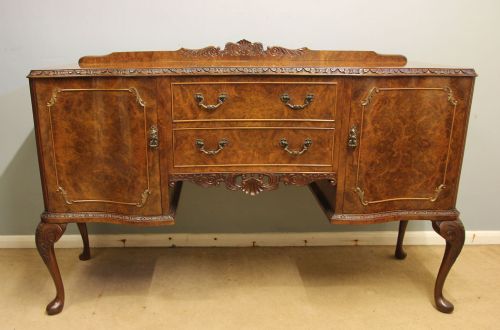
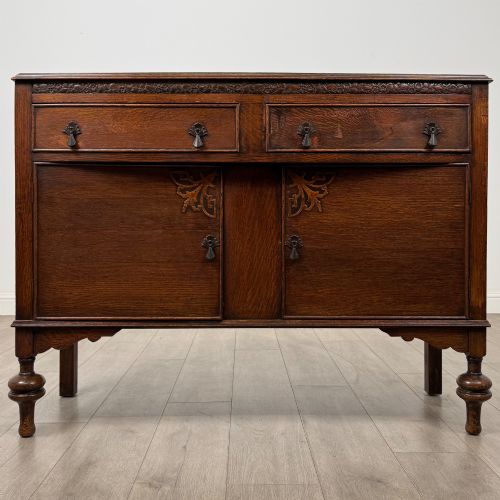
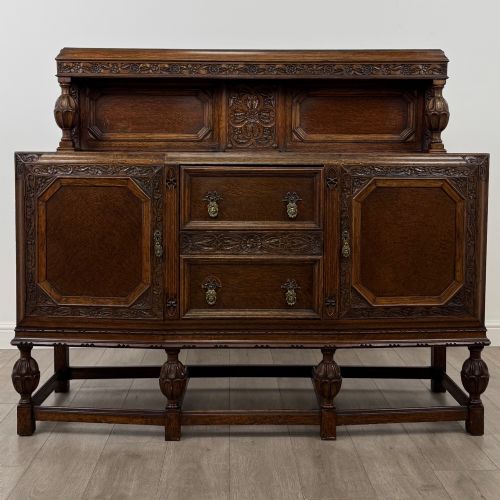


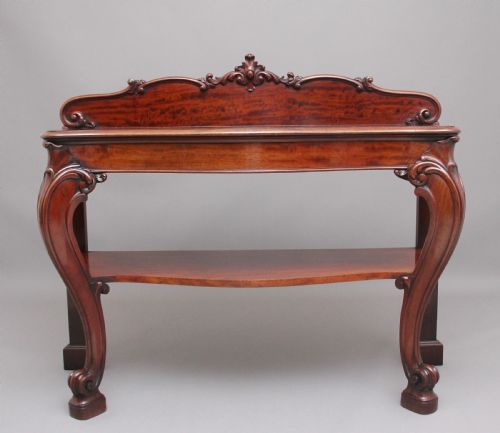

Carved Leg Dining Server
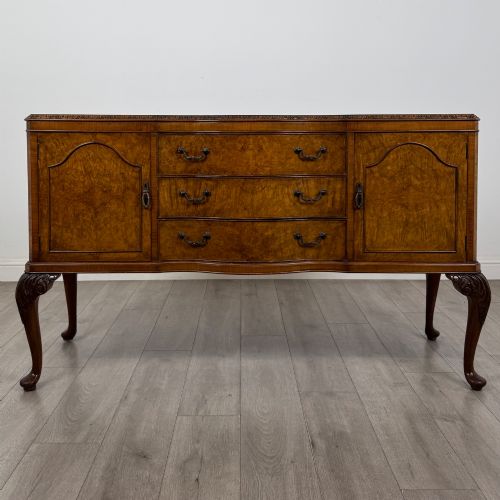
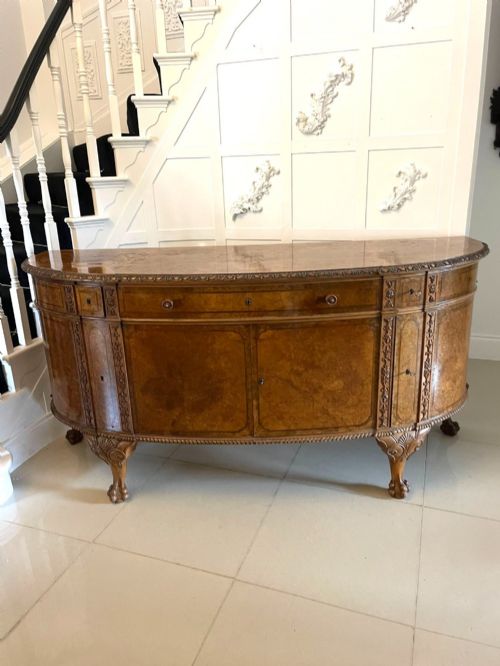
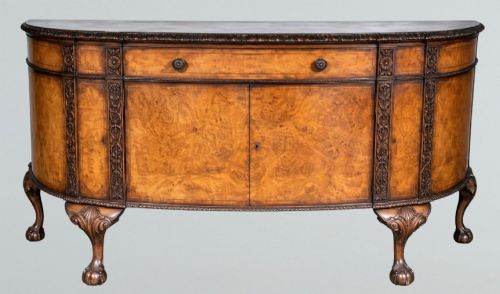
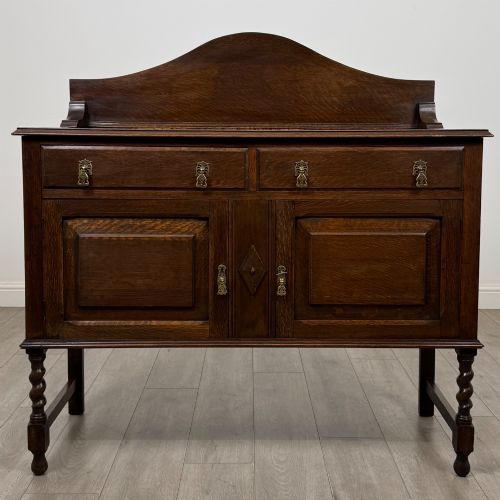
A carved leg dining server provides formal presence and surface utility in a dining room, uniting varied timber grains with solid structural supports.
Carved Leg Dining Server
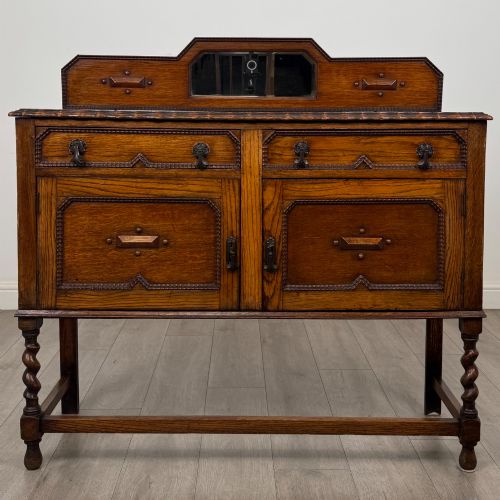
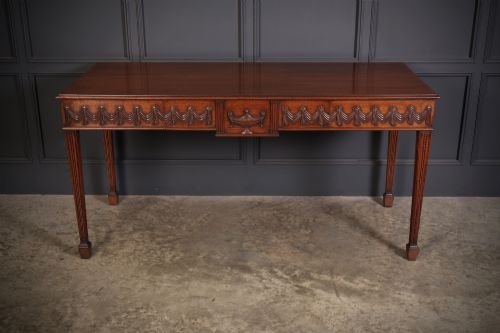
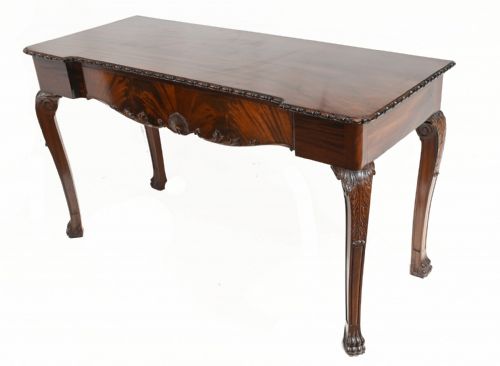
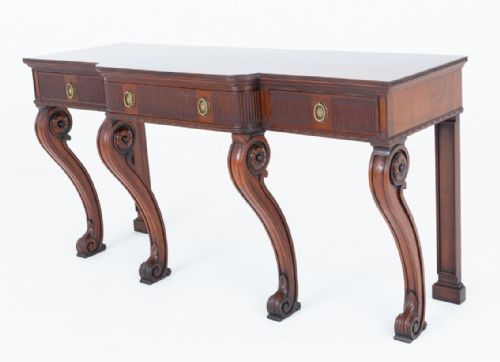
A carved leg dining server brings substantial storage and serving surface to a dining space, drawing on forms developed across the eighteenth, nineteenth, and early twentieth centuries. When searching for a carved leg dining server, buyers encounter diverse iterations ranging from formal Regency mahogany serving tables to Edwardian oak sideboards and burr walnut servers.
The pieces listed on this page span styles such as Regency, Edwardian, and Georgian Revival, alongside specific regional interpretations including Irish Regency serving tables. Forms include serpentine front sideboards, bow fronted servers, and console tables, frequently featuring distinct carved leg details that ground the heavy timber bodies.
Makers and workshops represented in the inventory include Hille of London, Epstein, Gillows, Whytock & Reid, and Mack Williams and Gibton. These dining servers function primarily as architectural focal points and practical surfaces for hospitality, reflecting the social rituals of their respective periods.
Materials and Construction Methods
Cabinetmakers utilised dense timbers such as mahogany, oak, and walnut, often applying flame mahogany veneer or burr walnut to create dramatic grain patterns across the main body and drawer fronts. Iron and brass hardware, including handles and hinges, provide functional contrast to the dark woods.
Carved structural elements define the legs and aprons, executed in styles ranging from geometric Jacobean motifs to flowing Queen Anne and Chippendale carving. French polishing and wax finishes protect the timber surfaces while accentuating the natural depth of the grain.
Listings feature mahogany, oak, burr walnut, and walnut timbers across Edwardian, Regency, and Georgian Revival periods.
Distinctions in Quality
Quality rests upon the integrity of the timber selection and the precision of the cabinetmaker's joinery, where matched veneers and solid secondary woods indicate superior construction. Lesser examples may exhibit clumsy proportioning or replacement secondary elements that disrupt the original silhouette.
The crispness and depth of the hand carving separate standard production pieces from masterwork servers attributed to renowned workshops like Gillows or Whytock & Reid. Smooth drawer operation and original brass fittings further distinguish the upper tier of the range.
Gillows·Hille of London·Epstein·Whytock & Reid·Mack Williams and Gibton
The Carved Leg Dining Server Glossary
- Serpentine front
- A convex central section flanked by concave curves, creating a fluid, undulating line across the front of the server.
- Bow front
- A convexly curved front surface that projects outward, commonly seen on late eighteenth and nineteenth-century dining furniture.
- Flame mahogany
- A veneer cut from the fork of a mahogany tree that produces a distinctive flame-like figure across the wood surface.
- Burr walnut
- Timber taken from a walnut tree outgrowth, highly prized for its swirling, intricate knot patterns.
- Dumb waiter
- A tiered set of revolving shelves used for serving food without domestic staff present in the room.
- Parquetry
- Geometric wood mosaic work used for ornamenting floors or table tops.
Carved Leg Dining Server: Frequently Asked Questions
How do I style a server in a modern dining room?
A carved leg dining server anchors a contemporary dining space by introducing rich timber tones and historical texture against minimalist walls.
Pair the piece with simple lighting and understated tableware to let the carved details and figured veneers remain the primary focus.
What is the difference between a sideboard and a serving table?
Serving tables typically feature open legs beneath a flat top designed primarily for presenting food and dishes during formal meals.
Sideboards frequently incorporate enclosed cupboards and drawers below the surface, offering more comprehensive storage for cutlery and linens.
Can I use a dining server as a hall console?
Many narrower server forms adapt well to entrance halls or living rooms where surface space is required without blocking movement.
Ensure the depth of the cabinet matches the clearance of the hallway before placing a large bow-front or serpentine server in a narrow space.
How do I identify a Regency period server?
Regency servers often display classical architectural motifs, brass inlay, and restrained mahogany or rosewood surfaces inspired by ancient Greek and Roman design.
Look for robust turned legs, lion paw feet, and dark patinated timber that indicate early nineteenth-century construction.