


Carved Italian Credenza
These carved Italian credenza examples bring profound walnut presence and architectural depth to a room.
Carved Italian Credenza
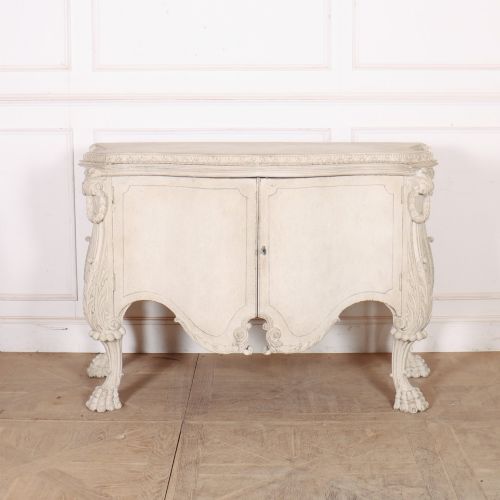
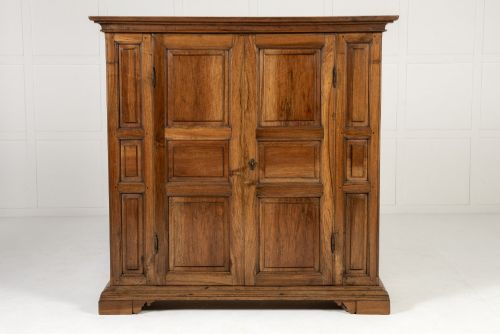
When you search for a carved Italian credenza, you encounter substantial storage furniture designed with sculptural relief and historical weight. The pieces on this page span the eighteenth and nineteenth centuries, taking the form of sideboards, side cabinets, cabinets on stands, and chests of drawers. Revival movements dominate the selection, bringing Renaissance, Baroque, and Rococo styling into nineteenth-century drawing rooms.
You are most likely to meet walnut examples displaying deep relief carving, alongside occasional painted and gilded surfaces. Forms range from monumental proportions to more compact side cabinets, reflecting the varied domestic scales of their Italian origins. Each piece functions as both storage and a primary decorative focal point within an interior.
How they were made
Cabinetmakers worked predominantly in solid and figured walnut, shaping heavy timber into panels, cornices, and structural frames. Joinery relied on traditional framing techniques to accommodate the seasonal movement of large timber panels.
Carvers applied chisel work directly to the wood to create figural motifs, scrolls, and architectural details. Secondary materials such as iron, brass, and mirror glass appear in hardware and structural reinforcement, while oil paint and giltwood finish specific decorative surfaces.
Object types span sideboards, console tables, chests of drawers, and monumental cabinets on stands.
What varies in quality
The depth, sharpness, and anatomical precision of the wood carving distinguish exceptional examples from simpler production. Master carvers achieved crisp undercut details and expressive relief that retain their visual power across centuries.
The choice of timber figure and the integration of structural hardware also separate standard items from superior commissions. Well-figured walnut grain enhances the sculptural planes, while robust internal construction ensures stability in heavy cabinet forms.
Pauly et Cie
The Carved Italian Credenza Glossary
- Credenza
- A sideboard or storage cabinet traditionally used for displaying plate and storing household goods. It evolved from a simple tier of shelves into a substantial architectural cabinet.
- Renaissance Revival
- A nineteenth-century stylistic movement that drew direct inspiration from sixteenth-century Italian art and architecture. Furniture from this period adapts classical motifs, heavy cornices, and figural carving.
- Marquetry
- The art of applying decorative veneer pieces in wood to form geometric or pictorial designs. It creates patterned surfaces across drawer fronts and cabinet doors.
- Giltwood
- Timber that has been coated with a thin layer of gold leaf or gilt pigment. This treatment highlights carved mouldings and decorative flourishes.
- Buffet
- A side table or low cabinet used for food service and storage. In Italian furniture, the term frequently overlaps with credenza and sideboard.
Carved Italian Credenza: Frequently Asked Questions
What is a credenza used for?
These pieces functioned historically for storing domestic silver, linens, and dining provisions while displaying objects of status on top.
Today, they serve as commanding storage sideboards in dining rooms, large hallways, or living spaces.
How do I identify a nineteenth-century revival piece?
Look for the heavy architectural forms, Renaissance motifs, and deep walnut carving that nineteenth-century workshops produced to emulate earlier centuries.
Construction methods, tool marks, and secondary timbers inside the cabinet usually clarify whether a piece dates to the eighteenth century or its later revival.
Are painted finishes original?
Certain pieces feature painted and decorated surfaces, particularly those associated with Venetian Rococo styles from the nineteenth century.
Palette choices and the relationship between the paint layer and the underlying wood help determine the history of the surface.
How do I care for antique walnut furniture?
Keep these heavy timber pieces away from direct heat sources and dramatic humidity fluctuations to protect the solid walnut and prevent panel splitting.
Routine dusting and occasional feeding with appropriate wax maintain the finish without building up heavy residues.