
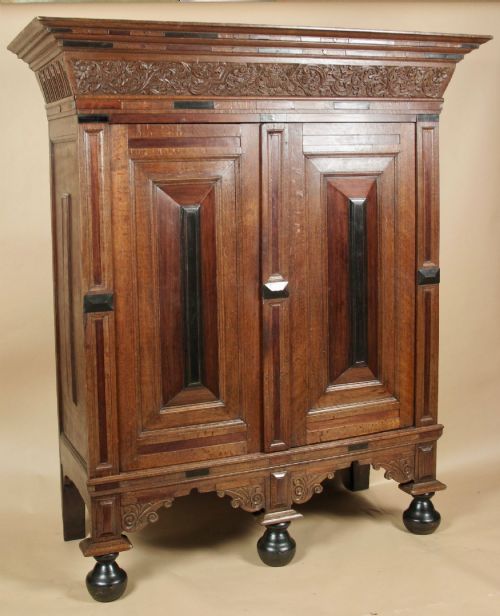
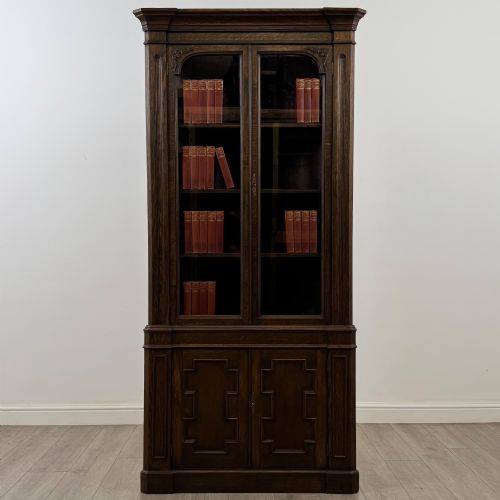
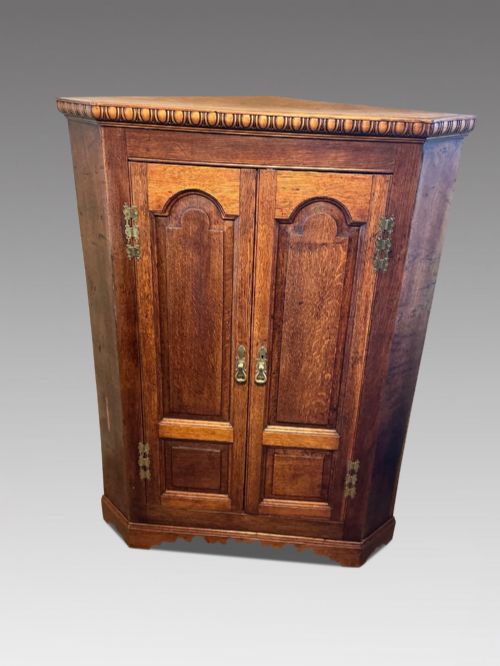
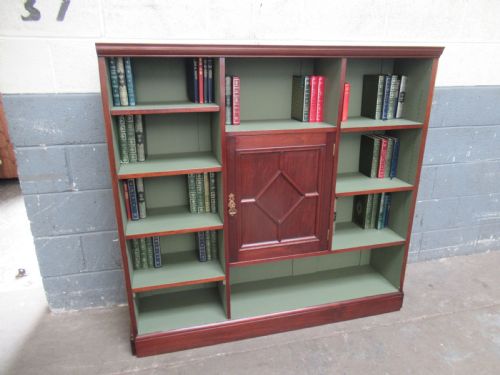
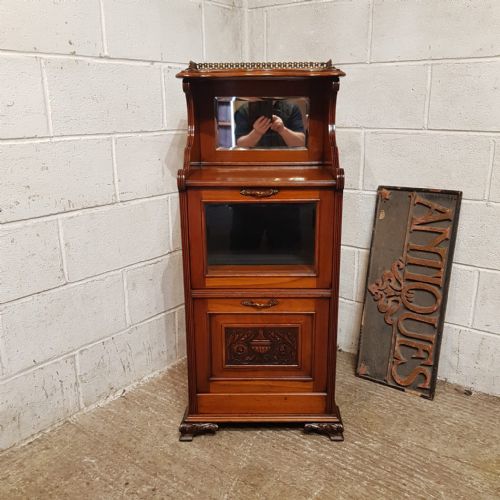


Carved Panel Display Cabinet
A carved panel display cabinet brings tactile depth to a room, offering glazed and timber storage shaped by historic revival styles.
Carved Panel Display Cabinet
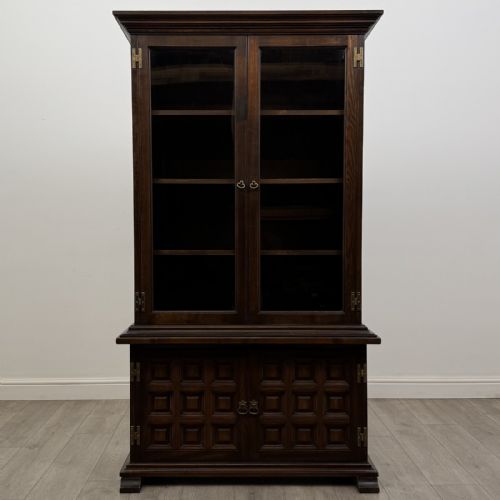
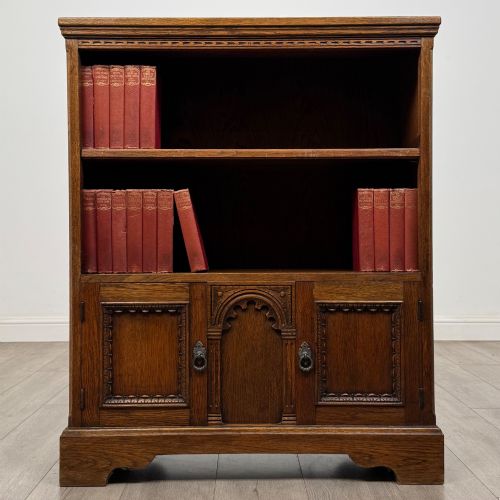
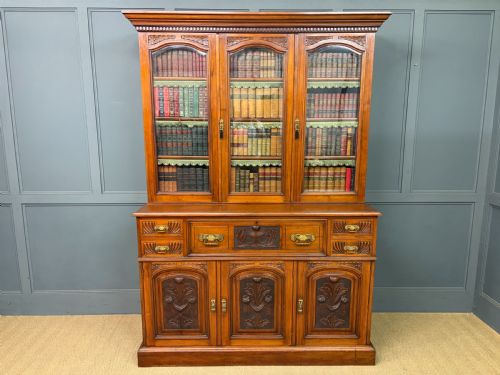
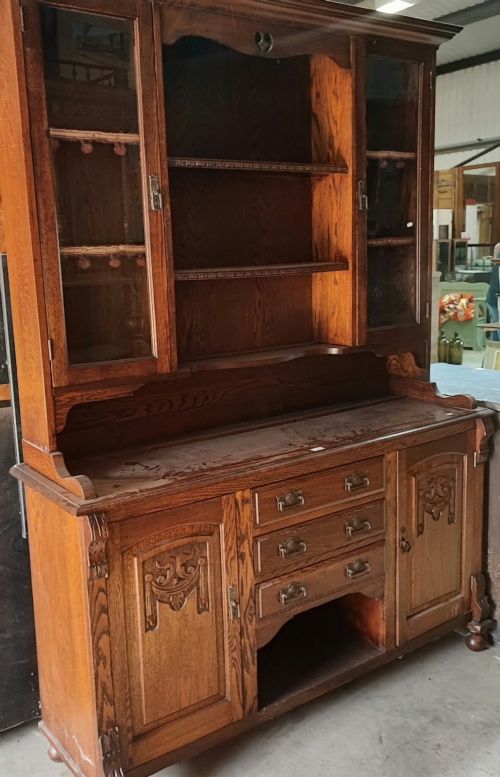
When you search for a carved panel display cabinet, you are looking at upright storage furniture that combines timber framing with decorative relief work and glazed or open sections. The examples seen here range from compact corner cupboards to substantial library bookcases and dressers.
The version you are most likely to meet on this page is constructed from oak, often drawing on 17th-century Jacobean or later revival idioms. These pieces frequently feature carved wooden panels set into doors or sides, housing books, ceramics or curiosities.
Origins span English country workshops to continental European traditions, alongside occasional examples from further afield. They serve as functional storage that simultaneously acts as a focal point through surface ornamentation.
What varies in quality
Quality rests heavily on the depth and crispness of the carving, where sharply defined hand-cut details contrast with softer, shallower relief work. The choice of primary timber and secondary framing woods also dictates the longevity and visual weight of the piece.
Construction methods distinguish standard utility pieces from exhibition grade examples, visible in the tightness of the joints, the thickness of the glazed or leaded glass panels, and the quality of internal fittings such as adjustable shelving.
Listings span the 17th century through to the Edwardian period, with oak dominating the structural materials alongside mahogany and walnut.
Samuel Pepys
The Carved Panel Display Cabinet Glossary
- Jacobean Revival
- A 19th-century style copying the heavy, geometric carved ornamentation of the early 17th century. It frequently appears on oak cabinets and dressers.
- Glazed
- Fitted with panes of glass to display the contents within while protecting them from dust. This is a defining feature of bookcases and display cabinets.
- Ormolu
- Gilded bronze mounts applied to furniture for decorative effect. It is typically found on high-status 19th-century continental and English pieces.
- Secretaire
- A cabinet incorporating a pull-down writing flap concealing a desk interior. It combines the functions of a writing desk and a bookcase.
- Marquetry
- The art of applying pieces of veneer to a structure to form decorative patterns. It appears on select mahogany display cabinets in the archive.
Carved Panel Display Cabinet: Frequently Asked Questions
What is a carved panel display cabinet?
It is an upright piece of furniture designed to store and exhibit objects behind glazed doors or within open shelving, distinguished by carved wooden panels.
These pieces draw on periods like the Victorian era and Edwardian period, utilising styles such as Jacobean Revival and English Country.
How were these cabinets used originally?
They served primarily to house libraries, valuable ceramics, and domestic curiosities in dining rooms, libraries and drawing rooms.
The enclosed lower cupboards stored items needing concealment, while upper glazed sections displayed prized possessions.
How do I tell a revival piece from an original 17th-century piece?
Revival pieces, such as those from the 19th century or Edwardian era, often exhibit machine assistance in timber preparation alongside hand-carving.
Examine the construction joints, timber shrinkage patterns, and hardware fixings to understand the true age of the frame.
What woods should I expect to find?
Oak is the predominant timber across these listings, appearing in native English forms as well as tiger oak variants.
Mahogany, walnut, kingwood and assorted hardwoods also feature, occasionally paired with brass, iron, ormolu and glass.