
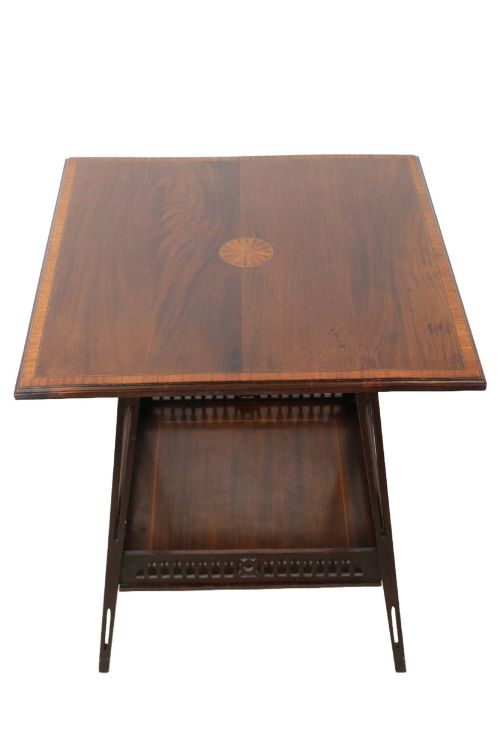

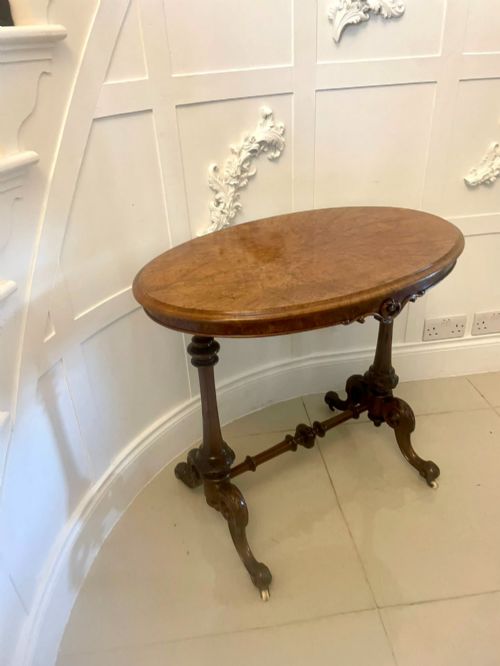
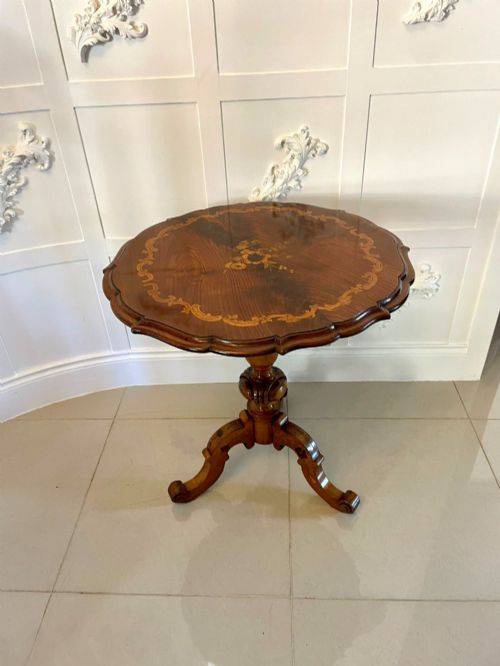
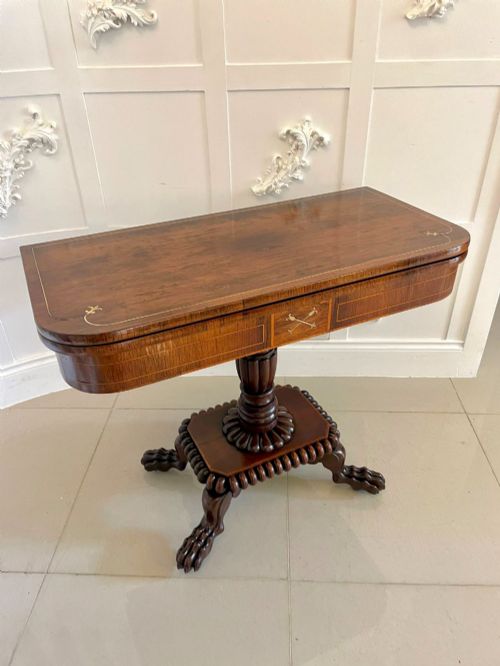
Carved Inlaid Tea Table
A carved inlaid tea table brings tactile warmth and intricate craftsmanship to a room, combining solid timber with delicate decorative detail.
Carved Inlaid Tea Table
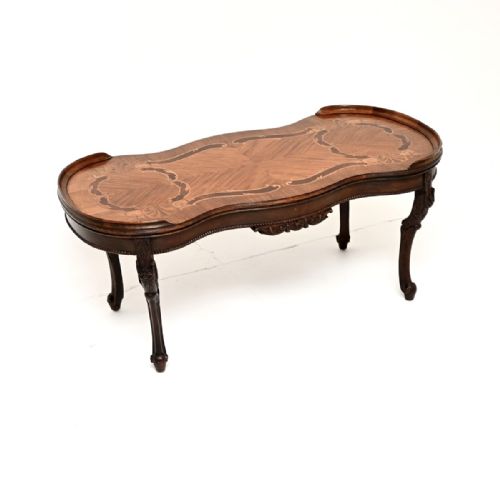
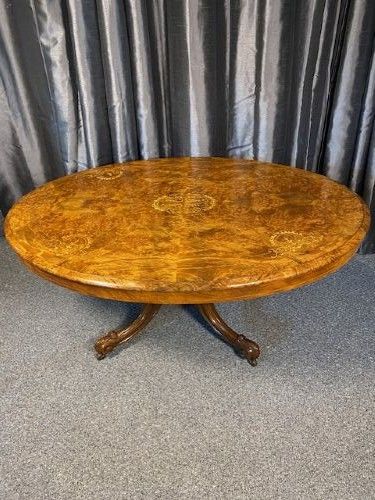
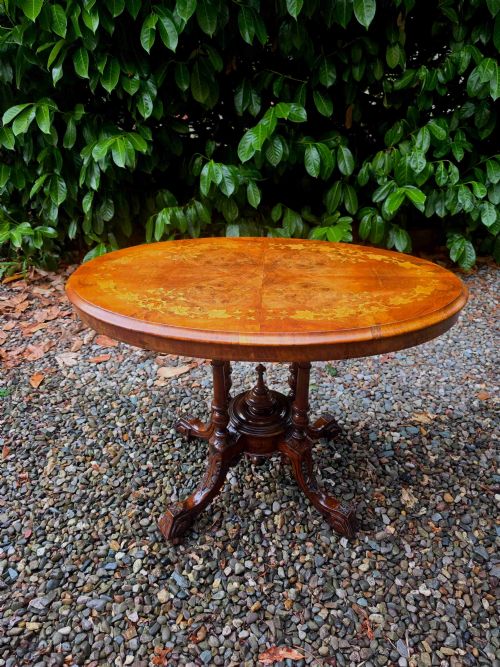
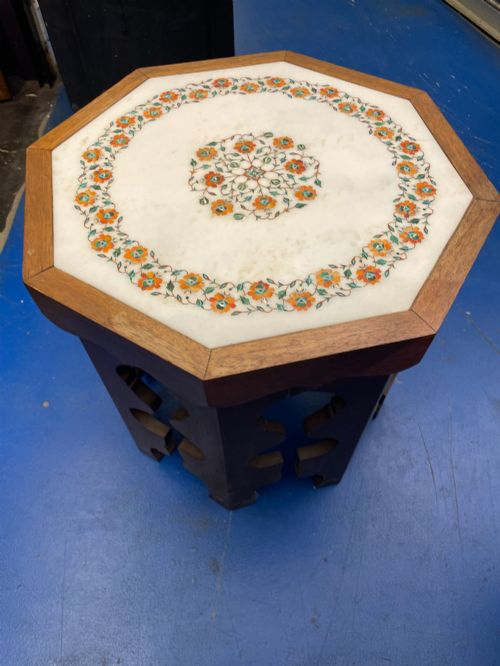
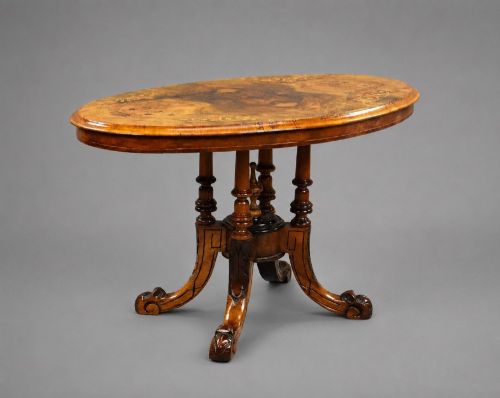
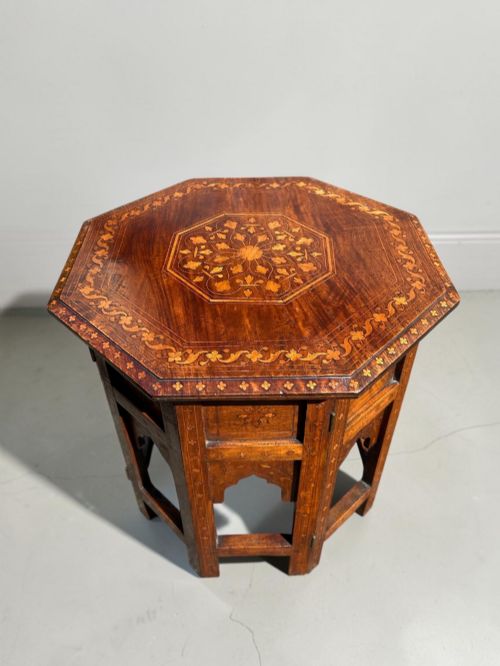
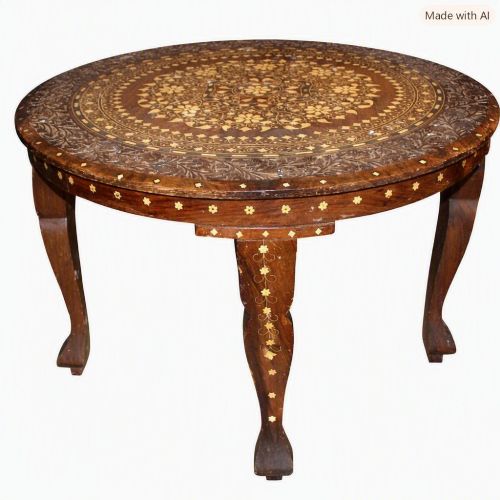
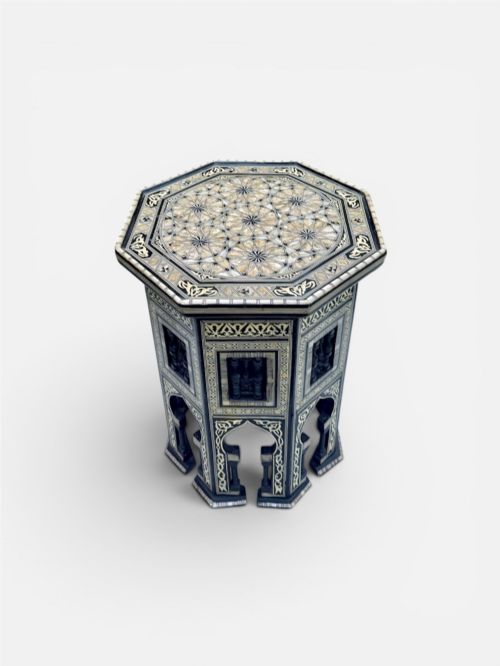
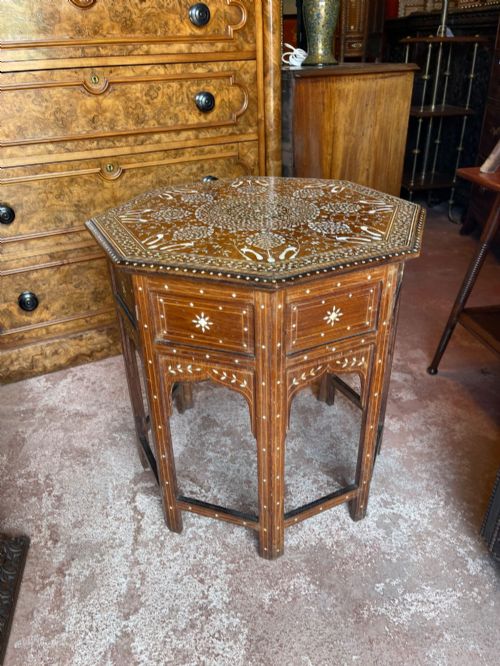
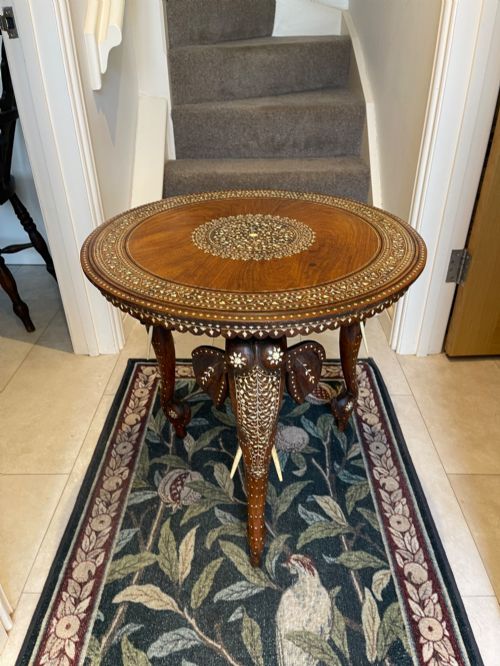
A carved inlaid tea table is a surface designed for social hosting, drawing from periods ranging through the Regency, Victorian, and Edwardian eras. These pieces appear in various forms, including rectangular folding tea tables, circular lamp tables, and octagonal occasional pieces.
Makers and retailers such as Liberty & Co and Trevor Page & Co occasionally stamp or attribute these works, marking them out within the broader nineteenth-century output.
Materials and construction methods
Cabinet makers utilised dense hardwoods such as mahogany, rosewood, walnut, and burr walnut as the primary structural foundations. These timbers provided stable bases for intricate surface decoration.
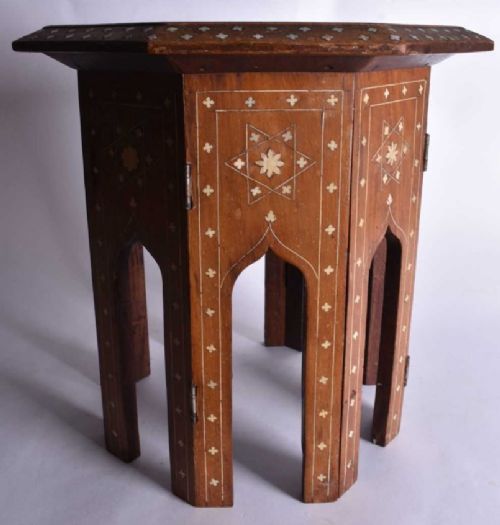
Surface embellishment relied on marquetry, parquetry, and contrasting stringing, alongside delicate inlays of brass, mother-of-pearl, and bone. Carving was frequently executed in deep relief, particularly on Anglo-Indian and Moorish examples featuring pierced folding bases.
Listings feature woods such as walnut, burr walnut, mahogany, rosewood, teak, satinwood, and bone, spanning the Regency to Edwardian periods.
Assessing craftsmanship and execution
Quality rests upon the precision of the joinery and the complexity of the surface work. Superior examples display tightly fitted marquetry with varied grain patterns and crisply defined hand-carved relief work.
Lesser pieces exhibit simpler turned structures with printed or basic linear stringing rather than genuine multi-material inlay. The depth and clarity of the carving distinguish standard production work from exceptional studio pieces.
Trevor Page & Co·Liberty & Co
The Carved Inlaid Tea Table Glossary
- Marquetry
- Decorative veneer applied to a furniture structure to form pictures or geometric patterns. This technique utilises various wood types to achieve natural tonal contrasts.
- Burr walnut
- Timber taken from the root growth of a walnut tree, prized for its swirling grain patterns. Cabinet makers selected it for high-status Victorian surfaces.
- Hoshiarpur
- A stylistic designation originating from the Punjab region, known for intricate wood carving inlaid with bone or brass. These pieces often feature folding octagonal frames.
- Sutherland table
- A narrow drop-leaf table where the leaves fold almost vertically. It was popular in the Victorian era for saving space in domestic interiors.
Carved Inlaid Tea Table: Frequently Asked Questions
How were these tables used originally?
These tables served primarily in domestic parlours and drawing rooms for serving afternoon tea or hosting card games.
Folding designs allowed households to stow the furniture easily when not in use for entertaining.
How do I care for inlaid wooden surfaces?
Maintain these tables by applying natural beeswax sparingly and polishing gently with a soft cloth.
Keep them away from direct sunlight and strong heat sources to prevent the timber from splitting and the inlay from lifting.
What distinguishes Anglo-Indian tables from Victorian pieces?
Anglo-Indian tables typically feature dense all-over carving on teak, combined with intricate bone or brass inlay work. Their forms often incorporate folding octagonal tops supported by pierced bases.
Victorian pieces lean towards European cabinet forms in walnut or mahogany, focusing on marquetry top surfaces rather than deep structural carving.
How can I tell the period of a table?
Dating relies on examining the underlying timber, the fastening methods, and the prevailing decorative style. Regency examples show classical restraint with brass stringing, while Victorian and Edwardian pieces often display heavier burr walnut veneers or exotic revival motifs.
Construction marks and occasional maker stamps help confirm the exact era.