
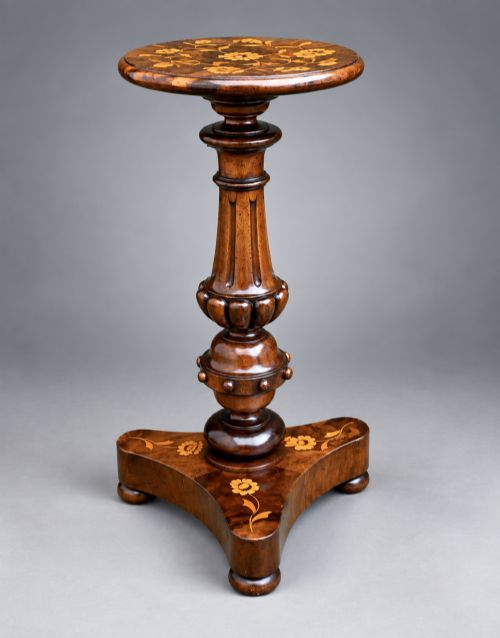
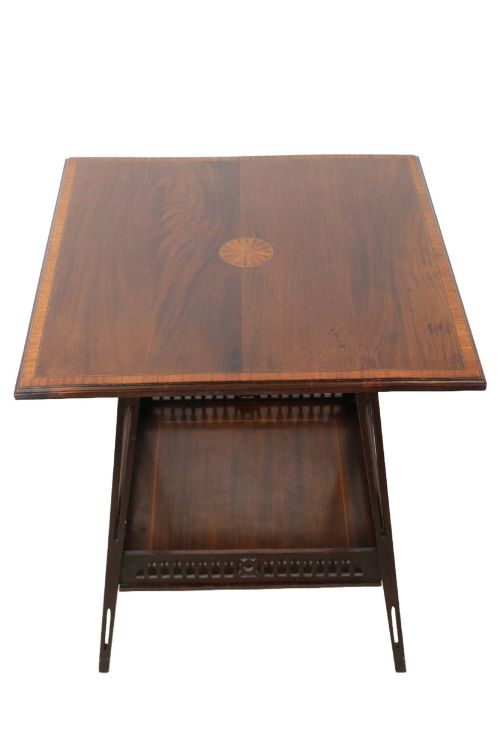

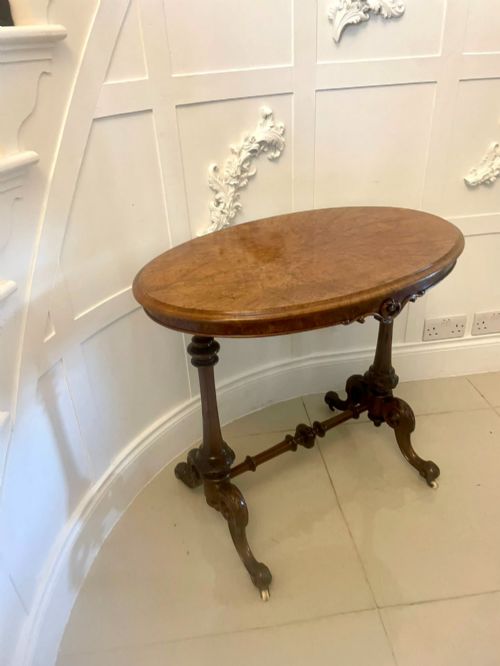
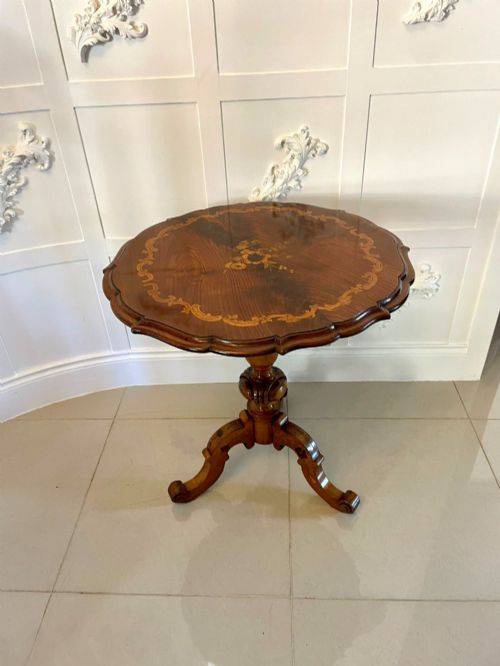

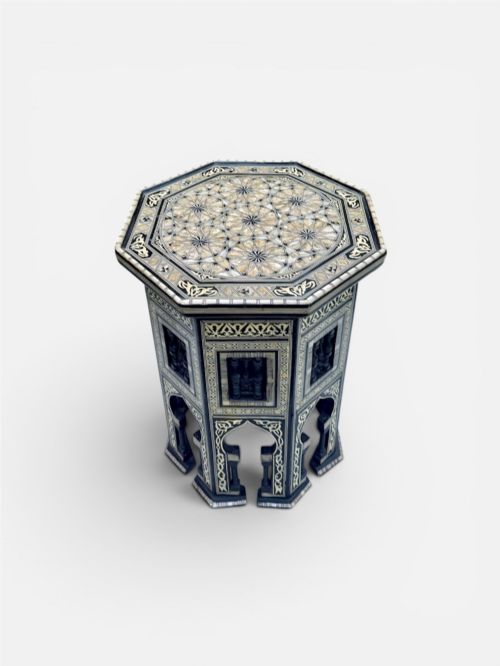
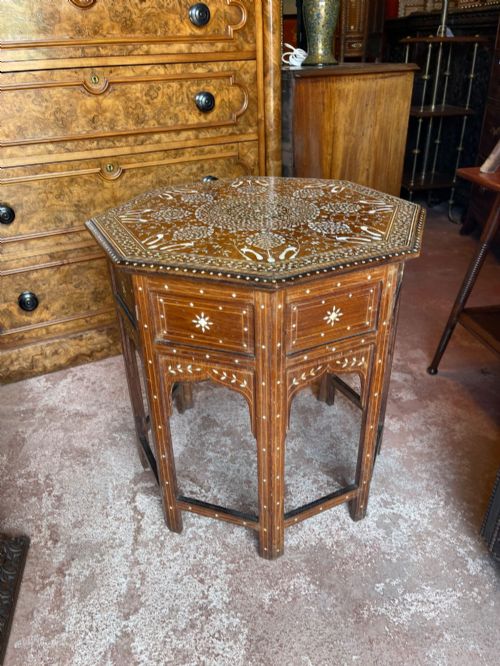
Carved Inlaid Occasional Table
A carved inlaid occasional table brings tactile surface pattern and warm timber tones into a room.
Carved Inlaid Occasional Table
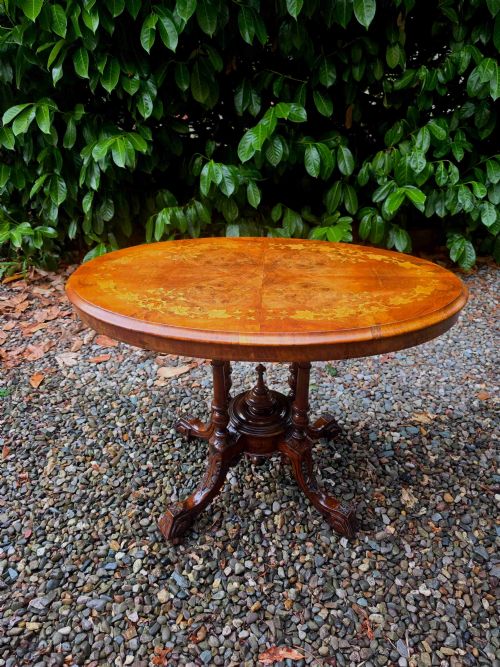
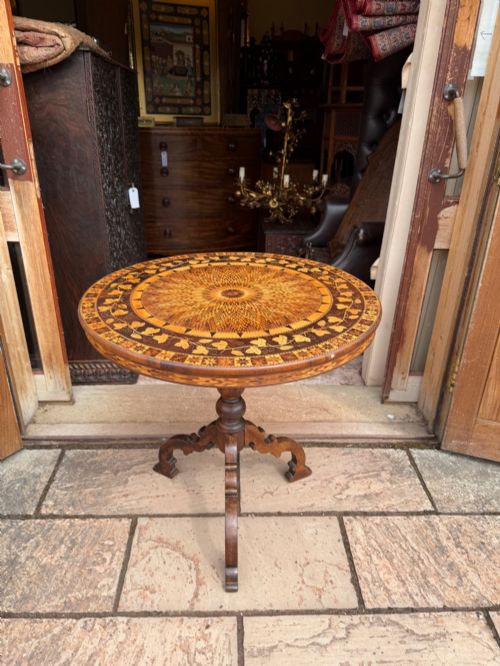
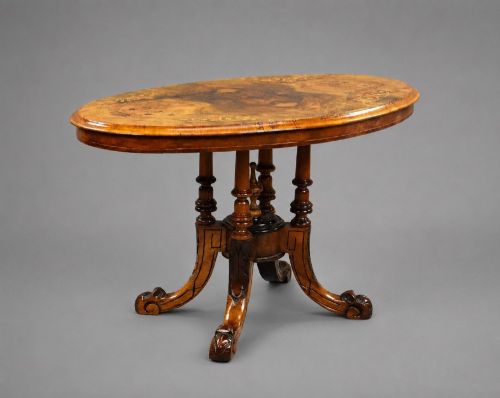
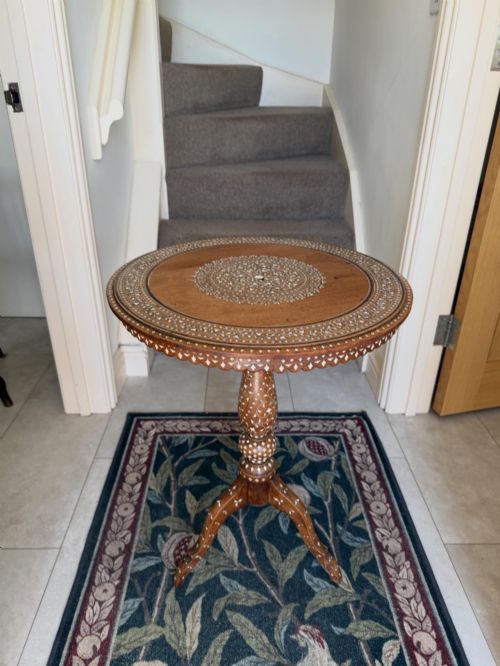
A carved inlaid occasional table combines surface carving with contrasting wood or bone sections, appearing frequently in Victorian, Edwardian, and nineteenth-century inventories.
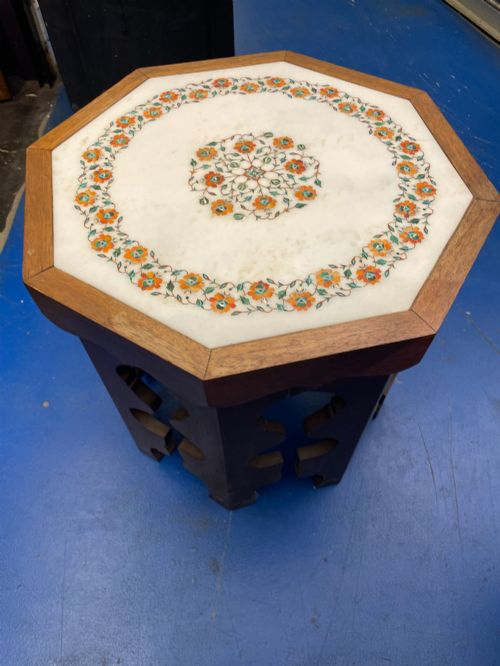
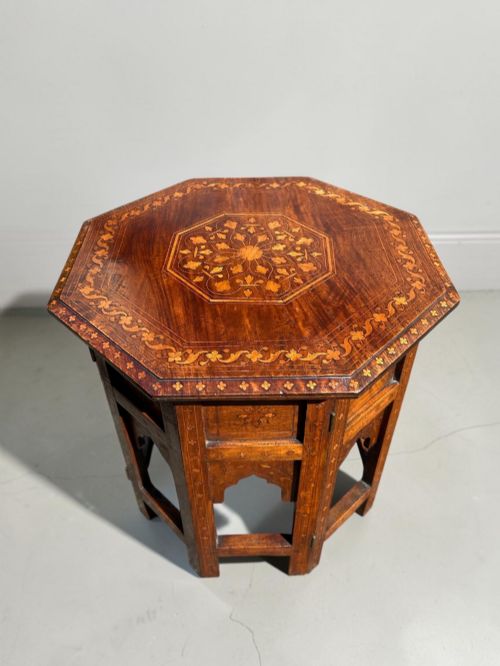
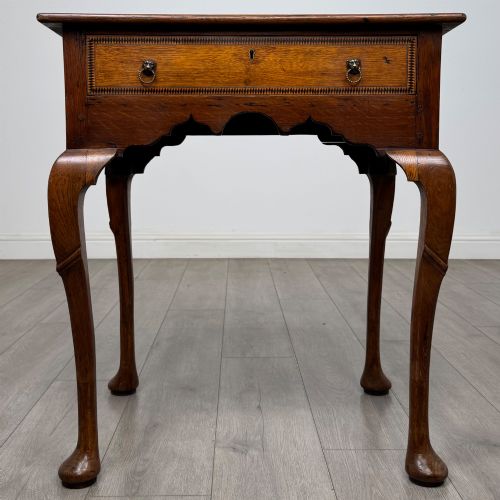
The selection ranges from British walnut and mahogany lamp tables to Anglo-Indian octagonal folding pieces, Syrian multi-tier designs, and Chinese export work.
Most examples function as compact side, lamp, or coffee tables designed to sit beside seating while displaying intricate geometric or floral detailing.
How they were made
Cabinetmakers utilised dense timbers including walnut, burr walnut, mahogany, and rosewood as the primary structural foundations for these tables.
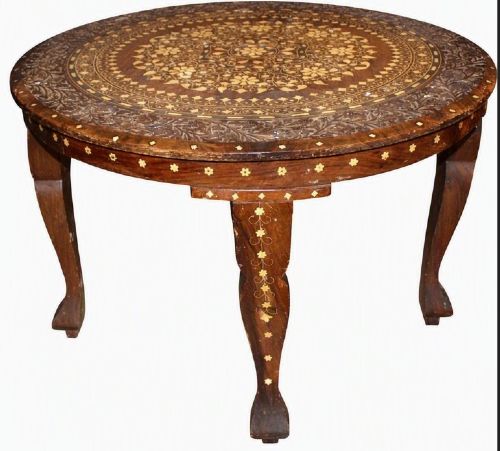
Surface enrichment relied on intricate inlay techniques incorporating bone, mother of pearl, brass wire, and various contrasting woods, paired with hand-carved relief work.
Materials recorded across the inventory include solid walnut, burr walnut, rosewood, teak, brass, bone, and mother of pearl.
What varies in quality
Quality rests in the precision of the joinery and the crispness of the hand-carved motifs, distinguishing workshop skill from mass production.
The integrity of the surface inlay determines the grade, where flush, tightly fitted bone or contrasting wood sections command higher regard than superficial surface decoration.
Trevor Page And Co·Liberty And Co
The Carved Inlaid Occasional Table Glossary
- Marquetry
- The art of forming decorative patterns on a wooden surface by fitting together small pieces of veneer. This technique creates complex pictorial or geometric designs.
- Hoshiarpur
- A North Indian city renowned for intricate wood carving and inlay work using bone or brass. Pieces from this region often feature dense floral and geometric motifs.
- Occasional table
- A small, movable table designed for intermittent use in a principal room. These items serve functional roles as lamp or side tables.
- Burr walnut
- A prized timber harvested from walnut tree growths, known for its swirling grain patterns. Cabinetmakers selected it for tabletops to create striking visual movement.
Carved Inlaid Occasional Table: Frequently Asked Questions
Where should I place a carved occasional table?
These compact tables fit readily beside armchairs, sofas, or in entrance halls where a surface is needed for a lamp or small objects.
Their decorative surfaces benefit from natural light that highlights the carving and contrasting inlay.
How do I identify an Anglo-Indian table?
Anglo-Indian pieces typically display dense overall carving combined with bone or brass inlay work on timber such as teak or shesham.
Many examples adopt traditional folding octagonal top constructions originating from workshops in regions like Hoshiarpur.
What is the difference between marquetry and inlay?
Marquetry involves assembling a complete veneer mosaic applied across the entire surface of the timber foundation.
Inlay generally refers to setting individual pieces of contrasting material into hollowed-out recesses within the solid wood.
How do I care for a burr walnut table?
Maintain the timber by keeping the table away from direct heat sources and strong sunlight that can dry the grain.
Dust regularly with a dry cloth and apply occasional natural wax to nourish the polished surface.