

Carved Home Office Desk
A carved home office desk brings nineteenth-century presence and timber warmth to daily writing work.
Carved Home Office Desk
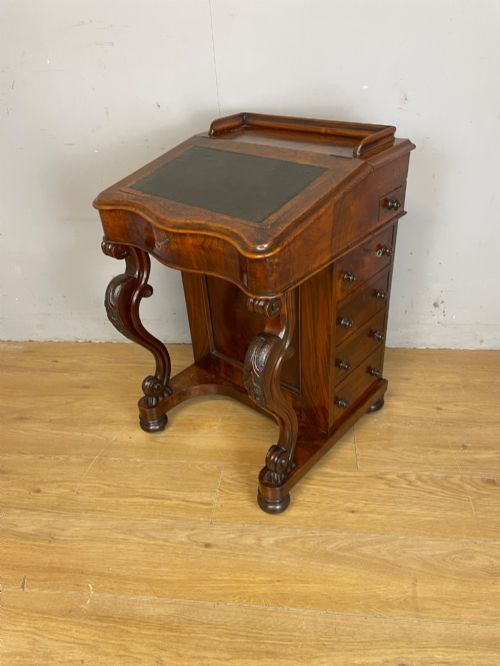
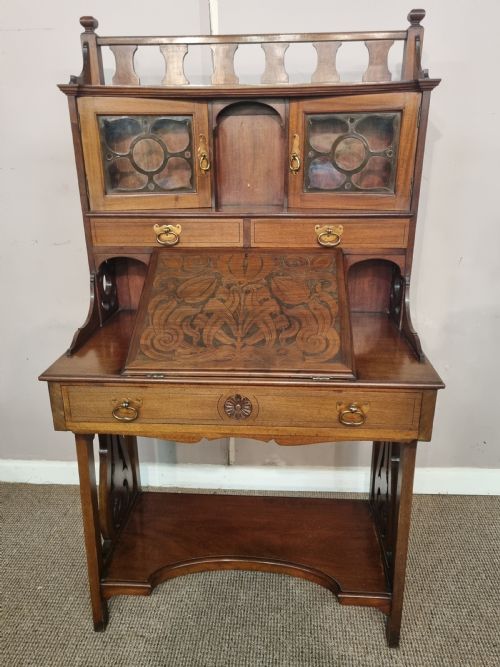
A carved home office desk encompasses robust pedestal tables, compact Davenport writing boxes, and kneehole forms designed for private studies. These pieces originate primarily from the Victorian and Edwardian eras, spanning the nineteenth and early twentieth centuries.
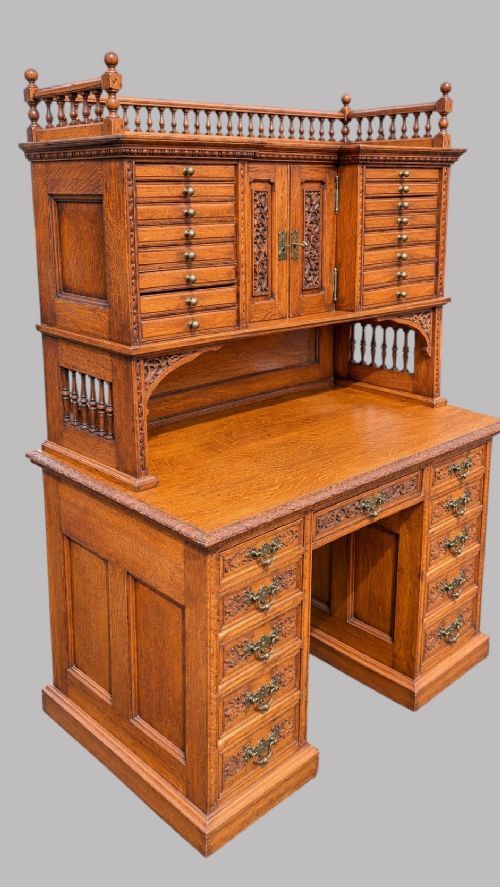
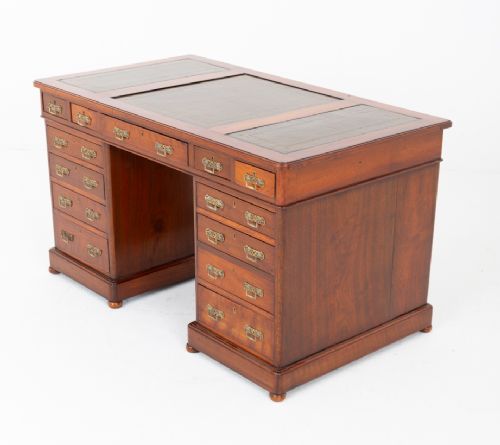
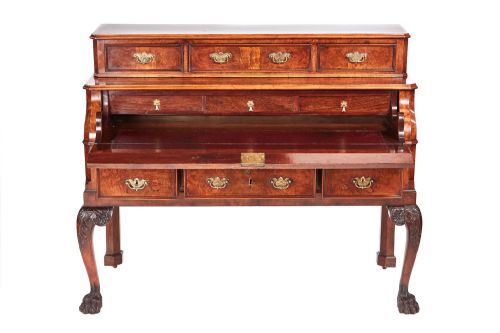
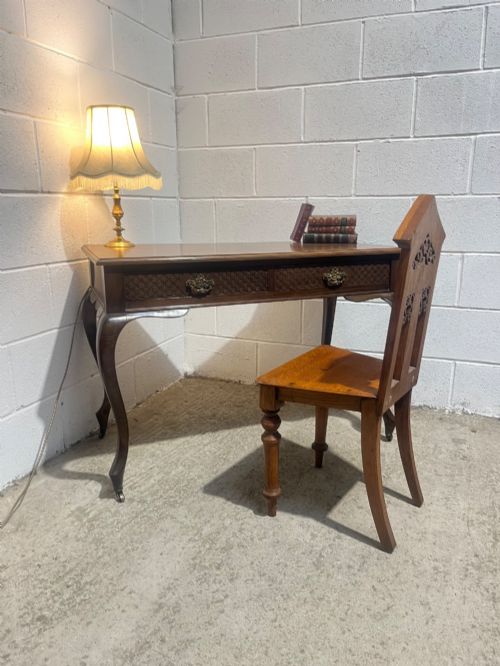
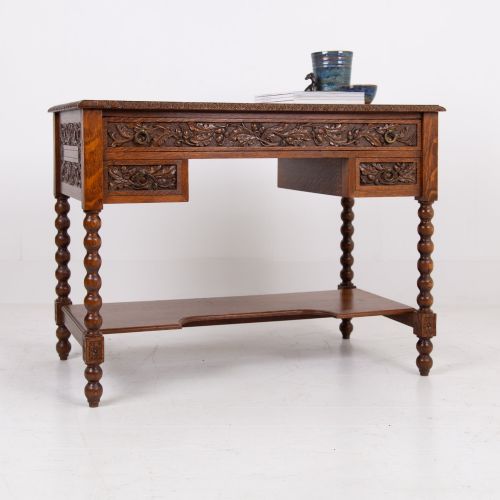
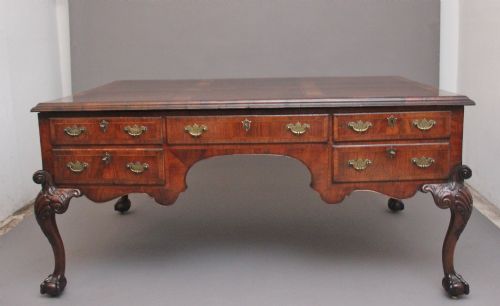
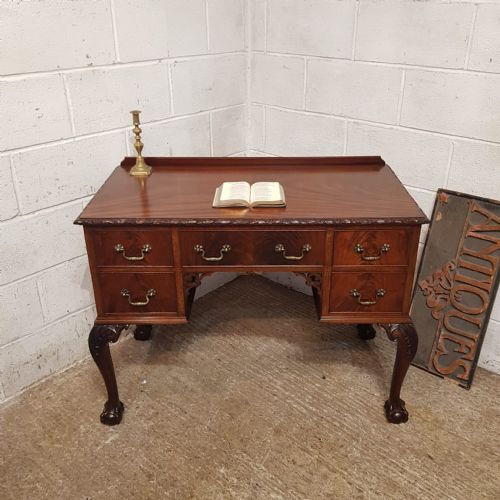
The version most commonly met on this page is the twin-pedestal desk featuring multiple drawers and an inset writing surface. Such examples utilise sturdy timbers like mahogany, oak, and walnut, often ornamented with carved details.
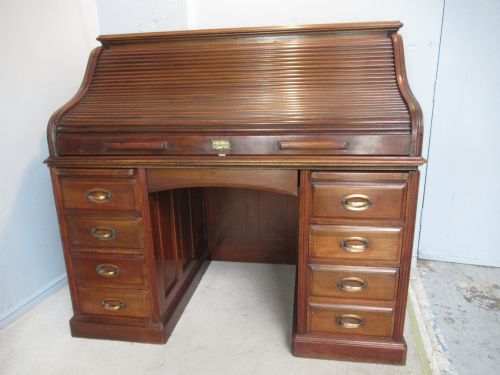
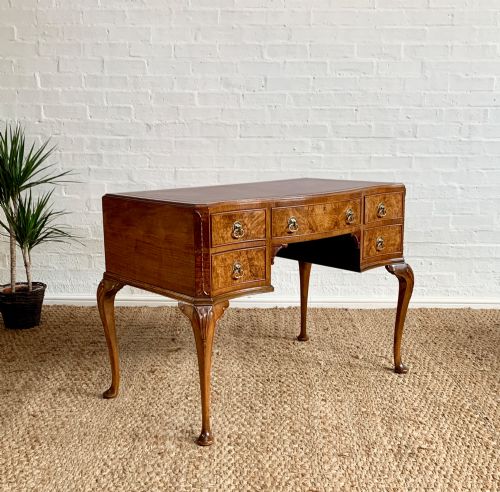
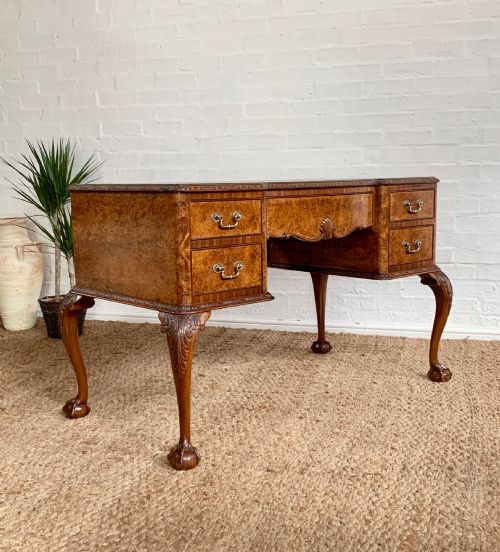
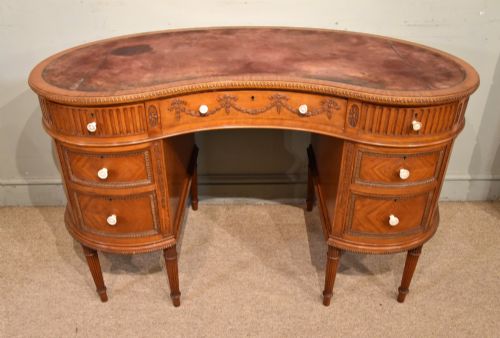
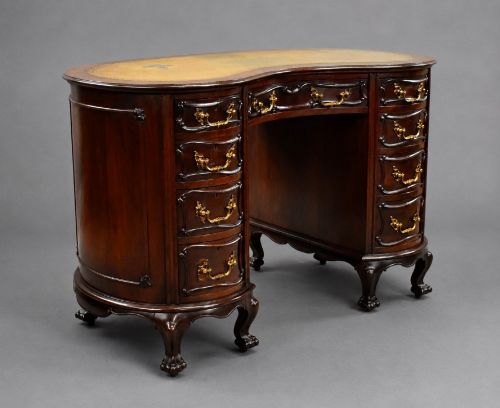
Makers and cabinetmakers of the period also produced serpentine fronts, kidney-shaped writing tables, and bureau cabinets. Each form adapts traditional proportions for functional workspace use within a domestic interior.
How They Were Made
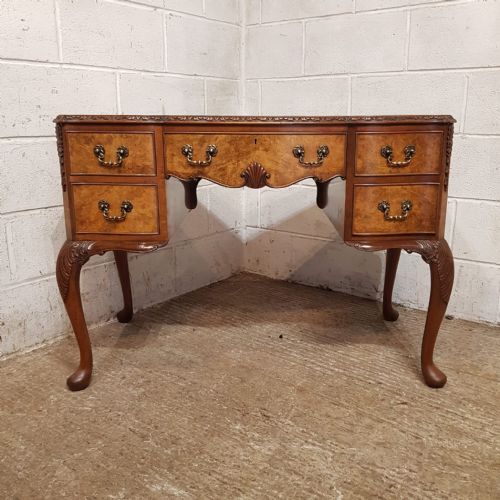
Cabinetmakers constructed these desks using dense hardwoods including mahogany, walnut, and oak, frequently applying figured burr walnut veneers to primary display surfaces. Solid timber framing ensures structural stability for heavy daily use.
Worksurfaces often incorporate inset panels of tooled leather, whilst drawer construction relies on traditional dovetail joints. Carved ornamentation, such as paw feet or foliage motifs, is worked directly into the solid wood.
Several desks include hidden compartments and secret drawers originally designed for private correspondence.
What Varies in Quality
Quality rests upon the selection of timber veneers and the depth and crispness of the hand-carved elements. Finely figured burr walnut and carefully matched mahogany grains distinguish superior workshops from standard production pieces.
Interior construction details, such as solid drawer linings and original brass hardware, indicate the level of craftsmanship invested in the desk. The integration of specialised maker signatures further elevates the standing of an individual piece.
Wylie & Lochhead Glasgow·Maple & Co·Rumney & Love Liverpool·Edwards & Roberts·Étienne Kohlmann
The Carved Home Office Desk Glossary
- Pedestal desk
- A heavy writing table supported by two banks of drawers flanking a central kneehole. These units provide substantial storage capacity alongside a formal work surface.
- Kneehole desk
- A compact desk configuration featuring a central recess for the user's legs, enclosed by smaller drawers on either side. This format suits smaller studies or domestic office spaces.
- Davenport
- A small sloping-lid writing desk originating in the nineteenth century, equipped with side drawers. The top surface typically holds a hinged desk box.
- Burr walnut
- A highly figured timber veneer harvested from the knot growths of walnut trees. It yields swirling patterns prized for decorative cabinet fronts.
- Partners desk
- A large double-sided writing table designed for two people to work opposite one another. Drawers and cupboards are duplicated on both long sides.
Carved Home Office Desk: Frequently Asked Questions
How do I maintain the leather top?
Clean the leather surface gently using a soft, dry cloth and apply specialist leather balsam periodically to prevent cracking.
Avoid placing hot cups or moisture directly onto the writing surface to preserve the tooling and gilt work.
Where should I place a pedestal desk?
Position the desk with adequate clearance around the pedestals to allow drawers to open fully without obstruction.
Ensure the timber is kept away from direct heat sources and strong sunlight to prevent warping and fading.
How do I identify Victorian pieces?
Examine the drawer construction for hand-cut dovetails and inspect the secondary woods used inside the carcass.
Victorian desks frequently employ dense mahogany or walnut timbers combined with heavy brass hardware and traditional finishes.
Can I use these for modern computers?
Most antique desks accommodate laptops comfortably upon their leather or timber writing surfaces.
Carefully measure kneehole clearances and drawer heights to ensure modern office chairs fit beneath the desk frame.