





Superstructure Oak Writing Desk
A superstructure oak writing desk offers robust Victorian workspace utility with built-in tiered storage, bringing solid timber presence to any study.
Superstructure Oak Writing Desk
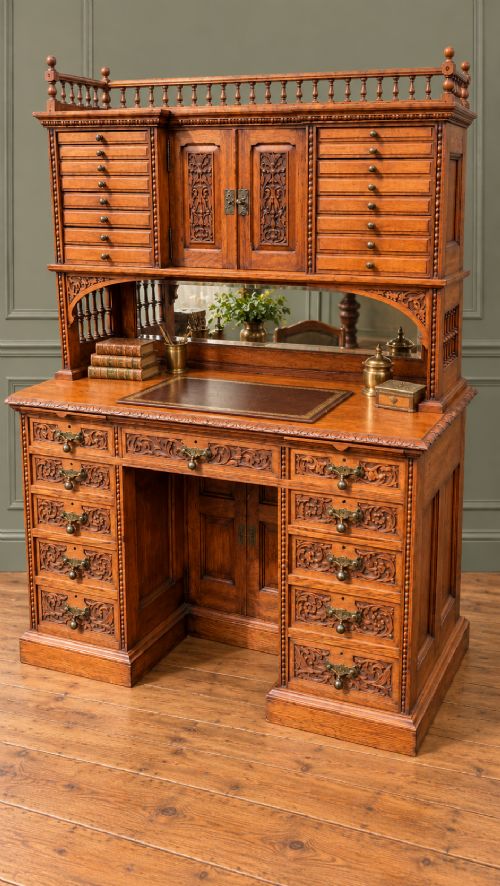
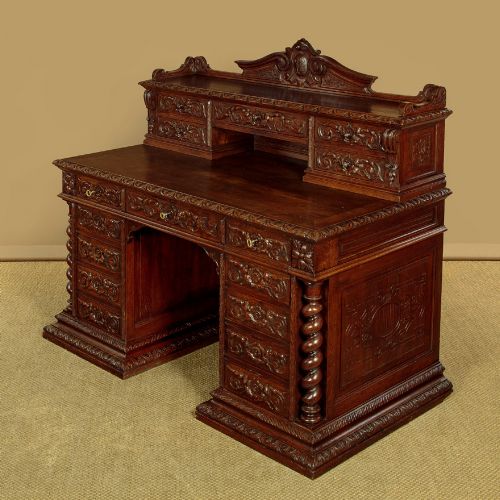
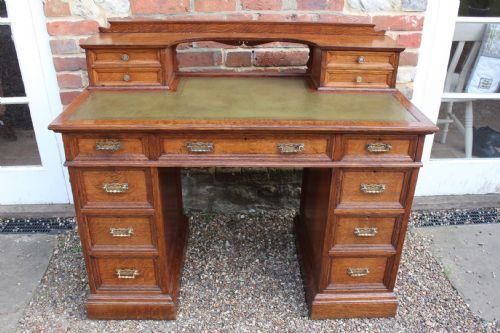
When you search for a superstructure oak writing desk, you encounter heavy Victorian workspace furniture designed for domestic studies, estate offices and country houses. These pieces combine a primary writing surface with raised superstructure elements such as drawers, compartments or pigeonholes at the rear.
The versions you meet most frequently on this page date from the Victorian era, spanning decades from eighteen sixty to nineteen hundred. They appear in formats including pedestal desks, kneehole arrangements and Dickens desk configurations, constructed primarily from solid oak and pollard oak.
How they were made
Cabinet makers utilised dense native and golden oak timbers, occasionally selecting pollard oak veneers for figured grain patterns on prominent surfaces. Desk tops frequently incorporate inset writing surfaces of worked leather alongside visible hand-carved ornamentation typical of the period.
Structural integrity relied on traditional joinery methods combined with brass hardware, including handles, hinges and castors. Superstructure tiers and pedestal drawer carcases were joined firmly to bear the weight of heavy ledgers and stationery.
Superstructure Oak Writing Desk Retail Price Guide 2026
Typical asking prices for superstructure oak writing desk among the pieces listed under this phrase on Sellingantiques today, from the lower quarter to the upper quarter. They describe what is for sale here now, not the wider market.
The documented forms on this page include pedestal layouts, kneehole arrangements and Dickens desk variations.
What varies in quality
The distinction between standard commercial pieces and top tier examples lies in the ambition of the carving and the selection of timber figure, such as richly patterned pollard oak. Maker attribution to notable nineteenth century firms elevates a piece significantly.
Construction depth also separates the grades, visible in the thickness of solid timber drawer linings and the precision of architectural mouldings built into the superstructure.
Thomas Turner·Howard & Son·James Lamb Manchester
The Superstructure Oak Writing Desk Glossary
- Superstructure
- A raised tier of drawers, shelves or compartments built onto the rear of a desk surface. This arrangement provides partitioned storage for papers and stationery.
- Pedestal desk
- A heavy freestanding writing table supported by two vertical banks of drawers reaching down to the floor. It offers extensive enclosed storage beneath the main writing plane.
- Kneehole desk
- A compact desk featuring a central recess for the user's legs, flanked by pedestals containing drawers. This form allows a seated posture directly facing the centre.
- Dickens desk
- A large partner desk design featuring a high superstructure with sloping lids or banks of drawers facing inward. It is traditionally associated with nineteenth-century clerical administration.
- Pollard oak
- Oak timber taken from trees that have been pollarded, producing highly decorative and speckled grain patterns. Cabinet makers prized this material for drawer fronts and feature panels.
Superstructure Oak Writing Desk: Frequently Asked Questions
What is a superstructure oak writing desk?
A superstructure oak writing desk is a nineteenth-century workspace furnishing featuring a raised bank of pigeonholes or small drawers mounted at the rear of the writing surface. These additions kept correspondence and writing materials organised close at hand.
Such desks formed the administrative hubs of Victorian libraries, estate offices and studies, constructed to handle heavy daily record keeping in solid timber.
How do I date a Victorian oak desk?
Dating relies on observing stylistic markers, construction methods and timber choices recorded across the Victorian period. Pieces from the eighteen sixties often display specific regional forms, whilst later nineteenth-century examples incorporate Renaissance Revival carving.
Maker signatures, stamps on drawer edges and brass hardware styles additionally help narrow the manufacture window between eighteen sixty and nineteen hundred.
Where were these desks used originally?
These desks served primarily in private studies, country house libraries and estate manager offices where heavy paperwork required dedicated organisation. The raised superstructure kept ledgers and correspondence secure and sorted.
They also occupied commercial counting houses and urban professional chambers before finding their way into domestic preservation.
How do I care for antique oak furniture?
Preserving antique oak requires maintaining stable room temperatures and avoiding direct sunlight that can dry out nineteenth-century leather writing inserts and timber finishes. Regular dusting with a dry cloth protects the carved details.
Occasional application of appropriate wax feeds the oak grain without building up heavy chemical residues on the polished surfaces.