

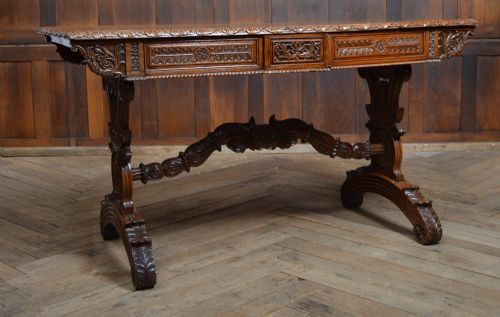


Carved Hardwood Writing Table
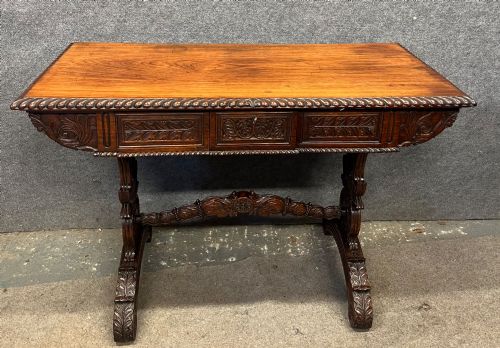
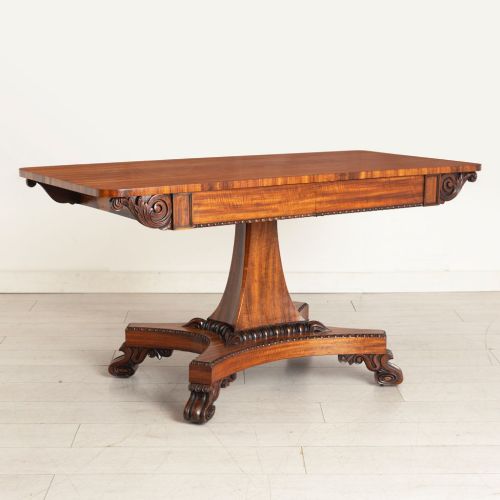
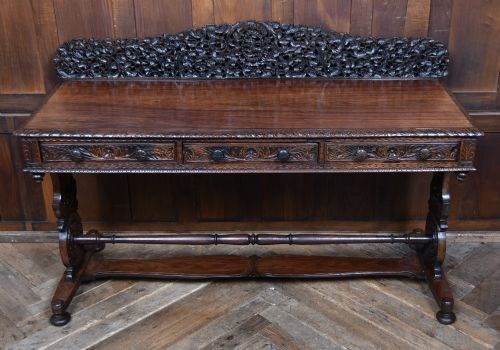
A carved hardwood writing table brings dense grain and deep relief carving into a room, offering a sturdy surface shaped by global workshop traditions.
Carved Hardwood Writing Table
A carved hardwood writing table unites dense timber construction with intricate surface relief, appearing across various regional traditions including Chinese export work, Anglo-Indian colonial pieces, and Japanese production. Buyers seeking this category encounter forms such as library tables, partners desks, and specialised writing desks shaped during the nineteenth and early twentieth centuries.
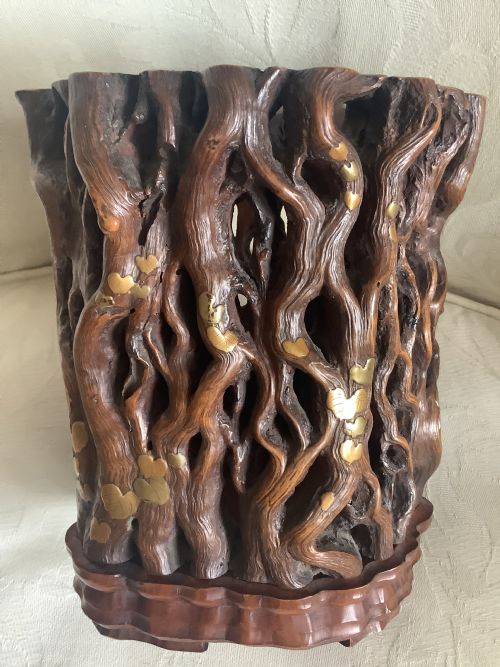
The pieces on this page span the Victorian and Edwardian eras alongside specific decades like 1880, 1890, 1900, and 1920, reflecting trade movements and stylistic crossovers. Alongside traditional writing desks, related forms such as centre tables, pedestal desks, and brush pots demonstrate the broader application of carved hardwood within period interiors.
Materials and construction methods
Makers utilised dense timbers such as padauk, teak, elm, and general hardwoods capable of supporting deep hand-carved relief without splitting along the grain. These woods provided the structural weight necessary for large library tables and partners desks.
Metal elements like brass and gilt bronze appear alongside glass in specific forms such as display tables, while structural joinery relies on traditional framing to accommodate the seasonal movement of heavy tropical and domestic hardwoods.
Carved Hardwood Writing Table Retail Price Guide 2026
Typical asking prices for carved hardwood writing table among the pieces listed under this phrase on Sellingantiques today, from the lower quarter to the upper quarter. They describe what is for sale here now, not the wider market.
Listings feature items dated across the nineteenth century, 1880, 1890, 1900, the Victorian and Edwardian periods, and 1920.
Judging quality and execution
The distinction between standard and superior examples lies in the crispness and depth of the carved ornament, particularly where dragon motifs or foliage wrap around structural framing. Deeper, more resolute hand carving demonstrates a higher degree of workshop skill.
The choice of timber grain and the integrity of the underlying joinery govern longevity, separating pieces built for heavy scholarly or administrative use from lighter decorative variants.
The Carved Hardwood Writing Table Glossary
- Padauk
- A heavy, durable tropical hardwood with a reddish hue frequently utilised in nineteenth-century colonial and export furniture. It takes a fine carved edge.
- Partners desk
- A large double-sided desk designed for two people to sit opposite each other, featuring banks of drawers on both sides. These heavy pieces often display elaborate carved detailing.
- Library table
- A substantial freestanding table used for reading and writing, finished on all sides so it could sit in the centre of a room. They often incorporate frieze drawers for stationery.
- Bijouterie table
- A glass-topped display table designed to showcase small valuable objects, sometimes constructed in hardwood during the late nineteenth or early twentieth century.
Carved Hardwood Writing Table: Frequently Asked Questions
Where were these tables made?
The pieces originate from various international workshops influenced by trade and export markets during the nineteenth and early twentieth centuries. Styles span Chinese export, Anglo-Indian colonial, and Japanese production.
Craftsmen utilised local dense timbers such as padauk and teak to construct forms suited to European writing habits and domestic interiors.
How do I maintain a hardwood surface?
Hardwood furniture benefits from minimal intervention, relying on regular dusting with a dry lint-free cloth to protect the polished finish. Avoid placing timber pieces in direct sunlight or near heat sources to prevent shrinkage.
Applying a traditional beeswax sparingly helps nourish the grain without building up sticky residues on carved relief work.
What is a partners desk?
A partners desk is a large format writing table configured with drawers and cupboards accessible from both long sides. This layout allowed two people to work facing one another in a study or library.
Because they were built for heavy administrative use, these desks feature sturdy hardwood frames and substantial writing surfaces.
How do I distinguish Victorian from Edwardian pieces?
Victorian examples generally date from the mid to late nineteenth century and often display heavier proportions alongside deep, robust carving styles. Padauk and heavy hardwoods dominate this earlier period of production.
Edwardian pieces extend into the early twentieth century, occasionally introducing lighter forms, display glass, or alternative styling influences while retaining solid hardwood construction.