


Carved Hardwood Curio Cabinet
A carved hardwood curio cabinet holds small treasures behind glass, bringing rich grain and intricate carving into a room.
Carved Hardwood Curio Cabinet
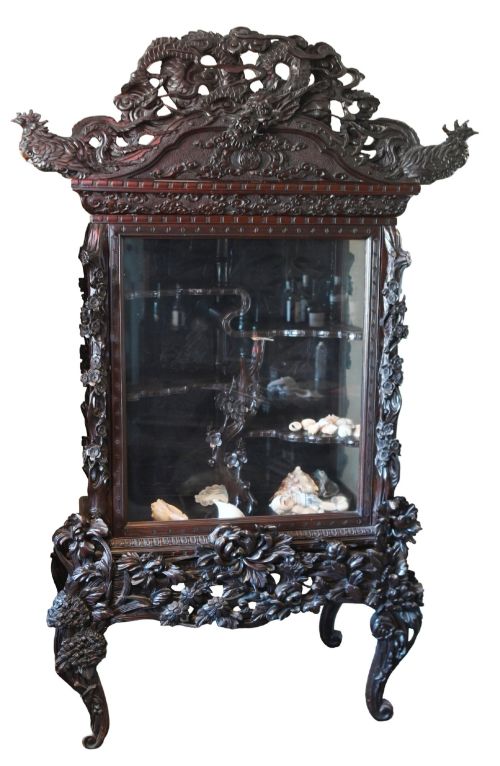
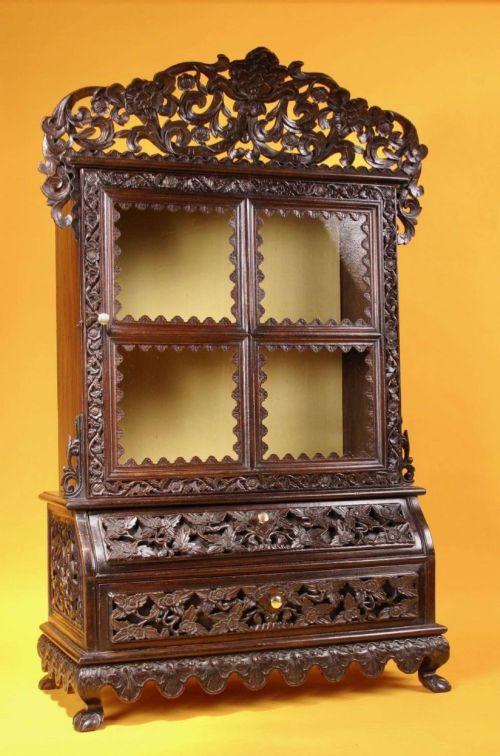
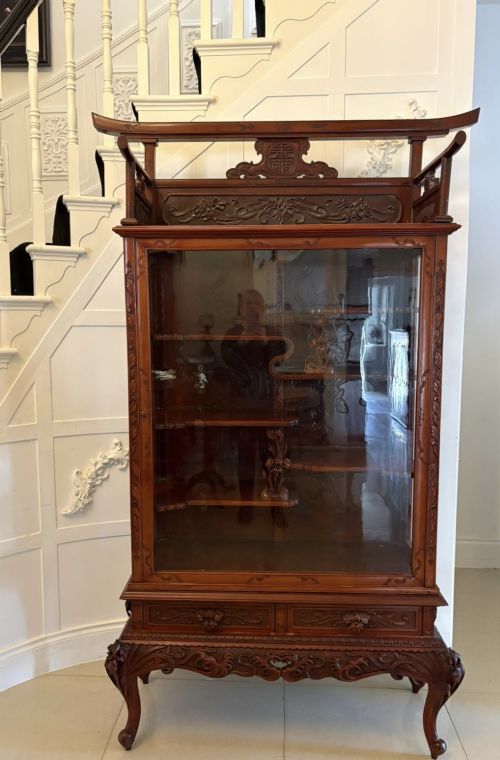
When you search for a carved hardwood curio cabinet, you are looking at glazed display furniture designed to hold precious objects and small ornaments. These pieces span the nineteenth and early twentieth centuries, drawing on diverse global traditions including Chinese Qing style, Japanese Meiji period design, and Anglo-Indian craftsmanship.
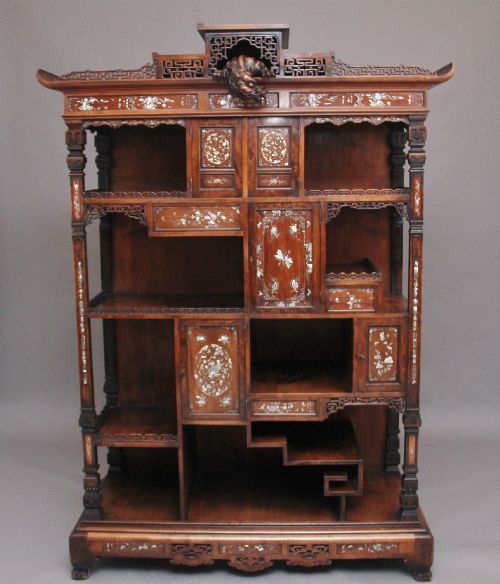
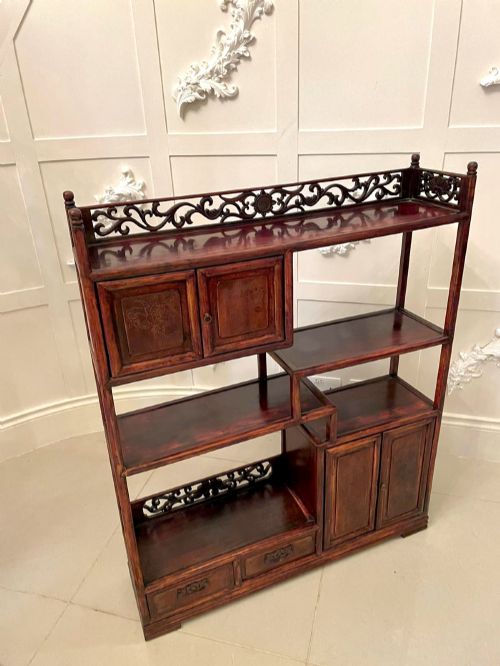
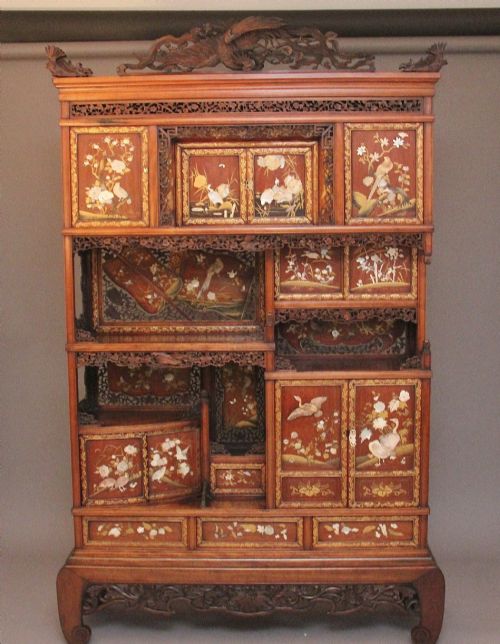
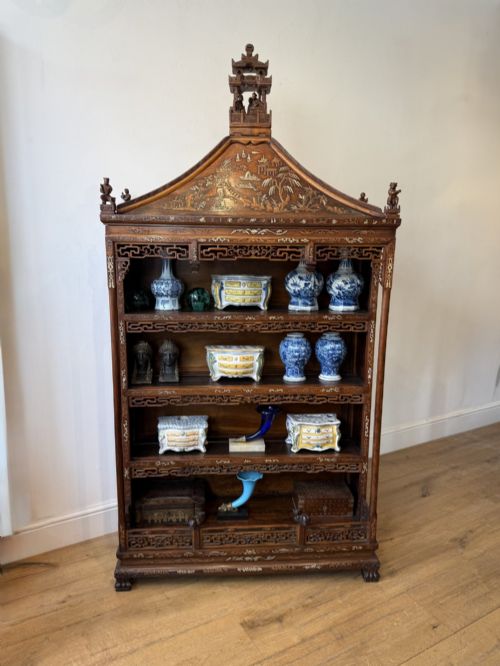
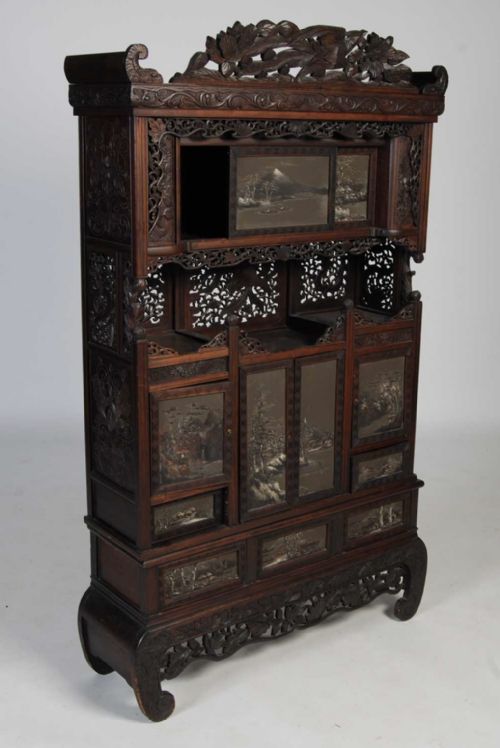
The versions you are most likely to meet on this page include Chinese hongmu open cabinets, pagoda display cabinets, and Japanese shodona cabinets on stands. They range from compact tabletop display stands to substantial glazed floor cabinets intended for formal reception rooms.
Materials and construction
Cabinet makers utilised dense exotic timbers such as hongmu and rosewood, which allowed for deep, crisp carving without splintering. These rich dark woods were frequently embellished with contrasting inlays of mother-of-pearl to catch the light.
Many examples incorporate glazed doors or open asymmetrical shelving structures known as shodona, designed to showcase porcelain and jade. Red lacquer and brass mounts appear on specific pieces, combining structural integrity with decorative refinement.
Some nineteenth-century makers tucked tiny hidden shelves inside pagoda cabinets just to surprise anyone rearranging the porcelain.
What separates the fine examples
The distinction between ordinary and exceptional work lies in the depth and clarity of the carving. Superior cabinets display undercut foliage and figures that retain their sharp edges, whereas lesser pieces show softer, shallower relief work.
Construction quality also reveals itself in the joinery of the intricate shelving arrangements and the snug fit of glazed doors. Timbers chosen for their consistent grain and rich natural colour elevate the finished piece significantly above utilitarian workshop output.
The Carved Hardwood Curio Cabinet Glossary
- Hongmu
- A dense, heavy hardwood prized by Chinese furniture makers for its deep reddish-brown colour and fine grain. It accepts intricate hand carving exceptionally well.
- Shodona
- A Japanese tier-style display cabinet featuring asymmetrical shelving designed for ornaments. These pieces originated during the Meiji period and combine utility with delicate craftsmanship.
- Mother-of-pearl
- The iridescent inner layer of mollusc shells used for inlay work. Craftsmen cut thin pieces to form floral or geometric patterns against dark hardwood surfaces.
- Japonisme
- A Western artistic style inspired by Japanese art and design during the late nineteenth century. It heavily influenced European interpretations of Asian cabinetry.
Carved Hardwood Curio Cabinet: Frequently Asked Questions
How were these cabinets used?
These cabinets served as focal points in Victorian and Edwardian drawing rooms for displaying imported porcelain, ivories, and small curiosities.
The glazed doors and open shelves protected delicate objects from dust while allowing guests to admire the owner's collection.
How do I date a Chinese cabinet?
Dating relies on timber selection, construction methods, and stylistic markers such as nineteenth-century Qing characteristics versus early twentieth-century export designs.
Examining the backboards and interior joinery often provides reliable clues about the workshop era.
Where should I place one?
These cabinets suit studies, drawing rooms, or hallways where natural light can illuminate the glazed display sections and highlight the carved details.
Keep them away from direct heat sources to prevent the dense hardwoods and intricate joints from drying out.