




Glazed Specimen Cabinet
A glazed specimen cabinet brings together precision timberwork and glass display, offering a dedicated home for natural history collections and small curiosities.

Glazed Specimen Cabinet
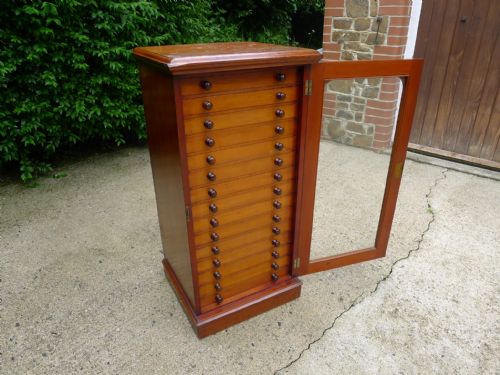
A glazed specimen cabinet is designed to protect and display delicate collections, ranging from insects and bird specimens to microscope slides and shells. You will frequently encounter nineteenth-century examples, particularly from the Victorian and Edwardian eras, built as multi-drawer chests or tabletop cases.
The materials span mahogany, walnut, oak, burr walnut, and satinwood, often fitted with glass doors or lift-off display tops. Some pieces emerge in regional variations such as teak or cedar, reflecting colonial and international trade during the nineteenth century.
Formats vary from large standing cabinets with numerous small drawers to compact table cabinets and wall-mounted display cases. The unifying element remains the glazed frontage or viewing panel, which allows safe inspection of the contents within.
Construction and Materials
Cabinetmakers utilised dense hardwoods like mahogany, walnut, and oak to construct the carcasses, ensuring the drawers remained stable and airtight to protect organic specimens. Fine brass handles, hinges, and locking mechanisms frequently secure the doors and drawers.
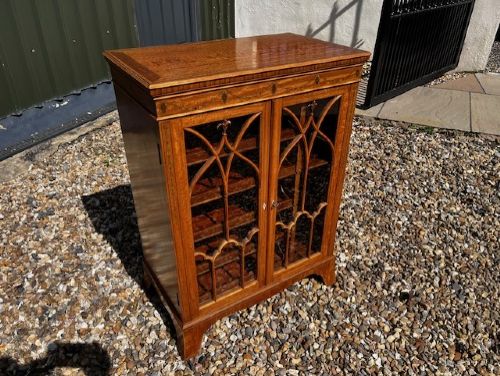
Glass panels are set into timber frames, sometimes enhanced by marquetry inlay or geometric brass detailing. Drawer interiors often feature precise joinery designed to hold specialised trays or glass-topped compartments without warping.
Listings feature woods including mahogany, burr walnut, oak, satinwood, teak, and cedar across the nineteenth and early twentieth centuries.
Judging Quality and Execution
Quality rests primarily in the timber selection and the precision of the drawer construction, where tight tolerances prevent dust from reaching sensitive collections. The choice of figured woods, such as burr walnut or Cuban mahogany, signals a piece destined for a discerning owner.
The integration of the glazing and the refinement of the brass hardware distinguish standard workshop production from specialised maker output. Cabinets signed by known natural history outfitters carry distinct marks of professional craftsmanship in every joint.
Watkins & Doncaster·Brady of Edmonton·J.T.Crockett
The Glazed Specimen Cabinet Glossary
- Specimen cabinet
- A piece of furniture containing multiple shallow drawers intended for storing and classifying natural history objects. These often feature glass doors or glazed lids.
- Entomology case
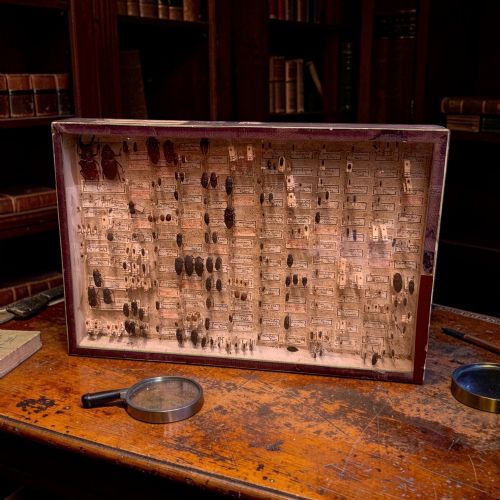
- A specialised housing designed specifically for the collection and preservation of insects. These frequently incorporate tight-fitting drawers with cork lining.
- Microscope slide cabinet
- A compact storage chest featuring extremely shallow drawers scaled to hold glass microscopy slides. They often include numbered indexing systems.
- Burr walnut
- A highly figured wood veneer derived from the burl growth of a walnut tree. It produces swirling patterns prized in Victorian cabinetmaking.
- Marquetry
- Decorative inlay work using various coloured woods to form patterns on the surface of a piece. It appears on finer Edwardian and late Victorian examples.
Glazed Specimen Cabinet: Frequently Asked Questions
What were glazed specimen cabinets originally used for?
These cabinets served naturalists and collectors as secure storage for classified samples, including insects, shells, minerals, and botanical specimens.
The glass fronts allowed scholars and enthusiasts to study fragile collections without exposing them to handling, dust, or light damage.
How do I date a Victorian specimen cabinet?
Dating relies on timber choices, construction techniques, and hardware styles associated with the nineteenth century.
Makers' stamps, lock manufacturers' names, and specific drawer configurations also help narrow the period of manufacture.
Can I use these cabinets for modern displays?
They suit the display of modern curiosities, small sculptures, jewellery, and contemporary collections exceptionally well.
The shallow drawers and glass viewing areas protect modern items just as effectively as nineteenth-century natural history specimens.
What maintenance do these wooden cabinets require?
Maintenance involves keeping the timber conditioned with appropriate wax and ensuring the glass remains clean.
Keeping the cabinets away from direct sunlight and fluctuating humidity preserves the historical wood and internal linings.