
Carved Hall Settle
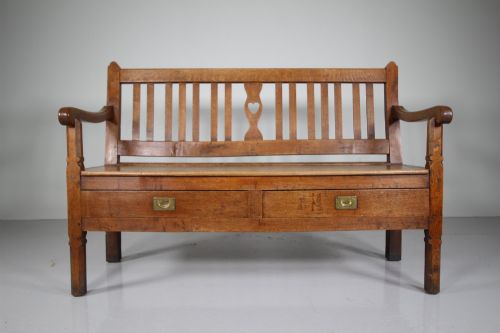
A carved hall settle makes a commanding entrance, offering solid oak structure and integrated storage for coats, boots and daily life.
Carved Hall Settle
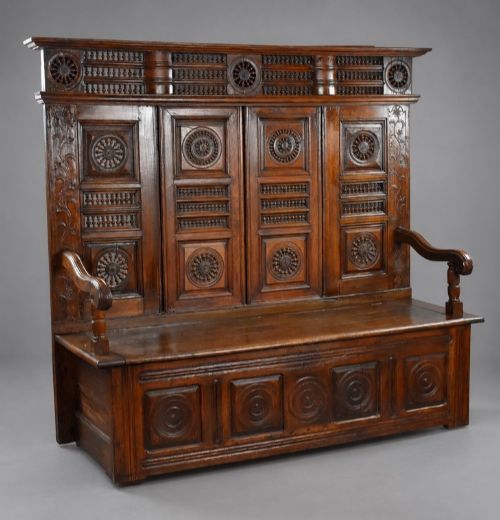
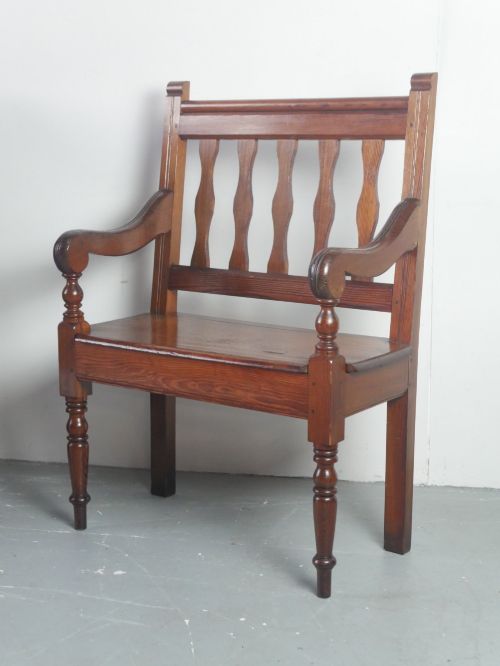
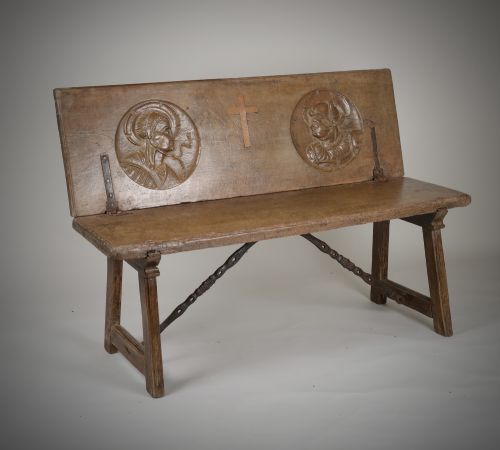
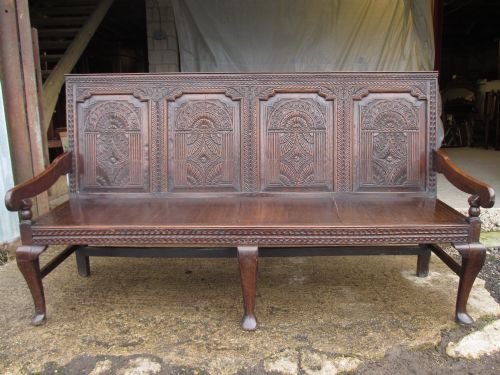
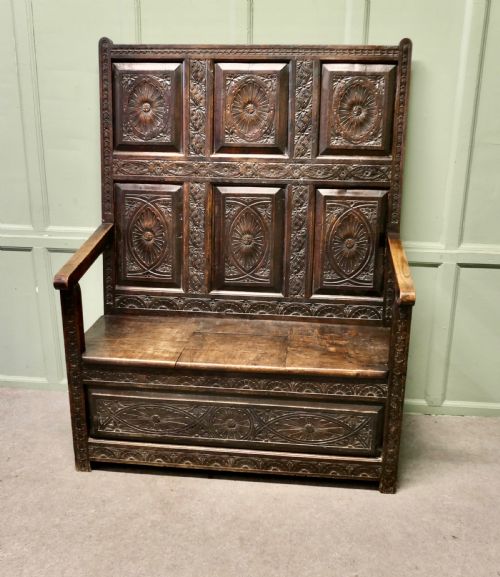
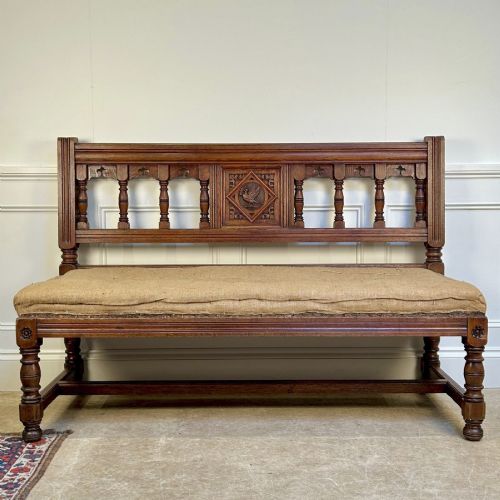
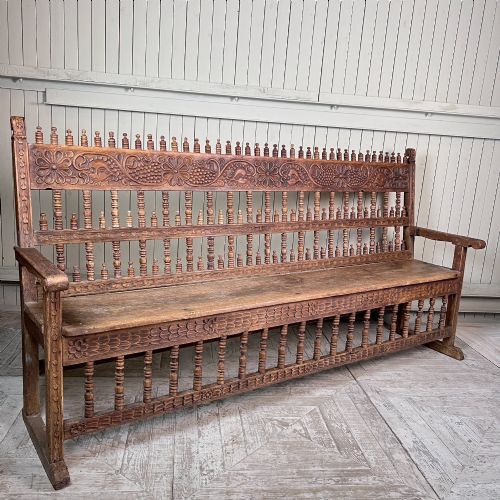
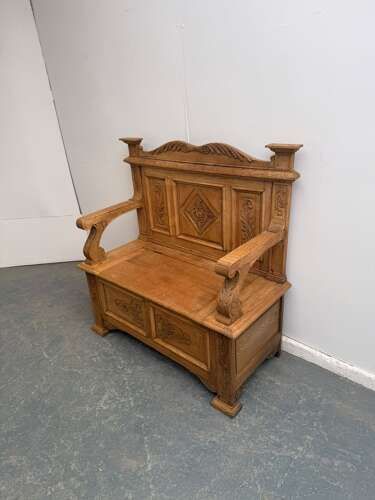
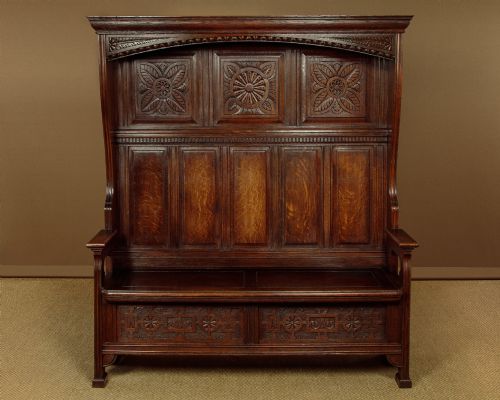
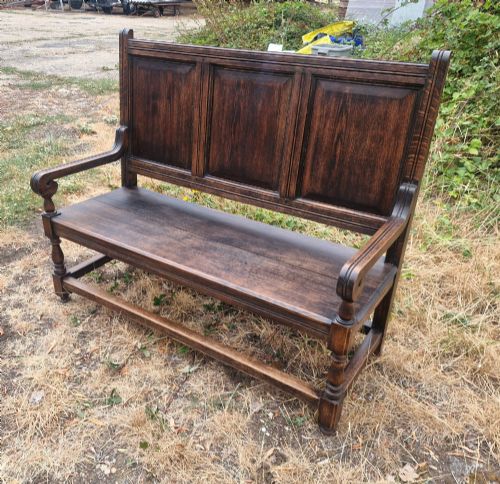
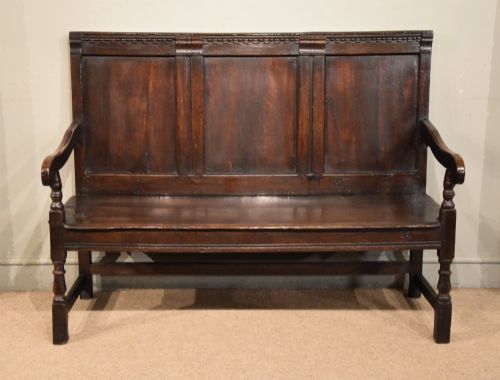
A carved hall settle stands as a substantial wooden bench designed for hallways and entrance spaces, featuring a high back and frequently incorporating storage beneath the seat. When exploring a carved hall settle, you will predominantly encounter solid oak examples dating from the Victorian and 18th Century periods.
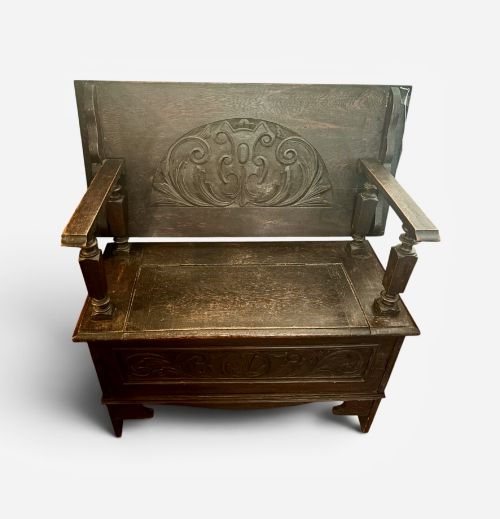
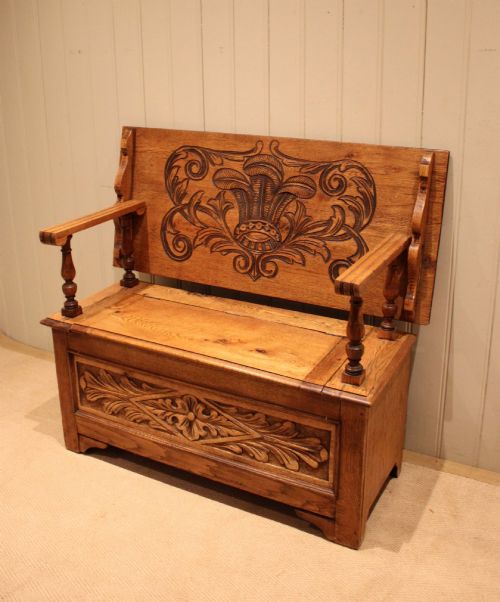
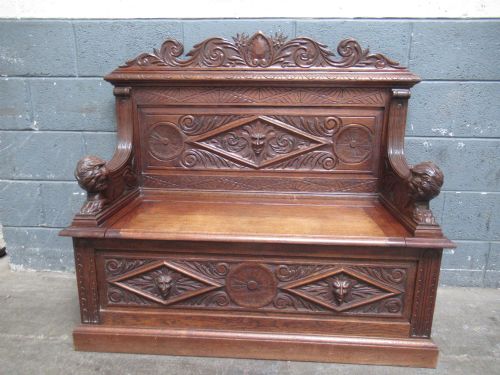
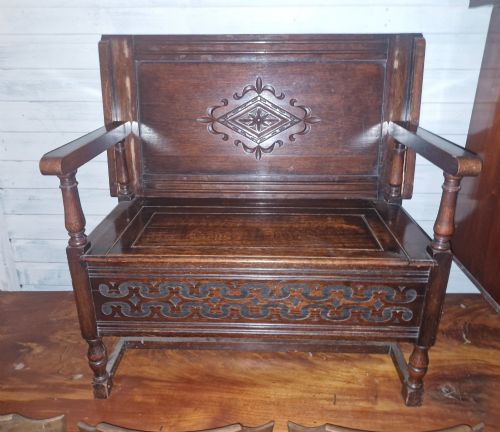
These forms range from architectural box settles with panelled backs to convertible monk's benches that fold into tables. Regional English styles often display traditional motifs like the Green Man alongside Gothic Revival or Jacobean influences.
While British oak dominates, the selection occasionally includes walnut, mahogany and hardwood variants from continental Europe and beyond. The primary function remains seating combined with practical utility for the hallway.
How they were made
Cabinet makers constructed these benches using solid timber, predominantly oak, employing traditional mortise and tenon joinery to ensure structural rigidity for heavy daily use. Panels were frequently hand-carved with relief work, scroll motifs or linenfold patterns.
Iron and brass hardware, including hinges and lift-up mechanisms, secured storage compartments and folding table tops. Wax or polished finishes were applied to protect the wood while highlighting the natural grain and carved details.
Some Victorian settles incorporate built-in stick stands to keep wet umbrellas ready for the next rainy walk.
What varies in quality
The depth and crispness of the hand-carving distinguish finer pieces from simpler vernacular items, with sharper chisel work indicating superior craftsmanship. The choice of timber grain and the integrity of the original joints also define the upper tier of quality.
Proportion and architectural balance separate master-built examples from utilitarian workshop output. Retaining original hardware and untouched patination significantly elevates the standing of an individual piece.
GIllows·Shapland & Petter·Edwards & Roberts
The Carved Hall Settle Glossary
- Box settle
- A wooden bench featuring an enclosed compartment beneath the seat accessed via a lift-up lid. This design provided secure storage for household items in draughty hallways.
- Monk's bench
- A multi-functional form with a hinged back that folds down over the seat arms to create a table. It served dual purposes in smaller or multi-use spaces.
- Green Man
- A sculptural architectural motif representing a human face entwined with foliage, leaves or vines. It frequently appears carved into the woodwork of Victorian revival seating.
- Cassapanca
- An Italian wooden chest-bench featuring a back and armrests, often carved from walnut. These substantial pieces served as formal seating in grand entrance halls.
Carved Hall Settle: Frequently Asked Questions
Where did people place a hall settle?
These benches traditionally stood in the main entrance hall or vestibule of a house. They provided a place to sit while removing boots and heavy outerwear.
The high wooden back also acted as a windbreak against draughts entering from the front door into the main living spaces.
What is a monk's bench?
A monk's bench is a versatile seating option with a hinged top that converts the backrest into a table surface. This allowed the furniture to serve dual functions in domestic interiors.
Cabinet makers produced these across the Victorian and Edwardian periods using solid oak and pine.
How do I date an oak settle?
Dating relies on examining construction techniques, joinery methods, tool marks and the style of the carving. Hand-cut peg joints and vernacular wear patterns typically indicate earlier 17th or 18th-century origins.
Revival periods during the 19th century often utilised machine assistance or replicated earlier Jacobean and Gothic styles with precise symmetry.
Can I use a settle for storage?
Many examples feature a lift-up seat that opens to reveal a deep storage box underneath. This compartment was historically used for blankets, boots and winter accessories.
The robust wooden construction easily supports everyday storage and seating requirements in modern hallways.