







Carved Hall Bench Seat
A carved hall bench seat serves as a practical focal point in an entranceway, offering robust seating and concealed storage suited to daily use.
Carved Hall Bench Seat
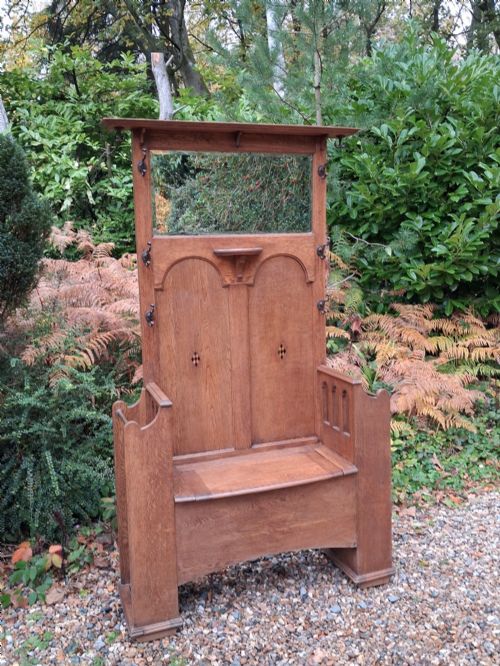
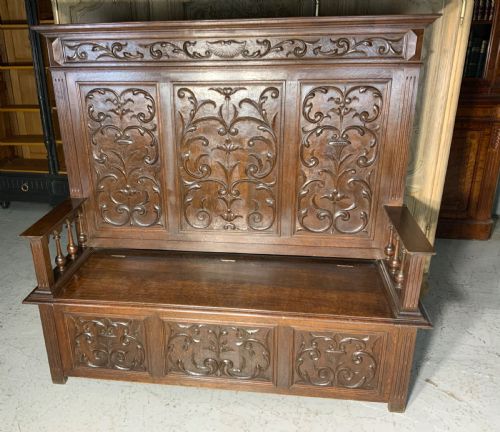
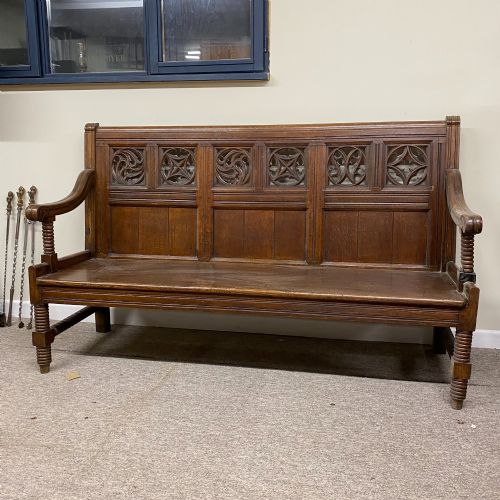
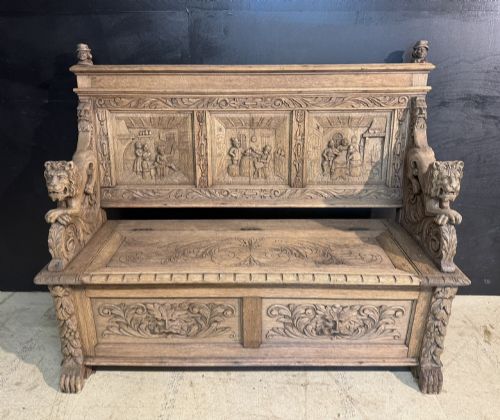
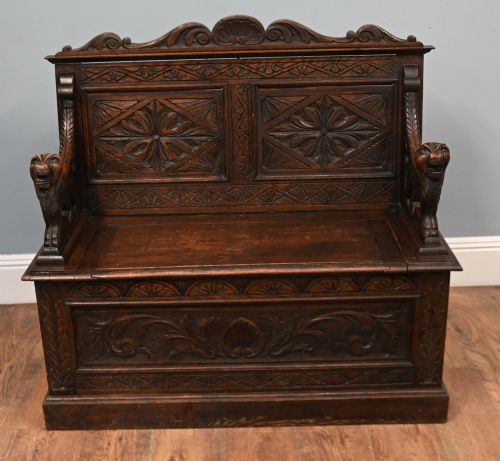
When you search for a carved hall bench seat, you encounter robust wooden furniture designed for domestic entryways and passages. These pieces combine seating with structural joinery, frequently incorporating panels, high backs, or hinged compartments beneath the seat.
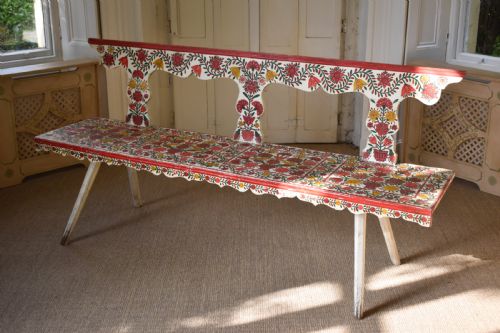
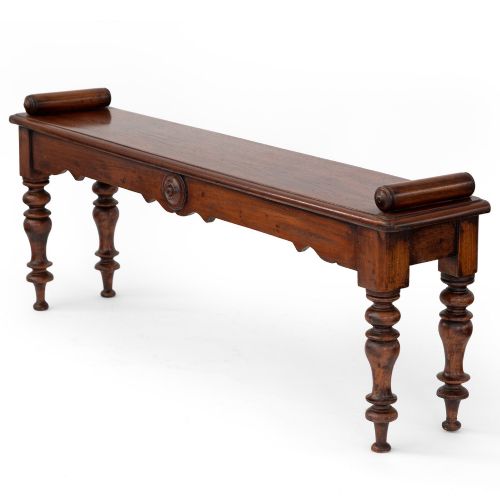
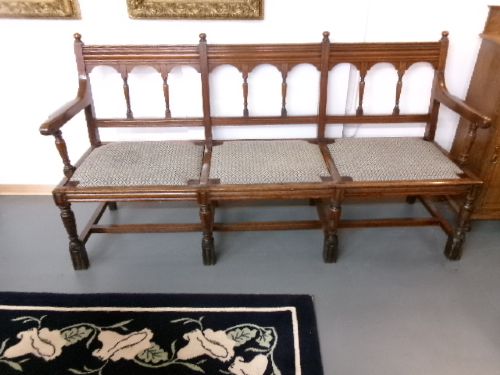
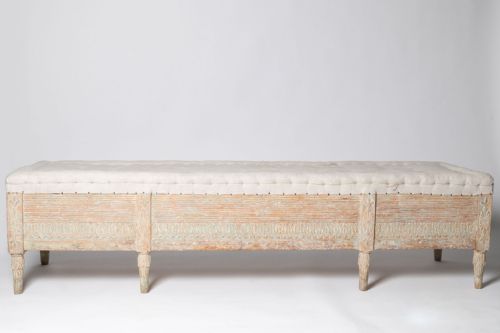
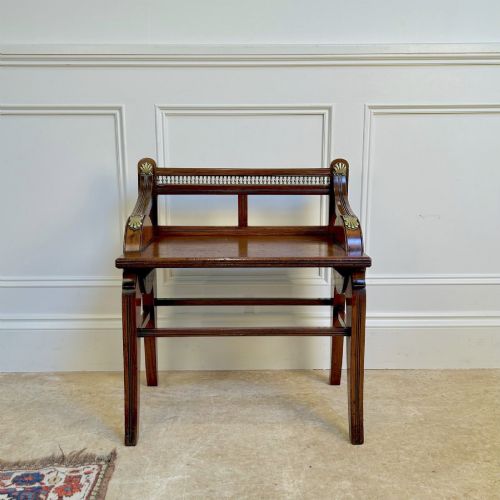
The selections span multiple eras, with Victorian and Edwardian interpretations appearing most frequently alongside earlier 18th-century forms. Examples range from simple settles with lift-up box lids to architectural window seats and elaborately carved Gothic or Jacobean revival designs.
What Varies in Quality
The calibre of a carved hall bench seat depends heavily on the depth and crispness of the hand-carved detail. Superior examples display sharp, well-defined execution in the woodwork, whereas lesser pieces feature shallow or mechanical tooling.
Structural integrity separates standard utilitarian items from finer cabinetmaking. Pieces built with thick solid timber planks, tight traditional joints, and original operational hardware retain greater stability and authenticity than those compromised by poorly executed alterations or replaced elements.
Carved Hall Bench Seat Retail Price Guide 2026
Typical asking prices for carved hall bench seat among the pieces listed under this phrase on Sellingantiques today, from the lower quarter to the upper quarter. They describe what is for sale here now, not the wider market.
Certain fierce-looking hall seats feature carved wooden bears gripping card trays, standing ready to startle unsuspecting guests.
GIllows·Jas Shoolbred·James Shoolbred And Co
The Carved Hall Bench Seat Glossary
- Settle
- A wooden bench with a high back, solid arms, and often a box seat base designed to block draughts in an entrance hall. This form dates back centuries and remains a staple of vernacular furniture.
- Monk's bench
- A convertible piece of furniture featuring a hinged top that folds forward to transform the high back into a table. It serves a dual purpose in compact spaces.
- Box settle
- A bench incorporating a hinged seat lid that opens to reveal a storage compartment beneath. This design maximises utility in hallways by housing cloaks and boots.
- Cassapanca
- An Italian wooden bench featuring a chest base and a backrest, often elaborately carved with panels and arms. These Renaissance-inspired forms were frequently revisited in later centuries.
- Trestle ends
- Upright supports placed at the extremities of a bench to distribute weight evenly to the floor. They often feature shaped or cutout profiles characteristic of Gothic and Arts and Crafts design.
Carved Hall Bench Seat: Frequently Asked Questions
What is a monk's bench?
A monk's bench is a versatile seat featuring a hinged backrest that folds down flat to form a table top. This clever dual-purpose design allowed small rooms to serve multiple functions.
Beneath the seat, many versions include a concealed storage box. They appear frequently in revival styles from the Victorian era onwards.
Where were hall benches used?
Hall benches were placed in entranceways, corridors, and boot rooms of larger houses and civic buildings. They provided a sturdy spot to sit while removing outer garments.
Many incorporated stick stands or under-seat storage to keep walking canes and accessories organised. Their heavy construction ensured they withstood heavy daily traffic.
How do I identify a Gothic revival bench?
Gothic revival benches are characterised by architectural motifs such as pointed arches, trefoils, linenfold panels, and heavy buttresses. These elements draw inspiration from medieval ecclesiastical and domestic architecture.
Cabinetmakers working in the 19th century revived these styles with vigour, often utilising dark-waxed oak. The carving is typically deep and geometric.
Are these benches comfortable?
These benches were built primarily for utilitarian function rather than lounging, featuring rigid wooden seats and upright high backs. Some designs accommodated squab cushions or fabric upholstery to improve comfort.
Their upright posture made them ideal for brief seating in hallways rather than extended relaxation. Many surviving examples retain their original firm wooden platforms.