
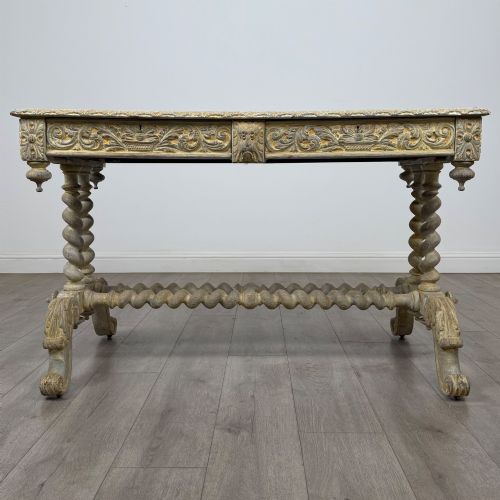
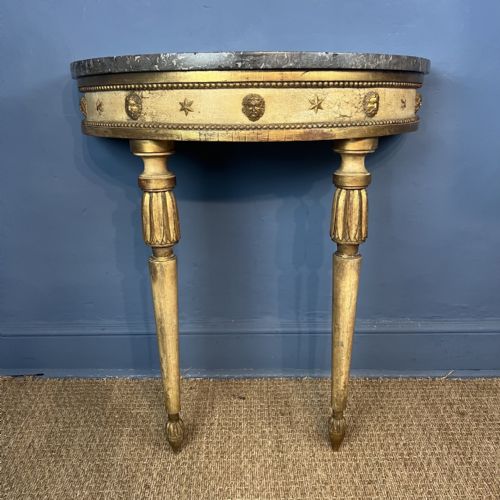


Carved Grey Side Table
A carved grey side table brings structural elegance and stone surfaces to a room, drawing on eighteenth and nineteenth-century European forms.
Carved Grey Side Table
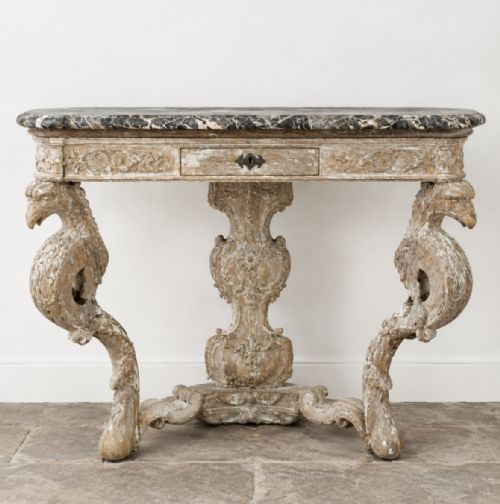
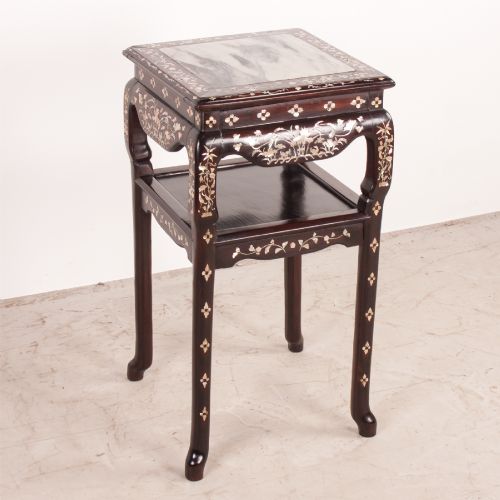
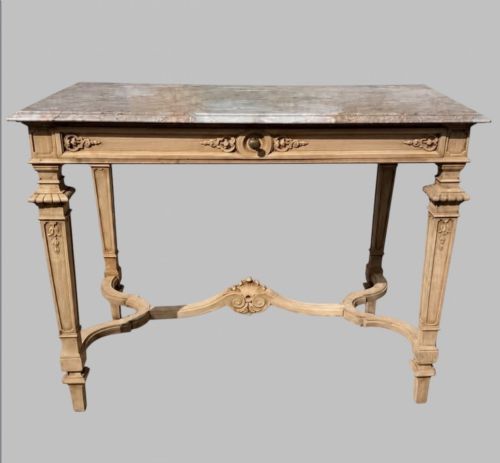
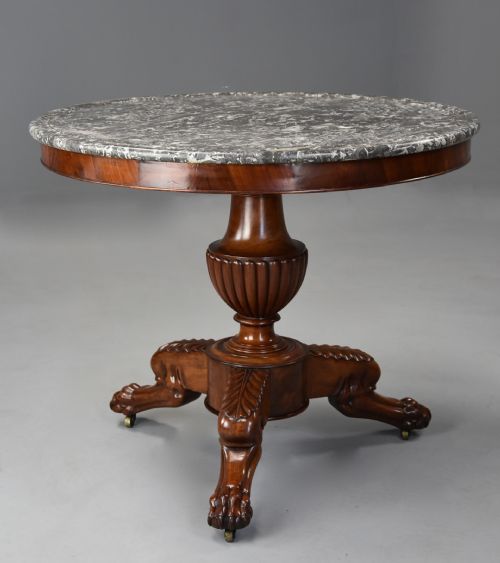
A carved grey side table encompasses console tables, gueridons, lamp tables, and occasional tables spanning the eighteenth and nineteenth centuries. These pieces predominantly originate from French, Italian, and Swedish traditions, often reflecting neoclassical, Gustavian, or rococo design aesthetics.
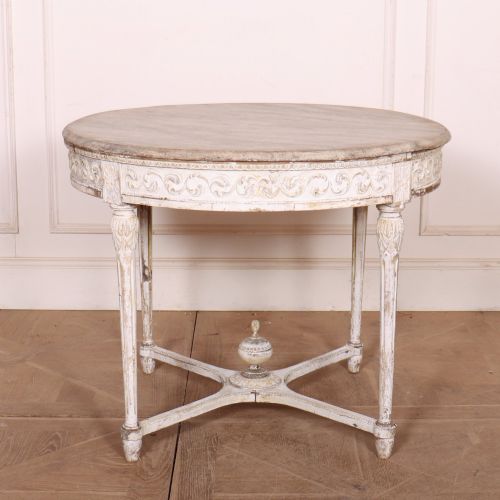
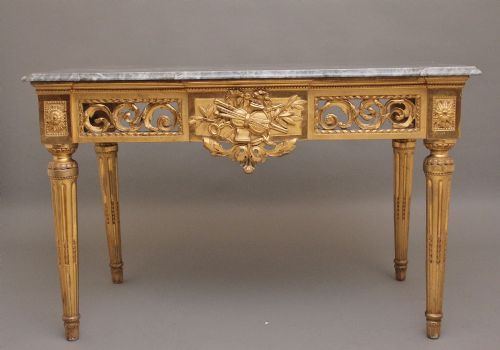
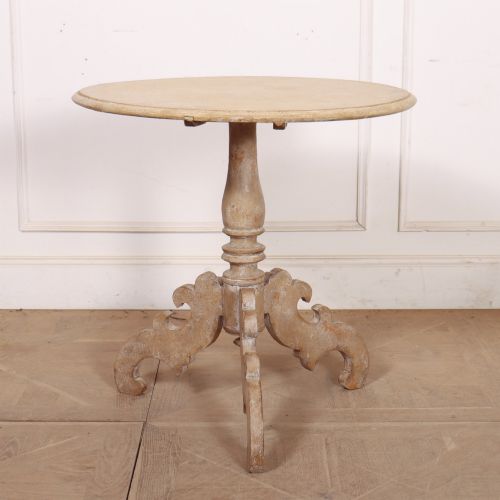
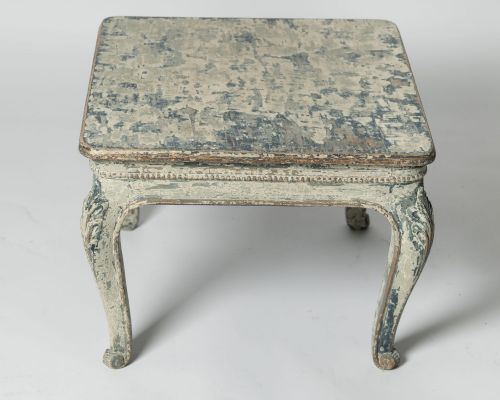
The form frequently functions as a console table against a wall or a freestanding gueridon centre table. Painted finishes in grey, cream, or off-white sit alongside exposed mahogany, walnut, and giltwood surfaces.
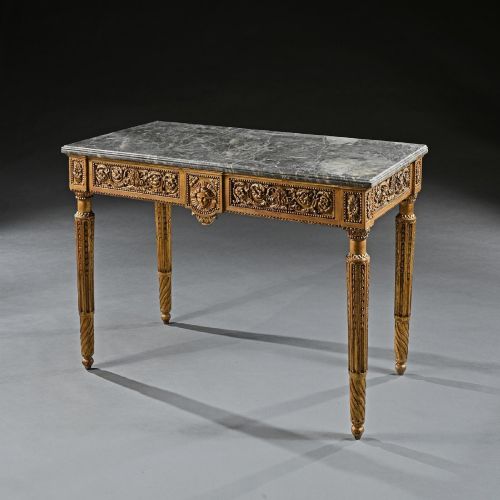
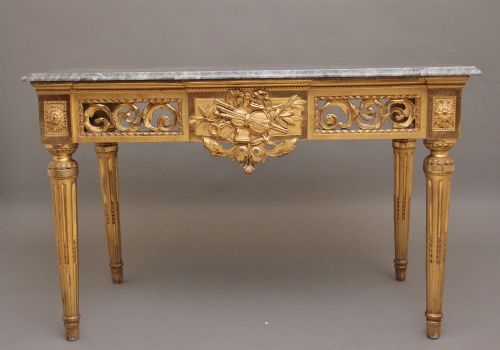
Most examples feature stone tops, particularly white, grey, or veined marble, resting on carved wooden frames. Buyers encounter everything from rustic painted pine to ornate giltwood consoles with classical motifs.
Materials and Construction
Makers shaped these tables from solid timbers such as mahogany, walnut, oak, and pine, applying layered paint finishes or surface gilding. Carving by hand defined the structural details, from simple fluted legs to elaborate rams' heads and floral scrolls.
Stone tabletops, including grey marble and Derbyshire fossil marble, were cut and polished to fit precisely onto wooden bases. Joints relied on traditional carpentry methods, supporting heavy stone surfaces without modern metal fasteners.
Materials across these listings include marble, painted wood, mahogany, giltwood, brass, and timber.
Assessing Craftsmanship and Detail
Quality rests in the depth and sharpness of the hand carving on the wooden frame, where crisp botanical and animal motifs separate superior pieces from softer, coarser work. The integration between the stone top and its wooden support reveals the precision of the maker.
The integrity of the original surface finish, whether aged paint, gilt, or polished timber, dictates the character of the piece. Tables retaining their original veined marble slabs hold greater consistency with their period origins.
The Carved Grey Side Table Glossary
- Gueridon
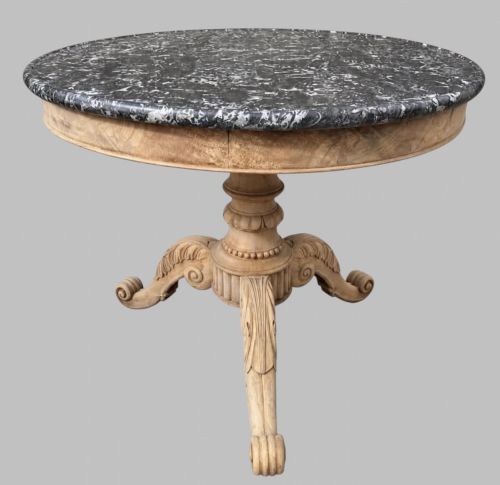
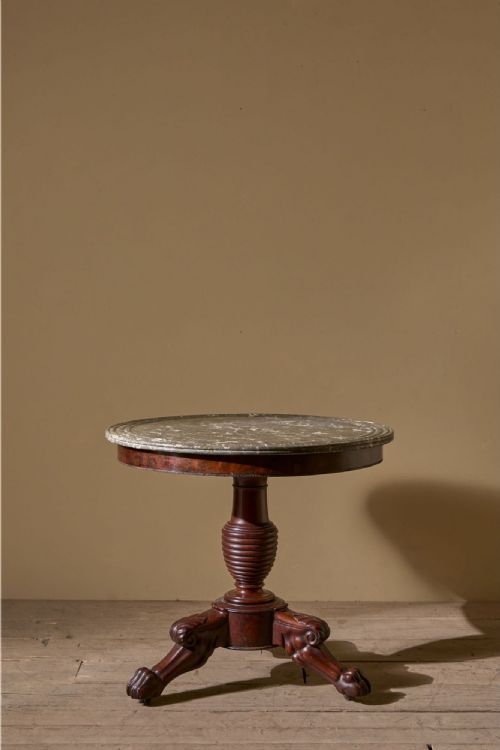
- A small circular table on a central pillar and tripod base, typically French in origin and often topped with marble. These tables served various domestic functions in nineteenth-century salons.
- Console table
- A table designed to stand against a wall, frequently secured with brackets or resting on front legs. Eighteenth-century Italian and French examples often feature elaborate carving and marble surfaces.
- Giltwood
- Timber coated with a thin layer of gold leaf over a prepared gesso ground. This technique created brilliant reflective surfaces on neoclassical and rococo frames.
- Derbyshire fossil marble
- A dark limestone quarried in England containing ancient crinoid fragments, polished to show organic patterns. It appeared on select tables during the nineteenth century.
Carved Grey Side Table: Frequently Asked Questions
Where should I place a side table?
These tables suit hallways, living rooms, and bedrooms where surface space and distinct period character are desired. Console variants anchor well against flat walls beneath mirrors or artwork.
Freestanding gueridon tables work effectively in the centre of a room or beside seating, offering a stable marble surface for lamps and decorative objects.
How do I care for a marble top?
Marble requires gentle cleaning with a damp cloth and mild, pH-neutral soap to preserve the polish and prevent staining. Avoid acidic substances like vinegar or citrus juice, which etch the stone surface.
Using coasters and mats protects the vintage marble from moisture rings and heavy impacts. Natural stone develops a patina over decades, reflecting its age.
What periods do these tables represent?
The selection spans the eighteenth century through the early twentieth century, capturing distinct historical design movements. Pieces range from Georgian and Regency eras to the Aesthetic Movement and Edwardian period.
Continental pieces often reflect French provincial, Gustavian, or Italian neoclassical styles from the eighteen-hundreds. Each era imparts specific decorative details onto the carved wooden frames.
Are painted finishes original?
Many Swedish, French, and English tables feature layered painted finishes applied during the eighteenth and nineteenth centuries. Original paint often exhibits natural craquelure and softening from decades of gentle wear.
Later decorative repainting is also common, particularly in styles that emulate rustic or distressed European antiques. Examining the underlying wood and paint layers helps determine the age of the finish.