



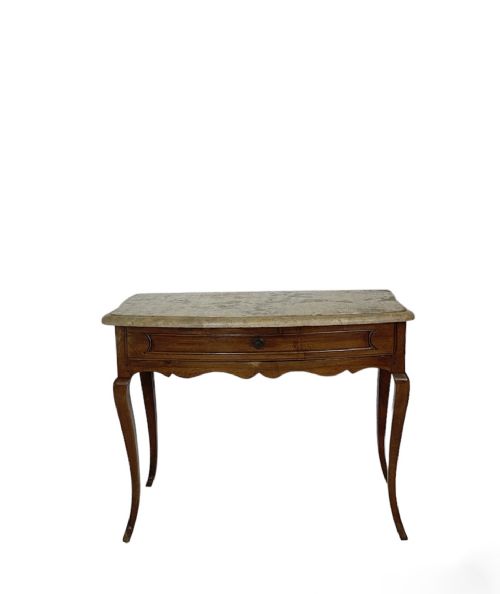


Grey Cabriole Leg Table
These grey cabriole leg table examples bring curved French styling and painted wooden surfaces into a room with understated elegance.
Grey Cabriole Leg Table
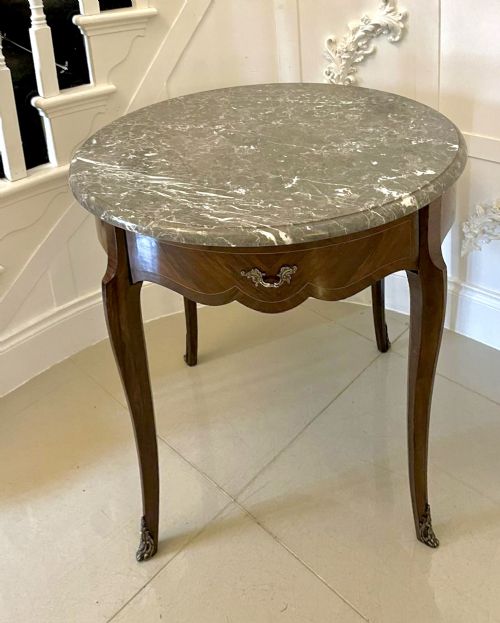
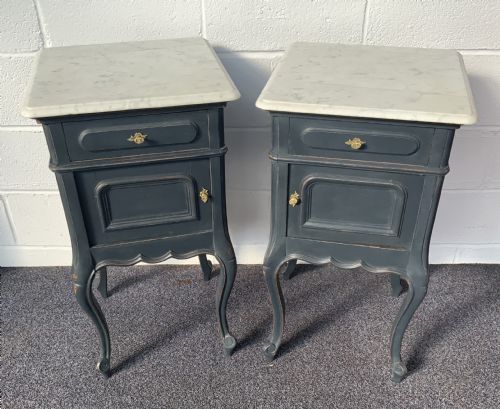
A grey cabriole leg table encompasses various forms including side tables, console tables, and bedside cabinets finished in painted surfaces. These items draw heavily on French Provincial, Rococo, and Louis XV design influences featuring distinctive curved supports.
The selection here ranges widely across centuries, spanning Georgian and Victorian items alongside pieces from the early twentieth century. Many examples incorporate contrasting materials like marble tops paired with timber bases.
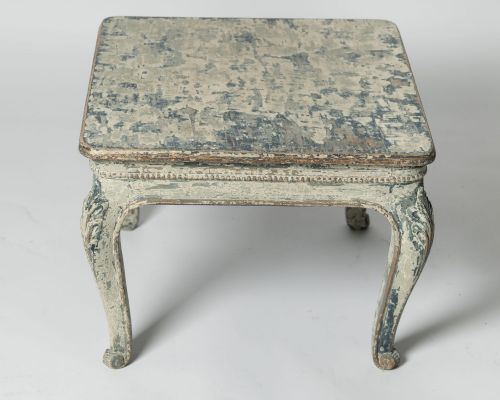
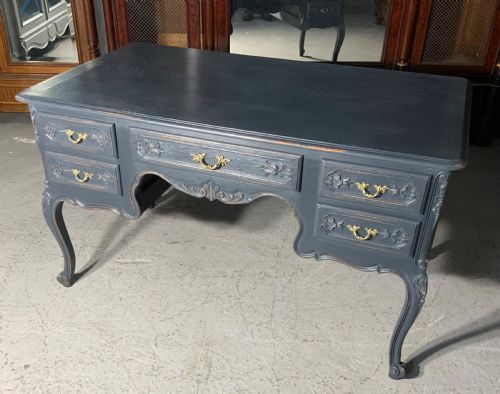
Console tables and side tables dominate the current selection, offering practical surfaces alongside decorative carved woodwork. Stools and dressing table variations also appear, maintaining the characteristic curved leg profile.
Materials and construction methods
Wood forms the primary structural foundation, with timber, oak, walnut, and kingwood utilised across different periods. Carved details demonstrate traditional joinery techniques applied to both solid timber and painted wooden surfaces.
Marble frequently tops console and lamp tables, providing a heavy, cool contrast to the carved wooden frames beneath. Paint finishes, specifically applied in shades like grey, coat many of the later twentieth-century and provincial pieces.
Brass hardware occasionally accents drawers on writing desks and bedside cabinets, adding metallic detail to the wooden structures. Carving appears directly on the oak and walnut frames, particularly within Rococo Revival and French styles.
Several bedside cabinets arrive ready-painted in specific grey tones, sparing modern decorators the trouble of matching historic swatches.
Distinctions in construction and design
The refinement of the carved woodwork dictates much of the visual merit, separating straightforward utilitarian carpentry from deeply articulated Rococo motifs. Crisp lines on the cabriole legs show superior hand-carving skill.
Material selection plays a significant role, with dense timbers like walnut and heavy polished marble slabs representing the upper tier of production. Painted finishes vary from straightforward modern applications to more nuanced, layered historic treatments.
Proportion and structural integrity define the best pieces, where the sweeping curve of the leg balances harmoniously with the table top. Finer items maintain tight joints and substantial timber thickness without feeling clumsy.
The Grey Cabriole Leg Table Glossary
- Cabriole leg
- A furniture leg that curves outward and then tapers inward, mimicking an animal's leg in motion. This form defines much of the traditional furniture styling seen in Georgian and French design.
- Console table
- A table designed to stand against a wall, frequently fixed or supported by brackets. These pieces often feature decorative marble tops and elaborate carved wooden aprons.
- Kingwood
- A dense, heavy tropical hardwood prized for its rich figuring and used in fine cabinet making. It appears on polished nineteenth-century statement pieces.
- Rococo Revival
- A nineteenth-century design movement resurrecting the ornate, asymmetrical curves of the French eighteenth century. It employs heavy carving and naturalistic motifs.
- Serpentine front
- A furniture front shaped with a convex centre flanked by concave curves. This undulating line demands high joinery skill and adds visual movement to console tables.
Grey Cabriole Leg Table: Frequently Asked Questions
What is a cabriole leg?
A cabriole leg is a stylistic furniture support featuring a double curve, bulging outward at the top and curving inward near the foot. This shape originates from classical animal forms.
It became a defining feature of eighteenth-century furniture and remains central to French Provincial and Rococo revival styles.
How do I clean a marble top?
Marble surfaces require gentle cleaning with a damp cloth and mild, non-acidic soap to protect the polished stone. Avoid abrasive cleaners that scratch the finish.
Promptly wiping up spills prevents staining on older marble tables.
Are these tables strictly French?
While many pieces reference French Provincial, Chateau, and Louis XV styles, the items span various origins including British Victorian production. The stylistic influence often dictates the aesthetic rather than the geography of manufacture.
Design motifs like carved scrolls and painted finishes cross international boundaries during the nineteenth and twentieth centuries.
How do I date an older table?
Dating relies on examining the timber species, joinery methods, and secondary woods used in construction. Hand-cut dovetails and tool marks indicate earlier craftsmanship.
Stylistic shifts between Georgian symmetry and Victorian revivalism provide further chronological clues.