

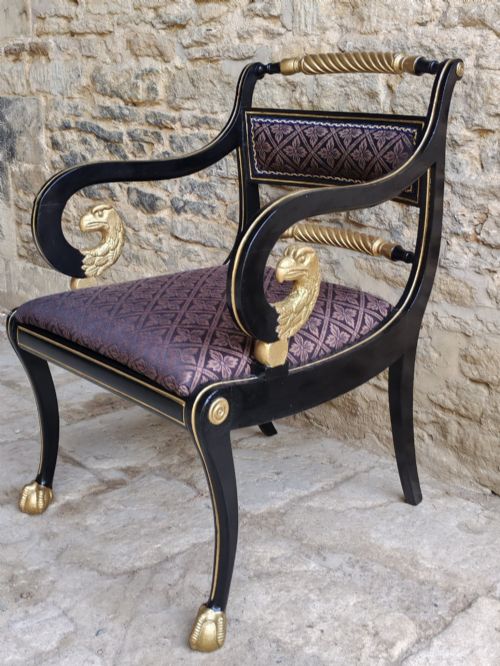
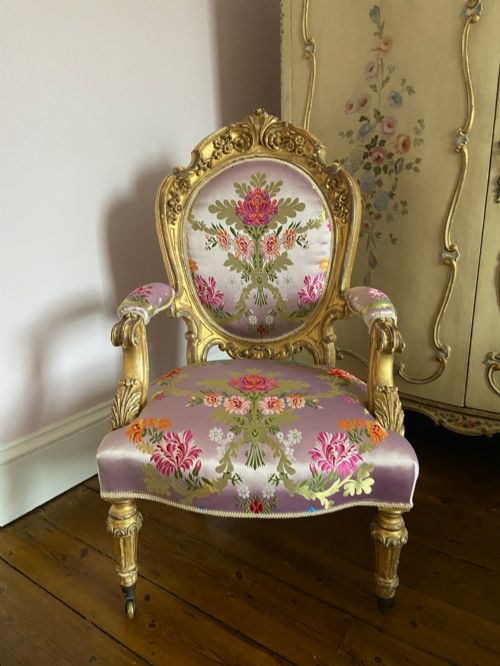
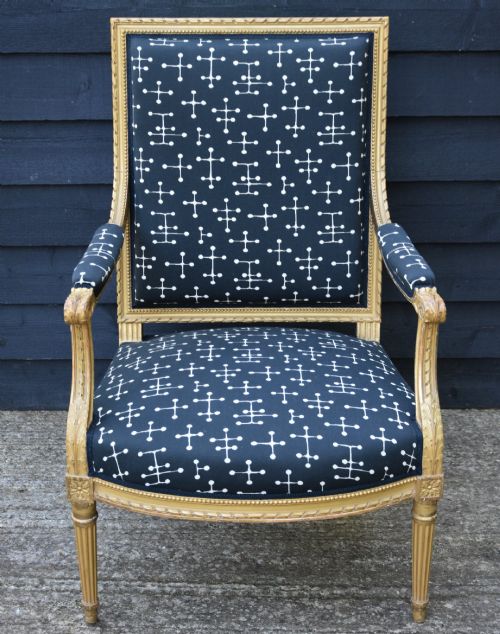
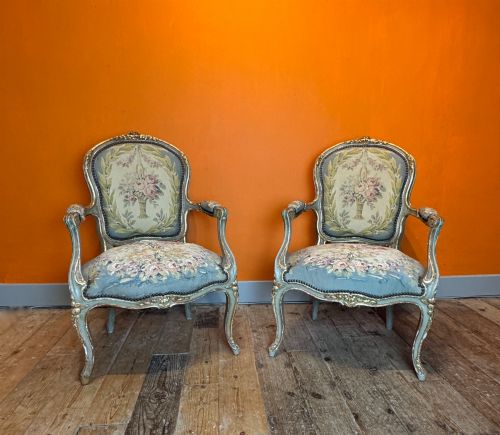
Carved Giltwood Open Armchairs
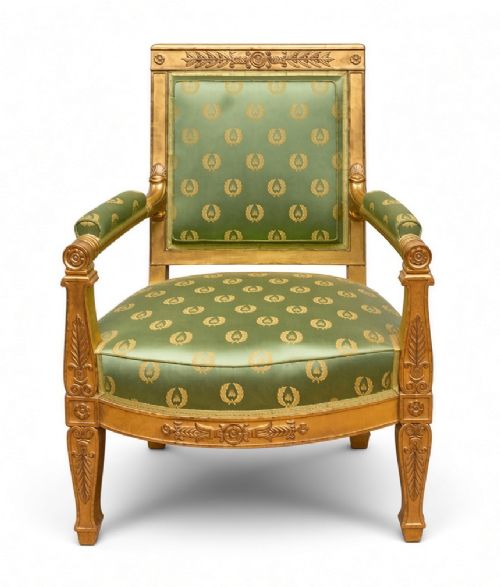
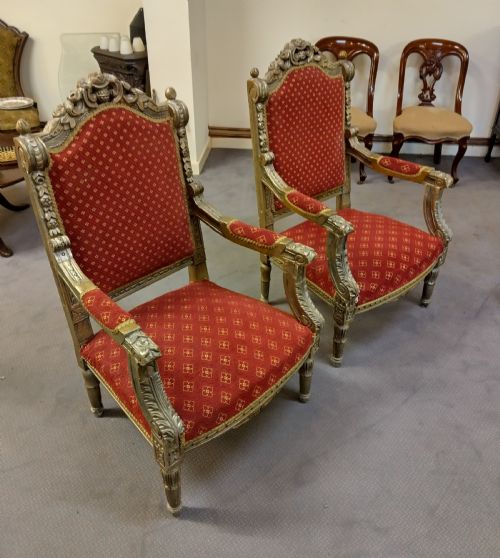
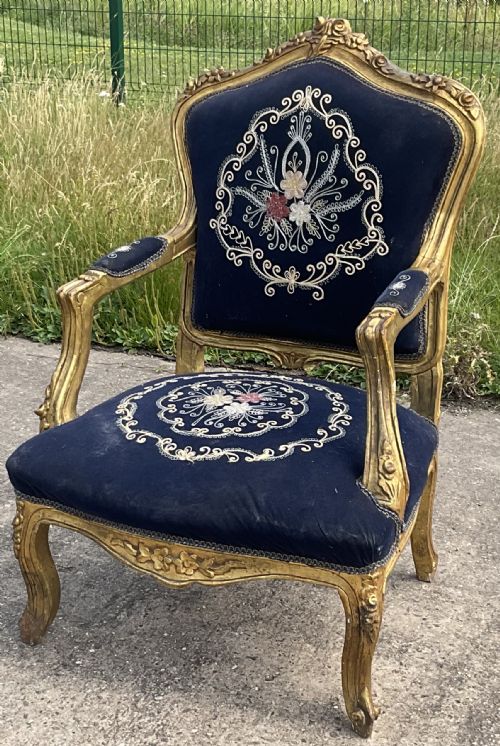
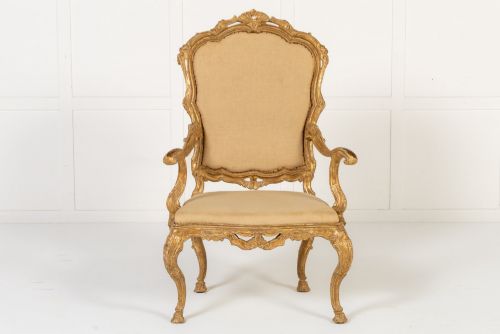
Carved giltwood open armchairs bring formal seating into a room with gilded surfaces and exposed wooden frames.
Carved Giltwood Open Armchairs
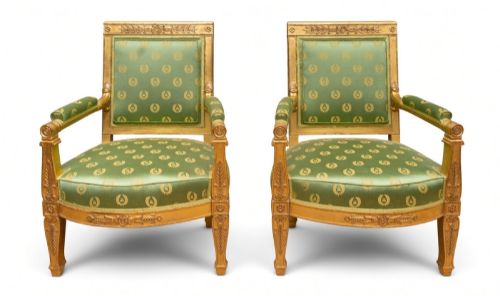
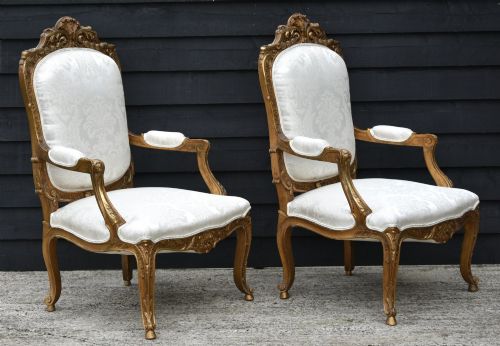
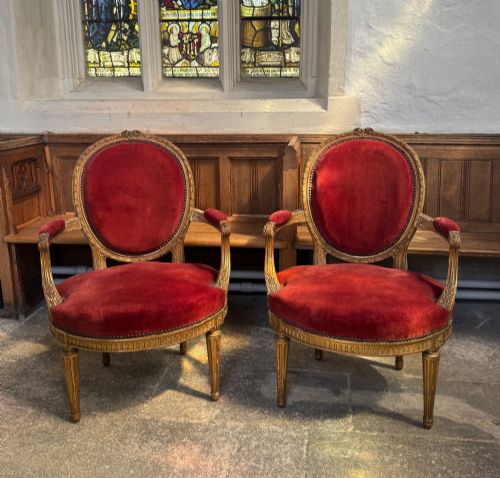
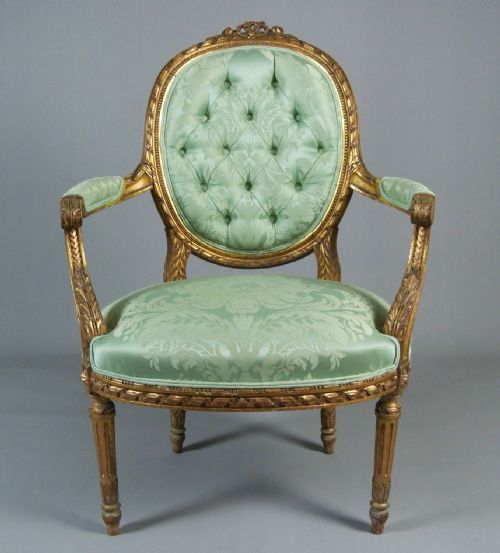
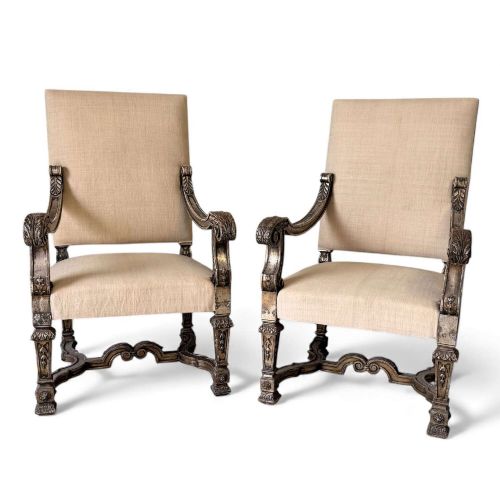
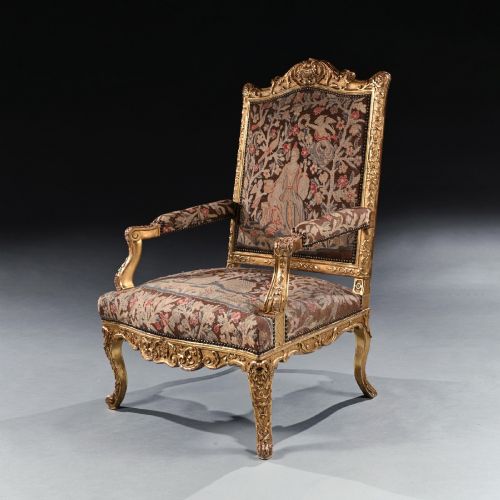
These items provide seating with structural wooden arms and gilded finishes, appearing frequently in French and Italian designs across the eighteenth and nineteenth centuries. Buyers encounter pairs and single pieces reflecting styles such as Louis XVI, Rococo, and Baroque.
The selections span grand salon chairs, throne chairs, and smaller bedroom or fireside seating. Many examples follow classical revival patterns originating in continental European workshops.
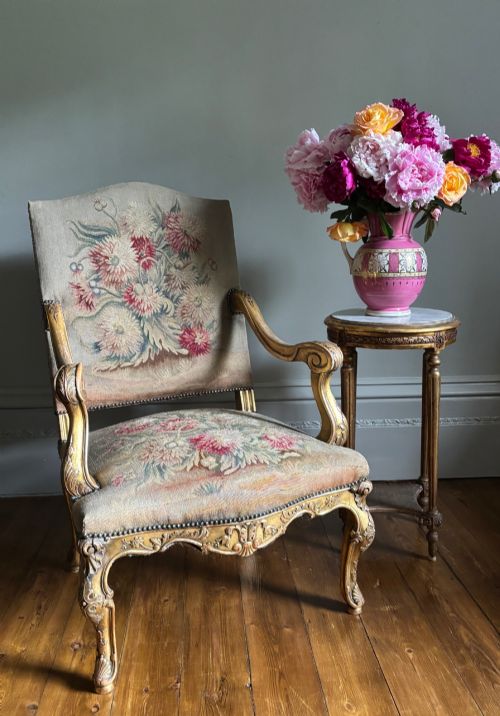
Makers utilised timber frames shaped to open arm configurations, often upholstered in silk, velvet, or tapestry fabrics.
How they were made
Craftsmen shaped structural timber frames, frequently using beech or walnut, before applying thin layers of gold leaf over a prepared gesso ground. This gilding technique created a reflective metallic surface across carved mouldings and decorative motifs.
Upholstery methods involved securing supportive webbing and padding directly into the open arm frame, finished with textile coverings like silk damask, velvet, or woven tapestry.
Carved Giltwood Open Armchairs Retail Price Guide 2026
Typical asking prices for carved giltwood open armchairs among the pieces listed under this phrase on Sellingantiques today, from the lower quarter to the upper quarter. They describe what is for sale here now, not the wider market.
The documented examples span the eighteenth, nineteenth, and early twentieth centuries.
What varies in quality
The crispness and depth of the wooden carving distinguish individual examples, with sharper chisel work indicating skilled hand labour. The application and survival of the original gilt finish also affect the character of the piece.
Proportion and structural integrity within the open arm joints determine the overall balance of the chair, alongside the historical appropriateness of the chosen textile upholstery.
Jacob Desmalter·Thomas Chippendale·Blaise Maucuy·Holland and Sons
The Carved Giltwood Open Armchairs Glossary
- Giltwood
- Timber coated with gold leaf or metallic powder applied over a prepared base. This surface treatment provides a bright, reflective finish characteristic of formal period seating.
- Fauteuil
- An open-armed upholstered armchair with exposed wooden framing originating in France. These seats typically feature padded armrests and distinct stylistic carved details.
- Bergère
- An enclosed upholstered armchair with wooden sides filled with upholstery or cane work. This form offers a deeper seating profile than standard open arm designs.
- Regence
- A transitional stylistic period preceding full Rococo designs, characterised by symmetrical scrolling foliage and curved structural lines. Pieces from this era display early developments in ornamental carving.
- Gesso
- A plaster mixture applied to wooden surfaces to create a smooth base for gilding. This layer receives the fine incisions and relief details before leaf application.
Carved Giltwood Open Armchairs: Frequently Asked Questions
How do I identify a Louis XVI style armchair?
Louis XVI style pieces display straight tapered legs, geometric forms, and neoclassical carvings such as fluting or rosettes. These design elements depart from the curved lines of earlier rococo work.
The frames maintain a balanced rectangular or oval silhouette, often finished in giltwood with exposed wooden structural members.
Where were these chairs placed historically?
These seats belonged in formal salons, withdrawing rooms, and grand reception spaces where guests gathered. Their decorative gilding and exposed frames were designed to display status.
Pairs frequently flanked fireplaces or large mirrors within formal domestic interiors.
Are these chairs suitable for daily use?
Period open armchairs function well for occasional seating when the internal webbing and padding remain structurally sound. Modern owners often place them in sitting rooms or studies as accent pieces.
Careful consideration of the upholstery fabric helps protect delicate silk or velvet surfaces from heavy wear.