
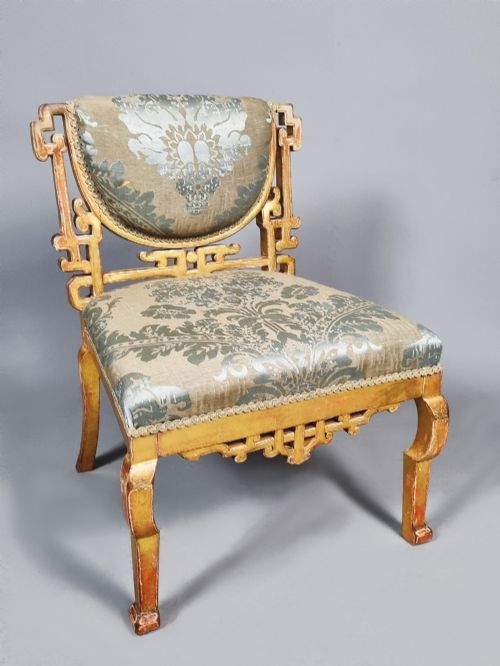
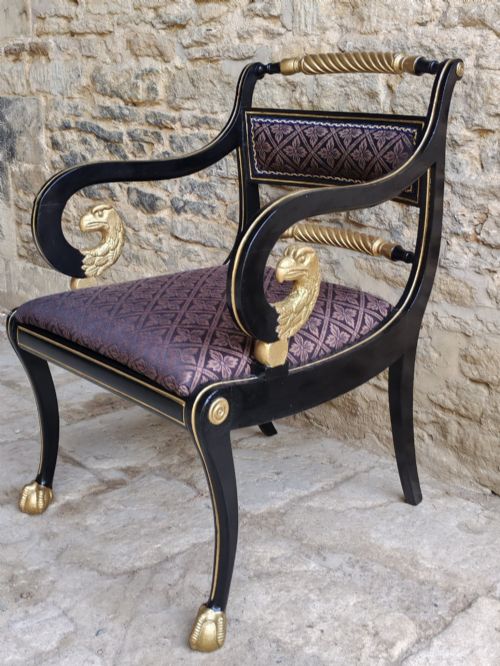
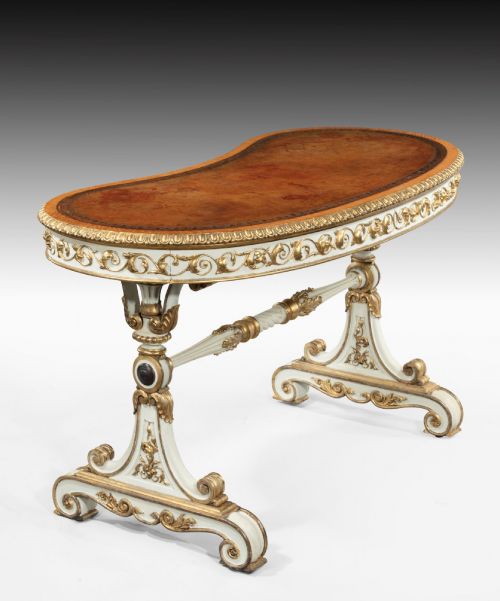
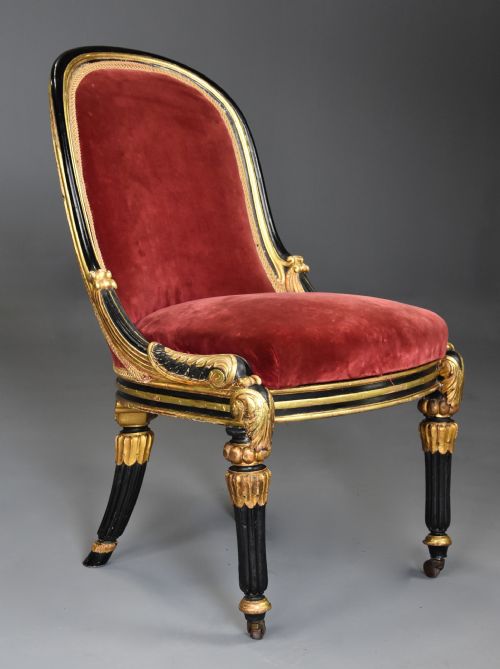


Carved Giltwood Desk
A carved giltwood desk brings brilliant warmth and theatrical flair into a room, offering a gilded surface that catches the light wonderfully.
Carved Giltwood Desk
When you search for a carved giltwood desk, you encounter writing tables and writing desks shaped by periods ranging from the eighteenth century through to the early twentieth century. These pieces combine functional workspace with the decorative richness of carved timber finished in gold leaf or gesso.
The versions most likely to appear on this page include nineteenth-century writing tables featuring painted decoration or contrasting details like ivory paintwork and Wedgwood plaques. Makers such as Holland and Son and Waugh and Son also represent the broader tradition of seating and tables associated with these ornate styles.
How they were made
The construction of these pieces relies on solid timber frameworks, including beech, ebonised wood, and general wood substrates, shaped to support intricate carving. Artisans applied layers of gesso to smooth the surface before laying fine gold leaf to achieve the characteristic luminous finish.
Many examples incorporate supplementary materials like brass fittings, fabric upholstery, and inset marble tops to enhance both utility and visual contrast. The union of carved woodwork and applied gilding required specialist joinery and gilding skills passed down through generations.
Listings feature periods from the eighteenth century to the early twentieth century, including Regency and Victorian examples.
What varies in quality
The refinement of the carving dictates the distinction between standard examples and superior pieces, particularly where naturalistic motifs or scroll arms are rendered with deep undercutting and crisp detail. Superior execution relies on confident hand-chiselling rather than mechanical smoothing.
The integrity of the original gilded surface also defines the upper tier of the range, distinguishing pieces that retain their authentic patina from those heavily restored. The harmony between the structural woodwork and the decorative elements determines the overall success of the piece.
Waugh and Son·Holland and Son
The Carved Giltwood Desk Glossary
- Giltwood
- Timber that has been coated with gold leaf or gold dust over a prepared base. This technique protects the underlying wood while providing a brilliant metallic lustre.
- Gesso
- A plaster-like mixture applied to wood surfaces to create a smooth base for gilding. It allows carvers to achieve sharp relief details before the application of gold leaf.
- Ebonised
- Wood treated with a chemical stain or finish to imitate expensive ebony. This dark ground often contrasts sharply with applied gilding.
- Neoclassical
- A style drawing inspiration from classical antiquity, often featuring symmetrical forms and restrained ornamentation. It frequently appears in furniture from the Regency and later periods.
- Chippendale
- A style named after cabinetmaker Thomas Chippendale, encompassing Chinese and Gothic influences. It is characterised by elaborate fretwork and ornate carved details.
Carved Giltwood Desk: Frequently Asked Questions
How do I care for giltwood furniture?
Giltwood surfaces require gentle dusting with a soft, dry brush to prevent the accumulation of dirt without disturbing the delicate gold leaf. Moisture and harsh cleaning chemicals must be avoided entirely to preserve the fragile metallic finish.
Placement away from direct sunlight and extreme temperature fluctuations helps protect the gesso and timber substrate from cracking. Careful handling ensures the gilded layers remain intact for years to come.
How do I identify Regency pieces?
Regency furniture typically dates from the early nineteenth century and draws heavily upon classical archaeological forms. You will often see clean architectural lines paired with striking contrasting elements like ebonised wood.
Detailing on these pieces frequently includes bold carving and restrained classical ornamentation rather than heavy baroque flourishes. Examining the construction methods and secondary woods helps confirm the period of origin.
Where were these desks used?
These desks were traditionally placed in principal reception rooms, libraries, or private boudoirs where their decorative qualities could be fully appreciated. They functioned as writing surfaces for correspondence and estate management.
In contemporary settings, they serve equally well as statement pieces in studies or living spaces. Their refined appearance bridges the gap between utilitarian workspace and fine art.