
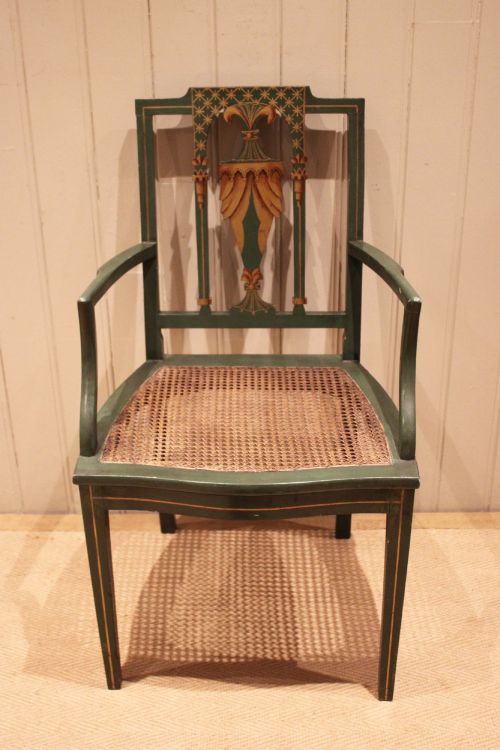
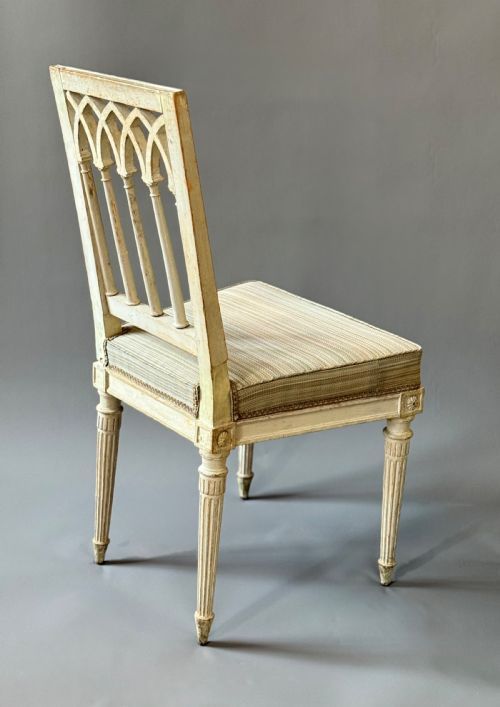
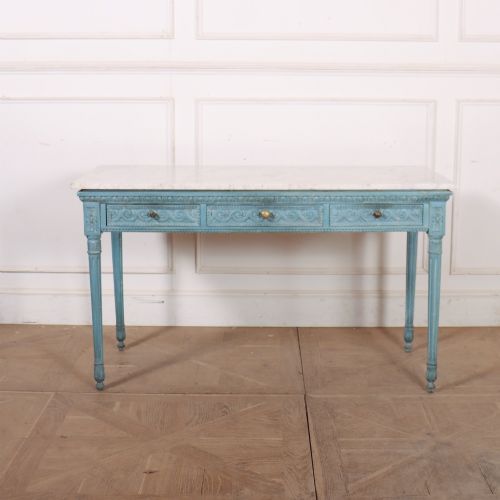
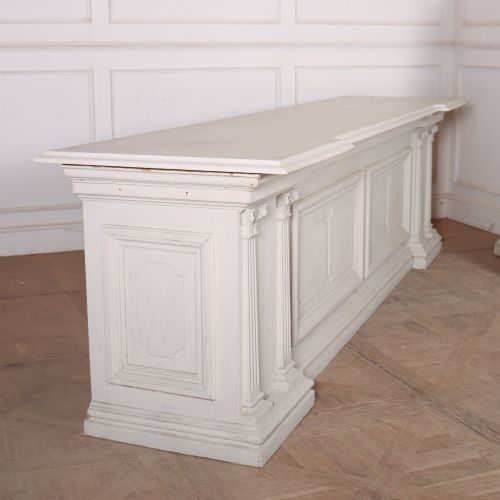
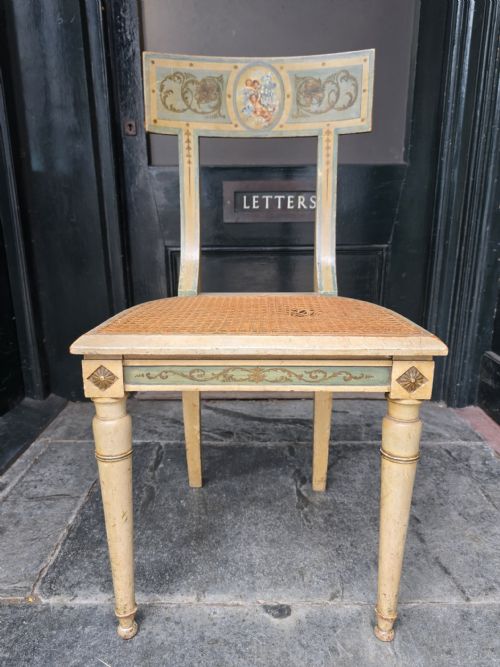
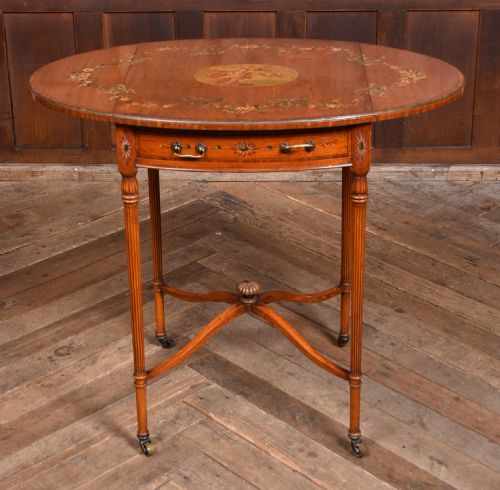
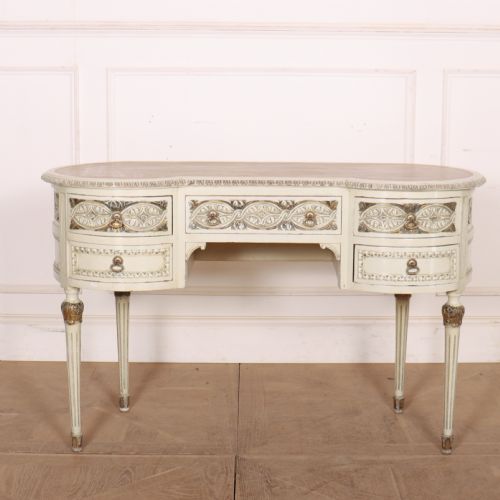


Painted Neoclassical Desk
A painted neoclassical desk brings architectural balance and delicate ornamentation to a room, offering a functional writing surface with distinctive character.
Painted Neoclassical Desk
A painted neoclassical desk embodies the symmetrical lines, classical motifs, and restrained proportions characteristic of the movement. When searching for a painted neoclassical desk, buyers encounter forms ranging from Swedish writing tables to English satinwood bureaux and Italian console desks.
The selections span the eighteenth and nineteenth centuries, alongside later revivals, drawing on French, Italian, and Scandinavian aesthetic traditions. These pieces combine practical workspace utility with decorative painted surfaces that highlight their architectural origins.
Materials and construction
Makers utilised woods such as satinwood and various painted timbers as the foundational structure for these writing surfaces. Artisans applied hand-painted decoration directly onto the wood, sometimes incorporating brass hardware, marble, or giltwood detailing.
Construction techniques reflect the cabinetmaking standards of the Georgian, Victorian, and Edwardian periods, employing joinery appropriate to writing tables, drop-leaf tables, and desks.
One exceptional nineteenth-century writing table manages to incorporate original painted decoration, giltwood, and Wedgwood plaques all at once.
Assessing quality
Quality rests in the execution of the painted decoration and the crispness of any carved or applied neoclassical details. Pieces featuring original decorative paintwork command greater interest from collectors than later repainted surfaces.
The refinement of the timber selection, such as figured satinwood, alongside the integration of brass mounts or ceramic plaques, distinguishes standard regional pieces from finer workshop productions.
Gillows
The Painted Neoclassical Desk Glossary
- Neoclassical
- A style spanning the eighteenth and nineteenth centuries drawing inspiration from the classical art and architecture of ancient Greece and Rome. It prioritises symmetry, straight lines, and classical motifs.
- Satinwood
- A hard, durable timber with a natural golden sheen often utilised for high-end furniture surfaces during the eighteenth and nineteenth centuries. It provides a pale ground well-suited for painted decoration.
- Gustavian
- The Swedish interpretation of French neoclassical and Louis XVI styles, characterised by a lighter, paler colour palette and restrained carving. These pieces are frequently found with original painted finishes.
- Carlton House desk
- A form of writing desk featuring a fitted superstructure of small drawers and compartments arranged in a curved semicircle around the back and sides of the writing surface.
- Bureau
- A sloping desk enclosing a writing area and small drawers, often supported on legs or a chest of drawers.
Painted Neoclassical Desk: Frequently Asked Questions
How do I date a painted desk?
Dating relies on examining the timber construction, joinery methods, and the characteristics of the paint layer. Secondary woods and hardware often provide reliable clues to the manufacturing period.
Stylistic cues such as Sheraton or Louis XVI influences further help narrow down whether a piece originates from the eighteenth century or a later nineteenth-century revival.
Are painted finishes usually original?
Many pieces retain their original decorative paintwork, while others have been retouched or repainted during subsequent interior redecoration over the decades.
Close inspection under magnification reveals the age of the pigment layer and whether underlying wear matches the surface finish.
Where were these desks made?
Production centres varied across Europe, with distinct regional schools emerging in England, France, Italy, and Sweden. Each region adapted neoclassical design principles to local materials and prevailing tastes.
Swedish workshops favoured pale, light-reflecting pigments, whereas English makers frequently utilised satinwood with delicate floral or classical motifs.
How should I care for painted wood?
Maintenance requires keeping the desk away from direct sunlight and maintaining stable indoor humidity to prevent the wood and paint layers from cracking.
Dusting with a soft, dry cloth is sufficient for routine upkeep, avoiding abrasive cleaners or modern polishes that can damage historic paint surfaces.