
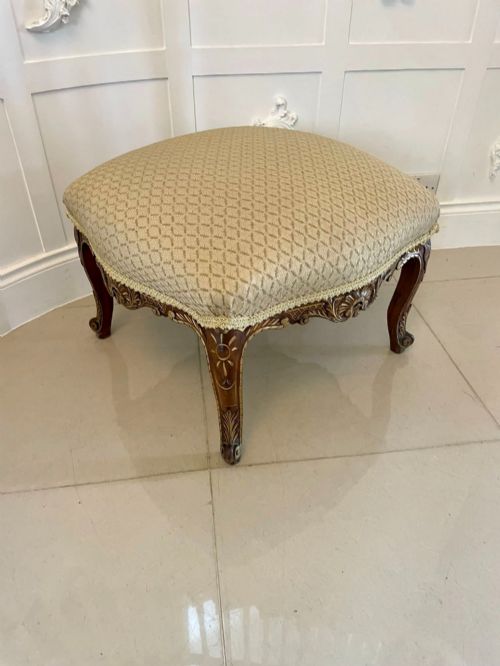
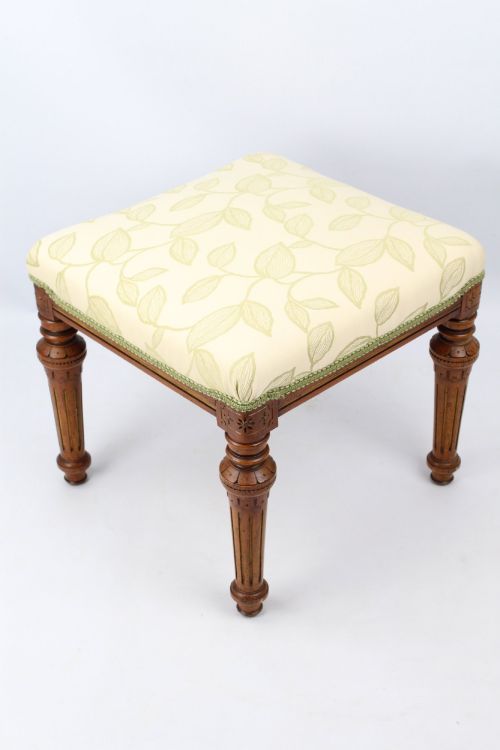
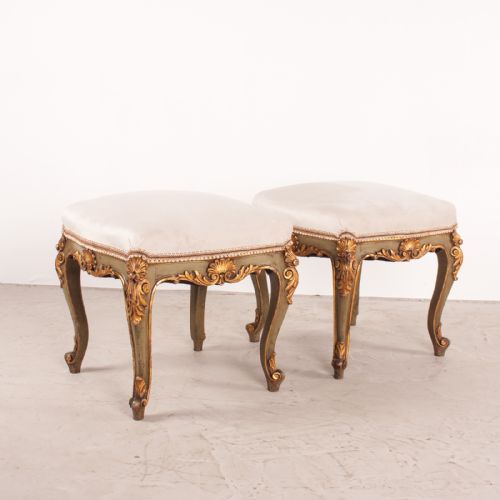
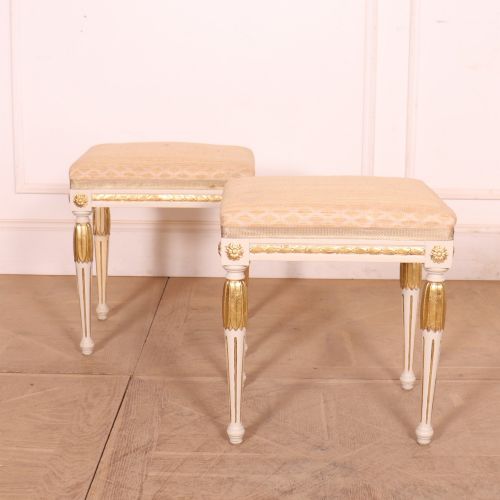
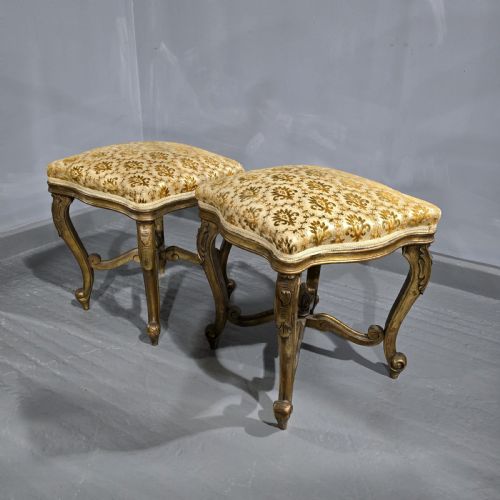
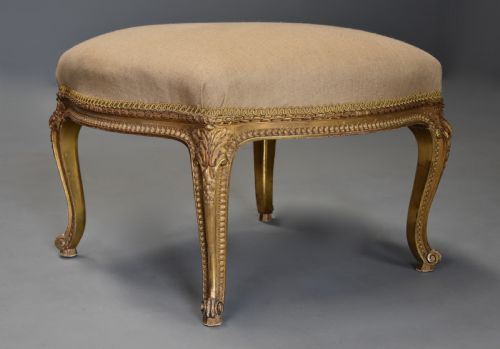


Carved Gilt Vanity Stool
These carved gilt vanity stool examples offer ornate seating shaped by nineteenth-century revival styles and continental cabinet-making traditions.
Carved Gilt Vanity Stool
A carved gilt vanity stool sits within a distinct group of nineteenth-century seating designed for dressing rooms and private chambers. The form frequently appears as single stools, paired seats, or wider duet formats intended for dressing tables.
Evidence points towards heavy representation from French, Swedish, and Italian workshops spanning the 1800s to the end of the Victorian era. Continental Rococo, Louis XVI, and Gustavian stylistic influences dominate the physical forms found here.
Makers utilised various functional sub-types including low footstools, curule X-frame bases, and upholstered benches. Buyers most commonly encounter pieces drawing on mid to late nineteenth-century revival aesthetics.
Materials and construction methods
Makers primarily shaped these frames from solid hardwoods like oak, walnut, and general wood substrates before applying surface enrichment. Craftsmen then enriched these wooden carcasses with delicate hand-carved detailing, gesso priming, and gold leaf application.
Upholstery completed the functional form, relying on traditional fabric textiles such as plush velvet alongside painted and gilded wood finishes. Structural integrity relied on period joinery techniques suited to supporting smaller seating formats.
Even nineteenth-century vanity seats needed a spot to rest, proving that pre-industrial dressing routines demanded proper architectural staging.
Distinguishing quality across the range
Quality diverges notably between standard decorative production pieces and items bearing specific workshop stamps or attributions. The crispness of the wood carving and the depth of the gold leaf application reveal the original maker's investment of time and skill.
The choice of primary timber, such as figured walnut versus basic painted woods, dictates the baseline structural calibre. Preservation of original surface finishes and period upholstery materials further separates standard decorative items from superior survivals.
LOIDRAULT FRERES PARIS·A.M.E. Fournier
The Carved Gilt Vanity Stool Glossary
- Giltwood
- Wood that has been coated with gold leaf or powder over a preparation layer. This finish provides the characteristic metallic brilliance seen on nineteenth-century revival seating.
- Curule
- An ancient Roman X-shaped magistrate seat design revived during the nineteenth century. These stools feature crossing legs that form a supportive and decorative curule base.
- Gustavian
- The Swedish neoclassical style spanning the late eighteenth and nineteenth centuries. Pieces from this tradition often feature painted wood surfaces and restrained classical carving.
- Gesso
- A plaster-like mixture applied to wooden frames as a smooth base for gilding. Skilled artisans carved directly into this layer to achieve sharp ornamental detail.
- Duet stool
- An extended seating form built to accommodate two people simultaneously. These wider vanity stools frequently match the proportions of larger nineteenth-century dressing tables.
Carved Gilt Vanity Stool: Frequently Asked Questions
What periods do these vanity stools date from?
The pieces span the nineteenth century, with specific examples originating from the 1800s through the 1890s. Victorian and continental workshops produced the majority of these designs during the height of the revival periods.
Craftsmen drew heavily upon earlier French and Swedish royal styles when building these vanity seats. Dating relies on stylistic cues, construction methods, and material choices typical of those decades.
How were these stools used originally?
These low seats functioned primarily as dressing table companions in private bedchambers and boudoirs. Their compact proportions allowed them to slide neatly beneath vanity surfaces when not in active use.
Certain wider versions served as duet stools for shared dressing spaces, while smaller variants doubled as decorative footstools. Their ornamental carving ensured they remained visible accents within the room's decorative scheme.
How do I care for antique giltwood?
Giltwood surfaces require gentle maintenance to preserve the delicate gold leaf and underlying gesso layers. Dusting should be performed softly with a dry, non-abrasive cloth without using chemical cleaning solutions.
Keep these stools away from direct sunlight and excessive moisture to prevent the wood from warping and the gilding from flaking. Careful placement ensures the historic surface finish survives intact.
How do I distinguish Gustavian from French styles?
Gustavian pieces originating from Sweden favour paler painted finishes and restrained, functional neoclassical ornamentation. They reflect a cooler, more geometric interpretation of classical design compared to their continental counterparts.
French pieces from Louis styles and the Rococo Revival embrace more exuberant carving, prominent curves, and gold leaf gilding. Comparing the baseline finish and intensity of the carving reveals the stylistic origin.