
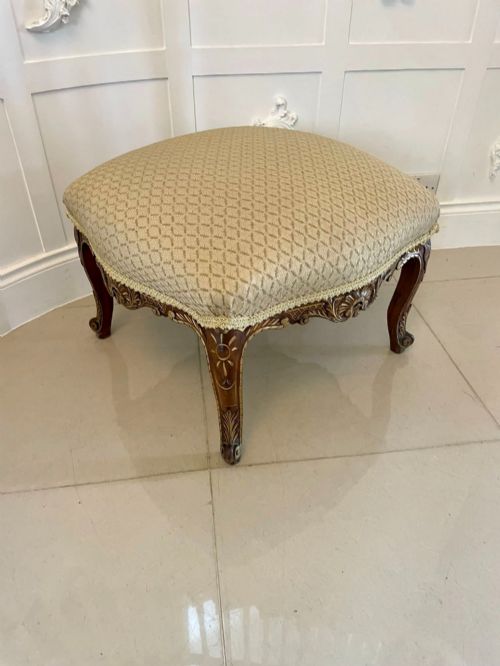
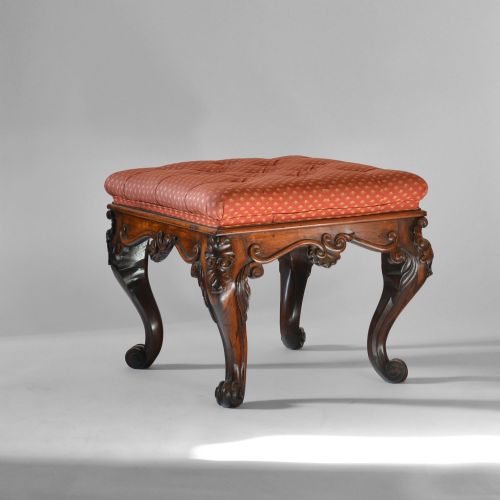
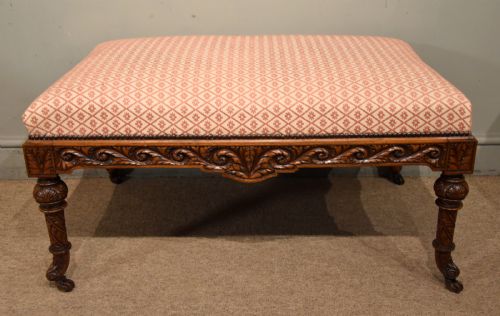
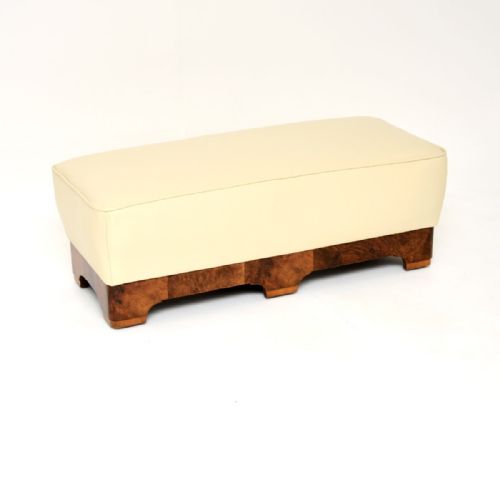



Low Dressing Table Stool
A low dressing table stool is a compact seat designed to tuck neatly beneath a vanity, combining practical daily utility with period elegance.
Low Dressing Table Stool
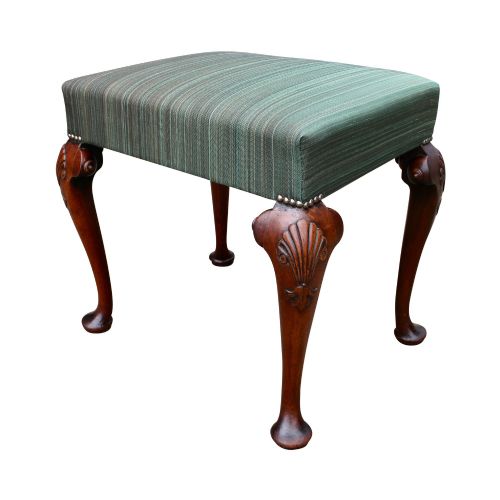
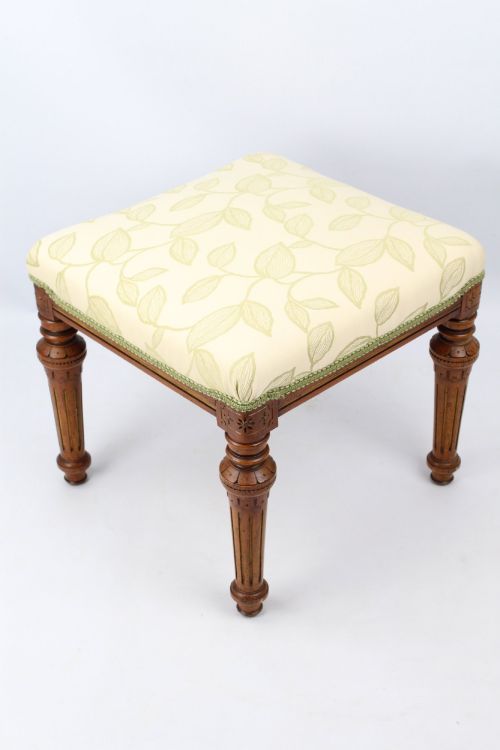
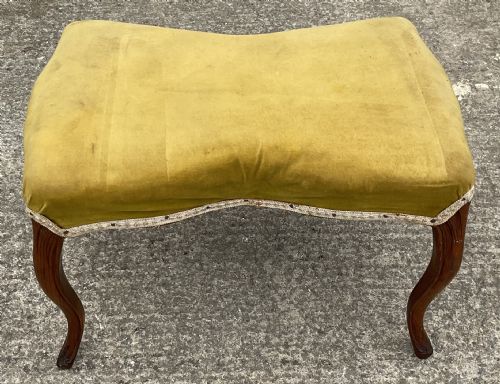
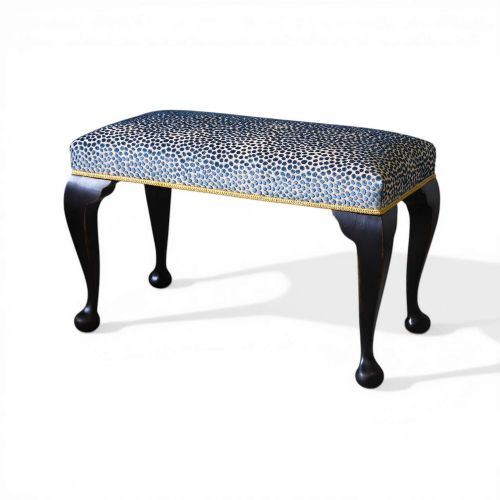
A low dressing table stool provides a comfortable, proportionate seat for a bedroom vanity or dressing table. These pieces span the nineteenth century through to the nineteen-thirties, with Victorian and Queen Anne style examples appearing frequently in the selection.
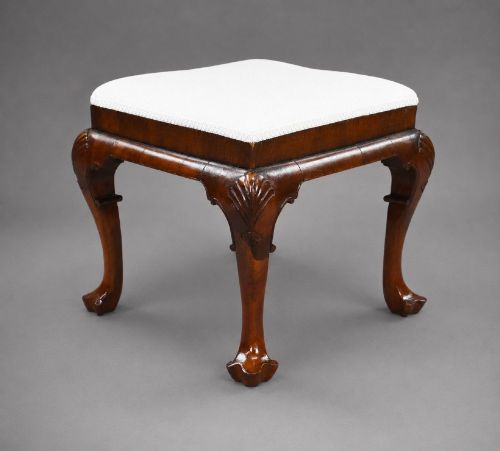
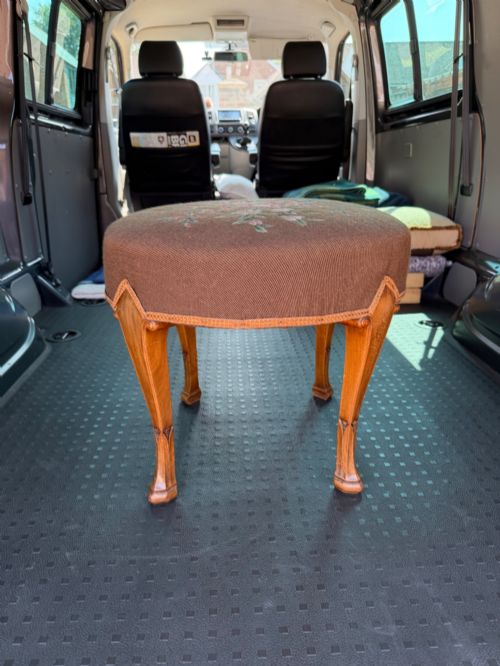
The assortment includes solid walnut and mahogany frames, alongside painted finishes and occasional rosewood or oak examples. Formats vary from oval shapes to deep-buttoned upholstered tops and models supported by cabriole legs.
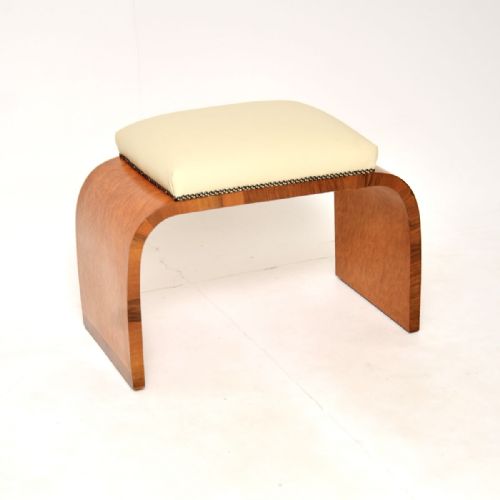
Makers drew on several distinct movements, producing Queen Anne revival pieces, Arts and Crafts designs, and Art Deco works featuring burr walnut or birds eye maple. Buyers often select these compact seats to match existing period bedroom furniture.
Materials and construction methods
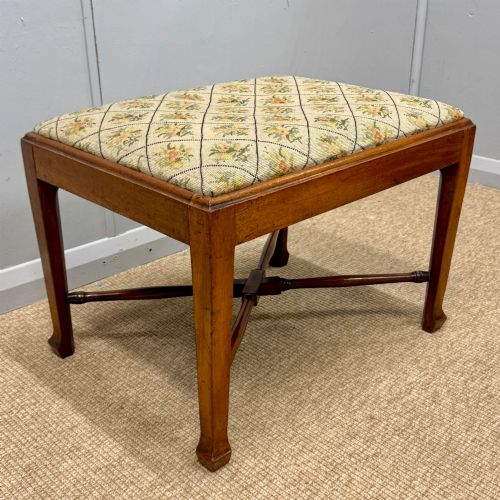
Frames rely principally on timber such as walnut, mahogany, rosewood, and oak, shaped into cabriole or turned legs, sometimes featuring cross stretchers for stability. Joinery techniques reflect the period of origin, from nineteenth-century hand carving to early twentieth-century cabinet work.
Upholstery forms an essential part of the construction, utilising materials like fabric, leather, wool, textile, and tapestry, occasionally finished with needlepoint or deep buttoning. Brass details and castors appear on specific Victorian iterations to aid movement.
Victorian makers occasionally fitted small castors to dressing stools, allowing occupants to glide across the carpet rather than lift heavy timber frames.
Quality factors in period seating
The standard of timber selection and carving execution distinguishes exceptional examples from standard pieces, particularly in walnut and mahogany frames where grain pattern and crispness of detail matter. Solid construction without undue wobble indicates sound underlying joinery.
Upholstery finish and the preservation of original fabric or appropriate period textile work contribute to the integrity of the piece. Refined proportions and balanced leg forms, such as well-executed cabriole shapes, elevate the visual standard.
The Low Dressing Table Stool Glossary
- Cabriole leg
- A furniture leg that curves outward and then tapers inward, typically ending in a pad or claw foot. This form derives from classical motifs and appears widely on Queen Anne style pieces.
- Cross stretcher
- A system of supporting rails connecting the legs near the base to provide structural rigidity. These are often turned or shaped to match the style of the frame.
- Deep buttoning
- An upholstery technique where twine is pulled through padding and secured with buttons to create a diamond pattern. This method adds firmness and texture to the seat.
Low Dressing Table Stool: Frequently Asked Questions
How do I date a low dressing table stool?
Dating relies on identifying timber choices, leg profiles, and upholstery styles associated with particular decades. Victorian pieces often show rich mahogany or walnut with turned or cabriole supports, while nineteen-thirty examples might display Art Deco veneers.
Examining the underside for tool marks, screw types, and construction methods helps confirm the manufacturing period when stylistic clues overlap.
What is the difference between a footstool and a dressing stool?
Dressing stools are generally built with slightly taller proportions and firmer padding to provide a comfortable seated height for a vanity table. Footstools sit lower to the ground and are intended to support feet rather than bear full sitting weight.
Many antique forms share similar frames, so total height and upholstery wear patterns usually distinguish daily seating from foot rests.
Are these stools suitable for daily use?
Most period stools are robustly constructed from hardwoods like walnut and mahogany, making them entirely practical for regular seating. Checking the stability of the frame and the condition of the joints ensures the piece handles everyday movement.
Modern users often pair these compact seats with contemporary dressing tables or use them as flexible occasional seating in hallways and bedrooms.
How do I match a stool to my dressing table?
Consider the primary wood type, such as walnut, mahogany, or oak, and look for complementary tones rather than exact matches. Height is also critical, as the seat must clear the underside of the vanity with enough space for comfortable legroom.
Style periods provide a helpful guide, pairing Queen Anne revival or Art Deco pieces with furniture sharing similar decorative motifs.