

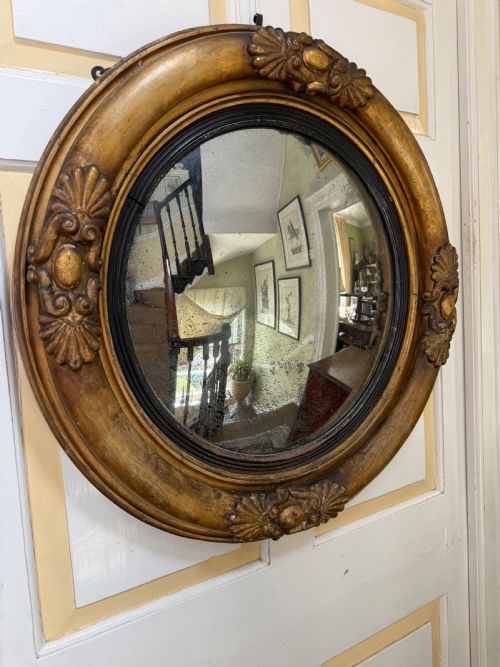


Carved Gilt Slip Mirror
Carved gilt slip mirror pieces bring together wood, gesso and glass in wall and overmantel forms that anchor a room with period light.
Carved Gilt Slip Mirror
A carved gilt slip mirror is a wall or overmantel glass incorporating a fine internal moulding finished in gold leaf, seen across Georgian, Regency, and Victorian periods. These pieces include circular convex frames, fretwork wall designs, and larger overmantel proportions.
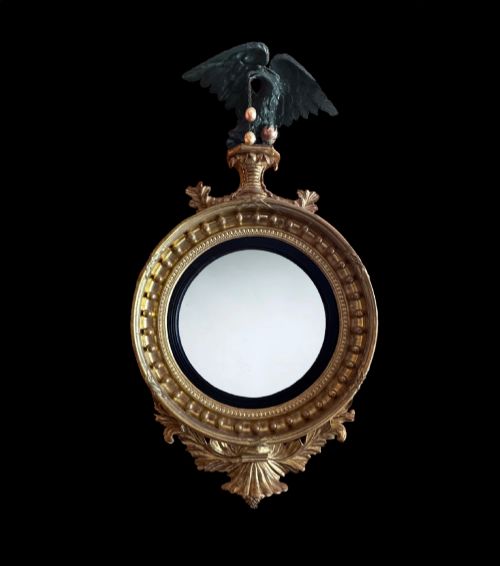
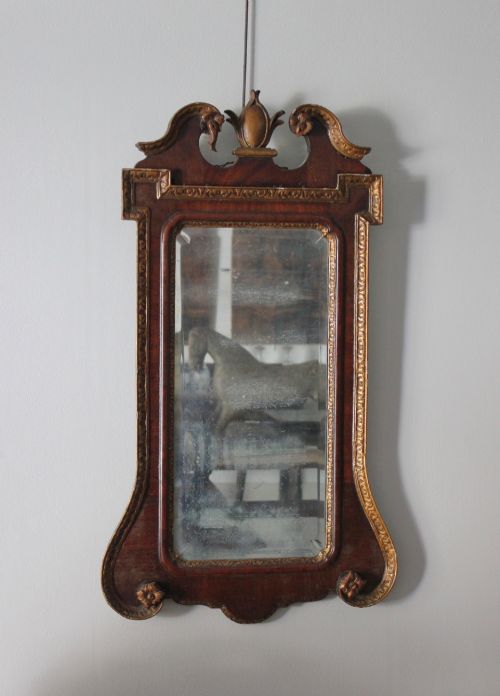
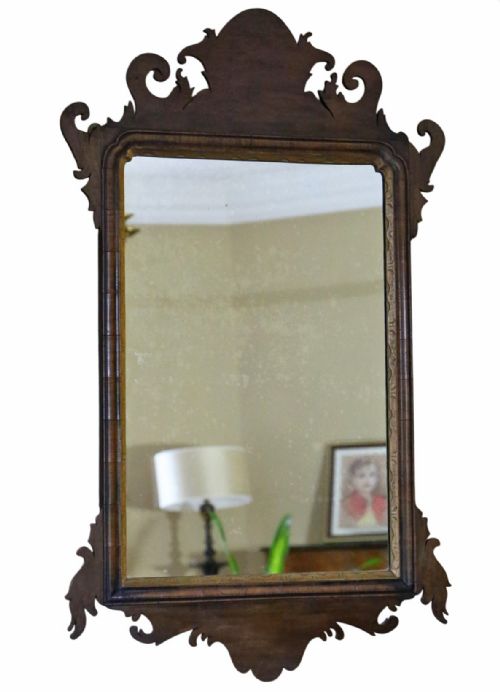
The version most commonly met on this page is the Regency convex mirror, often framed in giltwood and occasionally topped with an eagle surmount. Alongside these, buyers find walnut and mahogany fretwork mirrors from the eighteenth century and later revival eras.
How they were made
Makers shaped timber foundations from walnut, mahogany, sycamore, and ebonised wood, applying gesso to build up intricate decorative profiles. Giltwood and gilt applications then provided the metallic surface sheen characteristic of these frames.
Glass plates, including Vauxhall mirror plates, were set within the timber rebates alongside the internal gilt slip that frames the glass edge.
Listings span Georgian, Regency, Victorian, and 1920s periods, using glass, giltwood, gesso, mahogany, walnut, and yew wood.
What varies in quality
The standard of carving in the wooden frame and the depth of the gesso work determine the visual punch of the piece. Fret-cut designs and eagle surmounts show varying degrees of sharpness and relief.
The clarity and age of the glass plate, alongside the integrity of the original gilding on the internal slip and outer frame, set the finer examples apart.
The Carved Gilt Slip Mirror Glossary
- Gilt slip
- A thin internal frame moulding finished in gold leaf that sits directly against the mirror plate. It separates the glass from the main outer wooden frame.
- Convex mirror
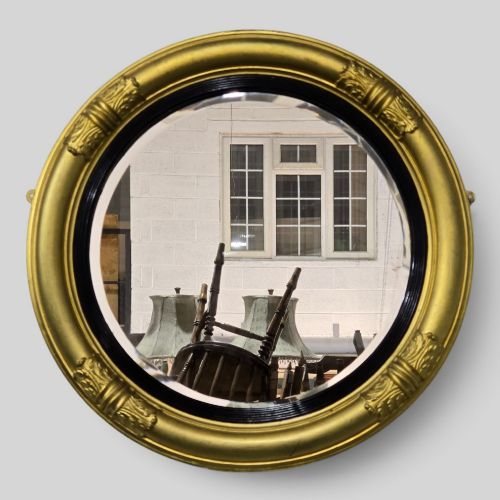
- A round looking glass with a curved plate that reflects a wide, distorted field of view. These forms were popular during the Regency period.
- Fretwork mirror
- A wall glass featuring flat timber panels cut with scrolling or geometric pierced patterns. Eighteenth-century Georgian examples often utilise walnut or mahogany.
- Overmantel mirror
- A wide horizontal wall glass designed to hang above a fireplace mantel. These large-scale items appear in Regency and Victorian periods.
- Gesso
- A plaster-like mixture applied to wood frames to build up surfaces for carving and gilding. It allows for crisp ornamental detail.
Carved Gilt Slip Mirror: Frequently Asked Questions
Where should I hang a convex mirror?
These round convex pieces suit principal reception rooms or hallways where their wide-angle reflection captures light and space.
Position them at eye level to make the most of the reflective glass and the gilt frame detail.
How do I identify a Regency mirror?
Regency pieces often feature circular convex plates, reeded ebony inner rings, and giltwood frames occasionally topped with eagles.
They rely on classical proportions and bold framing that sets them apart from earlier Georgian fretwork designs.
What is a Vauxhall mirror?
This term describes mirrors featuring bevelled plates produced or styled in the tradition of the famous London glasshouse.
They appear in eighteenth-century contexts, particularly within walnut frames.
How do I care for giltwood frames?
Keep giltwood and gesso surfaces away from direct sunlight and damp conditions to protect the gold leaf and underlying plaster.
Dust gently with a dry, soft brush rather than using liquid cleaning products.