

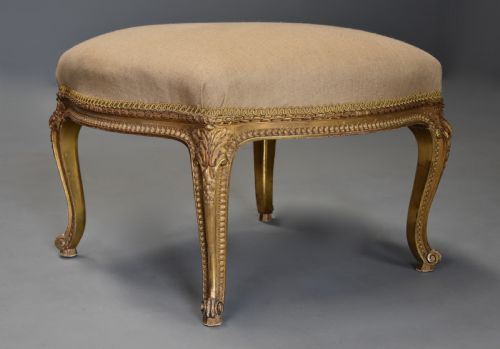


Carved Gilt Footstool
A carved gilt footstool brings rich texture and gilded warmth to a room, offering both decorative presence and practical comfort.
Carved Gilt Footstool
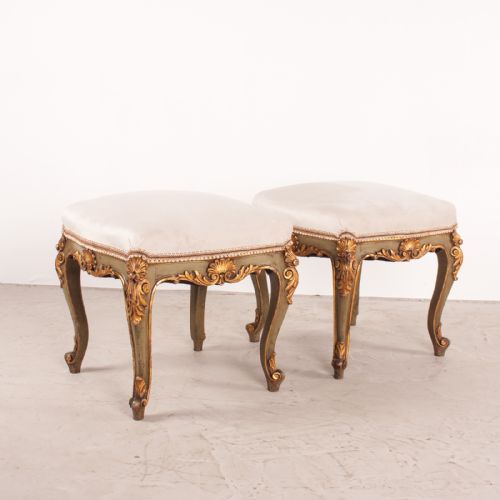
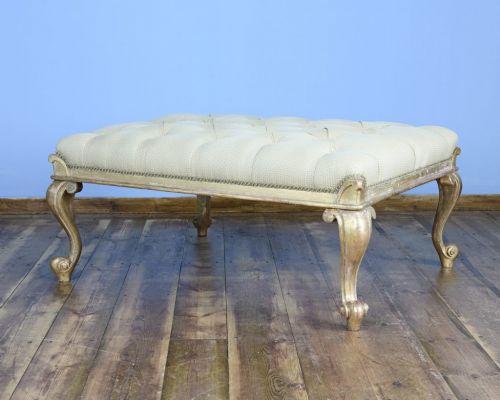
When searching for a carved gilt footstool, you encounter low seating forms designed to support the feet or serve as small occasional seats. The selection spans the nineteenth century, including Georgian, Victorian, and Edwardian periods, alongside continental revivals.
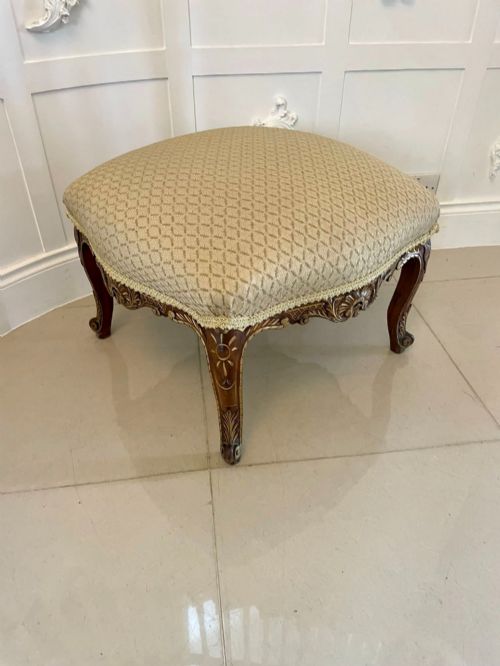
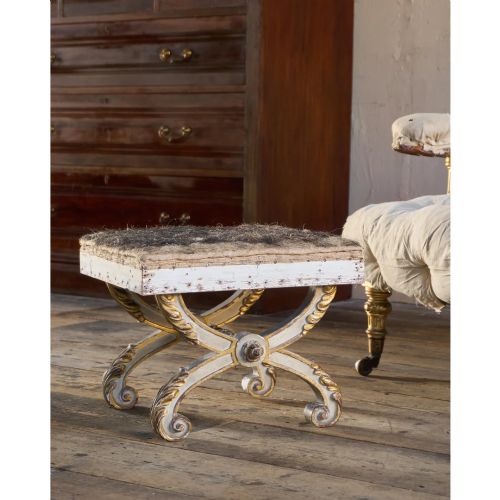
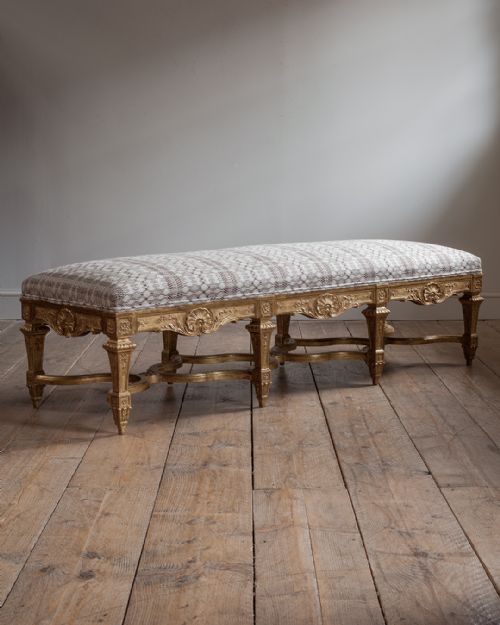
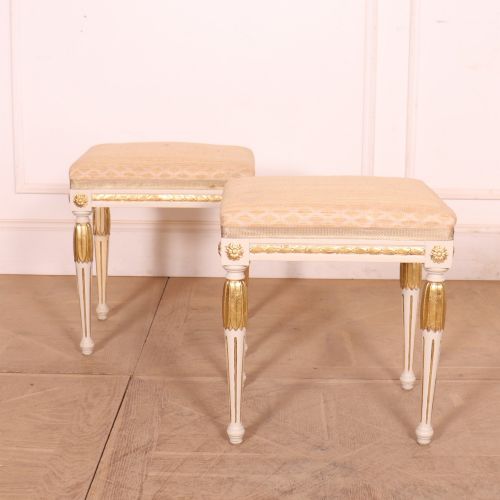
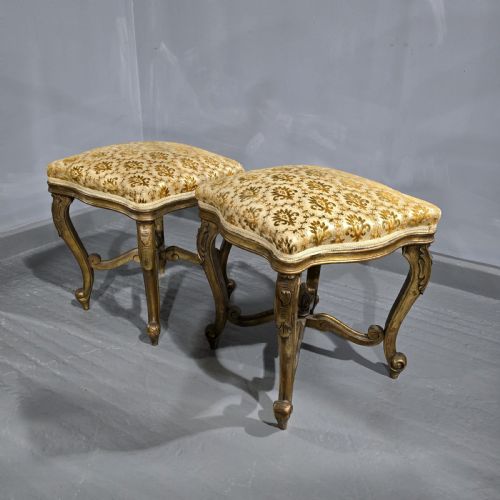
The most common examples on this page are French and Swedish pieces from the nineteenth century, often reflecting Louis XV, Louis XVI, or Gustavian styles. Forms range from simple upholstered stools to X-frame curule designs and parcel-gilt centre stools.
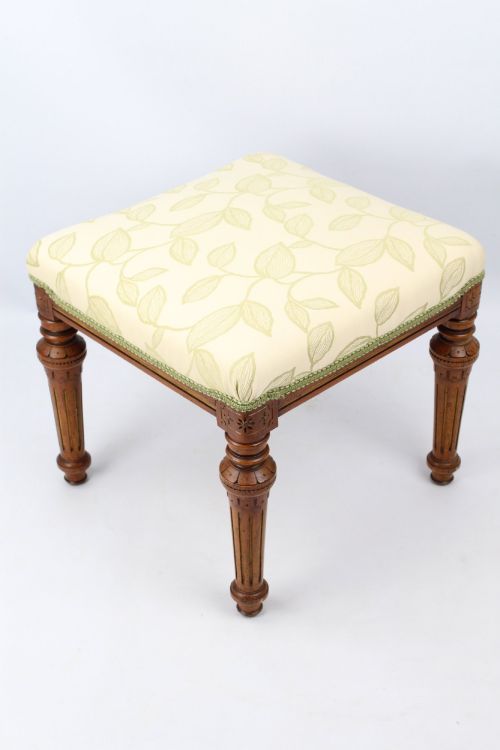
Many items appear in pairs or as part of larger seating arrangements, such as dressing table stools and footstools paired with armchairs. Walnut, oak, and painted wood provide the structural base beneath the gold leaf and decorative carving.
Materials and construction
Makers shaped these pieces from hardwoods like walnut and oak, as well as softer painted woods, applying layers of gold leaf or parcel-gilt finishes to the carved surfaces. Giltwood forms sit alongside painted and gilded variations that show traditional surface treatments.
Upholstery forms a vital part of the construction, utilising period textiles, velvet, and various fabrics secured over padded frames. Joinery methods include robust framing to support weight, visible in X-frame curule structures and sturdy cabriole legs.
One particularly relaxed piece in the archive is a rocking gilt gout stool, designed to soothe tired feet with gentle motion.
Indicators of quality
The depth and crispness of the hand-carved ornamentation separate standard pieces from finer examples. Sharp details in the acanthus leaves, scrolls, and floral motifs indicate skilled workshop production.
The application and preservation of the gold leaf dictate visual impact, with burnished and matte surfaces interacting distinctively with light. Original ground preparation beneath the gilding and the integrity of the underlying timber frame further distinguish superior pieces.
Miles & Edwards·Loidrault Freres Paris·A.M.E. Fournier
The Carved Gilt Footstool Glossary
- Giltwood
- Wood that has been coated with gold leaf or gold paint. This finish creates a reflective, luxurious surface popular in formal European furniture.
- Curule
- An X-shaped form derived from ancient Roman magistrate seats. This structural design provides cross-braced strength and an architectural silhouette.
- Gustavian
- The Swedish interpretation of neoclassical style, characterised by restrained carving and pale painted finishes. These pieces offer a lighter aesthetic than their continental counterparts.
- Parcel-gilt
- A decoration method where only specific carved portions of an object are gilded, leaving the underlying wood or paint exposed elsewhere.
- Louis XVI style
- A neoclassical design vocabulary marked by straight tapered legs, geometric symmetry, and classical motifs. It provides a more structured appearance than earlier rococo curves.
Carved Gilt Footstool: Frequently Asked Questions
How do I identify a French gilt footstool?
French examples often display characteristic rococo or neoclassical revival carving, utilising giltwood and traditional upholstery.
Look for maker stamps on the frame or distinct regional proportions that align with nineteenth-century Parisian workshop standards.
Where should I place a gilt footstool?
These pieces suit placement beside armchairs, at the foot of a bed, or beneath a dressing table.
Their decorative gilt surfaces also allow them to function as standalone accent objects in a hallway or drawing room.
What is an X frame footstool?
An X-frame footstool, sometimes called a curule stool, uses intersecting supports forming an X shape from the side view.
This ancient curule form provides inherent structural stability while adding a classical architectural element to the room.
How do Gustavian stools differ from French ones?
Gustavian pieces originating from Sweden embrace a more subdued aesthetic with painted finishes rather than heavy all-over gilding.
Their carved details remain restrained, reflecting Scandinavian interpretations of neoclassical design.
Can these footstools support sitting weight?
Most nineteenth-century footstools and dressing stools were built with sturdy timber frames intended for regular use.
However, fragile antique gilding and delicate upholstery may require careful handling depending on the specific construction.