


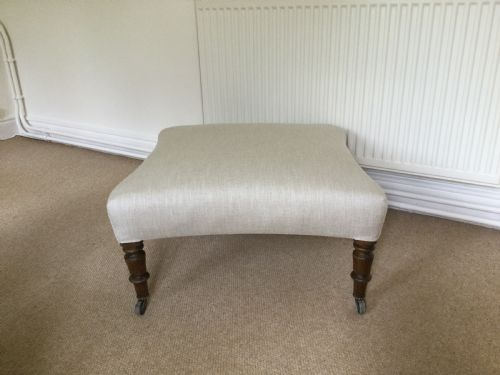


Antique French Pouffe
An antique french pouffe brings rich texture and low, inviting seating to a room, drawing the eye with classic carved timber and sumptuous upholstery.
Antique French Pouffe
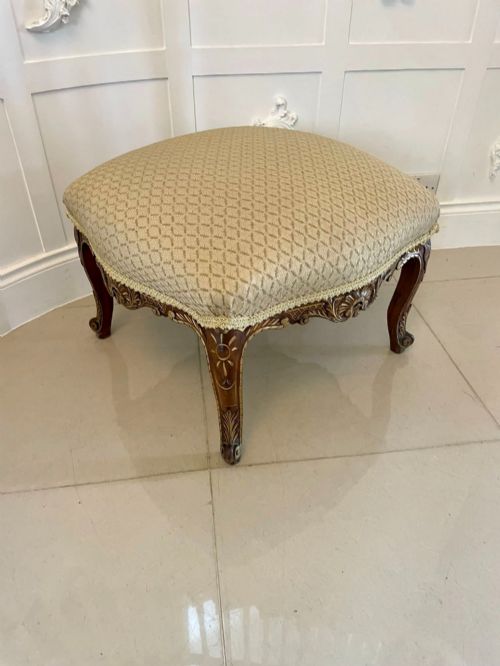
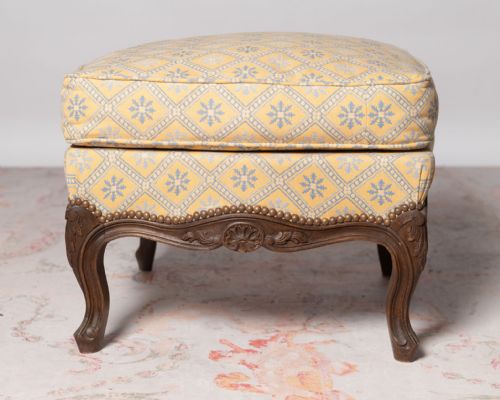
When you search for an antique french pouffe, you are looking at low seating designed for resting feet or adding flexible spots around a hearth. The examples gathered here span the nineteenth century and the early twentieth century, taking the form of footstools, ottomans and fireside stools.
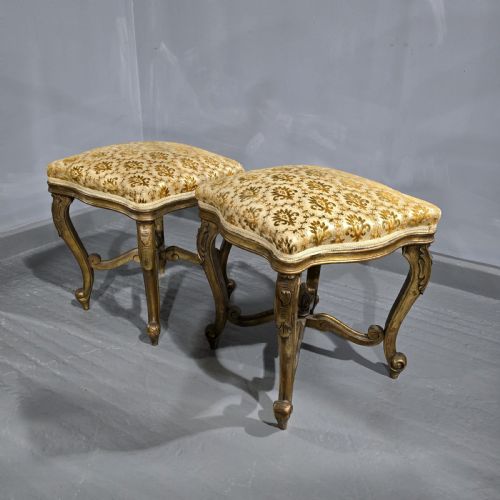
Most pieces on this page draw on classic continental aesthetics, featuring Louis XV style curves, French Neoclassical lines and elaborate French Chateau detailing. You will encounter both single items and matched pairs ready to integrate into a traditional interior.
How they were made
Makers fashioned the structural frames of these stools from hardwoods such as walnut and beech, frequently applying a layer of giltwood or fine gilding to the carved surfaces. Skilled artisans shaped cabriole legs and decorative trim by hand, creating sturdy supports designed to bear weight while remaining visually light.
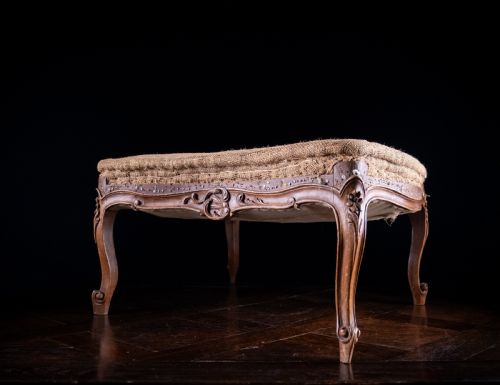
Traditional upholstery techniques involved webbing, hessian and calico foundations layered beneath top covers of velvet, red silk or plain fabric. Artisans secured the padding with careful tacking, often finishing the edges with deep buttoning or decorative gimp braid.
Listings feature items dated from eighteen fifty through to nineteen twenty, alongside pieces attributed to the nineteenth century generally.
What varies in quality
The standard of carving determines much of the distinction between ordinary pieces and exceptional ones. Crisp, deep relief work on the wooden frames and well-proportioned cabriole legs indicate skilled workmanship from the workshop.
The integrity of the underlying timber frame and the quality of any original gilding also separate simpler examples from finer ones. Surviving historical upholstery and rich fabrics add to the character of a well-preserved stool.
A.M.E. Fournier
The Antique French Pouffe Glossary
- Giltwood
- Timber treated with gold leaf or gilt finish. This decorative surface treatment was widely used on formal nineteenth century seating.
- Cabriole leg
- A furniture leg featuring a double curve, stepping outward at the knee and tapering inward toward the foot. It is a defining feature of Louis XV style design.
- Hessian
- A coarse woven fabric typically utilised as a foundation layer in traditional upholstery. It provides sturdy support beneath internal padding.
- Calico
- A plain-woven cotton textile used by upholsterers as an inner lining or base cover before applying top fabrics.
- Deep buttoning
- An upholstery technique where stitches pull the fabric deep into the padding in a diamond pattern. This method creates characteristic folds and secures the filling.
Antique French Pouffe: Frequently Asked Questions
How are antique french pouffes used today?
These low stools serve well as flexible seating beside a fireplace or at the foot of a bed. They also function practically as footrests in a living room.
Their compact size allows them to tuck easily beneath tables or sit quietly in an unused corner until needed.
What is the difference between a footstool and an ottoman?
Footstools are generally smaller items designed primarily to support seated feet. Ottomans often provide a larger surface area and can double as low coffee tables or extra seats.
Both forms share similar wooden framing and upholstery methods during the nineteenth century.
Are these stools sold ready to use?
Condition varies across the selection, with some pieces retaining their historic silk or velvet upholstery. Other examples arrive bare and ready for new fabric.
Checking individual descriptions clarifies whether a stool requires reupholstering before placement in your home.
How do I identify a Louis XV style stool?
Louis XV style pieces typically display characteristic curved lines, floral carvings and slender cabriole legs. The overall silhouette avoids straight edges in favour of organic, flowing contours.
This aesthetic revival remained popular across the nineteenth century in French and English workshops.