



Carved Gilded Dressing Stool
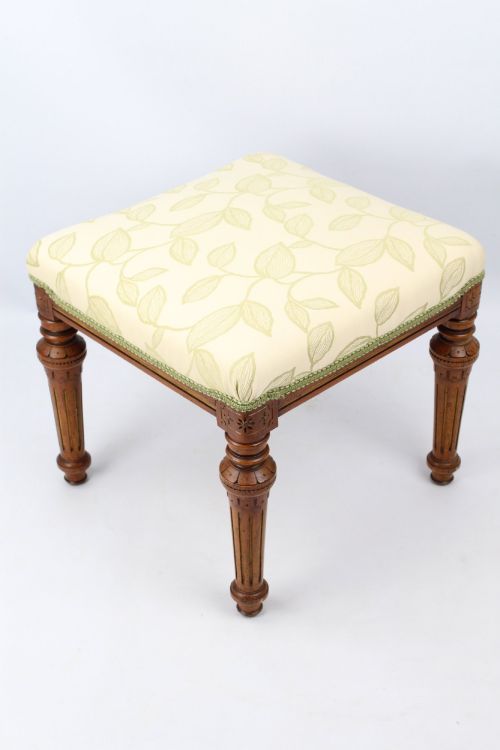
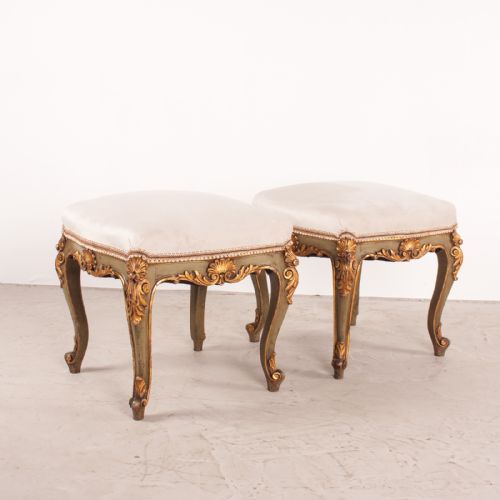
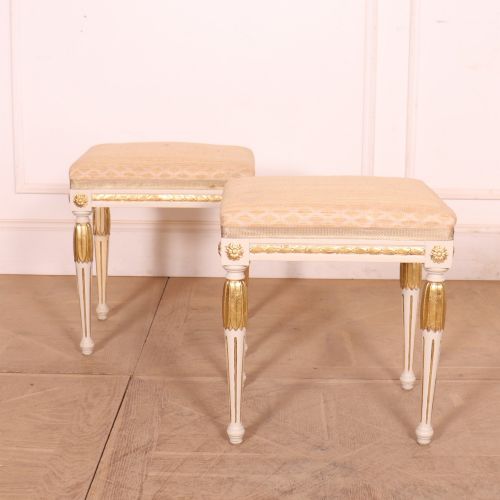
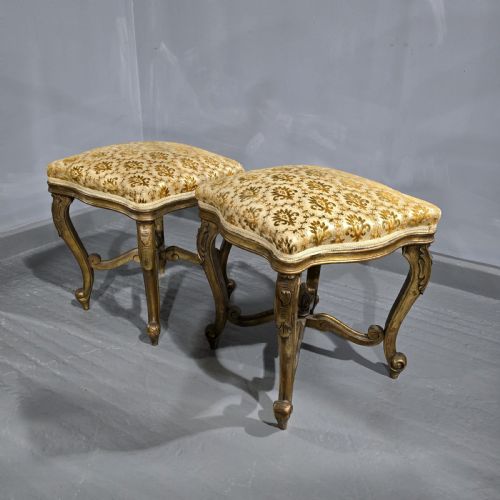
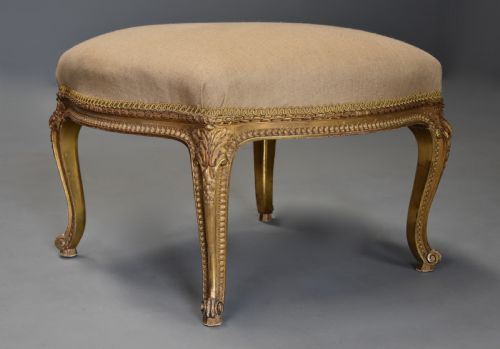
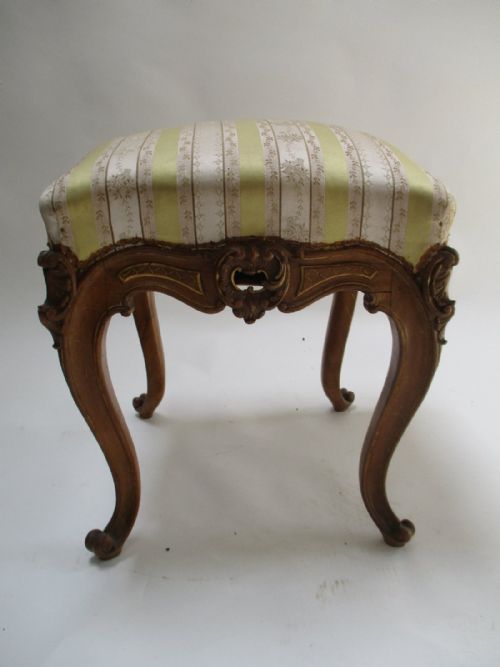
These carved gilded dressing stool examples bring nineteenth-century elegance to a bedroom, combining ornate timber frames with rich surface finishes.
Carved Gilded Dressing Stool
A carved gilded dressing stool brings nineteenth-century French and continental decorative schemes into modern spaces, often appearing as a small seat or footstool placed beside a vanity table.
Most pieces seen here date from the nineteenth century, including specific years like 1800, 1860, 1870, 1880, 1890, 1900, and 1920, reflecting periods of historic revival such as Louis XVI, Louis XV, and Neoclassical styles.
Forms vary from standard four-legged stools to X-frame curule designs, window seats, and long benches, constructed primarily from wood and upholstered in various fabrics and textiles.
Distinguishing quality in carved gilded dressing stool pieces
The crispness and depth of the timber carving dictate visual success, separating sharply hand-cut ornament from softer, less defined moulding.
The application of the gold leaf or painted finish determines the richness of the surface, with smoother adherence and ageing showing superior craftsmanship.
Form complexity also plays a part, as specialised shapes like curule X-frames or stamped maker pieces demonstrate higher ambition than standard rectangular frames.
Listings span the nineteenth century up to the 1920s, featuring oak, walnut, giltwood, and painted timber.
LOIDRAULT FRERES PARIS·Miles & Edwards
The Carved Gilded Dressing Stool Glossary
- Giltwood
- Wood that has been coated with gold leaf or a gold-coloured finish. This material defines the bright, reflective surfaces seen across many period seating items.
- Gesso
- A plaster-like mixture applied to wood surfaces to create a smooth base for carving and gilding. It allows craftsmen to achieve sharp, intricate relief details before applying gold leaf.
- Curule stool
- An ancient Roman magistrate's seat design featuring an X-frame shape. Nineteenth-century makers revived this form for elegant domestic seating and footstools.
- Louis XVI style
- A neoclassical design movement characterised by straight tapered legs, classical symmetry, and restrained ornamentation. Pieces in this style often feature carved fluting and geometric motifs.
- Louis XV Revival
- A decorative style focusing on asymmetrical curves, naturalistic scrollwork, and florid floral carving. It draws inspiration from mid-eighteenth-century French court aesthetics.
Carved Gilded Dressing Stool: Frequently Asked Questions
How are carved gilded dressing stool designs dated?
Dating relies on stylistic markers, construction traits, and recorded period indicators associated with nineteenth-century revival movements. Details like specific X-frame proportions or neoclassical motifs help align pieces with eras such as the 1880s or 1900.
Makers' stamps or specific regional traits, such as Swedish or Italian origins, also provide secure chronological clues for individual examples.
Where should a carved gilded dressing stool be placed?
These pieces traditionally sit before a dressing table or vanity, functioning as both a functional seat and a decorative accent. Their ornate gilt surfaces make them suitable for bedrooms or dressing rooms.
Longer benches and window seats also find places at the foot of a bed or beneath tall windows, adding a historic continental touch to the room.
How do French and English styles differ?
French-inspired items, such as those referencing Louis XVI or Louis XV aesthetics, typically emphasise curved cabriole legs, rich gesso relief, and elaborate floral carving. English Victorian interpretations often lean towards sturdier oak frames and simpler geometric lines.
Continental pieces frequently combine painted surfaces with partial gilding to achieve lighter decorative effects.