
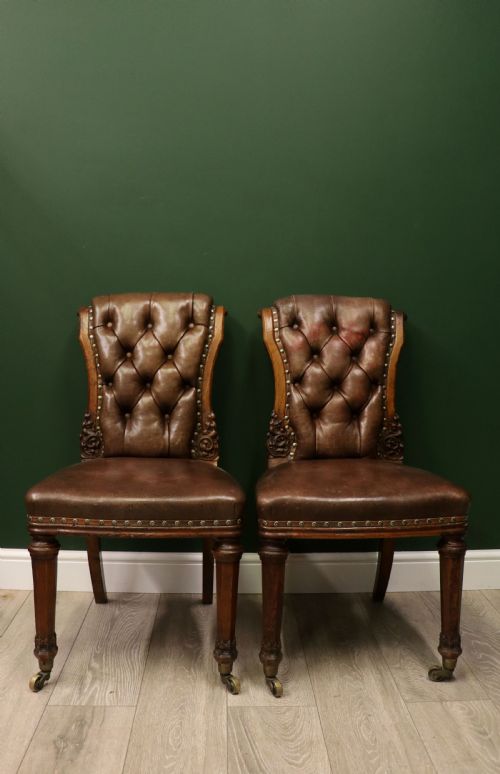


Carved Frame Desk Chair
A carved frame desk chair provides sturdy support at a working table, bringing period character and tactile materials into a room.
Carved Frame Desk Chair
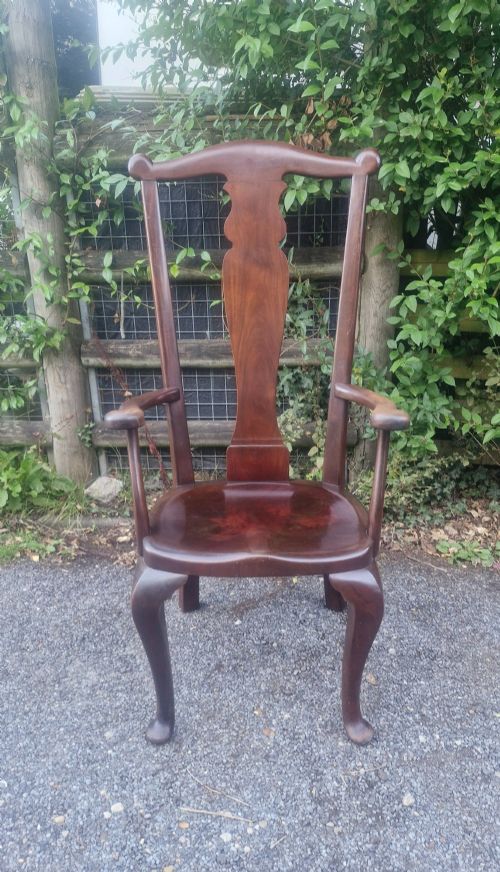
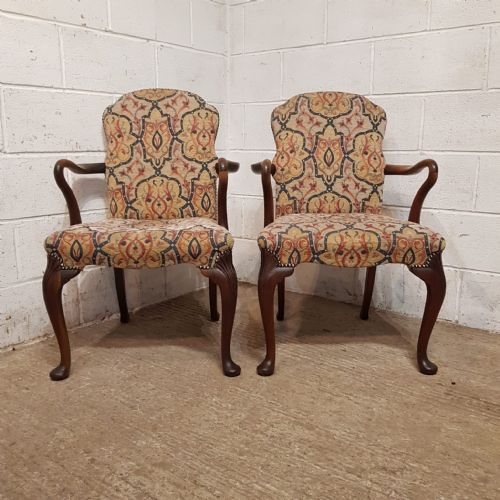
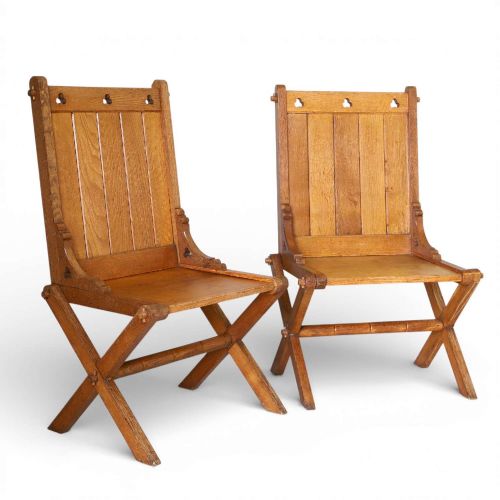
A carved frame desk chair combines a rigid timber structure with functional seating designed for writing tables, libraries, and studies. These pieces take various forms, from open armchairs and library seats to cross-frame x-shaped supports.
The versions most frequently met on this page date from the nineteenth century and the early decades of the twentieth century. Oak and mahogany frames predominate, often displaying revival styles such as Gothic, Renaissance, or Georgian alongside simpler vernacular designs.
How they were made
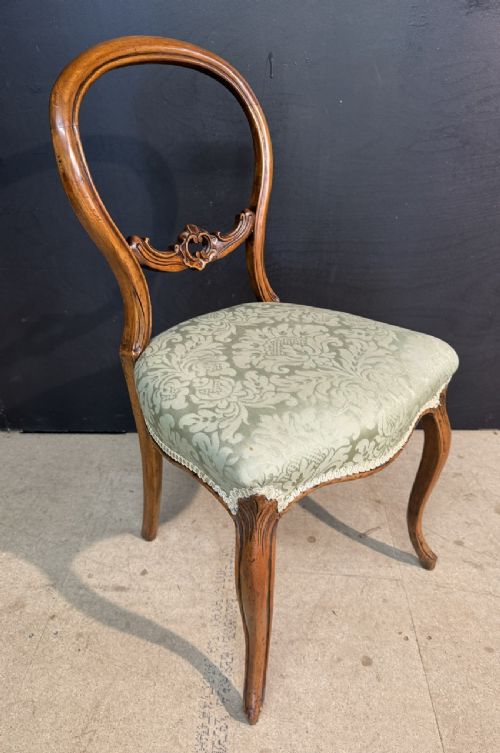
Makers constructed these chairs primarily using hardwoods like oak, mahogany, walnut, and rosewood, shaping the structural frames through traditional joinery and hand carving. Wood surfaces frequently feature turned elements, barley twists, or geometric details.
Upholstered components incorporate materials such as leather, fabric, velvet, and brass tacks to secure coverings to the seats and backs. Drop-in inserts and webbed foundations provide the internal support for daily use.
Listings feature oak, mahogany, walnut, and rosewood frames paired with leather, velvet, and fabric upholstery.
What varies in quality
The standard of timber selection and the crispness of the hand carving separate standard commercial seating from finer bespoke workshop output. Well executed joinery ensures the frame remains rigid under regular strain at a desk.
The choice of covering material and the fidelity to historical design precedents, such as Pugin or Gillows patterns, indicate the ambition of the original maker. Subtlety in turned supports and well proportioned arm rests elevate certain examples above simpler utility pieces.
COOPER & HOLT
The Carved Frame Desk Chair Glossary
- Glastonbury chair
- A type of folding or X-framed wooden chair with a sloping back and panel armrests. This form became popular during the Gothic Revival period.
- Curule
- An ancient chair shape featuring two curved legs that cross to form an X-shape. These seats often appeared in nineteenth century revival schemes.
- Gainsborough chair
- A wide, open-armed armchair with a padded seat and back, standing on short legs. Eighteenth and nineteenth century versions frequently served at writing desks.
- Carolean style
- A decorative manner dating from the reign of Charles II, characterised by rich carving, scrolling foliage, and high backs. Oak chairs of this type often use cane or upholstery.
- Barley twist
- A woodworking technique where a timber column is turned into a spiral shape. This detail appears frequently on the legs and stretchers of nineteenth century carvers.
Carved Frame Desk Chair: Frequently Asked Questions
What defines a desk chair?
A desk chair is a seating piece built with appropriate height and proportions for working at a table or writing surface. Many examples feature open arms that fit beneath standard desk drawers.
Designs range from simple side chairs to upholstered library armchairs with leather pads. The primary aim is to offer stable support during extended periods of reading and writing.
How are X-frame chairs used?
X-frame chairs utilise crossing structural supports beneath the seat to distribute weight evenly across the base. These pieces often serve as statement seating in studies or libraries.
Historically associated with folding campaign furniture, stationary versions provide robust seating while adding architectural interest to a room.
How do I date an oak chair?
Dating oak seating relies on examining the construction methods, tool marks left on the timber, and the specific revival style of the carving. Nineteenth century pieces often reinterpret earlier Gothic or Carolean motifs.
Secondary woods, fastening types, and wear patterns on the feet help distinguish mid-nineteenth century work from early twentieth century reproductions.
What is a library armchair?
A library armchair is a comfortable seating option traditionally kept in private studies for reading heavy volumes. These chairs typically feature padded armrests and upholstered backs for extended use.
Frames in mahogany or walnut frequently incorporate leather upholstery fastened with brass tacks to withstand daily handling.