


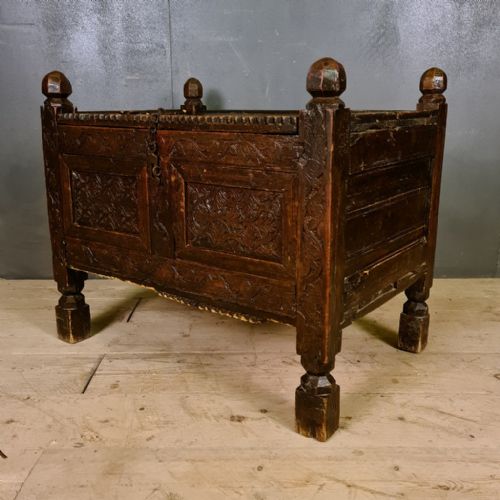

Carved Folk Art Chest
A carved folk art chest brings domestic history into a room through chip carving, painted panels, and regional traditions.
Carved Folk Art Chest
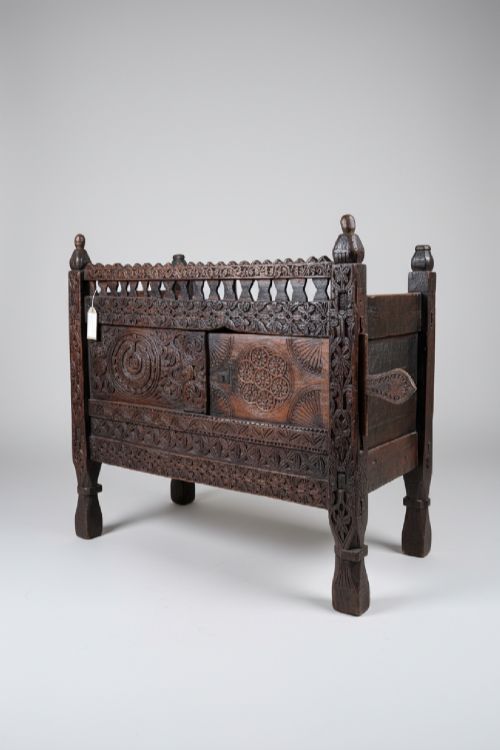
When you search for a carved folk art chest, you encounter a diverse group of regional storage pieces including dowry chests, marriage coffers, foot warmers, and small decorative boxes. These items span periods from seventeen hundred through the early twentieth century, drawing on styles such as Frisian, Swat Valley, Welsh, Hungarian, and Italian folk art.
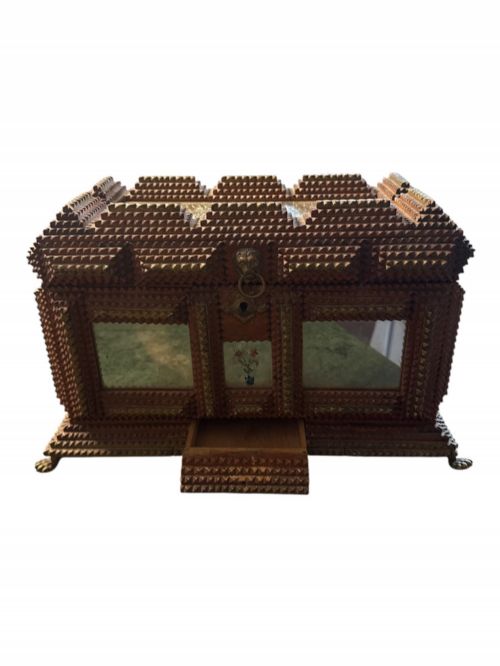
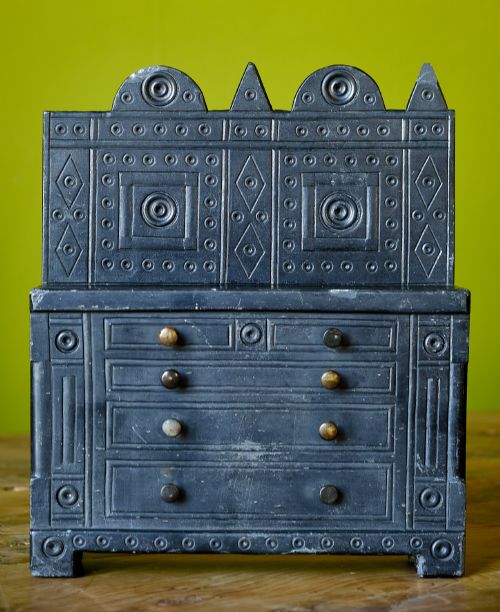
The objects on this page range from full-sized mule chests and cassones down to miniature slate models of chests of drawers and sweetheart tramp art boxes. Oak, pine, hardwood, and soft wood provide the primary structures, frequently embellished with chip carving, paint, and inlay.
You are most likely to meet nineteenth-century examples alongside seventeenth-century foot stoves and late Victorian decorative pieces. Each piece reflects the utilitarian storage needs of its domestic origin combined with local decorative carving traditions.
How they were made
Maker-carvers utilised native timbers such as oak, pine, and mixed hardwoods, shaping planks with hand tools before applying surface decoration. Construction methods rely on traditional joinery suitable for storage furniture, from sturdy board chests to dovetailed boxes.
Chip carving and hand painting define the decorative surfaces, creating geometric patterns and pictorial motifs directly into the timber. Pigments, brass fittings, iron hardware, and slate elements appear across the pieces to reinforce joints and accent the carved panels.
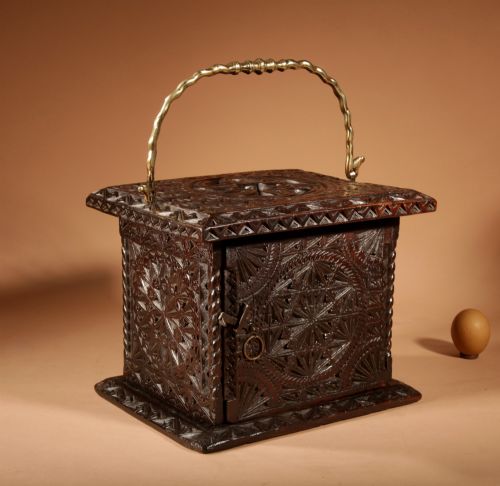
A seventeenth-century foot stove offers a glimpse into historical heating methods, designed to warm chilly toes beneath heavy skirts.
What varies in quality
The distinction between standard examples and superior pieces rests upon the depth, complexity, and execution of the hand-carved ornament. Crisp chip carving and well-preserved original painted surfaces demand greater skill than simpler, utilitarian forms.
Proportion and regional authenticity also dictate the standing of an item, particularly when comparing miniature models or dowry chests against everyday storage boxes. The integrity of the timber and the survival of original brass or iron hardware contribute substantially to the character of each piece.
The Carved Folk Art Chest Glossary
- Chip carving
- A style of relief decoration where small chips are removed from a wooden surface with a knife or chisel to form geometric patterns. This technique appears frequently on nineteenth-century coffers and boxes.
- Cassone
- A large Italian marriage chest used historically to hold the bride's dowry. These pieces often feature extensive painting or carved wood panels.
- Mule chest
- A form of storage chest featuring one or more drawers beneath the main lift-top compartment. They combine the storage of a traditional coffer with the accessibility of drawer space.
- Tramp art
- A type of woodwork created by self-taught makers using readily available materials like discarded cigar boxes, shaped with pocketknives and layered in notch-carved reliefs. Sweetheart boxes represent a common application of this method.
- Dowry chest
- A traditional furniture piece designated to collect household goods and linens for a bride prior to marriage. They are found across numerous European and Asian folk traditions with distinct regional decorative styles.
Carved Folk Art Chest: Frequently Asked Questions
What is a mule chest?
A mule chest is a traditional storage piece that combines a lift-top trunk with one or more drawers fitted beneath the main compartment. This form emerged as makers sought to make stored items more accessible without unloading the entire contents from above.
Examples in this tradition often display regional hand carving or painted finishes unique to their domestic origins.
How do I identify folk art?
Folk art is identified by its non-academic, traditional execution, often created by self-taught makers using local materials and vernacular styles. Pieces frequently incorporate chip carving, naive painted decoration, or regional motifs tied to specific communities.
Items range from full-sized dowry chests to miniature models and foot stoves, each carrying the distinct aesthetic of its place of origin.
What is chip carving?
Chip carving is a technique where the maker uses a knife or chisel to cut small triangles and geometric chips out of a wooden surface. This creates textured, patterned low-relief decoration across coffers, boxes, and panels.
It requires steady hand control and appears widely on nineteenth-century folk pieces.