



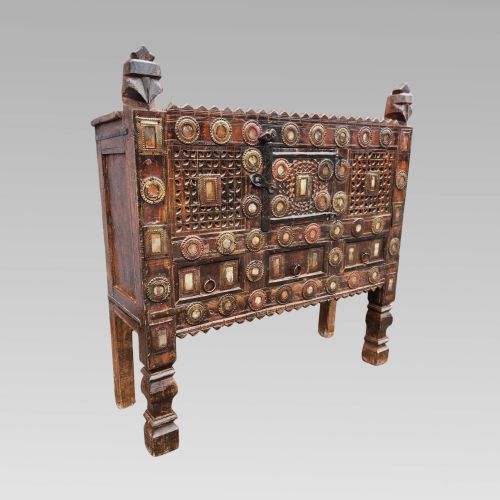


Dark Wood Dowry Chest
These dark wood dowry chest examples bring heavy timber, brass work, and deep carving into a room as practical storage with generations of history behind them.
Dark Wood Dowry Chest
A dark wood dowry chest serves as a robust storage piece originating from diverse regional traditions, built to hold household goods and textiles. These items appear across various forms such as coffers, trunks, and mule chests with integrated drawers.
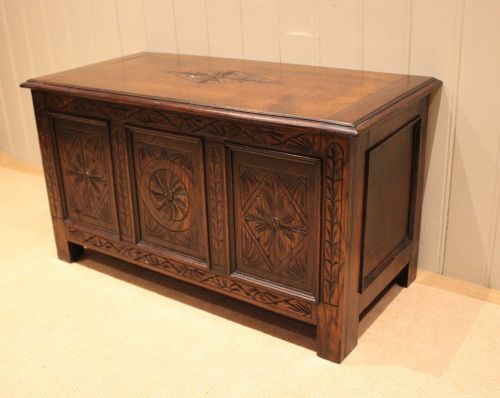
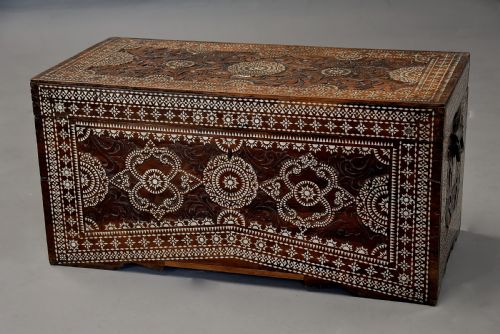
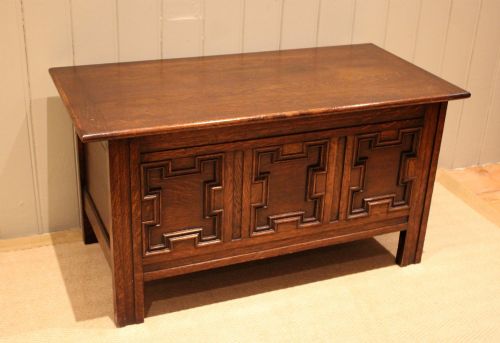
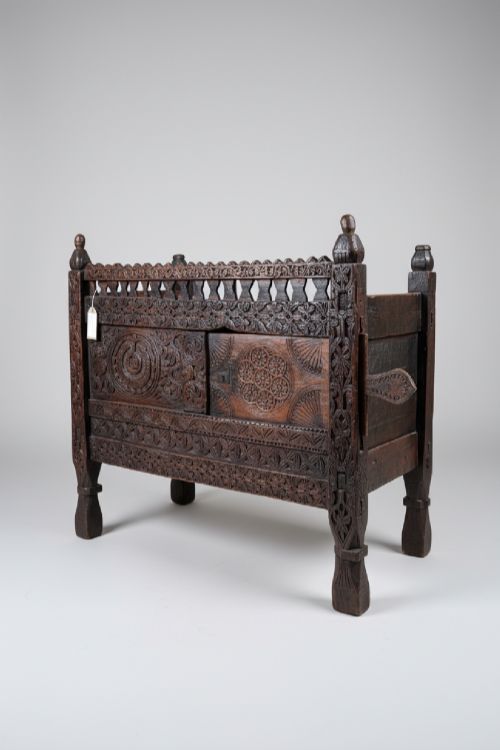
The selection on this page runs from English oak pieces of the Georgian and eighteenth-century periods through to carved Indian teak Damchiya cabinets and Middle Eastern inlaid trunks. Buyers meet everything from austere English country oak to heavily embellished regional folk art vessels.
Origins stretch across British, Indian, and Middle Eastern workshops, uniting different cultural practices of marriage gifts and domestic storage into heavy wooden containers. Each region employs its native timber and decorative vocabulary, creating distinct silhouettes within the same category.
Materials and construction
Carpenters built these dark wood dowry chest items using dense timbers like oak, teak, cedar, and assorted hardwoods to withstand decades of heavy use. Iron and brass feature heavily in structural strapwork, hinges, and decorative corner plates.
Surface decoration relies on deep chisel carving, applied mouldings, and intricate inlays of mother of pearl or metal wire. Regional workshops developed specialised joinery methods, from pegged panel construction in English coffers to intricate frame and panel assemblies in eastern cabinets.
Dark Wood Dowry Chest Retail Price Guide 2026
Typical asking prices for dark wood dowry chest among the pieces listed under this phrase on Sellingantiques today, from the lower quarter to the upper quarter. They describe what is for sale here now, not the wider market.
Listings feature oak, teak, cedar, and hardwood timbers paired with brass, iron, and mother of pearl elements.
Distinctions in quality
Quality rests upon the integrity of the timber selection and the depth of the original hand carving. Pieces featuring crisp, unblemished relief work and tight joinery stand apart from simpler utility boxes.
The preservation of original hardware, including hinges, locks, and metal mounts, elevates a piece significantly. Elements like secondary timbers inside drawers and the precision of inlaid mother of pearl indicate the original maker's investment of time and skill.
The Dark Wood Dowry Chest Glossary
- Damchiya
- A traditional Indian storage cabinet or dowry chest often characterised by carved panels and recessed compartments. These pieces frequently incorporate vibrant folk art motifs and sturdy teak construction.
- Mule chest
- A storage chest fitted with one or more drawers at the base beneath the main compartment. This form bridges the gap between a traditional coffer and a chest of drawers.
- Zanzibar chest
- A heavy hardwood trunk originating from East trade routes, distinguished by brass studding and elaborate strapwork. They were traditionally used by merchants and families for valuable possessions.
- Swat Valley folk art
- Decorative woodwork originating from the Swat Valley region, known for geometric carving and distinctive regional patterns. Pieces from this tradition display high relief work on native timber.
Dark Wood Dowry Chest: Frequently Asked Questions
What is a dark wood dowry chest used for?
These chests were originally made to hold household linens, garments, and valuables prepared for a bride's new home. Today, they function well as blanket boxes, coffee tables, or deep storage furniture in living spaces.
Their sturdy tops also allow them to double as window seats or display surfaces while keeping clutter hidden inside.
How do I care for antique hardwood chests?
Keep the wood conditioned by applying natural waxes occasionally, avoiding direct sunlight which can dry and split older timbers. Dust carved recesses regularly with a soft brush to prevent dirt buildup in the deep grain.
Ensure the room maintains a stable humidity level to protect ancient joints and prevent the hardwood from warping.
How do I tell English coffers apart from Indian chests?
English examples typically rely on heavy oak panels, pegged joinery, and restrained linenfold or geometric carving typical of Georgian and earlier periods. They focus on architectural proportion and structural heft.
Indian and Middle Eastern chests often employ teak or diverse hardwoods paired with brass mounts, mother of pearl inlay, and intricate figural or floral relief carving.
What makes a mule chest different from a standard coffer?
A standard coffer opens only from the top lid into a single deep well, making items at the bottom difficult to reach. A mule chest adds one or more drawers beneath the main box.
This addition allows everyday items to be stored accessibly without lifting the heavy lid and disturbing objects placed on top.