
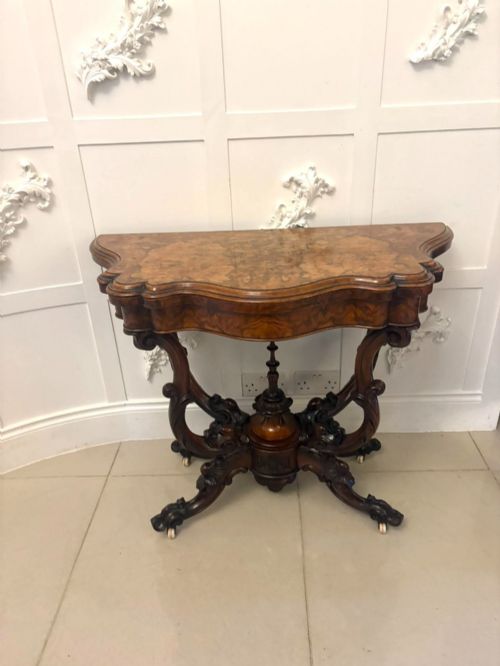
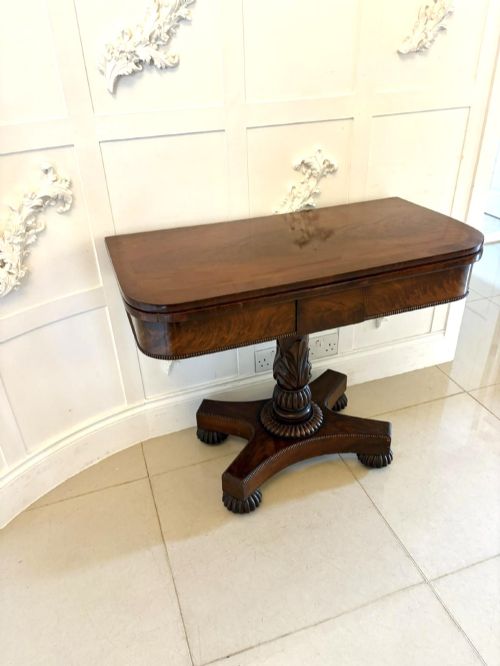
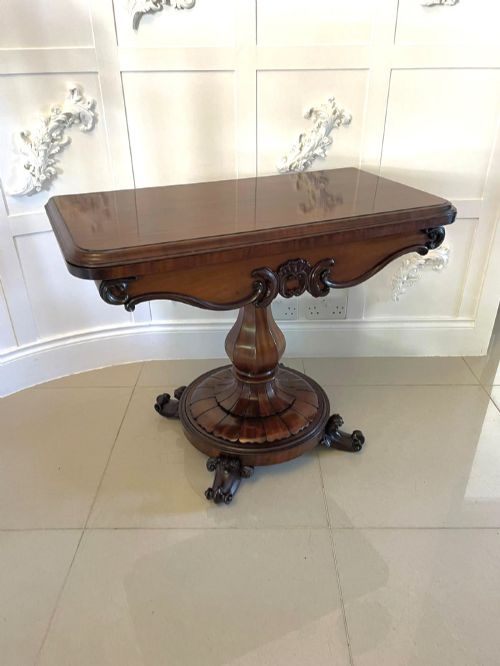

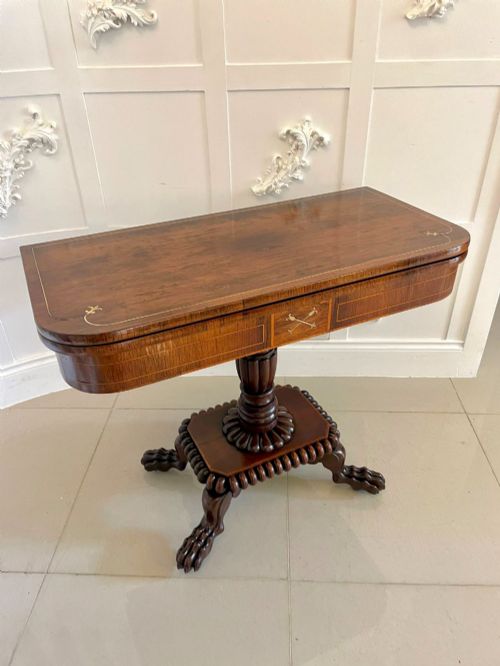
Carved Folding Table
A carved folding table brings centuries of ingenious mechanism and deep-carved ornament together in a portable form.
Carved Folding Table
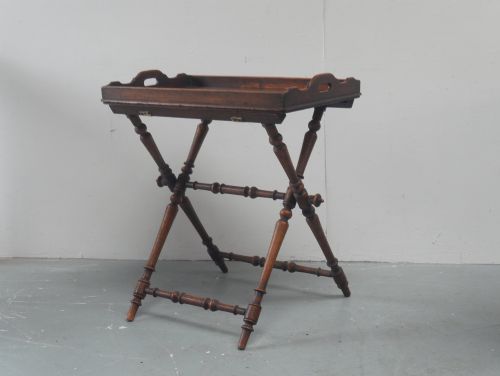
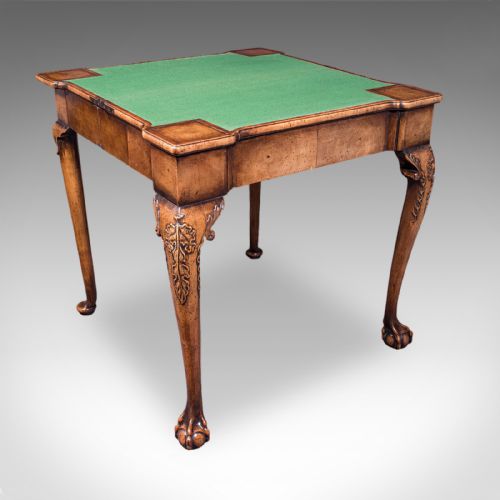
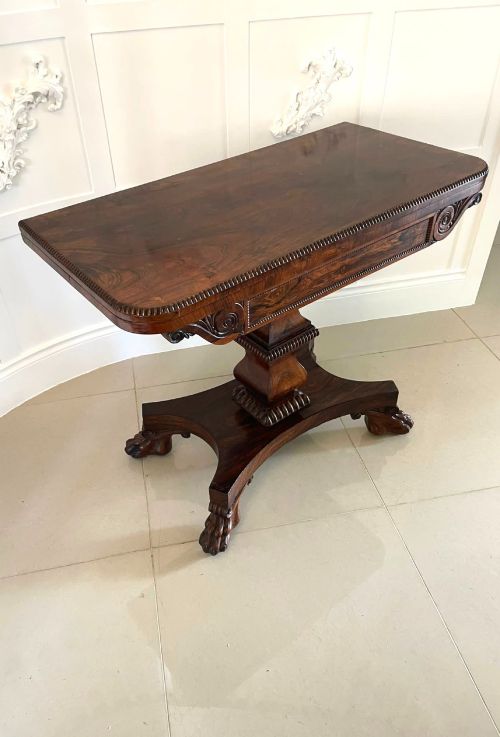
When you search for a carved folding table, you meet a diverse selection of pieces designed to save space while offering ornate surfaces for display or entertainment. The examples found here range from Anglo-Indian octagonal occasional tables with hinged bases to European card and games tables featuring swivel tops and carved supports.
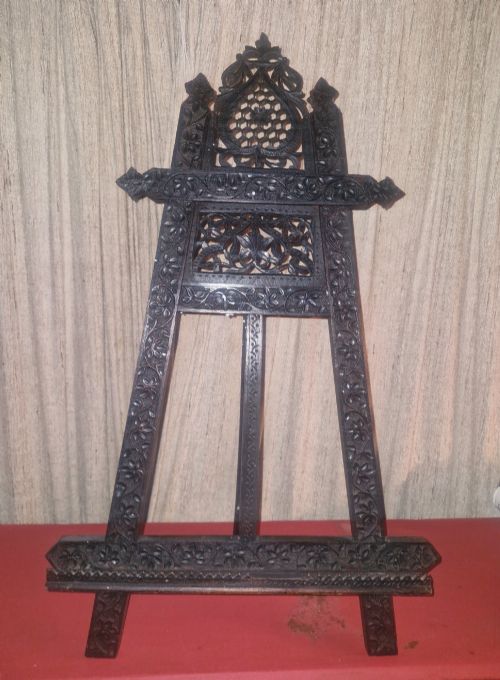
The version you are most likely to encounter on this page is the Victorian or late nineteenth-century carved hardwood table, often associated with workshops in Hoshiarpur or broader regional traditions of intricate pierced carving. These pieces frequently combine dense timbers like teak or shisham with brass, copper, or bone inlay, resting on collapsible stands that demonstrate practical engineering.
How they were made
Makers utilised dense timbers such as mahogany, rosewood, walnut, and teak, selecting them for their stability and capacity to hold fine detail under chisels. In many eastern and colonial pieces, local hardwoods were carved entirely by hand with foliage, geometric patterns, or figurative motifs, then paired with folding lattice bases designed to collapse flat for transport or storage.
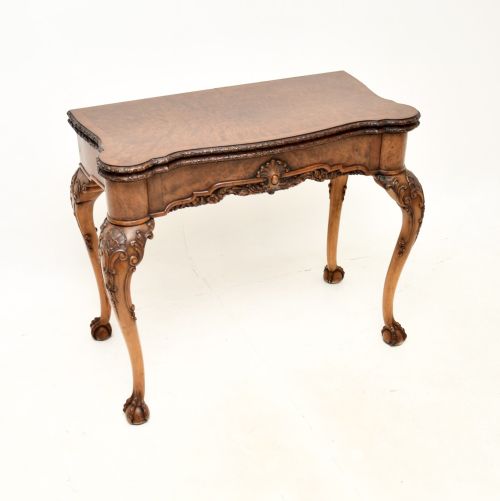
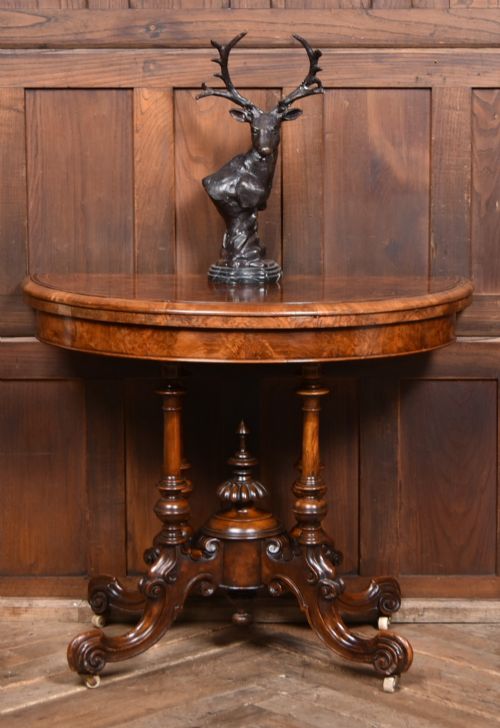
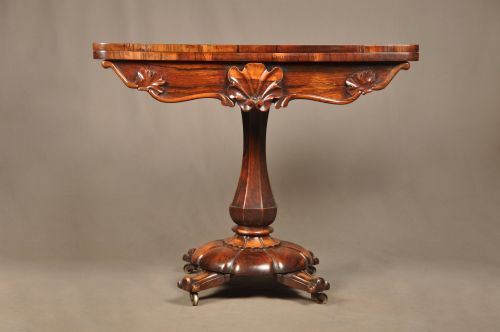
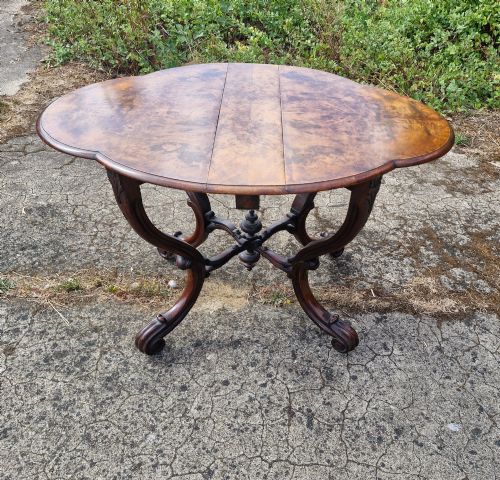
European workshops approached the mechanism differently, employing concertina actions, swivel hinges, and scissor actions to allow tops to fold over for card playing or dining. These frames relied on robust joinery and careful matching of veneers, such as burr walnut and figured mahogany, to create decorative surfaces that conceal their folding mechanisms when closed.
Listings span from the 18th century through the Edwardian period, utilising woods like mahogany, teak, and burr walnut alongside brass inlay.
What varies in quality
The distinction between ordinary and exceptional pieces rests primarily on the depth and crispness of the carving, alongside the integrity of the folding mechanism. Superior examples display high-relief carving with clean undercuts and symmetrical geometry, whereas lesser pieces often show shallow, machine-assisted stamping or blunt chisel work.
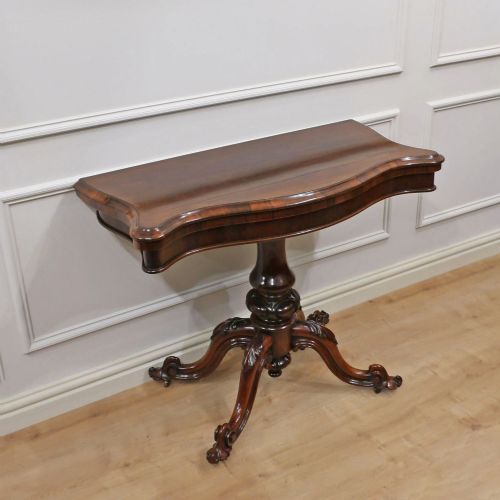
Material selection and timber figure also dictate the tier of a piece, with richly figured burr walnut veneers or finely matched rosewood marking out the superior English tables. Furthermore, the smoothness and rigidity of the folding action when locked into position indicate the precision of the original joiner's work.
James Shoolbred And Co·Giles Grendey·Gillows
The Carved Folding Table Glossary
- Card Table
- A specialised table featuring a hinged top that unfolds to reveal a baize-lined surface for playing games. These pieces date prominently through the Georgian and Victorian eras.
- Hoshiarpur
- A North Indian city renowned for intricate woodwork, particularly octagonal tables carved from teak or shisham with inlaid brass, copper, or bone.
- Sutherland Table
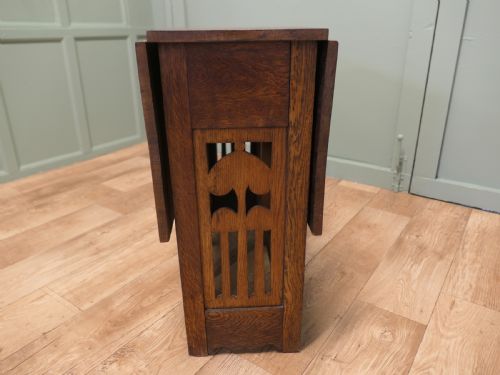
- A narrow drop-leaf table with hinged leaves that fold down almost vertically, supported by swinging gatelegs. This form became popular during the Victorian period.
- Gateleg Table
- A table with hinged legs that swing out to support drop leaves when raised. They offer stability while maintaining a compact footprint when closed.
- Concertina Action
- A complex expanding frame mechanism used on card tables that allows the rear legs to move outwards when the top is opened, ensuring balanced support.
Carved Folding Table: Frequently Asked Questions
How do you open a folding table safely?
Most folding tables rely on a swivel, gateleg, or hinged scissor action that requires you to lift the top gently before rotating or expanding the support base. Avoid forcing any joint if the timber has swollen with humidity.
Check for wooden pegs, brass latches, or pivoting struts underneath that lock the frame in place before resting any weight upon the surface.
What were these tables originally used for?
These tables served multiple domestic purposes, primarily acting as temporary surfaces for card games, tea, or needlework in smaller Victorian and Georgian drawing rooms. Many eastern folding pieces functioned as portable campaign furniture or decorative display stands for lamps and ornaments.
The ability to fold flat made them exceptionally practical for households that needed to clear floor space quickly for entertaining.
How do I care for carved wooden surfaces?
Maintain the timber by dusting regularly with a soft, dry brush to prevent dirt from settling deep into the carved recesses. Apply a quality beeswax occasionally to nourish the wood and preserve its natural sheen.
Keep the table away from direct heat sources and strong sunlight, which can cause dense hardwoods to warp or historic veneers to lift.
How do I distinguish Victorian from Georgian examples?
Georgian tables often display restrained classical proportions, featuring straight or cabriole legs with mahogany or walnut primary timbers. Victorian pieces frequently introduce heavier proportions, extensive burr walnut veneers, and more elaborate, deep-relief carving or pierced decoration.
Examining the internal secondary woods, hinge types, and joinery style usually clarifies the period of manufacture.