


Carved Elephant Side Table
A carved elephant side table brings dense regional timber and spirited zoomorphic design directly into a room.
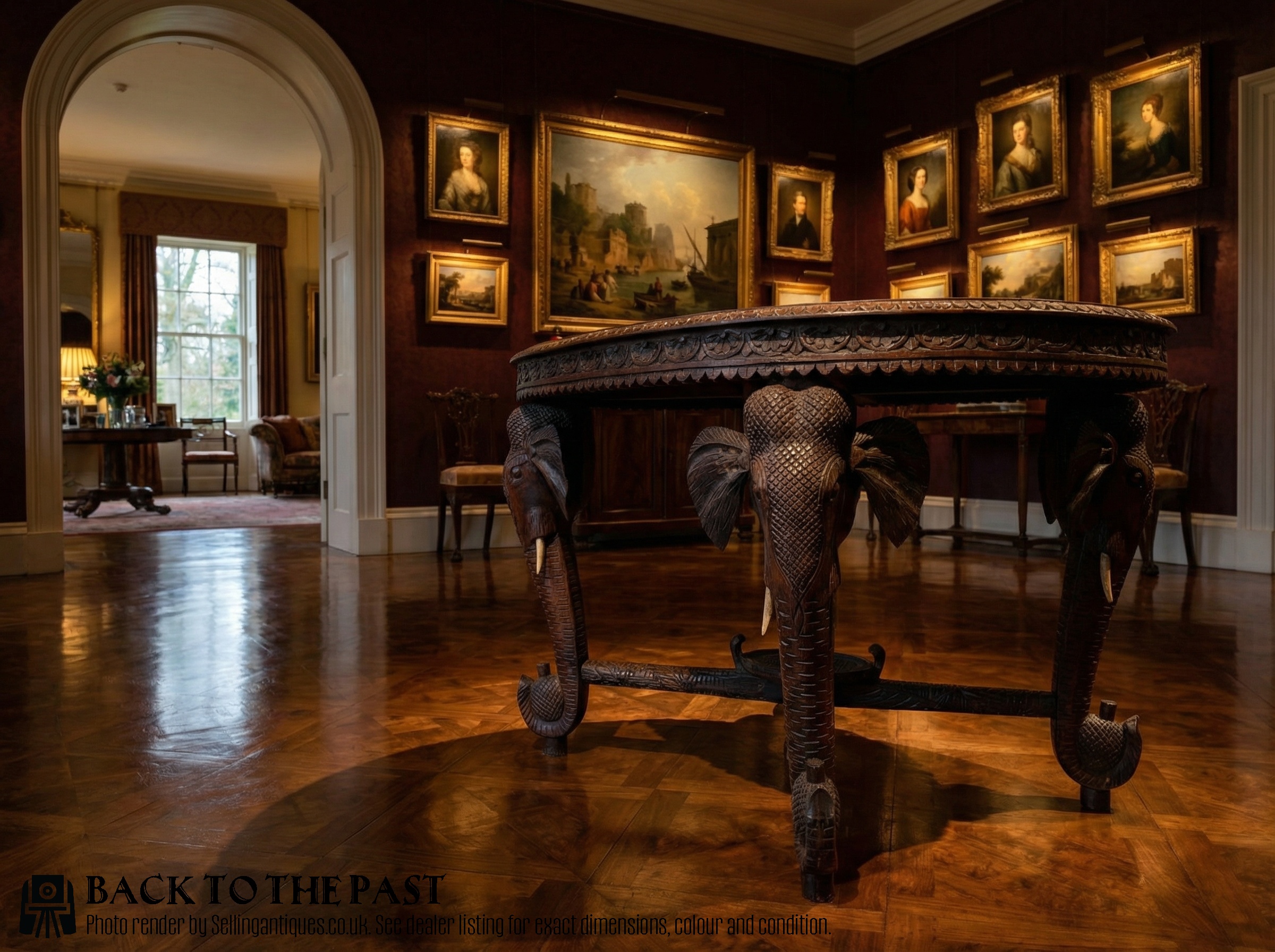
Carved Elephant Side Table
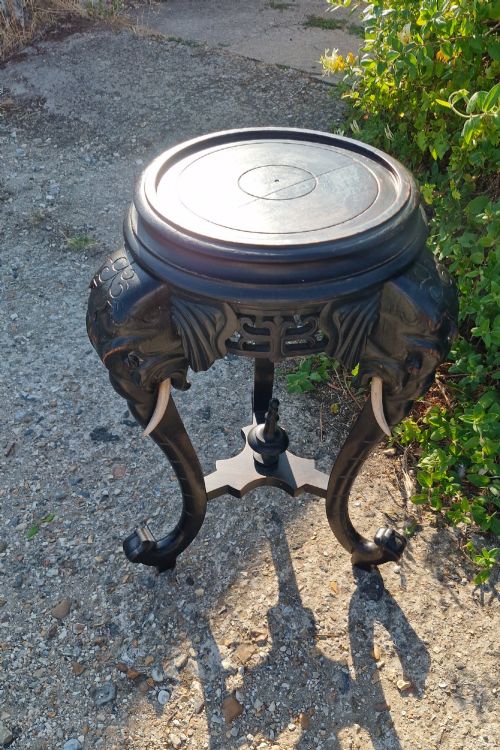
When you search for a carved elephant side table, you encounter distinct regional works created during the nineteenth and early twentieth centuries. These pieces combine utilitarian surfaces such as occasional, coffee, and centre tables with sculptural supports formed as elephants.
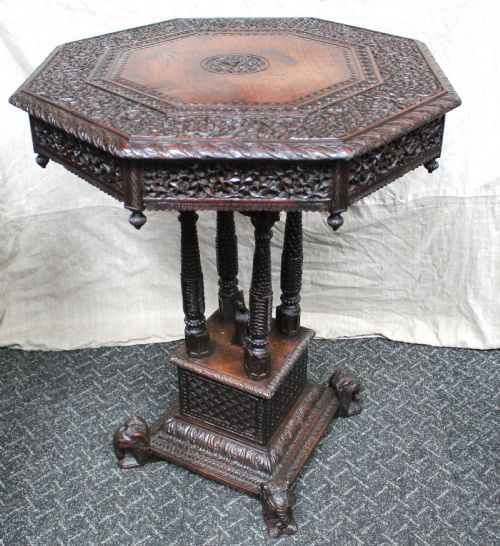
The version you are most likely to meet on this page is an Anglo-Indian or Burmese creation in teak, rosewood, or hardwood. They range from small occasional stands to larger circular and octagonal formats.
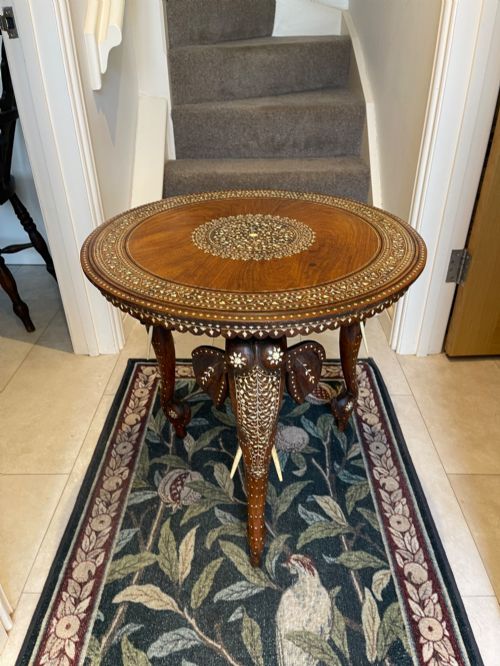
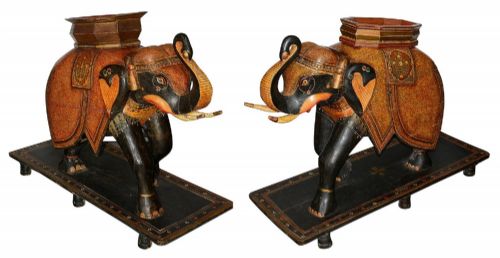
Makers utilised various traditional motifs alongside the characteristic animal legs, sometimes incorporating painted wooden tusks or bone inlay into the surface.
How they were made
Carvers shaped dense tropical timbers like teak, rosewood, padouk, and ebony using hand tools to achieve deep relief carving on both the tabletops and the animal supports. Artisans in regions such as Hoshiarpur and the Bombay Presidency applied specialised techniques including bone inlay and lacquer.
Structural elements vary from tripod designs to sturdy four-legged forms where the elephant heads and trunks serve as the primary load-bearing legs or bases.
The site records show pieces spanning the Victorian period through the 1930s, constructed in teak, rosewood, ebony, and bone inlay.
What varies in quality
The choice of timber and the preservation of delicate inlays such as bone or specialised wood treatments dictate the overall integrity and visual impact of the table.
The Carved Elephant Side Table Glossary
- Anglo-Indian
- Descriptive term for furniture made in the Indian subcontinent during the British colonial period, often combining local carving traditions with European furniture forms. These pieces frequently utilise native hardwoods.
- Bone inlay
- A decorative technique where small pieces of bone are set flush into the wooden surface to form geometric or floral patterns. It is particularly associated with workshops in Hoshiarpur.
- Teak
- A durable tropical hardwood prized for its rich grain and resistance to decay. It serves as the primary structural timber for many colonial Asian tables.
- Occasional table
- A small, movable table designed for specific, intermittent use rather than central dining. They appear frequently in various circular and rectangular formats.
Carved Elephant Side Table: Frequently Asked Questions
How were elephant tables used originally?
These tables served primarily as decorative occasional pieces in colonial drawing rooms and halls. They held lamps, calling card trays, or decorative ornaments.
Their sturdy wooden construction also allowed them to function as plant stands or small coffee surfaces in domestic settings.
Where were these tables manufactured?
Production centred largely in the Indian subcontinent and Burma during the nineteenth and early twentieth centuries. Specific regional centres like Hoshiarpur and the Bombay Presidency developed distinct carving traditions.
Local artisans adapted indigenous motifs to suit British colonial tastes for exotic home furnishings.
How do I care for a teak table?
Maintain the timber by keeping the surface away from direct heat sources and sudden humidity changes. Regular dusting with a dry cloth protects the carved details.
Avoid harsh chemical polishes that can damage the grain or loosen delicate bone inlay components.
How can I tell the period?
Dating relies on examining the timber species, carving depth, and construction methods. Pieces from the Victorian era often display heavier proportions and dense floral relief.
Later examples from the early twentieth century occasionally incorporate Art Deco influences alongside traditional animal motifs.