


Indian Elephant Leg Table
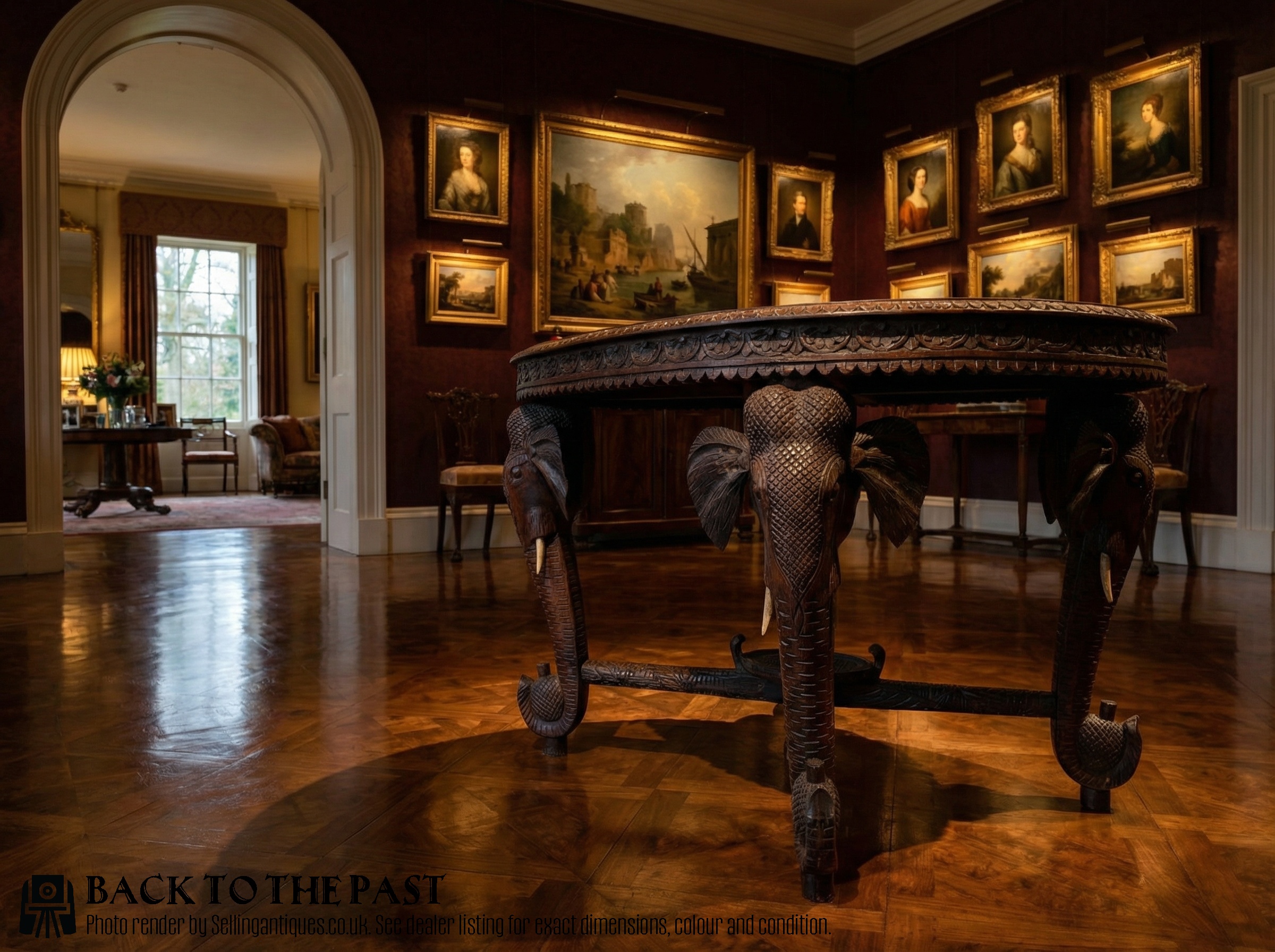
An indian elephant leg table brings the distinct craft of the colonial period into a room, offering carved form and practical surface space.
Indian Elephant Leg Table
When you search for an indian elephant leg table, you are looking at items designed with carved animal forms supporting the surface. These pieces emerge from periods spanning the late nineteenth century through to the Edwardian era, reflecting colonial craftsmanship. The selection available here includes side tables, coffee tables, occasional tables, centre tables, and plant stands with pedestals.
You are most likely to meet circular, octagonal, or rectangular tops supported by three or four legs shaped as elephant limbs, often incorporating carved heads or tusks. Styles lean towards Anglo-Indian, Anglo-Indian Colonial, and Anglo-Burmese Colonial traditions. Forms range from small tripod surfaces to larger centre tables suitable for display.
The regional origins vary, with items originating from the Bombay Presidency, Hoshiarpur, and Ceylon, as well as Burma. Each piece carries specific regional motifs, combining local woodworking traditions with British colonial interior demands. Smaller occasional tables and stands appear alongside larger centre tables in the current selection.
Materials and construction
Makers utilised dense timbers, predominantly teak, solid rosewood, and general hardwood, to achieve the stability required for heavily carved supports. These woods provided the necessary weight and grain density for deep relief carving on the legs and aprons. Specimen woods also appear in specific regional variants.
Decoration relied on skilled carving, bone inlay, ebony inlay, and occasional brass fittings. Carvers shaped the timber to form the legs, tusks, and heads of the elephants, integrating them directly into the table structure. Inlay work created geometric and floral patterns across the tops and borders.
Some tables feature carved trunks curled upward, a traditional motif intended to bring good fortune into the room.
Assessing quality and execution
The depth and crispness of the carving distinguish finer examples from simpler production. Superior pieces display anatomical detail in the elephant legs and heads, with well-defined tusks and toes rather than generic cylindrical posts. The integration of the legs to the tabletop shows the joinery skill of the workshop.
The complexity of surface decoration also separates items within the range. Pieces featuring precise bone or ebony inlay work, particularly intricate geometric patterns associated with Hoshiarpur production, demonstrate higher craftsmanship than plain carved surfaces. The choice of solid rosewood or figured teak further elevates the standing of an individual table.
The Indian Elephant Leg Table Glossary
- Anglo-Indian
- A descriptive term for decorative arts produced during the British rule in India, combining European furniture forms with local Indian carving techniques. These items often used indigenous timbers like teak and rosewood.
- Hoshiarpur
- A town in Punjab known for intricate woodwork involving delicate micro-mosaic inlay. Pieces from this region frequently incorporate bone and ebony into dense floral and geometric patterns.
- Tripod table
- A small standalone table supported by three legs. In this context, the three legs take the form of carved elephant limbs meeting a circular or shaped top.
- Specimen wood
- Furniture constructed from a variety of different timbers arranged to display contrasting natural colours and grain patterns. This technique appears in specific regional pieces.
- Pedestal stand
- A tall, narrow furniture form designed to elevate objects, plants, or lamps. These structures share the same carved elephant leg supports found on larger tables.
Indian Elephant Leg Table: Frequently Asked Questions
What is an indian elephant leg table?
An indian elephant leg table is a piece of furniture featuring structural supports carved to resemble the legs, and frequently the heads and tusks, of elephants. These items were produced during the nineteenth and early twentieth centuries.
They reflect the intersection of British colonial demand and local craftsmanship across regions like the Bombay Presidency, Burma, and Ceylon.
How were these tables used originally?
These tables served as occasional furniture in colonial drawing rooms, used for holding decorative objects, lamps, or tea services. Smaller versions functioned as plant stands or pedestals.
Larger centre tables acted as focal points in reception rooms, displaying specimen woods and intricate carving.
How do I date an antique elephant table?
Dating relies on examining the timber, construction methods, and regional style indicators recorded across the 1880 to Edwardian periods. Earlier nineteenth-century examples often feature solid rosewood and deep, sculptural carving.
Later pieces from the 1900s to 1920s frequently incorporate specific inlay techniques, such as bone work from Hoshiarpur.
What woods were used for these tables?
Makers relied on dense tropical hardwoods suited to intricate carving and weight-bearing supports. Teak and solid rosewood appear frequently in the listings.
Additional materials include ebony and bone used for contrasting inlay work across the tabletops.
How do I care for an inlaid table?
Care involves maintaining stable indoor humidity levels to protect both the dense hardwood and the bone inlay. Sudden environmental changes can cause wood movement and affect the adhesive holding delicate inlay work.
Dusting with a dry cloth and avoiding harsh polishes preserves the original surface finish.