


Colonial Elephant Head Table
A colonial elephant head table brings unmistakable character to a room, combining rich woods and detailed carving.
Colonial Elephant Head Table
A colonial elephant head table stands as a distinctive form of decorative furniture produced during the nineteenth and early twentieth centuries. When searching for a colonial elephant head table, buyers encounter works largely originating from the Anglo-Indian, Anglo-Indian Colonial, and Anglo-Burmese Colonial traditions. These pieces predominantly take the shape of side tables, occasional tables, coffee tables, and plant stands.
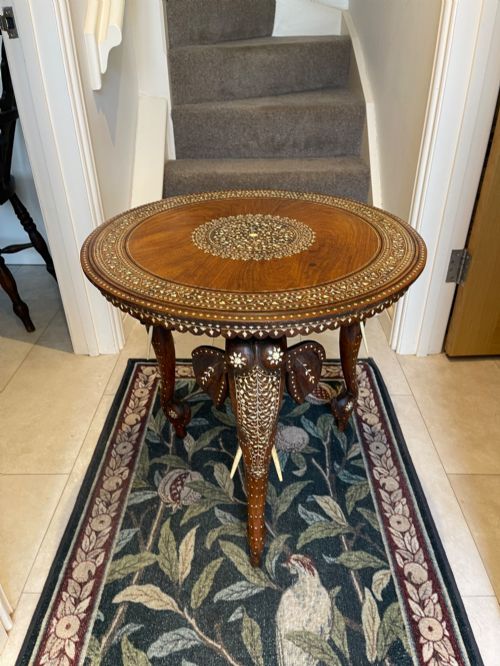
The regional origins of these tables shape their distinct appearance and structure. Examples from the Bombay Presidency frequently utilise teak and employ octagonal or rectangular tops alongside carved elements. Pieces linked to Hoshiarpur incorporate intricate bone inlay and tripod bases, sometimes featuring Taj Mahal motifs.
How they were made
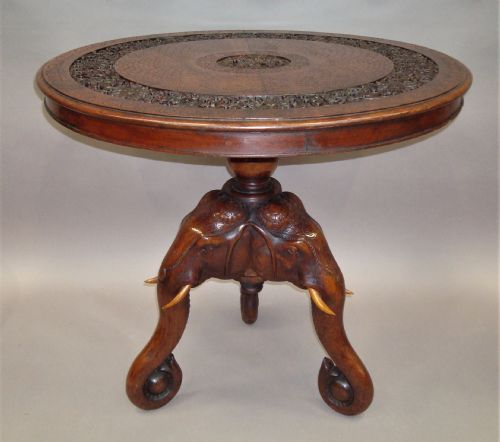
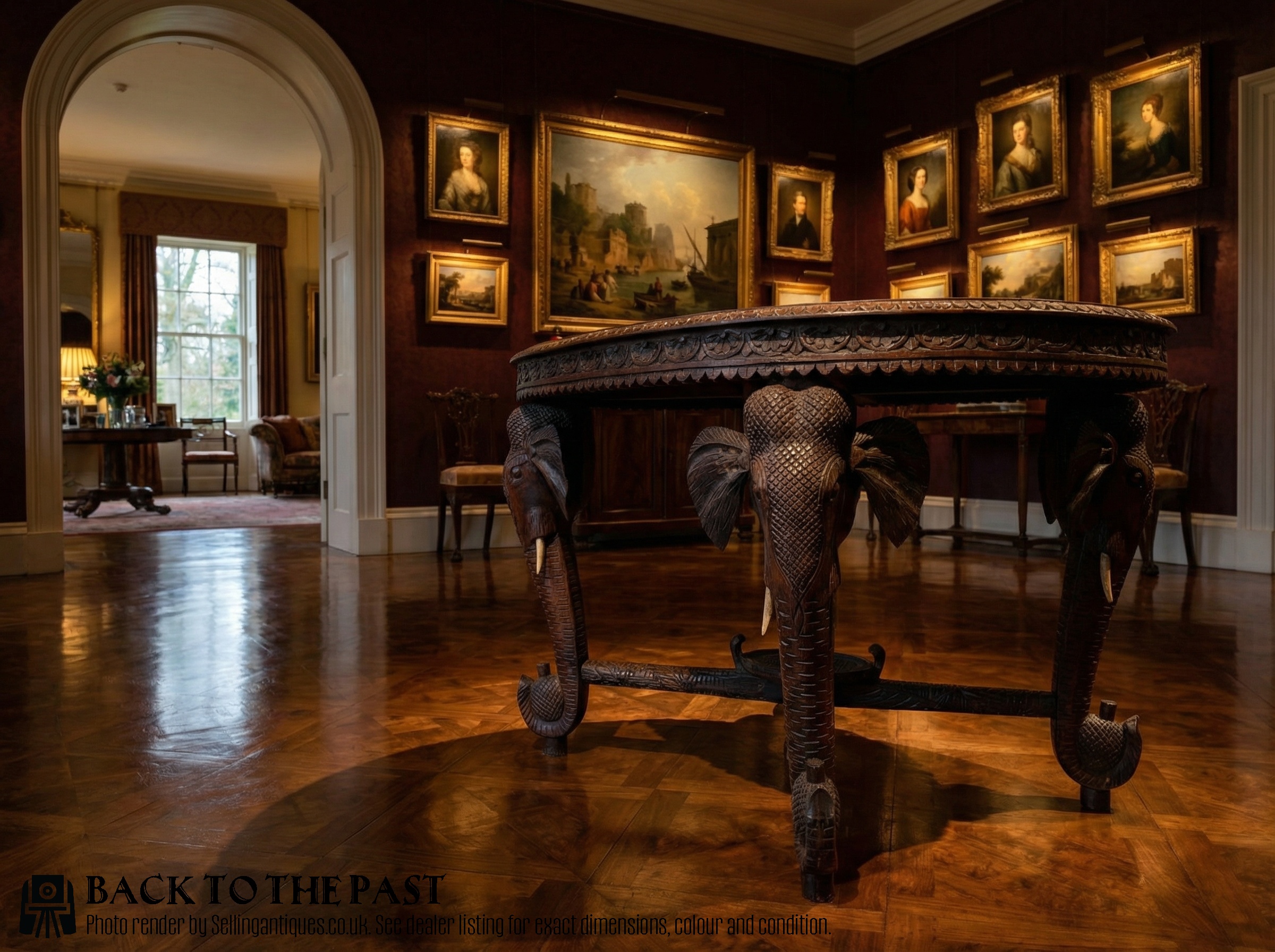
Carvers built these tables using dense tropical timbers such as teak, rosewood, and hardwood, which provided a stable base for deep relief work. Artisans shaped the supporting legs into the form of elephant heads and trunks, often integrating realistic tusks carved from bone.
Surface decoration frequently relied on contrasting materials to create visual depth. Workshops set bone inlay and ebony inlay into the wooden framework, while brass elements sometimes reinforced structural joints or ornamented the edges.
Some tables feature tiny bone tusks that survived a century of dusting.
What varies in quality
Material selection and inlay execution further separate standard output from finer commissions. Pieces featuring dense rosewood or intricate, complete bone inlay demonstrate a higher level of artisan skill than simpler hardwood variants.
The Colonial Elephant Head Table Glossary
- Anglo-Indian
- Pertaining to furniture produced during the British rule in India, blending British forms with traditional Indian craftsmanship. This style frequently incorporates dense carving and local timbers.
- Bone inlay
- A decorative technique where small pieces of animal bone are shaped and set flush into recesses carved in wood. It creates contrasting geometric or floral patterns.
- Teak
- A durable, oil-rich tropical hardwood native to South and Southeast Asia. It is valued for its strength and resistance to warping.
- Tripod base
- A three-legged support structure commonly found on smaller occasional tables. It provides stability on uneven floors.
- Occasional table
- A small, light table designed for flexible placement around a room. These pieces serve functional roles beside seating.
Colonial Elephant Head Table: Frequently Asked Questions
What is an elephant head table?
An elephant head table is a decorative item of colonial furniture where the legs are carved to resemble the heads and trunks of elephants. These tables were produced during the nineteenth and early twentieth centuries in regions influenced by British rule.
They function practically as side tables or plant stands while serving as striking sculptural accents. The design typically pairs utilitarian table tops with elaborate figural carving.
Where were these tables made?
These pieces originate primarily from regions within the Indian subcontinent and Burma during the colonial era. Specific production centres included the Bombay Presidency and Hoshiarpur, each known for distinct carving and inlay techniques.
Local artisans adapted indigenous woodworking traditions to suit British domestic tastes. This cross-cultural exchange resulted in forms that combined western furniture types with eastern ornamentation.
What woods are used?
Makers constructed these tables using heavy, durable tropical hardwoods available in the region. Teak, rosewood, and general dense hardwoods form the primary structural bodies of the pieces.
These timbers allowed artisans to execute deep, intricate relief carving without compromising the stability of the legs. The natural grain of the wood often complements the detailed figural work.
How should I style one?
A colonial elephant head table works well as a focal point in a room where its sculptural base can be fully appreciated. Placing it beside a plain sofa or chair allows the intricate carving to stand out without visual clutter.
Because these pieces carry strong historic character, they pair effectively with neutral backdrops and understated furnishings. They suit both traditional interiors and eclectic spaces seeking a distinct conversational element.
How do I date these tables?
Dating relies on examining the timber, the style of carving, and any regional markers associated with the piece. Tables from the nineteenth century often feature heavier solid rosewood or teak construction with deep, traditional hand carving.
Later examples from the early twentieth century frequently incorporate extensive bone inlay or specific regional motifs like tripod Taj Mahal designs. Comparing construction methods helps clarify the approximate period of manufacture.