



Carved Ecclesiastical Chair
A carved ecclesiastical chair brings architectural authority and heavy timber presence into a domestic interior.
Carved Ecclesiastical Chair
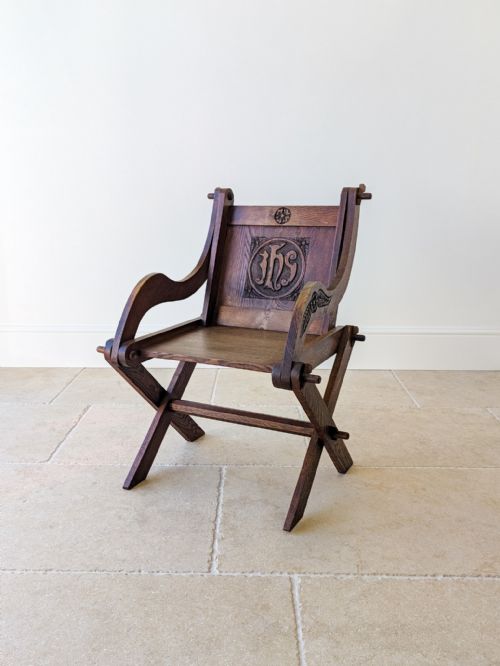
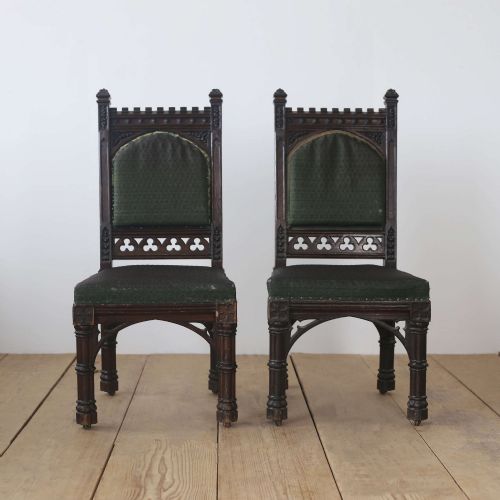
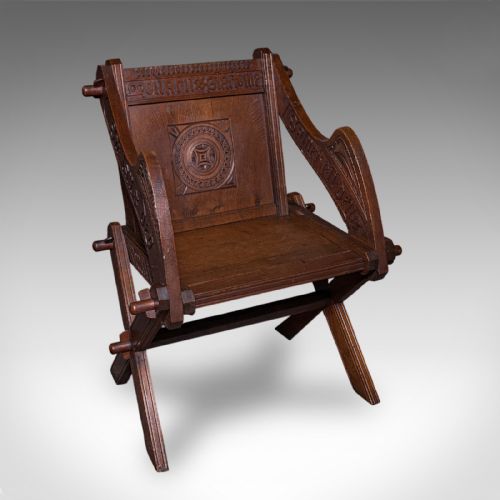
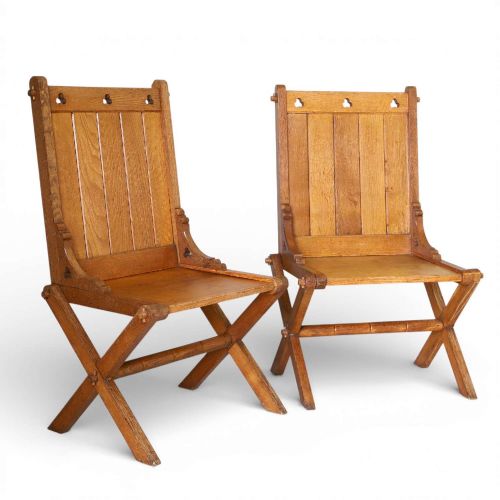
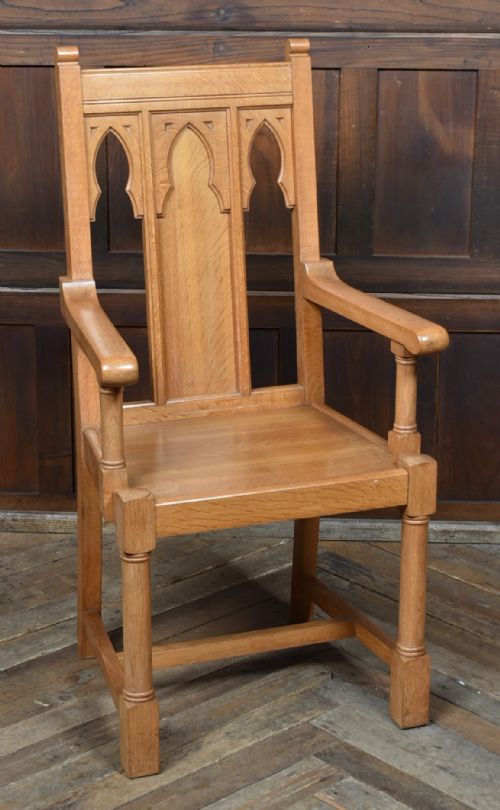
A carved ecclesiastical chair draws directly upon architectural motifs and religious furnishings from centuries of church history, spanning periods from pre-reformation examples up to Edwardian revivals. These pieces encompass robust thrones, Glastonbury armchairs with folding X-frame profiles, side chairs, and specialised prayer seats designed for devotional use.
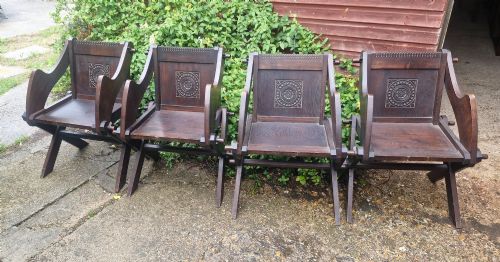
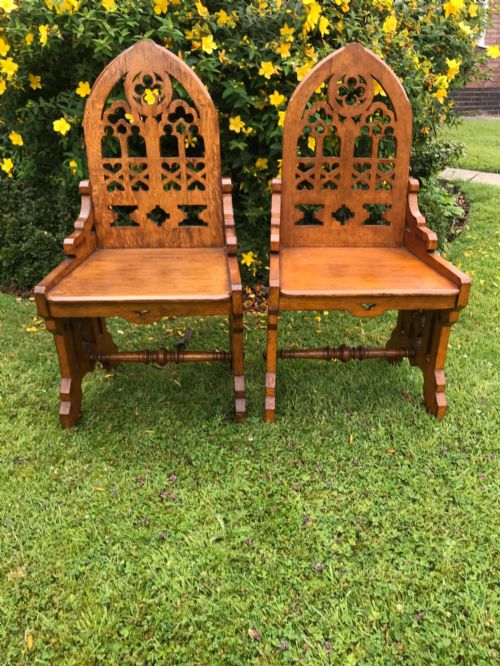
The version most commonly encountered on this page is the nineteenth-century Gothic Revival oak Glastonbury chair, alongside pitch pine chapel thrones and smaller prayer chairs. English and Welsh workshops produced many of these sturdy oak and pitch pine seats during the Victorian era, heavily influenced by medieval church architecture and monastic tradition.
Materials and construction methods
Makers relied primarily on solid oak and pitch pine for these sturdy frames, utilising dense native timbers capable of supporting deep hand-carving and structural joinery. Walnut and rosewood appear in select examples, while secondary elements incorporate brass plaques, gold leaf accents, and upholstered panels of velvet or heavier fabric.
Joinery depended on traditional pegged mortise and tenon construction to ensure the upright frames and heavy armrests remained rigid under sustained use. Carvers worked directly into the timber to create trefoil details, inscriptions, and tracery patterns without relying on applied mouldings.
Carved Ecclesiastical Chair Retail Price Guide 2026
Typical asking prices for carved ecclesiastical chair among the pieces listed under this phrase on Sellingantiques today, from the lower quarter to the upper quarter. They describe what is for sale here now, not the wider market.
Several prayer chairs hide devotional knee-rests designed so Victorian parishioners could contemplate eternity in relative comfort.
Distinguishing quality in church seating
Quality rests heavily on the depth, crispness, and ambition of the hand-carving across the crest rails, panels, and arm supports. Pieces featuring intricate trefoil tracery, original inscribed plaques, or substantial timber sections command greater regard than simpler utility seating.
The integrity of the structural frame and the choice of timber grading also define the tier of a piece. Well-figured English or Welsh oak and heavy pitch pine retain their structural stability far better than softer secondary woods, preserving the intended silhouette of the throne or armchair.
The Carved Ecclesiastical Chair Glossary
- Glastonbury chair
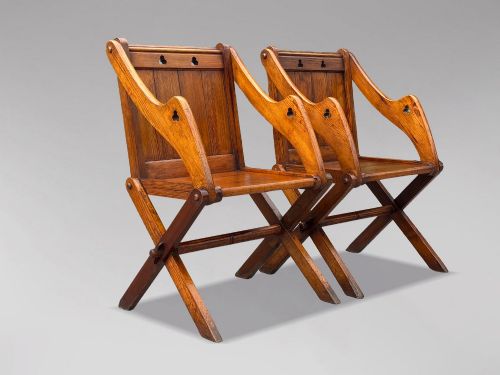
- A traditional folding armchair design with intersecting X-form legs, sloping armrests, and a tall panel back, frequently constructed in oak during the nineteenth-century Gothic Revival.
- Prie Dieu
- A specialised devotional prayer chair featuring a low seat and an upper kneeling rail or desk surface designed for private worship, often upholstered in velvet or fabric.
- Trefoil
- A three-lobed decorative carving motif derived from Gothic church architecture, commonly pierced through the back splats or carved in relief.
- Pitch pine
- A resinous, durable softwood utilised extensively for nineteenth-century church and chapel furniture, known for prominent grain patterns and resistance to wear.
Carved Ecclesiastical Chair: Frequently Asked Questions
Where were these chairs originally used?
These seats originated in churches, chapels, rectories, and monastic settings for use by clergy, officials, or parishioners during services and private prayer.
Over time, many of these substantial pieces transitioned into domestic libraries, halls, and studies as decorative seating.
How do I identify a Glastonbury chair?
A Glastonbury chair is distinguished by its distinct intersecting X-frame legs that support the seat and arms in a continuous geometric line.
They usually feature a wooden panel back carved with Gothic motifs and narrow armrests sloping downward from the upright posts.
What is a Prie Dieu chair?
A Prie Dieu chair is a low prayer seat designed with an extended upper rail intended for resting arms or kneeling during devotion.
Victorian examples frequently pair this devotional form with upholstered panels and carved woodwork reflecting Gothic tastes.
How do I care for antique oak church furniture?
Maintain antique oak and pitch pine by keeping the timber away from direct heat sources and sudden humidity changes that cause wood to split.
Apply a traditional beeswax polish sparingly to nourish the dry grain and protect the surface without building up excessive residue.