

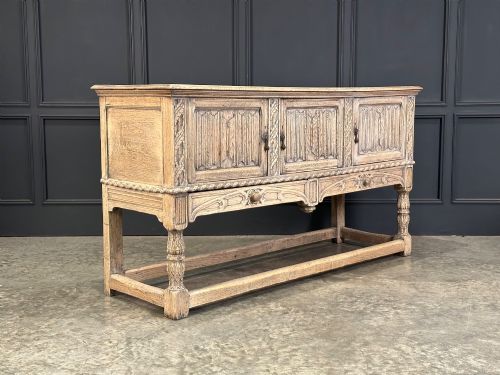
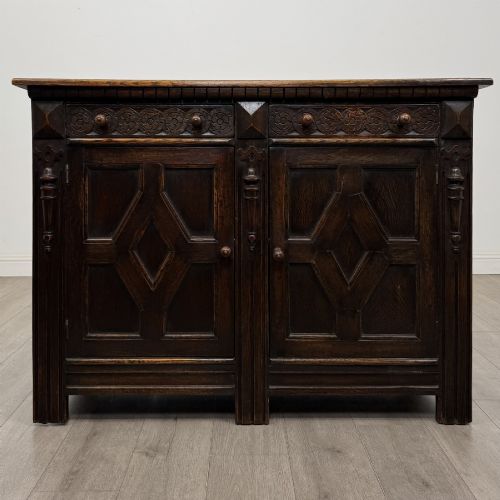
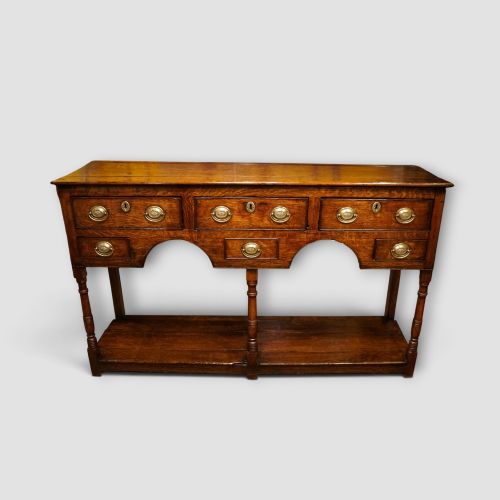
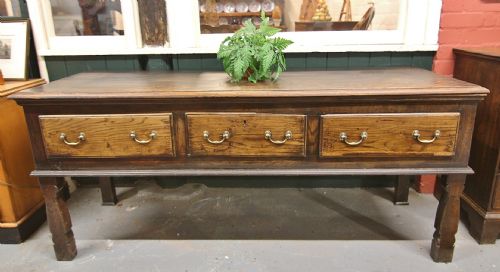
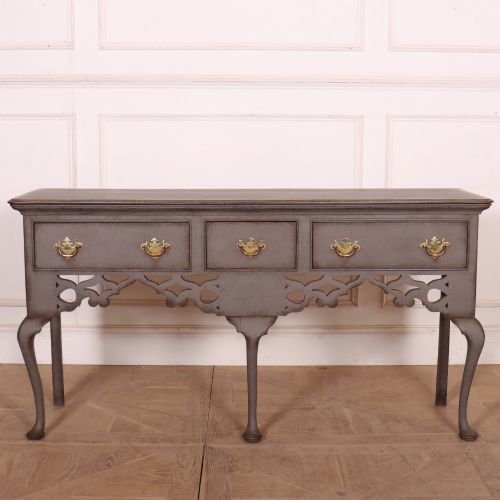
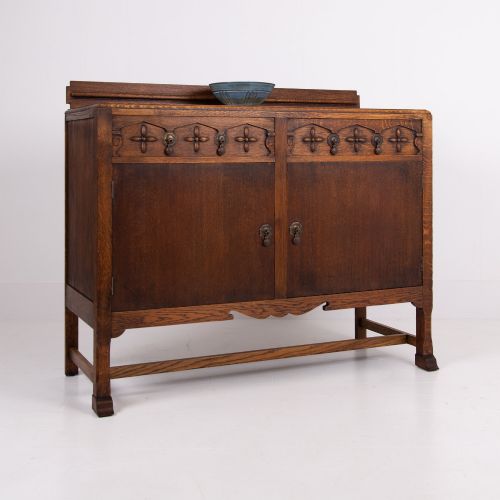
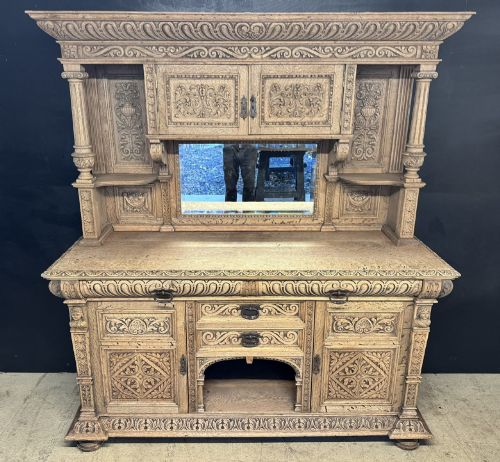
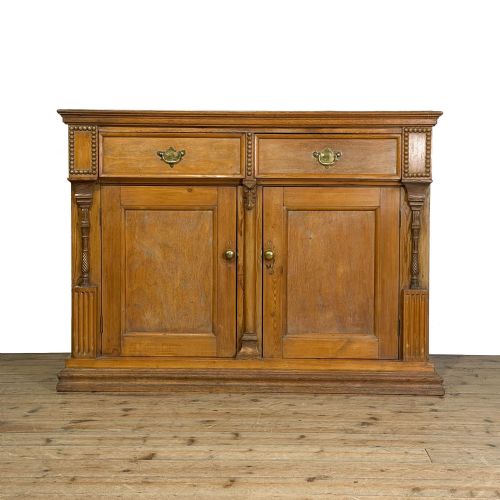
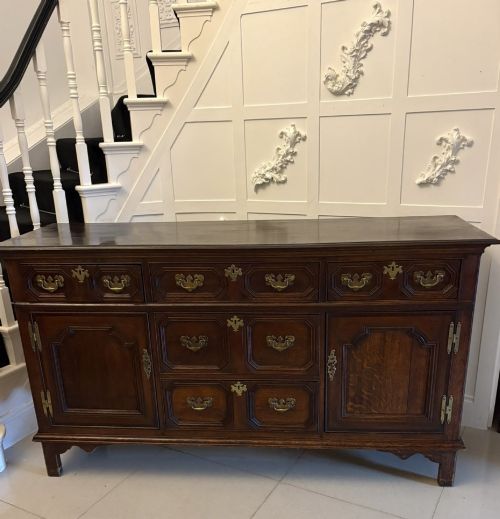
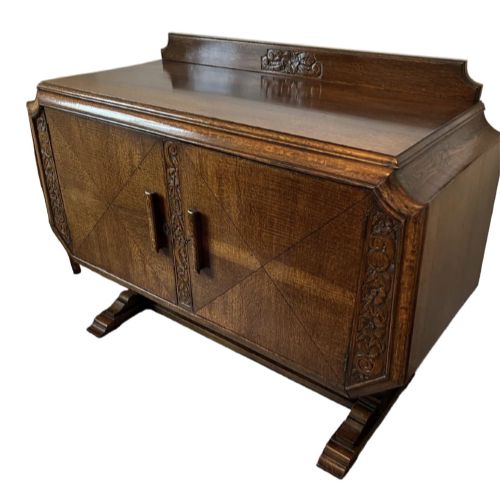
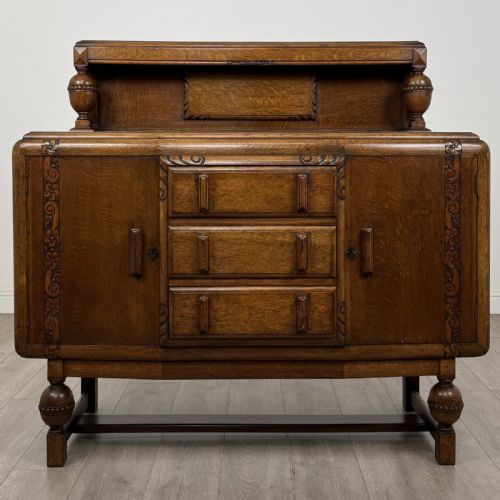
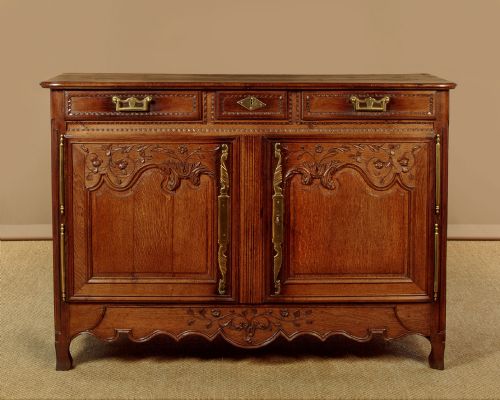
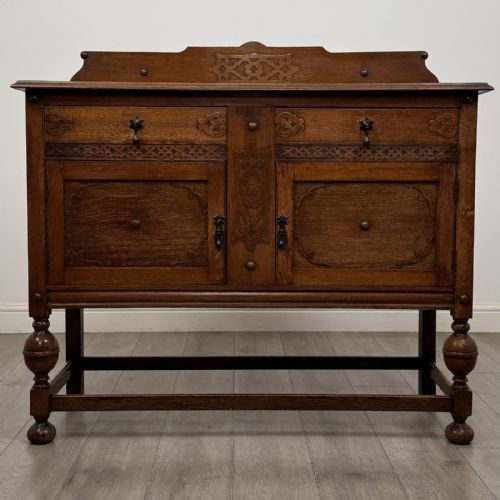
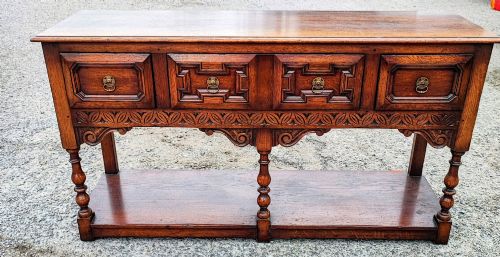
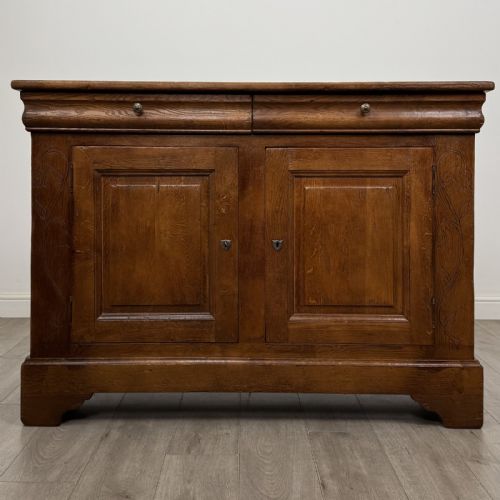
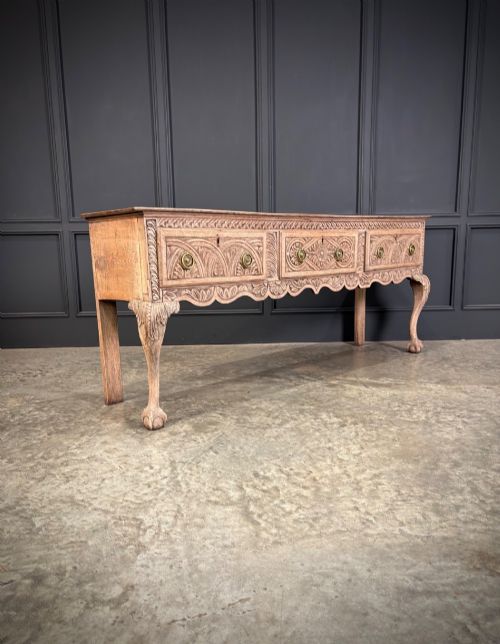
Carved Dresser Base
A carved dresser base brings robust proportions and deep historical character to a room, serving as a practical surface and storage unit.
Carved Dresser Base
A carved dresser base is a substantial utilitarian furniture form typically found in oak, designed for heavy domestic use across centuries. When searching for a carved dresser base, buyers encounter regional interpretations ranging from simple 18th-century country examples to heavily ornamented revival pieces from the Victorian and Edwardian eras.
The standard form provides a low storage cabinet featuring surface boards for serving and drawers or cupboards beneath. Many surviving examples date from the 17th, 18th, and 19th centuries, though revival periods in the 1920s and 1930s produced numerous reinterpretations utilising older motifs.
Makers utilised various regional timbers, though oak dominates the selection alongside occasional mahogany and pollard oak. These pieces function well in modern dining spaces and hallways where surface area and deep drawer storage are required.
Materials and construction
Construction relies primarily on solid oak, assembled using traditional joinery methods such as mortise and tenon joints to ensure long-term stability. Cabinetmakers shaped panels with geometric moulding, relief carving, or applied turnings, frequently incorporating brass handles and iron hardware.
Surfaces received hand-applied finishes that aged over generations, developing natural patination on both the primary timber and secondary woods like pine. Details such as cup and cover legs, barley twist supports, and raised galleries reflect the specific stylistic vocabulary of their period.
Carved Dresser Base Retail Price Guide 2026
Typical asking prices for carved dresser base among the pieces listed under this phrase on Sellingantiques today, from the lower quarter to the upper quarter. They describe what is for sale here now, not the wider market.
Keep an eye out for hidden Green Man carvings peering through the foliage on Victorian oak cupboards.
Evaluating quality and execution
Quality in a carved dresser base rests upon the crispness of the timber carving and the integrity of the original construction. Superior examples display harmonious proportions, substantial oak thickness, and minimal later alterations to the drawer linings and top boards.
The distinction between standard utility items and finer workshop pieces lies in the depth of the relief work, the complexity of geometric panels, and the retention of original brass or iron hardware. Pieces that retain their unblemished patination and structural cohesion represent the higher standard of the form.
The Carved Dresser Base Glossary
- Dresser base
- A low sideboard or cabinet with drawers and cupboards, traditionally used for food preparation and storage before the development of fitted kitchens. It provides a wide top surface and substantial under-counter storage.
- Pot board
- An open lower shelf built between the legs of a dresser base, originally intended for storing heavy pots and pans. This lower platform adds structural rigidity to the base frame.
- Geometric panels
- Raised or sunken mouldings applied to cabinet doors and drawer fronts in geometric patterns, characteristic of 17th-century and revival joinery. They create depth and visual texture on flat timber surfaces.
- Barley twist
- A turned column or leg resembling the shape of a twisted barley sugar stick, popular in Jacobean and Edwardian furniture construction. This decorative turning technique requires skilled lathe work.
- Cup and cover
- A heavy bulbous furniture leg shape resembling a covered goblet, prevalent on Jacobean and Elizabethan oak furniture. It represents a turning style carved directly from solid timber blanks.
Carved Dresser Base: Frequently Asked Questions
What is a dresser base used for?
A dresser base serves as a heavy-duty sideboard or serving table, providing a wide flat top and ample storage beneath through drawers or cupboards. It functions effectively in dining rooms, kitchens, or hallways for storing tableware and displaying decorative objects.
Historically, these units formed the lower half of larger kitchen dressers before upper shelving units became separated. Today, they operate independently as statement storage furniture.
How do I date an oak dresser base?
Dating relies on examining construction methods, timber choice, and decorative motifs such as geometric mouldings or carved panels. 17th-century pieces often show hand-riven oak boards and peg-joined frames, while later revival pieces from the 19th and 20th centuries utilise machine-sawn components.
Hardware styles, including brass drop handles and iron butterfly hinges, also offer clues to the period of manufacture. However, many pieces combine older elements with later restorations.
Are these pieces made of solid oak?
Most traditional examples utilise solid oak for the primary framework, drawer fronts, and top boards. Secondary timbers like pine or elm frequently appear in concealed areas such as drawer linings and back panels.
Revival pieces from the Edwardian period and the 1920s also relied heavily on solid oak, though variations in timber grade and finishing techniques are common across different workshops.
How do I care for an antique oak sideboard?
Maintain antique oak surfaces by dusting regularly with a dry, soft cloth and avoiding silicone-based polishes that build up over time. Feeding the timber occasionally with traditional beeswax preserves the natural patina without sealing the wood.
Keep the sideboard away from direct heat sources and drastic humidity changes to prevent the solid oak panels from splitting or warping. Stable indoor environments ensure the joinery remains secure.