


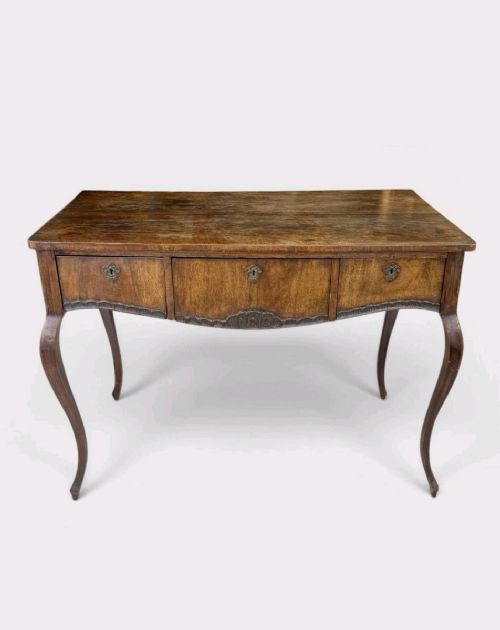
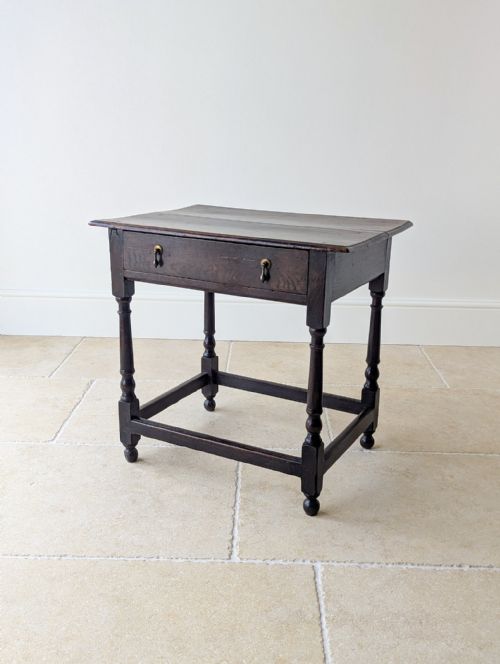
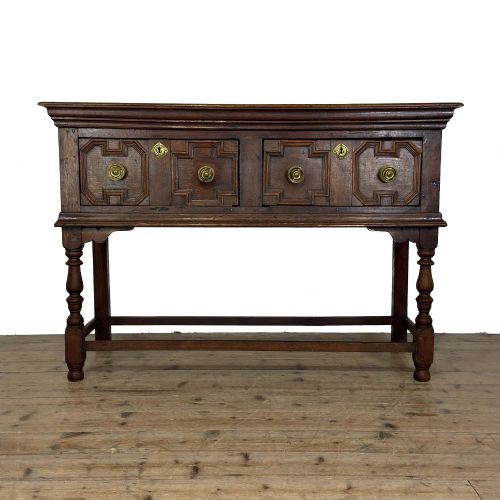
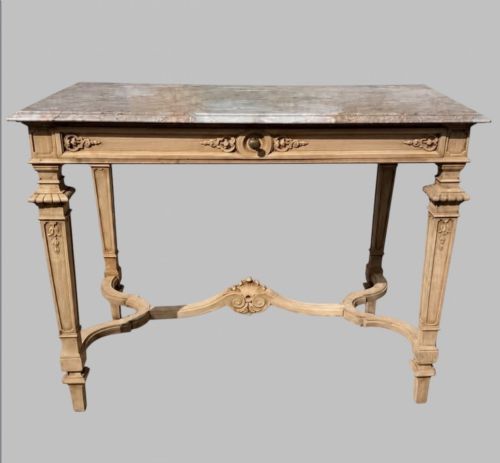
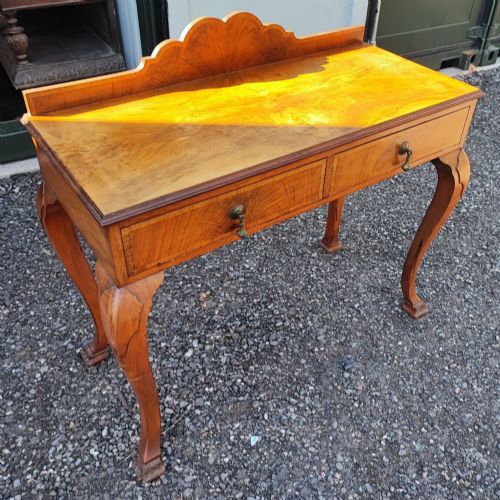
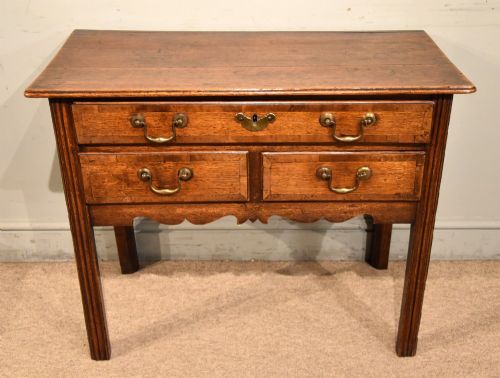
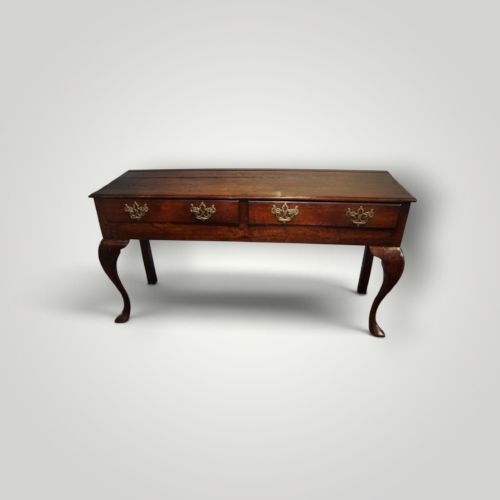
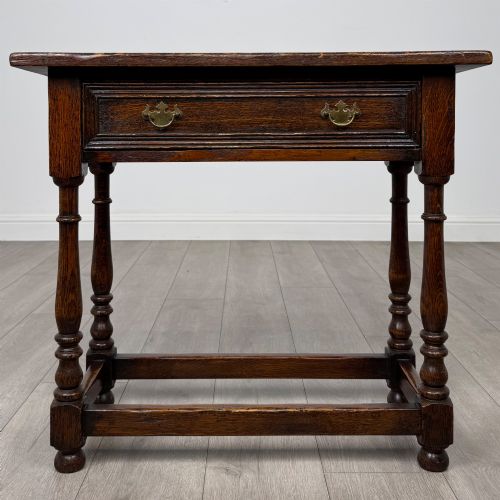
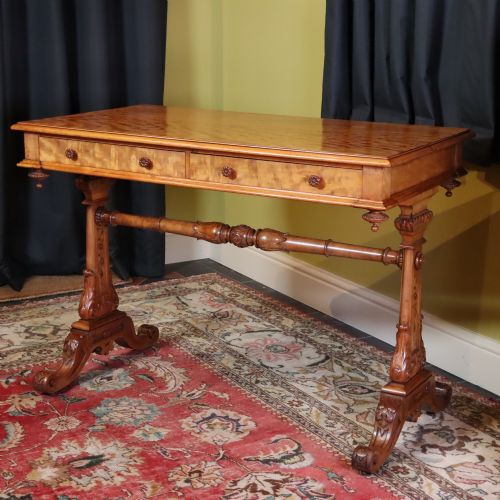
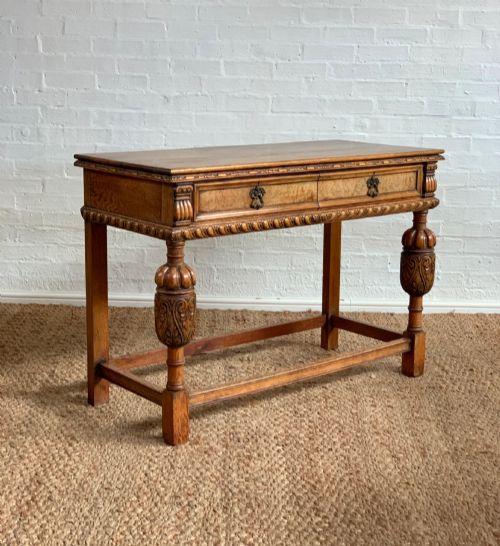
Carved Drawer Console Table
A carved drawer console table brings practical surface space and concealed storage to a hallway or reception room.
Carved Drawer Console Table
A carved drawer console table serves as a functional surface for a hallway, living area or bedroom, equipped with integrated storage drawers. When searching for this form, buyers encounter pieces spanning from the seventeenth century through the Edwardian era and into the early twentieth century.
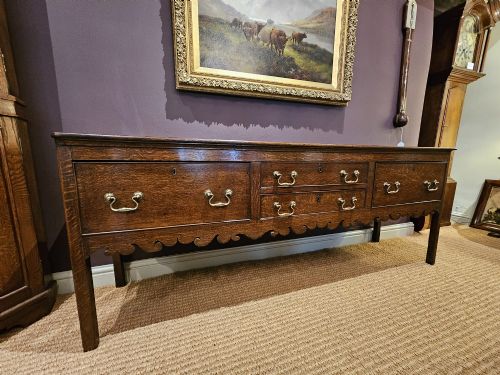
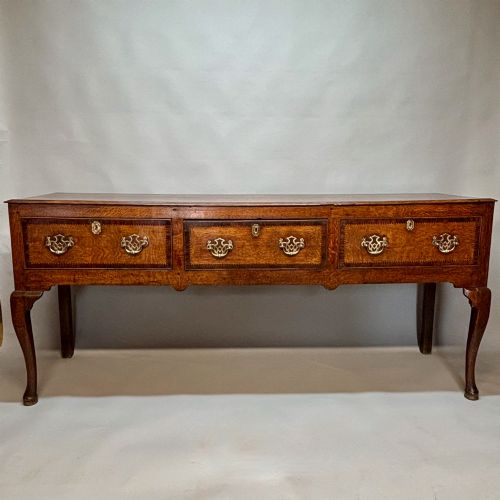
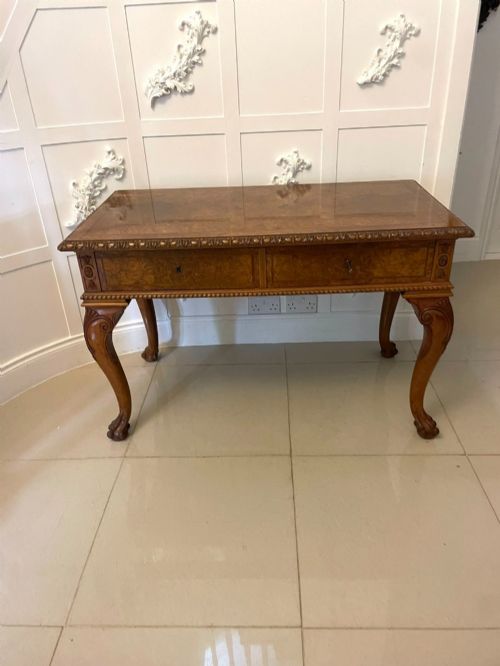
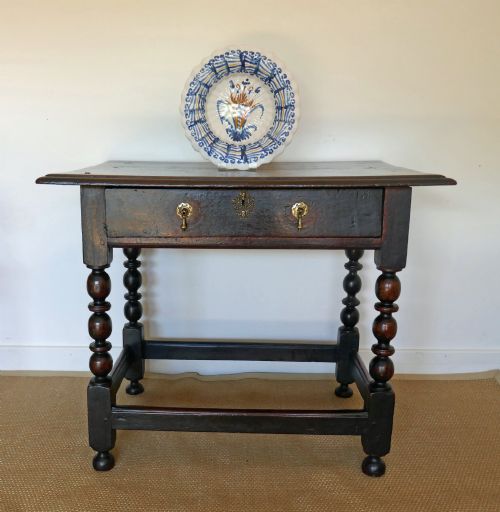
The selections available on this page lean heavily towards oak and walnut constructions from the Georgian, Victorian, Edwardian and Jacobean Revival periods. Alongside dedicated console tables, the inventory includes related forms such as side tables, lowboys, writing desks and dresser bases that fulfil the same architectural role.
Materials and construction
Cabinet makers relied primarily on timbers such as oak, walnut, burr walnut and mahogany, often enhanced with boxwood inlay, contrasting veneers or marble tops. Construction methods evolved from pegged joints in seventeenth-century pieces to more refined dovetailing in Georgian and Victorian drawer linings.
Carving serves as a primary decorative technique across the eras, ranging from geometric Jacobean motifs and barley twist turnings to classical Georgian mouldings and Edwardian serpentine fronts. Brass handles and escutcheons complete the hardware, reflecting the prevailing stylistic tastes of each distinct period.
Materials recorded across the inventory include solid oak, walnut, burr walnut, mahogany, satinwood, marble and boxwood inlay.
Assessing craftsmanship
Quality rests upon the selection of timber and the crispness of the carved detail. Pieces featuring figured walnut veneers, substantial oak boards or carefully matched boxwood inlay demonstrate a higher tier of workmanship from their respective workshops.
The integrity of the construction distinguishes superior examples from standard utility pieces. Smooth drawer operation, tight joinery and well-preserved original hardware indicate an object that has retained its structural and aesthetic value over centuries.
Beresford and Hicks
The Carved Drawer Console Table Glossary
- Console table
- A table designed to stand against a wall, frequently secured with brackets or supported by front legs. These pieces provide a narrow surface for display while occupying minimal floor space.
- Lowboy
- A small eighteenth-century dressing or side table featuring one or more rows of drawers beneath the top. They are typically raised on slender cabriole or straight legs.
- Dresser base
- A robust lower cabinet structure featuring drawers and sometimes cupboards. These pieces originated as utilitarian kitchen furniture but evolved into decorative serving tables.
- Jacobean Revival
- A nineteenth and twentieth-century stylistic movement imitating the heavy turned legs, geometric panels and dark oak finishes of the early seventeenth century.
- Burr walnut
- A wood harvested from the warted growths of walnut trees, yielding a turbulent and highly decorative grain pattern. Cabinet makers utilised these veneers for high-status surfaces.
Carved Drawer Console Table: Frequently Asked Questions
Where should I place a console table?
These tables suit narrow circulation spaces such as hallways and landings where depth is restricted. They also function effectively against living room walls as display surfaces.
Positioning a mirror or painting above the table helps anchor the piece within the room's overall proportions.
How do I care for antique wood?
Maintain timber surfaces by dusting with a dry cloth and applying natural beeswax periodically to nourish the grain. Avoid placing furniture in direct sunlight or near heat sources to prevent timber splitting.
Keep marble tops sealed against spills and use coasters beneath glasses to protect vulnerable polished finishes.
Can I use a console table as a desk?
Many historical console tables and lowboys feature shallow drawers suitable for stationery and writing equipment. Their narrow proportions allow them to double as occasional writing desks in compact studies.
Verify the knee clearance beneath the drawer rails to ensure comfortable seating before daily use.
How do I date an oak console table?
Examine the timber colour, drawer construction and carving style to determine the period. Early pieces from the seventeenth century often show pegged tenons and hand-riven oak boards, whilst later revival pieces utilise machine-cut elements.
Hardware styles and secondary woods inside the drawers also offer reliable clues to manufacture dates.