
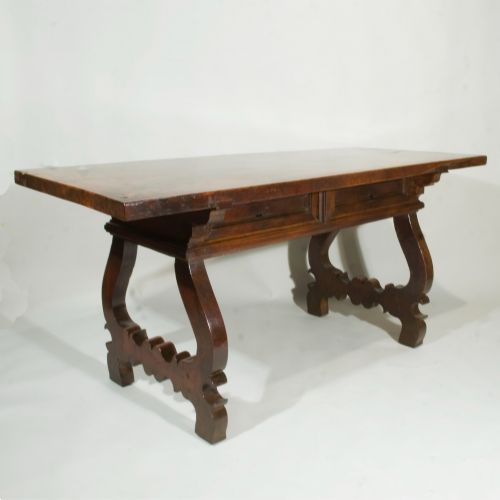

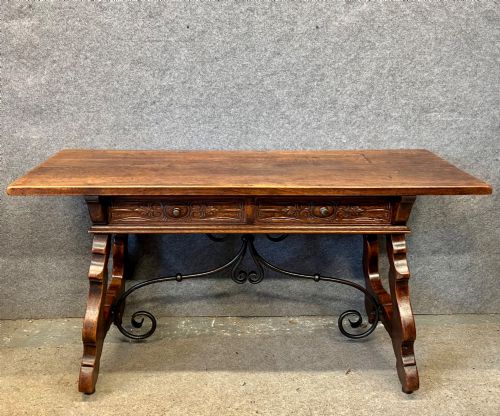


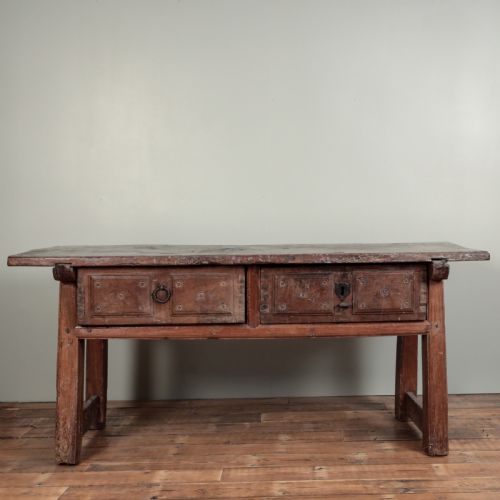


Spanish Carved Wood Table
These heavy walnut and oak pieces are solid spanish carved wood table examples, bringing rustic warmth and centuries of craftsmanship directly into your home.
Spanish Carved Wood Table
A spanish carved wood table embodies centuries of domestic utility, spanning from the robust seventeenth century to the revival periods of the early twentieth century. Buyers encounter forms ranging from simple side tables and console tables to expansive trestle and dining variations.
The regional styles vary distinctly across the inventory, displaying characteristics of spanish baroque, spanish colonial, and rustic spanish traditions. Walnut and oak dominate the surviving examples, often paired with wrought iron stretchers or hardware.
Alongside standard tables, related forms such as centre tables and storage boxes appear frequently in walnut and chestnut. Each piece tells a story of provincial craftsmanship, adapting heavy timber into functional domestic furnishings.
Assessing Quality and Authenticity
The integrity of the original timber surface and depth of carving separate superior examples from later revivals. Good original patina on walnut and oak indicates age and careful preservation over centuries of domestic use.
Structural honesty and the retention of period ironwork define the finer pieces in this category. Pieces showing restrained provincial carving rather than heavy, later alterations command greater appreciation from collectors.
Listings feature periods spanning from the seventeenth century through to nineteen twenty, predominantly utilising solid walnut and wrought iron.
Whytock and Reid
The Spanish Carved Wood Table Glossary
- Patina
- The surface sheen and mellowing developed by wood over centuries of handling and exposure. This gradual change is a key indicator of age in walnut and oak furniture.
- Trestle Table
- A form consisting of two heavy feet or supports connected by a horizontal beam or stretcher. This design provides sturdy support for long, heavy wooden tops.
- Giltwood
- Wood that has been coated with gold leaf or a gold-coloured metallic finish. This decorative technique appears on lamps and altar pieces within the collection.
- Console Table
- A table designed to be placed against a wall, often supported by brackets or ornate legs. These pieces serve as decorative surfaces in hallways and living spaces.
Spanish Carved Wood Table: Frequently Asked Questions
How do I date a Spanish carved wood table?
Dating relies heavily on wood species, construction joinery, and the style of carving present on the aprons and legs. Earlier seventeenth century examples typically feature solid walnut with simpler, heavier framing compared to later nineteenth century revivals.
Examining the underside and hardware provides further clues regarding age. Hand-forged wrought iron stretchers and signs of historic tool use help distinguish early provincial work from later interpretations.
Are these tables suitable for daily dining?
Many of these sturdy wooden forms, particularly trestle and farmhouse variations, were built precisely for daily domestic use. Their robust walnut and oak construction handles regular placement in modern dining rooms with ease.
Care should be taken to protect antique wood surfaces from excessive moisture and heat. Using placemats and coasters preserves the original patina without sacrificing functionality.
What is Spanish Baroque style?
Spanish Baroque furniture embraces dramatic carving, rich wood tones, and substantial proportions. It reflects the grandeur of seventeenth century design adapted to provincial materials like walnut.
These pieces often incorporate bold geometric motifs and strong vertical lines. The aesthetic values heavy timber construction over delicate ornamentation.
How do I care for antique walnut furniture?
Maintaining antique walnut involves keeping the timber away from direct sunlight and sudden temperature shifts. Regular dusting with a soft, dry cloth prevents particulate buildup on carved surfaces.
Occasional application of appropriate wax feeds the wood and protects the historic patina. Avoid modern silicone polishes that can permanently alter the porous surface of old timber.